

The World's Most Prosperous Countries in 2026: A New Global Ranking
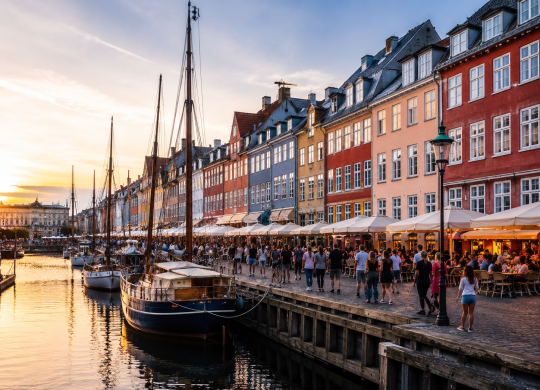
Analysts have released a new ranking of the world’s most prosperous countries in 2026. The assessment took into account not only the economy but also safety, healthcare, education, the environment, and quality of life. Find out which countries have emerged as global leaders in terms of well-being and why the Scandinavian countries have consistently held the top spots for years

In 2026, analysts from the Legatum Institute and the Visual Capitalist platform released an updated ranking of the world’s most prosperous countries. The study covered 167 countries, and the assessment was based on dozens of indicators: from economic stability and income levels to healthcare, safety, education, personal freedoms, and digital development.
Northern European countries once again topped the ranking. Norway took first place, ahead of Denmark, Switzerland, Sweden, and Finland. At the same time, the world’s major economies, including the U.S. and China, ranked significantly lower due to issues with social inequality, security, and quality of life.
Today, a country’s prosperity is increasingly defined by more than just GDP or export levels. For millions of people, affordable healthcare, environmental quality, stability, work-life balance, and trust in government institutions have become paramount.
Earlier, we talked about 7 neutral countries outside of conflicts that are ideal for living and relocation.
Are you planning to work abroad in 2026? Visit World's Work Guide will help you quickly understand the requirements for a work permit, the list of necessary documents, and the application procedure. The guide contains current employment rules, the main types of permits, common mistakes made by applicants, and practical advice after moving. You will receive structured information in PDF format within a few minutes after ordering. Check out the guide and prepare for working abroad without any stress.

Which countries became the most prosperous in 2026?
In 2026, the Prosperity Index once again confirmed the dominance of Northern and Western European countries. It is these nations that demonstrate the best balance between economic development, social protection, healthcare, security, and quality of life for their populations.
The top ten was dominated by Scandinavian countries, with Norway taking first place with a score of 91.6 out of a possible 100. Iceland, Denmark, Sweden, and Ireland also made the top five.
The top 10 most prosperous countries in the world in 2026:
1. Norway – 91.6 points
2. Iceland – 90.1
3. Denmark – 90.0
4. Sweden – 89.4
5. Ireland – 89.1
6. Switzerland – 88.9
7. Belgium – 88.7
8. Finland – 88.4
9. Netherlands – 88.1
10. Slovenia – 87.9

Ranking of the world’s most prosperous countries in 2026 according to the Prosperity Index / Source: Visual Capitalist, Atlantic Council.
Analysts paid particular attention to Singapore, which ranked 18th and became Asia’s most successful country. The country received high marks thanks to its stable economy, one of the highest income levels in the world, and very high life expectancy.
Another surprising result was Slovenia’s 10th place. The country outperformed a number of larger European economies thanks to its stable healthcare system, high level of safety, and environmental performance.
The top twenty also included Australia, New Zealand, Malta, Austria, Canada, and Cyprus. Most of these countries have high indicators of social protection, access to healthcare, and the quality of public services.
In our previous article, we discussed the cost of living in the best EU countries in 2026.
Why did Norway top the ranking of the world’s most prosperous countries?
Norway has remained among the world’s leaders in prosperity for several years now. In 2026, the country scored 91.6 points—the highest score in the global Prosperity Index ranking.
One of the main reasons for its leadership is its stable economy. Norway ranks among the countries with the highest GDP per capita in the world, and the Government Pension Fund Global exceeds $1.7 trillion and is considered the largest sovereign wealth fund in the world.
At the same time, the high level of public well-being is not driven solely by the economy. The country demonstrates strong performance across several key areas:
- Accessible and high-quality healthcare;
- High standards of education;
- Low crime rates;
- Well-developed social protection;
- High environmental standards;
- Work-life balance.
Norway also ranks among the countries with the highest life expectancy in the world—over 83 years. Additionally, the country consistently ranks highly in surveys of national happiness and trust in government institutions.
Energy policy also plays a significant role. Despite substantial revenues from oil and gas, Norway actively invests in “green” energy and electric transportation. According to the Norwegian Road Federation, over 90% of new cars sold in the country in 2025 were electric vehicles.
Analysts also note that Scandinavian countries have consistently demonstrated high results for years thanks to a combination of a strong economy, transparent government institutions, and a high quality of life. In addition to Norway, the top 10 of the ranking includes Iceland, Denmark, Sweden, and Finland.
You can learn more about the richest cities and regions in Europe in 2026 by following the link.
What indicators were considered when compiling the ranking?
The Prosperity Index ranks countries not only by the size of their economy or the level of income. During the study, analysts examine dozens of social, economic, and political factors that directly impact people’s quality of life.
In 2026, the assessment was conducted across the following key areas:
- Level of income;
- Economic stability;
- Access to healthcare;
- Quality of education;
- Safety and crime rates;
- Personal freedoms;
- Level of democracy;
- Environmental conditions;
- Digital development;
- Social equality;
- Business environment;
- Protection of human rights.
One of the key criteria was the quality of life of the population. Because of this, countries with massive economies do not always make it to the top of the ranking. For example, a high GDP does not compensate for problems with social inequality, crime, or low trust in government institutions.
Analysts also focused on life expectancy, housing affordability, the development of digital services, and environmental policy. This is why Scandinavian countries, which combine a strong economy with a high level of social protection, traditionally score highly.
The level of equality in society was also assessed separately. Countries with a smaller income gap among the population typically received higher overall scores. For example, Iceland, Denmark, and Finland consistently rank among the countries with the lowest levels of social inequality in the world.
Digitalization was another key factor. In many of the top-20 countries, most government services have long been available online, and internet speeds and the population’s digital literacy remain among the highest in the world.
In our previous article, we discussed the IMF’s forecast of the richest countries in Europe by 2030.
Why didn’t major economies make it into the top ranks of the most prosperous countries?
One of the most interesting findings of the ranking is the low ranking of some of the world’s largest economies. For example, the U.S. ranked only 38th, even though the country remains a global leader in terms of economic size and wealth creation.
Analysts attribute this to the fact that a high GDP does not guarantee a high quality of life for the entire population. In the U.S., the following factors have a significant impact on the country’s ranking:
- High social inequality;
- Problems with access to healthcare;
- Expensive education;
- Rising crime rates in major cities;
- Political polarization;
- High levels of stress and burnout.
The infographic specifically notes that the U.S. generates more wealth than any other country in the world, yet still ranks behind 37 other nations in terms of prosperity.
Other major economies also posted low scores. Japan ranked only 24th, while South Korea came in 26th. Despite high levels of technological development, these countries face challenges such as an aging population, worker burnout, and a demographic crisis.
China did not make it into the top 40 of the ranking at all. Analysts cite restrictions on personal freedoms, uneven regional development, environmental issues, and a high level of government control as some of the reasons.
India and Brazil also lag far behind European countries due to issues with security, income inequality, access to healthcare, and the quality of public services.
At the same time, the ranking reveals an interesting trend: today, the most successful countries are not the wealthiest in the world, but those that can provide their citizens with stability, security, and comfortable living conditions.
If you are planning to work abroad in 2026 and want to better understand the rules of employment, work permits, taxes, and basic employee rights, it is worth preparing for the move in advance. Visit World's practical working guide will help you navigate the current requirements, types of work permits, and steps to take upon arrival to avoid common mistakes and feel confident in your new life abroad.
We remind you! Which countries became the richest in the world in 2026 and how did the global ranking change over the year? New economic indicators show who was able to increase their GDP and who lost ground due to inflation and slowing growth. The ranking of the richest countries in the world in 2026 and the main changes of the year can be found at the link.
Products from Visit World for a comfortable trip:
Travel guide for 200 countries;
Legal advice from a local specialist on visa and migration issues;
Travel insurance around the world (please select the country of interest and citizenship to receive services);
Medical insurance all over the world.
We monitor the accuracy and relevance of our information, so if you notice any errors or inconsistencies, please contact our hotline.
Frequantly
asked questions
Which country was the most prosperous in 2026?
What criteria were used to evaluate the countries?
Why didn’t the U.S. make the top 10?
Which European countries performed best?
Does the ranking take into account safety and healthcare?
Recommended articles
3 min
Popular
Europe’s wealthiest cities and regions in 2026: where incomes and living standards are highest
The economic divide between different parts of Europe continues to widen. Whilst some regions are enjoying record revenues, high wages and a strong influx of investment, others still lag significantly behind in terms of living standards and economic development. We look at which European cities and regions have become the wealthiest in 2026, what lies behind their success, and where the continent’s main financial centres are concentrated today
11 May. 2026
More details3 min
Popular
How much will it cost to live in the best EU countries in 2026: actual monthly expenses
European countries with the highest quality of life attract millions of people with their stable economies, safety, social security, and high salaries. However, living comfortably in Switzerland, Denmark, or Luxembourg requires a substantial budget—rent alone in some cities can exceed several thousand euros a month. We’ll tell you how much it actually costs to live in the top five European countries in 2026 and what expenses await foreigners and expats
15 May. 2026
More details2 min
Popular
The European Union is preparing for a large-scale transition to digital documents on smartphones. In the coming years, residents and tourists in the EU will be able to use digital IDs and driver’s licenses through a single system called the European Digital Identity Wallet. Learn more about how the new digital documents will work and what will change for travelers in Europe
20 May. 2026
More details2 min
Travels
20 Best Cities in the World for Art and Culture in 2026: Time Out Ranking
London, Paris and Berlin lead the list of the world's best cultural cities. Find out which 20 cities made Time Out's 2026 list, what makes each one unique for travelers, and why some unexpected destinations – like Krakow and Guadalajara – have surpassed the famous capitals in terms of accessibility and quality of art
24 May. 2026
More detailsAll materials and articles are owned by VisitWorld.Today and are protected by international intellectual property regulations. When using materials, approval from VisitWorld.Today is required.