

Electricity Costs Across Europe in 2026: Countries Where Households Pay the Highest Bills
Table of contents
- In which European countries does the population pay the most for electricity?
- What determines the cost of electricity in European countries?
- Why does Germany remain among the leaders in the cost of electricity?
- How does the EU electricity pricing system work?
- What impact did the closure of nuclear power plants have in Germany?
- Why does the development of green energy not yet guarantee cheap electricity?
- What will happen to electricity tariffs in the coming years?
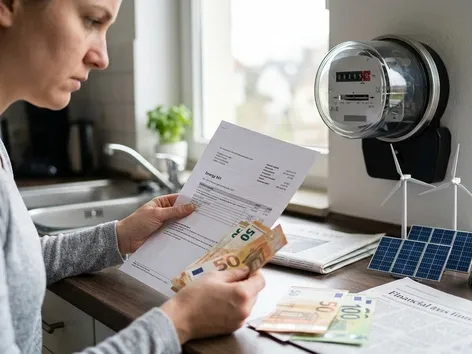
The cost of electricity remains one of the key factors in the cost of living in Europe in 2026. Find out in which countries the population pays the most for electricity, why tariffs vary significantly, and how the development of green energy affects prices

When planning a move to Europe, most foreigners pay attention to housing prices and salary levels. At the same time, utility bills can significantly affect the monthly budget. In 2026, the difference in the cost of electricity between individual European countries remains significant: in some countries, households pay almost four times more than in others. We tell you where electricity bills are the highest and what factors determine the final cost of electricity for the population.
Also read in the previous article where in Europe the income of the population is growing the fastest in 2026.
When planning a move, study or long-term stay abroad, it is important to consider not only the cost of housing and utilities, but also possible costs for medical care. In many European countries, treatment for foreigners can cost hundreds or even thousands of euros.
Health insurance helps to avoid unforeseen expenses and guarantees access to necessary care in case of illness or accident.
Get health insurance today and travel the world with confidence and protection.

In which European countries does the population pay the most for electricity?
The highest tariffs in 2026 are recorded mainly in Western and Northern European countries. This is where high taxes, significant investments in energy infrastructure and the peculiarities of national electricity markets are combined.
The best platforms for renting housing in Europe in 2026 are here.
The ten countries with the most expensive electricity for the population include:
- Ireland – 0.40 euros per kWh;
- Germany – 0.39 euros per kWh;
- Belgium – 0.35 euros per kWh;
- Denmark – 0.33 euros per kWh;
- Austria – 0.33 euros per kWh;
- Czech Republic – 0.32 euros per kWh;
- Italy – 0.30 euros per kWh;
- Romania – 0.29 euros per kWh;
- Cyprus – 0.28 euros per kWh;
- Sweden – 0.27 euros per kWh.
For comparison, the lowest tariffs among EU countries are maintained in Hungary, Bulgaria and Malta, where the state continues to actively influence pricing.
Visit World services for tourists, migrants, and expats: Insurance | Guides | Legal advice
What determines the cost of electricity in European countries?
The difference in tariffs is explained not by one, but by several factors. The cost of electricity for the end consumer is formed taking into account the structure of energy production, the cost of fuel, the tax burden and the state of the energy infrastructure.
Among the main factors:
- the share of renewable energy sources;
- dependence on imported energy sources;
- state regulation of tariffs;
- taxes and fees;
- investments in network modernization;
- costs of balancing the power system.
At the same time, practice shows that even a significant share of solar and wind generation does not guarantee low tariffs for the population.
We will tell you about the cheapest cities in Europe for travel in 2026 in this material.
Why does Germany remain among the leaders in the cost of electricity?
For many years, Germany has been among the European countries with the most expensive electricity for households. And this is despite the fact that the country is one of the undisputed leaders in the EU in the development of renewable energy.
Today, more than half of German electricity is produced from renewable sources. Solar and wind power plants provide a significant part of the total production, but this has not yet led to a noticeable reduction in bills for the population.
The reason lies in the peculiarities of the European pricing mechanism, as well as in the significant costs of modernizing networks and ensuring the stability of the power system.
Search for the route of Europe's longest night train in this article.
How does the EU electricity pricing system work?
The European energy market operates on the Merit Order principle. This means that the market price is determined by the most expensive source of generation needed to meet current demand.
Even if most electricity is generated by relatively cheap solar or wind power plants, during peak load periods the system may need additional generation from gas or coal-fired power plants. These are often the ones that determine the final market price.
As a result, the cost of fossil fuels continues to affect consumer bills even in countries that are actively switching to renewable energy sources.
Read here about what tourists are most often fined for on European roads in 2026.
What impact did the closure of nuclear power plants have in Germany?
An additional factor was the closure of the last nuclear reactors in Germany. Nuclear power has long provided stable electricity production with low emissions.
After abandoning nuclear power generation, the country accelerated the development of renewable energy and at the same time faced the need to invest significantly in the modernization of the power system. Experts call this transition period one of the factors that maintain relatively high tariffs.
Poland cancels old EU residence permits from August 3, 2026, more details here.
Why does the development of green energy not yet guarantee cheap electricity?
One of the main problems of the modern power system remains the uneven production of solar and wind energy.
During periods of favorable weather conditions, the volume of generation may exceed the capacity of power grids to transmit energy. As a result, some production has to be limited, and operators have to pay compensation to producers.
That is why European countries are actively investing in the development of electricity storage systems, the construction of battery complexes and the modernization of power grids.
Tax rating of European countries 2026 is here.
What will happen to electricity tariffs in the coming years?
Analysts believe that in the long term, the expansion of renewable generation and the development of energy storage technologies should contribute to a gradual decrease in the cost of electricity.
However, the process of modernizing the energy sector requires significant investment and time. Therefore, experts do not predict any sharp changes in electricity bills for most European households in 2026–2027.
The increase in electricity tariffs is once again a reminder of how expensive life abroad can be. However, utility bills are far from the only expense item that can significantly affect the budget of an expat, student or tourist. In the event of illness or accident, the cost of medical services for foreigners in many European countries often exceeds the cost of renting housing for several months.
That is why health insurance remains one of the most important documents for those traveling or living outside their country. The policy covers a wide range of risks - from emergency medical care to emergency evacuation and other unforeseen situations. Applying for insurance takes only a few minutes, but allows you to avoid significant financial losses in the future.
Take care of your safety in advance and take out medical insurance for travel and life abroad.
Reminder! Mobile communication prices in Europe differ by 6 times depending on the country. We have already told you where the cheapest tariffs are in 2026, which countries have the highest prices and what determines the cost of communication for expatriates and travelers.
Photo - generated by Gemini
Products from Visit World for a comfortable trip:
Travel guide for 200 countries;
Legal advice from a local specialist on visa and migration issues;
Travel insurance around the world (please select the country of interest and citizenship to receive services);
Medical insurance all over the world.
We monitor the accuracy and relevance of our information, so if you notice any errors or inconsistencies, please contact our hotline.
Frequantly
asked questions
Do international cost-of-living rankings take electricity prices into account?
How do electricity prices influence the choice of a country for relocation?
Are there support programs in European countries to help residents cope with high electricity prices?
Recommended articles
3 min
Travels
Where to go in Croatia in 2026: 5 places without crowds of tourists
Most tourists in Croatia choose Dubrovnik, Split, or Hvar, but these cities are often overcrowded during peak season. At the same time, the country has dozens of less popular destinations with beautiful beaches, historic architecture, and the authentic atmosphere of the Adriatic—without the huge crowds and noise. Learn more about 5 places in Croatia where you can relax more peacefully and see the country from a different perspective
07 Jun. 2026
More details3 min
Popular
The World's Most Prosperous Countries in 2026: A New Global Ranking
Analysts have released a new ranking of the world’s most prosperous countries in 2026. The assessment took into account not only the economy but also safety, healthcare, education, the environment, and quality of life. Find out which countries have emerged as global leaders in terms of well-being and why the Scandinavian countries have consistently held the top spots for years
26 May. 2026
More details2 min
Expats
Best Cities in the World for Expats in 2026: Top Places to Relocate and Live Comfortably
Moving abroad is becoming increasingly popular among people seeking a better quality of life and new opportunities. Find out which cities topped the list of the most comfortable for expats in 2026 and why they became the leaders
07 Jun. 2026
More details2 min
Expats
Fastest Countries to Get Citizenship in 2026: Top 10 Paths to a Second Passport
Obtaining a second citizenship has become more accessible for students, workers, and investors in 2026. Find out which countries offer the fastest paths to a passport, what the requirements are today, and how to choose the best option for your move
08 Jun. 2026
More detailsAll materials and articles are owned by VisitWorld.Today and are protected by international intellectual property regulations. When using materials, approval from VisitWorld.Today is required.