

Where to Get Free Land in the U.S. in 2026: Current Programs, Requirements, and Hidden Costs
Table of contents
- Why do cities give away land for free?
- Kansas: The State with the Most Free Land Programs
- Nebraska: Proven Programs with a Long History
- Iowa, Minnesota, and New York: Other States with Active Programs
- Alaska and the USDA Program: Alternative Paths to Affordable Land
- How much does “free” land in the U.S. actually cost?
- How to apply for a free plot of land in the U.S.: general steps
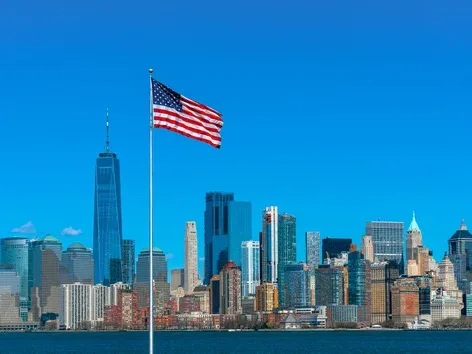
In 2026, dozens of small American towns continue to give away land for free to anyone willing to build a house and become a permanent resident. These programs are available in Kansas, Nebraska, Iowa, Minnesota, and other states, but each has its own terms, deadlines, and hidden costs. Learn more about current free land programs in the U.S., eligibility requirements, and the actual cost of participation

In the United States, dozens of small towns continue to give away plots of land for free to anyone willing to build a house and become part of the local community. This practice dates back to the federal Homestead Act of 1862, under which more than 270 million acres of public land were distributed. The federal program ended in 1976, but municipalities in various states have developed their own initiatives adapted to modern realities.
Which states are offering free plots of land in 2026, what they require from participants, and how much this “free” land actually costs—we’ll cover all of this in the article below.
Want to learn how to legally move to the U.S. and take advantage of programs for new residents?
The Visit World portal offers an immigration guide to help you navigate visa categories, requirements for immigrants, and the ins and outs of settling in.

Why do cities give away land for free?
Rural areas in the U.S. are facing a steady population decline. Young families are moving to large cities, while small towns are losing their tax base, workforce, and infrastructure. Free land grant programs are a municipal tool designed to address these issues. Local authorities transfer ownership of a residential or commercial lot in exchange for a commitment to build a home and register permanent residency. In this way, cities simultaneously increase their population, expand their tax base, and stimulate the construction sector.
The highest-paying jobs in the U.S. in 2026 — are listed here.
Kansas: The State with the Most Free Land Programs
Kansas remains the leader among states in terms of the number of active free land grant programs. Several cities—Mankato, Marquette, Plainville, and Lincoln—offer land grants to new residents.
Mankato is allocating 26 lots in the Johnson Addition neighborhood on the city’s eastern outskirts. The average lot size is about 18,000 square feet (just over 0.4 acres). Utilities are connected to each lot. The main eligibility requirements are:
- build a single-family home with at least 3 bedrooms, a floor area of at least 1,200 square feet, and a 2-car garage;
- begin construction within 6 months of transferring ownership;
- complete construction within 2 years;
- register the property as your primary residence (investment and recreational properties are prohibited);
- include a letter of preliminary approval for a construction loan with your application.
Marquette offers lots in the Westridge Addition neighborhood on the city’s western outskirts. Lot sizes range from 11,000 to 25,000 square feet. Construction must be completed within 1 year, and the minimum home size is 1,000 square feet. Mobile homes and prefabricated homes on temporary foundations are prohibited. Marquette also has a community garden program available to new residents.
Everything you need to know about the 2026 U.S. Green Card — follow the link.
Nebraska: Proven Programs with a Long History
Nebraska is known for having some of the oldest modern free land programs. The cities of Beatrice, Curtis, and Elwood have over 10 years of practical experience implementing such initiatives.
Beatrice implements the “Homestead Act of 2010”—a modern counterpart to the historic federal law. The city is located 40 miles south of Lincoln and has a population of over 12,000, providing access to quality schools and a full range of municipal services. Participants receive a free residential building lot with the obligation to build a permanent home within 18–24 months. Income and creditworthiness requirements depend on the specific funding cycle. Applications are accepted by the City’s Economic Development Department via the website cityofbeatrice.com.
Curtis provides free residential lots with full access to municipal utilities—water, sewer, and electricity. Construction must be completed within 24 months. The city is focused on supporting agricultural education and the rural way of life.
Visit World services for tourists, migrants, and expats: Insurance | Guides | Legal advice
Iowa, Minnesota, and New York: Other States with Active Programs
Marne, Iowa—a small town in Audubon County that is striving to stem population decline. Residents receive a free lot on the condition that they build a home of at least 1,200 square feet within 18 months. Mobile homes are not permitted.
Claremont, Minnesota offers a worker housing program with strong community support. The city is located relatively close
to the Twin Cities metropolitan area, making it attractive to working families. The program has income eligibility requirements.
Buffalo, New York stands out from other cities by offering free urban lots through the Urban
Homestead Program. This is a rare occurrence, as most similar initiatives are focused on rural areas.
About the 2026 pied-à-terre tax in New York — read more at the link.
Alaska and the USDA Program: Alternative Paths to Affordable Land
Alaska continues to sell state-owned land in remote areas through the Department of Natural Resources.
The price is often less than $1,000 per acre. In addition, every eligible resident of the state receives an annual payment from the Alaska Permanent Fund (PFD). In 2025, this amount was $1,000 per person, meaning a family of four received $4,000. The application period for the 2026 PFD runs from January 1 to March 31. Applications are submitted via dnr.alaska.gov. This option is best suited for experienced farmers who are prepared to live self-sufficiently.
The USDA Rural Development program is not technically a “free land” program, but it offers financing with zero or minimal down payments for the purchase of rural real estate nationwide. Interest rates are below market rates thanks to support from the Farm Service Agency. Applications are accepted through rd.usda.gov and fsa.usda.gov.
How much does “free” land in the U.S. actually cost?
The cost of the land itself is zero, but participants should be prepared for a number of associated expenses. Building a frame-style house costs an average of $120,000 to $350,000. A building permit costs between $500 and $3,000. Connecting to utilities can cost anywhere from $0 to $5,000, depending on the lot. Architectural design will cost between $1,500 and $5,000.
The security deposit ranges from $500 to $1,000 (refundable upon completion of construction in most programs). The annual property tax ranges from $400 to $2,000. Moving costs vary from $1,500 to $8,000, depending on the distance.
By comparison, buying a 3-bedroom house in the suburbs requires a down payment of about $30,000 and annual mortgage payments of about $18,000—totaling over $120,000 over 5 years. A free plot of land with a house built on it in Kansas would cost approximately $45,000 over the same period. The savings for most participants range from $60,000 to $150,000 compared to purchasing a similar property.
By the way, in our previous article we mentioned that in the U.S., people are paid up to $15,000 to move to Detroit.
How to apply for a free plot of land in the U.S.: general steps
- Select a state and city—visit the municipality’s official website and locate the economic development or housing department.
- Contact the program organizers—call or send an email to check if any lots are available. The number of lots is limited, so it’s best to get on the waiting list as soon as possible.
- Get pre-approval for a construction loan—most programs require a letter from a bank or lender.
- Prepare a house plan—a basic floor plan indicating the square footage, number of bedrooms, and space for a garage.
- Submit your application—some programs accept applications online, while others require in-person or mail submissions.
- Go through the city council review process—many cities require a brief interview to confirm the seriousness of your intentions.
- Obtain title to the property—once approved, the construction timeline begins.
What should you look out for before applying?
The U.S. federal government no longer distributes free land—any websites claiming to do so on behalf of the federal government are scams. Legitimate programs are implemented exclusively by individual cities and counties.
Most free plots are zoned for residential use rather than agricultural use, so commercial food production may be restricted. Keeping livestock—such as chickens, goats, and other animals—is also prohibited within city limits in many cities. All programs set a minimum home size (usually between 1,000 and 1,300 square feet), so tiny homes ranging from 200 to 400 square feet do not qualify. Most cities require frame-constructed or modular homes—mobile homes are generally not permitted.
The main requirement of all programs is that you live in the house you build on a permanent basis. It is not possible to obtain free land for investment, rental, or recreational purposes.
Planning to move to the U.S.? Order a migration guide from Visit World!
Free land programs can be a great starting point for those considering a move to the United States. However, successful immigration requires an understanding of visa procedures, legal immigration pathways, and the challenges of adapting to a new country. The Visit World portal offers a detailed immigration guide to help you plan your move step by step—from choosing a visa category to practical matters regarding settling in.
Order the guide on the Visit World website and prepare for your move as effectively as possible!
Reminder! In a previous article, we reported that the U.S. is launching a fee-based expedited interview scheduling service for B-1/B-2 visas.
Photo: Magnific
Products from Visit World for a comfortable trip:
Checklist for obtaining a visa and necessary documents in the USA;
Legal advice on immigration to the USA;
Travel insurance for foreigners in the USA;
Medical insurance all over the world.
We monitor the accuracy and relevance of our information, so if you notice any errors or inconsistencies, please contact our hotline.
Frequantly
asked questions
Is it possible to get free land in the U.S. in 2026?
Which U.S. states are giving away free land?
Recommended articles
2 min
Residence permit
US Green Card 2026: New USCIS Rules for Temporary Visa Holders Explained
The US has changed the approach to obtaining a green card for temporary visa holders – and this applies to citizens of any country. Find out what the new USCIS memorandum PM-602-0199 means, who it affects, what is currently unclear and how to prepare for the changes to the process of obtaining permanent residence in America
27 May. 2026
More details2 min
Investment
New York Pied-à-Terre Tax 2026: Who Pays the Luxury Second Home Surcharge and How Much
New York has introduced an annual levy on luxury second homes – the pied-à-terre tax will take effect on July 1, 2026. Find out which properties are subject to the new surcharge, what rates are set for apartments and houses, who is exempt from paying, and how this norm fits into the nationwide American trend of taxing empty luxury homes
04 Jun. 2026
More details2 min
Work
Highest-Paying Jobs in the United States in 2026: Who Earns More Than $300,000 a Year?
The American job market continues to offer record earnings for certain categories of professionals. Find out which professions are among the highest-paid in the US in 2026, why medicine dominates the leaders, and which specialists can expect a salary of over $300,000 per year
06 Jun. 2026
More details2 min
Travels
U.S. Launches Paid Expedited B-1/B-2 Visa Interview Appointments: What Changes Starting July 1, 2026
The United States is launching a new expedited appointment program for B-1/B-2 visas. Find out who will be eligible, how much it will cost, and how the new mechanism will work starting in July 2026
09 Jun. 2026
More detailsAll materials and articles are owned by VisitWorld.Today and are protected by international intellectual property regulations. When using materials, approval from VisitWorld.Today is required.