

Summer Vacation in Norway on a Budget: The Best Free Spots
Table of contents
- Where can you swim for free in Norway?
- Oslo’s Lakes and City Beaches
- Hiking Trails for All Fitness Levels
- How can you see the Norwegian fjords without an expensive cruise?
- How to find a budget-friendly itinerary?
- Where can you find affordable lodging in Norway?
- When to go and how to cut down on daily expenses?
- How can you save money on transportation and food?
- Useful Services for Independent Travel in Norway
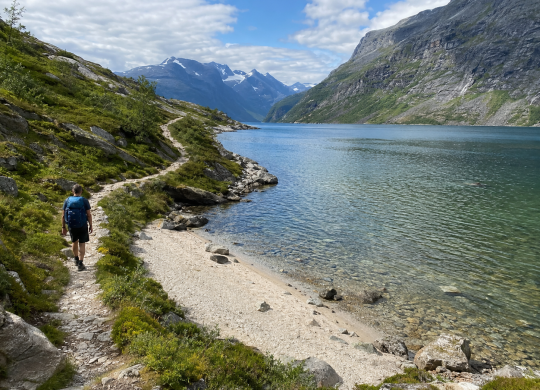
Norway is considered one of the most expensive tourist destinations in Europe, but many of its natural attractions are free to visit. Here’s where to go swimming, which hiking trails to explore, how to see the fjords, and how to save money on your summer trip

A vacation in Norway doesn’t necessarily mean expensive hotels, restaurants, and sightseeing cruises. Admission to most natural sites is free: tourists can hike through forests and along mountain trails, swim in lakes and fjords, visit city beaches, and camp overnight under the rules of the general right of public access to nature.
There are lakes near Oslo that are accessible by subway, and in Bergen, Trondheim, and the capital, there are designated swimming areas right within the city limits. For hiking, options range from the easy trails of Nordmarka to the more challenging Preikestolen and Besseggen. The biggest expenses are usually transportation, lodging, and food, but booking in advance, staying at campgrounds, and planning your own itinerary can help significantly reduce your budget.
In our previous article, we wrote about 5 European countries that tourists are hardly visiting in 2026.
Discovering a new country for yourself without the help of travel agents or intermediaries is very simple. All you need is a checklist or a “Travel Guide” from Visit World – a step-by-step guide with all the key information for your trip.
The guide contains information on visa requirements, visa-free entry rules, permitted periods of stay and a list of required documents.
After completing the form, the guide will be sent to your email in PDF format in just a few minutes.
Choose a country and get your travel guide today.

Where can you swim for free in Norway?
To go swimming in Norway, you don’t have to book a hotel with a pool or pay to visit a beach club. Near major cities, there are free lakes, ocean beaches, and equipped platforms on the fjords. However, even in summer, the water can remain cold, so it’s best to check its temperature and quality before your trip.
Oslo’s Lakes and City Beaches
One of the most accessible spots is Lake Sognsvann, located on the northern outskirts of the capital. You can take the metro to the Sognsvann terminal, followed by just a few minutes’ walk. A flat trail approximately 3.2 km long circles the lake, and there are areas near the water for swimming, picnicking, and relaxing.
Another option is Nøklevann in the Østmarka forest area. The lake is located near the city, but is surrounded by woods and hiking trails. The City of Oslo lists both locations as popular swimming spots that are easily accessible by public transportation.
Right in the center of Oslo, the following are available:
1. Sørenga sjøbad – a large swimming area in the fjord with platforms, ladders, and a separate section for children;
2. Tjuvholmen – a small urban beach and pier next to the Astrup Fearnley Museum;
3. Sukkerbiten—a waterfront area near the Opera House;
4. Huk and Paradisbukta—beaches on the Bygdøy peninsula;
5. Hovedøya and Gressholmen—islands with beaches and picnic areas, accessible by city ferries.
Admission to these areas is free, but you’ll need to pay the standard public transportation fare for the metro, bus, or ferry.
Where to swim near Bergen and Trondheim?
Near Bergen, you can head to the island of Tyssøy, known for its small coves, rocky coastline, and swimming spots. This is a good option for those who want to spend a day in nature away from the tourist center. Before your trip, be sure to check the public transportation route, as you’ll have to walk the last part of the way.
In Bergen itself, there’s Nordnes sjøbad, which features direct access to the sea, a heated pool, a sauna, and a diving tower.
Unlike typical city beaches, this area requires an admission fee: during the 2026 summer season, an adult ticket costs 130 NOK, a child’s ticket costs 45 NOK, and a family ticket costs 300 NOK.
In Trondheim, be sure to check out Korsvika on the Lade Peninsula. There is a small sandy beach, coastal cliffs, a grassy area, picnic tables, a playground, and restrooms. From the city center, you can get there by bus in about 15 minutes or on foot in approximately 50 minutes.
Before swimming, check local announcements regarding water temperature and quality. In Norway, these conditions are regularly monitored throughout the summer season, and after heavy rains, swimming may be temporarily discouraged at certain beaches.
In our previous article, we discussed where to go in Slovakia this summer: routes to castles, caves, and thermal springs.
Hiking Trails for All Fitness Levels
Access to most hiking trails in Norway is free, but you may incur costs for transportation to the trailhead, parking, or a ferry. The difficulty of a hike should be assessed based on its length, elevation gain, and terrain, not just the estimated hiking time.
Nordmarka and Lommedalen – for easy walks
The Nordmarka forest area begins near Oslo, so you can get there by metro, bus, or commuter train. Convenient starting points include Sognsvann, Frognerseteren, and Songsvann. Visitors can enjoy short walks around the lakes and longer hikes between forest cabins.
A less crowded alternative is Lommedalen, located west of the capital. Here, forest roads and easy trails predominate, suitable for walking or biking. Both areas are ideal for a day trip without special gear, though waterproof shoes will be necessary after rain.
Preikestolen – a trail with views of the Lysefjord
Preikestolen, or the Pulpit Rock, towers 604 meters above the Lysefjord. The total length of the trail is about 8 km, with an elevation gain of approximately 500 meters, and the round trip takes an average of four hours.
The trail is of moderate difficulty: it features steep ascents, stone steps, marshy sections, and uneven terrain. There is no fee to access the trail, but a shuttle from Stavanger or parking at the starting point will incur additional costs. There are no railings on the plateau itself, so it is dangerous to approach the edge in fog, rain, or strong winds.
Besseggen – a challenging route for experienced hikers
The Besseggen Ridge in Jotunheimen National Park is known for its views of two lakes: the dark-blue Bessvatnet and the greenish Gjende.
The route has the following characteristics:
- Length – about 14 km
- Total elevation gain – approximately 1,100 meters
- Duration – 6–8 hours on average
- Difficulty level – high
The DNT recommends Besseggen for experienced hikers. In some sections, you’ll have to climb steep cliffs, and rapid weather changes can significantly complicate the hike. A popular option involves taking a boat from Gjendesheim to Memurubu and returning on foot across the ridge, so be sure to include the cost of the boat ticket in your budget.
To find other routes, use UT.no. The service includes maps, descriptions, estimated hiking times, and difficulty ratings. It’s best to download the map you need in advance, as cell service in mountainous areas can be unreliable. Before setting out, you should also check the forecast on Yr.no and warnings about hazardous natural conditions on Varsom.no.
In our previous article, we discussed the best places to go on vacation in July without the tourist crowds.
How can you see the Norwegian fjords without an expensive cruise?
Organized fjord tours often include transportation, a guide, meals, and several activities, which significantly increases the final price. You can save money by purchasing train, bus, and ferry tickets separately or by choosing regular transportation routes that pass through scenic areas.
Nærøyfjord: The Route Between Flåm and Gudvangen
Nærøyfjord, along with Geirangerfjord, is a UNESCO World Heritage Site. It is one of Norway’s narrowest fjords: in some sections, the distance between its shores is only about 250 meters.
The ferry ride between Flåm and Gudvangen takes about two hours one way. The ferry passes through the Aurlandsfjord and then enters the narrow Nærøyfjord. You can return to the starting point by bus, which connects the two villages in about 20 minutes.
This is a tourist ferry, not a typical cheap city ferry. However, purchasing ferry and bus tickets separately may cost less than a pre-packaged tour from Bergen or Oslo. Before booking, it’s worth comparing the prices of individual segments with the package deal and checking whether the tour includes any unnecessary services.
Geirangerfjord and Hjørundfjord near Ålesund
The city of Ålesund serves as a convenient base for trips to Geirangerfjord and Hjørundfjord. Buses, high-speed boats, and car ferries run to the region’s towns and villages. Some bus routes include a ferry crossing across the fjord, and the cost of the crossing is already included in the ticket.
Geirangerfjord is famous for the “Seven Sisters,” “The Groom,” and “The Bride’s Veil” waterfalls, as well as its steep cliffs and abandoned mountain farms. You can see some of these panoramic views without taking a cruise—from observation decks and hiking trails around Geiranger.
The Hjørundfjord, which is less crowded with tourists, is nestled among the Sunnmøre Alps. Local residents use the scheduled ferries and boats, so you can combine your trip with travel between villages without having to purchase a separate sightseeing tour.
In our previous article, we discussed the cheapest and most expensive European cities for a vacation in 2026.
How to find a budget-friendly itinerary?
The easiest way to plan your trips is through the government-run Entur service. It consolidates schedules for trains, buses, ferries, and other forms of public transportation throughout Norway. For the Ålesund region, it’s also worth checking the FRAM carrier’s website.
To avoid overpaying:
1. Compare a packaged tour with the total cost of individual tickets
2. Look for scheduled ferries and buses that include the crossing
3. Book popular summer routes in advance
4. Check the last departure time in the opposite direction
5. If possible, stay overnight not in Flåm or Geiranger, but in neighboring, less touristy towns
Ferry schedules vary by season, so you should double-check your route right before your trip.
Where can you find affordable lodging in Norway?
Hotels can be the biggest expense when traveling in Norway. Cheaper alternatives include a tent, an equipped campground, or a DNT hiking cabin. The choice depends on your route, the weather, and your desired level of comfort.
Free Overnight Stay in a Tent
Norway’s right of public access to nature, or allemannsretten, allows you to pitch a tent for free on undeveloped land—in forests, mountains, and other natural areas. However, this does not mean you can camp just anywhere.
Basic rules:
1. Your tent must be pitched at least 150 meters from the nearest residential building or occupied cabin
2. Without the owner’s permission, you may stay in one place for no more than two nights
3. The two-night limit does not apply in high-altitude areas and remote, sparsely populated regions
4. You may not pitch a tent on cultivated fields, in yards, or on other fenced-off private property
5. Specific restrictions may apply in national parks, nature reserves, and popular tourist destinations
After spending the night, you must remove all trash and avoid damaging vegetation. You should also check the rules for building fires: in Norway, there is generally a ban on open fires in and near forests from April 15 to September 15 if there is a risk of fire.
Campgrounds with basic amenities
If you need a shower, restroom, electricity, or a kitchen, you should stay at a fully equipped campground. A tent site is usually much cheaper than a hotel room, and the ability to cook your own meals further reduces costs.
Different campgrounds may offer:
- Shared kitchens and refrigerators
- Showers and washing machines
- Spots for tents, campers, and RVs
- Small wooden cabins
- Bike, boat, or hiking gear rentals
You can find options along your route on Camping.no.
In July and early August, it’s best to book popular campsites near the fjords well in advance.
DNT Hiking Cabins
The Norwegian Trekking Association (DNT) manages a network of approximately 580 cabins. They are divided into three main types: staffed with meals, self-service, and unstaffed. The most basic huts usually have beds and basic kitchen equipment, but you’ll need to bring your own food and sleeping gear.
There is a fee for staying in the huts. A DNT membership only provides a discount on lodging and meals, as well as access to a standard key for many self-catering huts. In 2026, a standard annual membership for adults aged 26–66 costs 860 NOK, for youth aged 13–25—365 NOK, and a family membership—1,540 NOK.
If you’re planning several overnight stays, the membership can pay for itself thanks to the discounts. Before your trip, be sure to check the specific cabin’s page on UT.no or DNT.no: access conditions, reservation requirements, food availability, and payment methods vary.
Learn more about the TOP 10 budget-friendly alternatives to the Maldives that will surprise even seasoned travelersby following the link.
When to go and how to cut down on daily expenses?
The best time for hiking, swimming, and fjord cruises is from late June to mid-August. During this period, most seasonal ferries are operating, high-altitude roads are open, and the trails are usually already clear of snow. July is the warmest month, but it’s also the busiest and most expensive.
It’s easier to save on lodging in early June or late August. However, there may still be snow in the mountains, the weather can turn bad early, and some summer transportation routes have reduced schedules.
In the summer, daylight hours are very long throughout the country. However, the midnight sun—when the sun never sets below the horizon—can only be seen north of the Arctic Circle. In Northern Norway, this period depends on latitude and usually lasts from May through the end of July.
How can you save money on transportation and food?
The lowest fares for intercity trains and buses are usually available when booking early. You can search for train tickets through Vy and plan your entire trip, including transfers, through Entur. Before paying, it’s worth comparing trains, buses, and domestic flights: for long distances, flying is sometimes no more expensive than ground transportation.
The following tips will help you cut costs:
- Buy groceries at supermarkets and cook your own meals
- Bring a thermos, sandwiches, and snacks on day hikes
- Carry a reusable water bottle—tap water in Norway is safe to drink
- Use city bikes instead of taxis
- Buy daily or weekly transit passes if you plan to travel frequently
- Check whether the ferry crossing is included in your bus ticket
- Book accommodations with a kitchen or use the kitchens at campgrounds
You should also check out the Oslo Pass or Bergen Card. These cards may include public transportation, museums, and discounts, but they’re only worth it if you have a packed itinerary. If you plan to spend most of your time at free lakes, beaches, and hiking trails, a regular public transportation pass is often cheaper.
The weather in Norway changes quickly, even in July. Instead of buying warm clothes once you’re there, it’s better to pack a waterproof jacket, a fleece, closed-toe shoes, and several layers of clothing right away. This is especially important during hikes, where temperatures in the mountains can be significantly lower than in the city.
Useful Services for Independent Travel in Norway
When planning your route, it’s best to use official Norwegian platforms. They help you check trail difficulty, current public transportation schedules, weather conditions, and the availability of hiking huts.
1.UT.no – maps of hiking trails, including their length, difficulty, elevation gain, and estimated hiking time. It also shows mountain huts and places to stay overnight.
2.Entur – planning trips by train, bus, ferry, and public transportation. The service is especially useful for complex routes with multiple transfers.
3. DNT.no – reservations for hiking huts, information on membership, prices, key access, and services at specific locations.
4. Camping.no – search for equipped campgrounds, tent sites, and wooden cabins. On the individual listings, you can check for the availability of a kitchen, shower, laundry facilities, and electricity.
5. Vy.no – tickets for trains and some intercity buses. You can find cheaper fares here if you book early.
6. Yr.no – detailed weather forecasts for cities, mountainous areas, and specific tourist locations. Before a hike, be sure to check the forecast again on the day of departure.
7. Varsom.no – warnings about avalanches, floods, landslides, and dangerous ice. This service is important even in the summer, especially after heavy rains or when hiking in the high mountains.
For local travel, you may need regional apps: Ruter in Oslo, Skyss in Bergen, and FRAM in the Ålesund region. It’s a good idea to check schedules and prices right before your trip, as seasonal ferries and buses may run less frequently in late summer.
Are you planning a trip and want to prepare without unnecessary stress? Visit World's travel guide contains key tips for travelers: rules of entry and stay, current requirements for tourists, basic safety, transportation and accommodation. Such a guide will help you quickly navigate a new country, avoid common mistakes during your trip, and plan your route taking into account practical nuances that often go unnoticed by tourists.
We remind you! Popular tourist destinations can be a trap. We have already told you which 8 places in the world Fodor’s advises to avoid in 2026 due to overtourism, environmental risks and social tension – and what alternatives to choose instead.
Products from Visit World for a comfortable trip:
Travel guide for 200 countries;
Legal advice from a local specialist on visa and migration issues;
Travel insurance around the world (please select the country of interest and citizenship to receive services);
Medical insurance all over the world.
We monitor the accuracy and relevance of our information, so if you notice any errors or inconsistencies, please contact our hotline
Frequantly
asked questions
Is it allowed to pitch a tent for free in Norway?
When is the cheapest time to travel in Norway during the summer?
Can you swim in Norwegian lakes and fjords?
Which hiking trails are suitable for inexperienced hikers?
Is it possible to travel around Norway without a car?
Recommended articles
3 min
Travels
Italian Riviera 2026: Top Cities for a Beach Vacation in Italy
The Italian Riviera remains one of the most popular beach vacation destinations in Europe—from elegant Sanremo to the five villages of the Cinque Terre. Euronews has named the cities of Liguria worth considering for a trip in 2026. Learn more about the top resorts on the Italian Riviera and get tips on choosing a destination
19 Jul. 2026
More details2 min
Travels
Top 10 Safest Islands in the World for 2026: A Guide to Stress-Free Travel
Aruba, Cayman Islands and Malta lead the new ranking of the safest travel destinations. Find out which other islands made the top 10 safest in 2026 and why you should pay attention to them
23 Jul. 2026
More details3 min
Travels
Ireland's Best Tourist Attractions: The Top 20 Attractions According to Travelers
The latest ranking of Ireland’s tourist attractions has revealed some surprising results—the legendary Guinness Storehouse and Blarney Castle fell well outside the top 20. The top spots went to atmospheric museums, distilleries, and natural sites that offer a true immersion into the culture of the Emerald Isle. Learn more about Ireland’s top 20 highest-rated attractions and the criteria used to compile the ranking
25 Jul. 2026
More details3 min
Travels
Where to Go in Slovakia This Summer: Itineraries to Castles, Caves, and Hot Springs
Slovakia lets you explore medieval castles, hike along mountain waterfalls, and relax in a natural thermal pool—all in a single trip. Learn more about the country’s most interesting summer destinations, perfect for day trips and a peaceful getaway far from the busiest resorts
26 Jul. 2026
More detailsAll materials and articles are owned by VisitWorld.Today and are protected by international intellectual property regulations. When using materials, approval from VisitWorld.Today is required.