

Working in Norway in 2026: Websites, Salaries, Permits
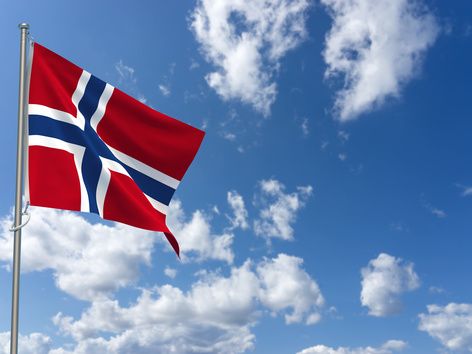
In Norway, job openings are posted on several specialized websites. Foreigners from outside the EEA need a permit from the UDI. Learn more about the websites and salaries

Norway ranks among the highest-paying European labor markets, and the unemployment rate remains moderate. Employers are consistently looking for professionals in healthcare, construction, IT, and skilled technical trades. Relocate.to reports on this.
Further in the article: a list of the top job search websites, official salary data from SSB, minimum hourly wages by sector, requirements for a work permit, and a list of required documents.
Not sure where to start when applying for a work permit in Norway?
The Visit World guide provides a list of documents required by the UDI, requirements for citizens of different countries, and the current steps for submitting an application online.

Top Job Search Websites in Norway
Job hunting in Norway in 2026 is most effective through a combination of five platforms: the government database Arbeidsplassen from the NAV service, the private portal FINN, the professional network LinkedIn, the specialized resource Jobbnorge for the public and academic sectors, and the aggregator Indeed.no. Together, these platforms cover private businesses, government agencies, academic institutions, and English-language positions at international companies.
A brief overview of each resource:
- Arbeidsplassen (NAV) — the official job database of the Norwegian Labor and Welfare Service. It offers filters by region, industry, and language of the job posting (including English).
- FINN.no — the country’s largest private job portal. It features job openings in the service sector, retail, logistics, marketing, construction, and technical fields.
- LinkedIn — the best channel for office positions, IT, management, and roles in international companies where English is the working language.
- Jobbnorge — publishes job postings primarily from government agencies, universities, research institutes, and municipalities.
- Indeed.no — a job aggregator that compiles listings from various sources. It is advisable to apply directly through the original source’s website.
Visit World services for tourists, migrants, and expats: Insurance | Guides | Legal advice
Salaries in Norway in 2026: Data from SSB
According to official data from Statistics Norway (SSB; reference month: November 2025; published February 5, 2026), the average monthly gross salary in Norway is 62,070 Norwegian kroner. The annual growth rate of wages is 4.5%. In the central government sector, the average is 66,530 kroner; in the private sector, 63,310 kroner; and in local government, 55,080 kroner.
Distribution of average monthly wages by occupational group (SSB, 2025):
- top management (Managing Directors and CEOs)—108,510 kroner;
- managers—90,510 kroner;
- highly qualified professionals (Professionals)—69,650 crowns;
- technicians and associate professionals—69,220 crowns;
- office workers—52,110 crowns;
- Machine and equipment operators — 52,080 kroner;
- Skilled workers (craft and related trades) — 51,390 kroner;
- Service and sales workers — 44,790 kroner;
- Unskilled workers — 43,700 kroner.
By industry, the highest SSB figures were recorded in the mining industry (94,310 kroner), finance and insurance (88,570 kroner),
energy (84,980 kroner), and the IT sector—Information and Communication (80,770 kroner); the lowest—in the hotel and restaurant industry (42,810 kroner).
About renewing your residence permit in Norway online—find out more at the link.
Minimum Wage Rates: The Allmenngjøring System
Norway does not have a single, nationwide minimum wage. Minimum hourly rates are set only in ten regulated sectors through the allmenngjøring mechanism—the legal extension of collective bargaining agreement provisions to an entire industry. These standards are mandatory for all employees in these sectors, including foreign nationals. Enforcement is carried out by the Norwegian Labor Inspection Authority (Arbeidstilsynet), and the current rates are effective as of June 15, 2025.
Basic hourly rates as of 2026 (Arbeidstilsynet):
- construction — 264.32 kroner for skilled workers, 239.61 kroner for unskilled newcomers;
- electrical installation work — 270.45 kroner for skilled specialists;
- cleaning — 236.54 kroner (for workers aged 18 and older);
- trucking — 229 kroner;
- fish processing plants — 240.96 kroner for skilled workers;
- marine construction — 216.79 kroner for skilled workers;
- hotels and food service — 204.79 kroner (after 4 months of experience for those 18 and older);
- automotive industry (new sector effective June 15, 2026) — 237 kroner for skilled workers with one year of experience.
How to obtain a work permit in Norway in 2026 — we explain it here.
Work Permits in Norway for Foreigners
The rules for accessing the Norwegian labor market depend on citizenship. For citizens of EU/EEA countries—including Liechtenstein—a work permit is not required: it is sufficient to register with the police within three months of starting work. Citizens of third countries, such as New Zealand or North Macedonia, need a residence permit with work authorization from the UDI (Norwegian Directorate of Immigration).
The main type is the skilled worker permit. Key requirements according to the UDI’s official list:
- a completed higher education degree (bachelor’s, master’s) or vocational training lasting at least three years at the upper secondary school level (with a corresponding program in Norway);
- a specific job offer from a Norwegian employer;
- a position that requires the applicant’s qualifications;
- full-time employment (at least 80% of full-time hours);
- pay and working conditions no worse than the average in Norway;
- payment of the application fee;
- for regulated professions—separate authorization (for example, from the Norwegian Directorate of Health for medical professionals).
The permit is valid for up to three years for university positions and up to one year for positions requiring vocational training; after three years of continuous residence, the path to a permanent residence permit opens up.
For detailed information about moving to or living in Norway, please follow the links below:
– Traveling to Norway for Tourism;
– Traveling to Norway for Medical Treatment.
Documents Required for a UDI Application
To apply for a work permit through the UDI, you need a basic set of documents confirming the applicant’s identity, qualifications, and job offer. Submission is done online through the applicant’s account on the UDI website, followed by a visit to the Norwegian embassy/consulate or a VFS Global center in the country of residence. The exact list of documents depends on the type of permit and profession.
Standard list of documents:
- A valid foreign passport with sufficient validity.
- A completed UDI online application.
- A receipt for payment of the application fee.
- A job offer or a signed employment contract from a Norwegian employer with clear terms of pay and responsibilities.
- Educational documents (diploma, transcript) with translations.
- A resume (CV) detailing professional experience.
- For regulated professions—official recognition of qualifications or a license.
- A passport-sized photo.
Important! In addition to searching for job openings and applying for a permit, you’ll need guidance on labor rights, the process for legalizing documents, and residency conditions for different categories of applicants. The practical guide from the Visit World portal compiles these steps into a single structured set of instructions with links to relevant Norwegian agencies.
Get full access to the guide to ensure you gather all the necessary documents correctly and avoid delays when submitting your application to the UDI!
Reminder! In our previous article, we discussed moving to Norway in 2026, visas, jobs, salaries, and everything else you need to know.
Photo: Magnific
Products from Visit World for a comfortable trip:
Checklist for obtaining a visa and necessary documents for Norway;
Legal advice on immigration to Norway;
Travel insurance for foreigners in Norway;
Medical insurance all over the world.
We monitor the accuracy and relevance of our information, so if you notice any errors or inconsistencies, please contact our hotline.
Frequantly
asked questions
What is the average salary in Norway in 2026?
Is there a minimum wage in Norway?
Recommended articles
1 min
Expats
Best Countries for Digital Nomads in 2026: Visas, Income Thresholds, Cost of Living
Five countries topped the global ranking for digital nomads in 2026. Find out which visa is right for you, how much you need to earn or have in your account, and how much it really costs to live in Kuala Lumpur, Lisbon, Chiang Mai, Tbilisi, and Taipei
15 Aug. 2026
More details3 min
Expats
The Best Country to Move to in 2026: Estonia Tops the Global Ranking
Estonia took first place in the global ranking of the best countries to move to in 2026. Learn more about its strengths, the rankings of other countries, and the criteria used to evaluate 192 countries and territories
24 Aug. 2026
More details3 min
Expats
The World's Best Cities for Remote Work in 2026 Have Been Named
Seoul topped the ranking of the world’s best cities for digital nomads, while Japan claimed three spots in the top 10. Find out where high-speed internet, affordable prices, a functional infrastructure, and a comfortable lifestyle come together best
24 Aug. 2026
More details2 min
Expats
Where Does Giving Birth Give Parents the Right to Residency?
A child’s citizenship rarely grants parents immediate legal status. Find out where in the world giving birth can actually open a pathway to residency and citizenship for parents
17 Sep. 2026
More detailsAll materials and articles are owned by VisitWorld.Today and are protected by international intellectual property regulations. When using materials, approval from VisitWorld.Today is required.