

Plan B Under $100,000: 6 Countries for a Second Home
Table of contents
- Paraguay: Permanent Residence via a $70,000 Business Investment
- Uruguay: Residency With No Investment, on $1,500 Income
- Panama: The Pensionado Program From $1,000/Month
- Costa Rica: $2,500/Month or a $60,000 Deposit
- Ecuador: Investment From $48,200 and Your Own Passport
- Mauritius: $2,000/Month Outside Latin America
- Which Options Didn't Make the Cut?
- Which Route to Choose?
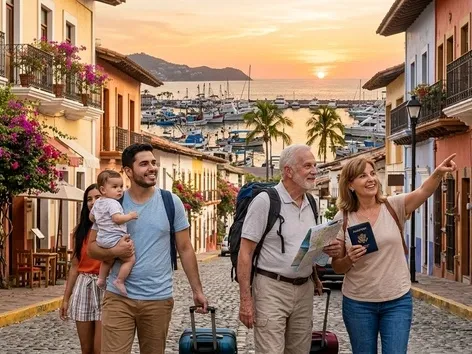
Plan B residency can be obtained for less than $100,000. Discover six residency programs in Latin America and Mauritius

A second passport usually brings to mind sums with six zeros. But there's a small group of income-based or modest-investment residency programs where a full-fledged Plan B – with a real path to permanent residence and often citizenship – costs less than a premium car. IMI put together an overview of six such routes; below is an adapted version with updates current as of September 2026.
The core selection criterion is simple: a permit that just renews forever but leads nowhere doesn't count. The focus here is on countries where residency opens a real path to permanent status or citizenship, rather than simply letting you stay a tourist longer. Half of the routes work through capital, half through proven income – so a retiree with no savings and someone holding $70,000 with no pension are effectively reading two different lists.
Five of the six countries are in Latin America, where a low entry threshold pairs with fast timelines. The sixth, Mauritius, is the only one outside the region and still fits the under-$100,000 budget.
Handling the paperwork for a move or long-term residency is a process where it's easy to slip up: an incorrectly assembled document package or the wrong type of permit often leads to rejection right at the final stage. An immigration lawyer knows the legislation of a specific country and helps prepare the full document package for your route.
On VisitWorld, you can find a specialist matched to your exact "citizenship – destination country" pair. Find your immigration lawyer on VisitWorld today.

Paraguay: Permanent Residence via a $70,000 Business Investment
Paraguay is one of the fastest routes to permanent residence in the world. Following the April 2026 reform (Resolution 0283), four investment tracks were unified into a single Investor Pass system that grants permanent residence directly, skipping the temporary stage.
The cheapest of these requires an investment of at least $70,000 in a business plan for commercial, industrial or service activity, plus the creation of at least five formal jobs for Paraguayan citizens. There's a nuance that's often overlooked: family members aren't automatically included in this route – relatives file a separate application for temporary residence, and only after two years can the principal applicant sponsor them for permanent residence.
Naturalization is possible after three years of permanent residence. The territorial tax system doesn't tax foreign-sourced income, and dual citizenship is only allowed where a reciprocity treaty exists between Paraguay and the applicant's home country – otherwise naturalization costs you your previous citizenship.
- Minimum amount: $70,000 (business investment with a business plan)
- Requirements: creation of 5 jobs, approved business plan
- Processing time: a few months, permanent residence granted immediately
- Family: not automatic – relatives file separately for temporary status, permanent residence after 2 years
- Path to PR/citizenship: PR immediately, citizenship after 3 years
Uruguay: Residency With No Investment, on $1,500 Income
Uruguay ranks third in South America on the UN Human Development Index, and it's the only country on this list that grants residency purely on income, not capital. An applicant who can show foreign monthly income of roughly $1,500 or more (a pension, rental income, dividends, or even a remote salary) receives permanent status immediately – there's no intermediate temporary permit at all. The threshold rises with family size, so a family can be included in the application by increasing the income shown.
It's worth distinguishing between two things people often confuse: immigration residency and tax residency are different statuses with different rules. The common "$100,000 investment" myth actually refers to the tax regime: under the new Law 20.446, in effect since January 1, 2026, a new resident can secure an 11-year exemption on foreign capital income tax through one of three routes – real estate from $2 million, $100,000 a year into the national innovation fund, or at least 183 days of physical presence in the country. None of these figures affect the immigration procedure itself.
Citizenship is available after three years for applicants with a family, and after five for single applicants, provided you spend more than half the year in the country.
- Minimum amount: no investment required, income from ~$1,500/month (threshold rises with family size)
- Requirements: proven regular income, certified by an accountant
- Processing time: 6–12 months, status is permanent from the start
- Family: can be included, income threshold rises accordingly
- Path to PR/citizenship: PR immediately, citizenship in 3–5 years
You can read about the pros, cons, and safety level of living in Uruguay in this article.
Visit World services for tourists, migrants, and expats: Insurance | Guides | Legal advice
Panama: The Pensionado Program From $1,000/Month
Panama's Pensionado is one of the oldest "retirement" routes in the region and, despite the name, sets no age limit for applicants – the only criterion is a lifetime pension. You need to prove a stable payment of at least $1,000 a month from a government, a company, or a private annuity, plus $250 for each dependent.
Status is granted as permanent immediately upon approval. Citizenship can be applied for after five years, though the final decision always rests with the immigration authority's discretion. Panama uses the US dollar and taxes only locally sourced income, and Law No. 6 of 1987 gives Pensionado holders discounts on hotels, restaurants, and medical services.
Formally, Panama's constitution requires naturalized citizens to give up their previous passport – in practice this is applied inconsistently, so it's worth checking the current position with a lawyer before naturalizing.
- Minimum amount: pension from $1,000/month + $250 per dependent
- Requirements: proven lifetime pension (no age limit)
- Processing time: a few months, status permanent from the start
- Family: included for an additional amount per dependent
- Path to PR/citizenship: PR immediately, citizenship after 5 years
A digital nomad visa is another accessible route for moving to Panama in 2026. The permit process is covered in the linked article.
Costa Rica: $2,500/Month or a $60,000 Deposit
Costa Rica offers two income sources to choose from for residency. The Rentista visa is granted on proven income of at least $2,500 a month for two years, or on a $60,000 deposit with a state bank, which is drawn down gradually over that period – unlike the Paraguay or Ecuador investment routes, nothing is left of this money for the applicant at the end of the term. Retirees can instead choose Pensionado status with a lifetime pension of at least $1,000 a month.
Both routes start with temporary residency: the move to permanent status comes after three years, citizenship after seven, with a Spanish-language and civics exam (shortened to five years for citizens of Central America and Ibero-America). The Rentista permit needs renewing every two years, and every resident must register with the state healthcare system and pay contributions.
- Minimum amount: $2,500/month income or a $60,000 deposit (Rentista); $1,000/month pension (Pensionado)
- Requirements: registration with the state health insurance system, renewal every 2 years
- Processing time: a few months to temporary status
- Family: included on proven income
- Path to PR/citizenship: PR after 3 years, citizenship after 7 (5 for Ibero-Americans)
Ecuador: Investment From $48,200 and Your Own Passport
Ecuador has one of the lowest investor-visa thresholds in the world: the amount is pegged to 100 times the country's minimum monthly wage, which works out to roughly $48,200 for 2026 and is adjusted annually – so it's worth budgeting some buffer for future increases. The capital can be placed in a two-year bank deposit, real estate, or a stake in a local company, with no requirement to run the business personally.
The move to permanent residency comes after 21 months of continuous temporary status – continuity is the key word here: the rules allow time outside the country while the visa is valid, but overly long absences reset the accrued term. Ecuador uses the US dollar, allows dual citizenship, and its passport provides visa-free access to 92 destinations.
It's also worth knowing about the temporary tax residency regime, in effect since January 2024: for five years it taxes only Ecuador-sourced income for those who have never previously been a tax resident anywhere else – and it applies both to the $150,000-plus investment route and to the option with proven income of at least $2,500 a month.
- Minimum amount: $48,200 (2026, indexed annually)
- Requirements: deposit, real estate, or company stake; continuity of residence
- Processing time: PR after 21 months of temporary status
- Family: can be included in the application
- Path to PR/citizenship: PR after 21 months, citizenship via the standard procedure
Mauritius: $2,000/Month Outside Latin America
Mauritius is the only country on this list outside the Americas, and it's also the simplest of the six programs in terms of presence requirements. Applicants aged 50 and up just need to transfer $2,000 a month into a Mauritian bank account to obtain a 10-year residence permit with no minimum physical presence requirement.
The island draws interest for its strong financial system, English-speaking administration, and absence of capital gains, inheritance, or wealth taxes. A move to the 20-year permanent permit is possible after five years, but total transfers over that period must reach at least $200,000 – the $2,000 monthly minimum alone isn't enough, you need to exceed the threshold. Citizenship is available after five years of residence within the preceding seven years (plus the last 12 months continuously), and since 2022 naturalization no longer requires giving up your previous passport.
- Minimum amount: $2,000/month (retirement route, age 50+)
- Requirements: regular transfers to a Mauritian account, no presence requirement
- Processing time: issued for 10 years at once
- Family: assessed on a case-by-case basis
- Path to PR/citizenship: PR after 5 years (with $200,000 in cumulative transfers), citizenship after 5 years of residence
Details of the "Mauritius Golden Visa 2026" program are covered in our previous piece.
Which Options Didn't Make the Cut?
A few popular destinations were deliberately left off this list. Thailand's Elite Visa and Malaysia's MM2H buy long-term stay, but neither leads to permanent residence or citizenship – they function as renewable visas rather than a Plan B in the full sense. The cheapest MM2H tier, in Johor's special economic zone, starts at $32,000 and fits the budget, but likewise fails the permanence test.
Georgia's real-estate investment threshold rose to $150,000 as of March 2026 – over the limit here, and it formally only grants a short-term permit anyway: reaching permanent status there takes ten years. Cambodia's 10-year visa costs exactly $100,000 – right at the ceiling of this budget, not below it.
The only EU program within the limit is Latvia's business route (about $64,500), but a new immigration law shortens the permit's validity from five years to two, so it, too, lacks permanence. Balkan options – Serbia from €50,000, Albania with no minimum amount – are cheaper than everything above but fall outside the focus of this overview. And Europe's "income visas" – Portugal's D7, Spain's non-lucrative visa, Italy's elective residence, Greece's financially-independent-persons permit – fit the budget but require genuine physical presence in the country, making them better suited to people planning to actually relocate rather than keep a Plan B in reserve.
Also read: What is a Golden Visa, and why would a foreigner need one?
Which Route to Choose?
If you want the fastest permanent residence with a clear path to citizenship, Paraguay grants permanent status within a few months and a passport after three years, though the price is a running business with local staff. Ecuador is the alternative for passive capital with no business activity, but with the strictest continuity-of-residence requirements among all six options. Panama and Costa Rica turn a pension of $1,000 a month or more into legal status in a dollarized economy, and of the two, Panama is less demanding on presence. Where stability and quality of life are the priority and the goal is citizenship specifically, Uruguay is the best pick, provided you're willing to spend a substantial part of the year in the country. And for a base outside the Americas with a strong financial system, Mauritius is worth a look – if the applicant is already over 50.
Each program in this overview carries its own risk logic: where it's better to keep capital untouched, where continuity of residence matters more than the investment amount, and where tax residency needs to be kept separate from immigration status, as in Uruguay. Matching these nuances to your citizenship, budget, and presence plans on your own is hard, and the cost of a mistake is lost time and a rejected application.
An immigration lawyer on VisitWorld specializes in exactly this kind of analysis: assessing which program genuinely fits your situation, preparing documents to a specific country's requirements, and guiding the process through to status – from income-based residency in South America to investor routes like Paraguay's or Ecuador's.
Select your citizenship and destination country in the VisitWorld search and get a personal consultation with an immigration lawyer today.
A reminder: the best countries to move to in 2026 have updated their visa and investment program requirements. We've already covered the current requirements for expats across 8 destinations.
Photo - generated by Gemini
Products from Visit World for a comfortable trip:
Travel guide for 200 countries;
Legal advice from a local specialist on visa and migration issues;
Travel insurance around the world (please select the country of interest and citizenship to receive services);
Medical insurance all over the world.
We monitor the accuracy and relevance of our information, so if you notice any errors or inconsistencies, please contact our hotline.
Frequantly
asked questions
How is a Plan B different from an ordinary tourist or long-term visa?
Can you have several residency programs in different countries at the same time?
Why are income-based programs considered an underrated Plan B option compared with investment-based programs?
Recommended articles
2 min
Popular
Argentina’s Golden Passport Program: Could It Become the Biggest Investment Migration Story of 2027?
Argentina is getting closer to launching its own citizenship-by-investment program, which could be the first in South America. Find out when the program is expected to launch, what terms officials are discussing, what benefits an Argentine passport could provide, and why the new initiative has already caught the attention of investors from around the world
17 Jun. 2026
More details3 min
Investment
Greece's Golden Visa 2026: New Thresholds and Faster Processing
Greece has updated the eligibility criteria for the “Golden Visa” and expedited the application review process. Learn more about the program’s new terms for 2026
30 Aug. 2026
More details2 min
Residence permit
Latvia Closes Its Real Estate Golden Visa on September 15: What We Know
Latvia has adopted a new immigration law and closed the Golden Visa route through real estate investment. Find out which investment routes will remain available in 2026
09 Sep. 2026
More details2 min
Residence permit
Canada’s New Start-Up Visa Pilot: What We Know
Canada has paused the Start-Up Visa program and is preparing a pilot program for high-impact startups. Find out what is already known about the new criteria in 2026
19 Sep. 2026
More detailsAll materials and articles are owned by VisitWorld.Today and are protected by international intellectual property regulations. When using materials, approval from VisitWorld.Today is required.