

TOP 20 Best Cities to Live in the World in 2026
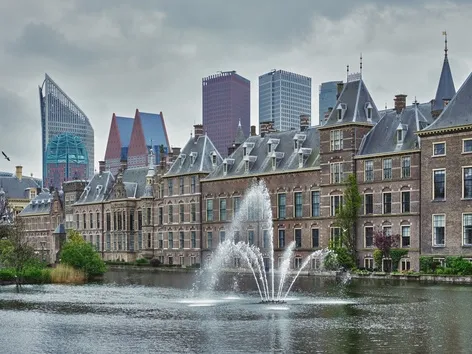
Numbeo has ranked the best cities in the world to live in 2026 based on safety, income and environmental quality. Find out which cities made the TOP 20 and why

Numbeo, the cost-of-living analytics platform, has released its latest quality of life ranking, comparing 303 cities worldwide across eight key criteria – from purchasing power to climate. The 2026 quality of life index shows that the entire top ten is made up of European cities, with the Netherlands holding six of those positions. The Hague remains the leader with a score of 227.4 – the city has held first place for the fourth year in a row.
Let's take a closer look at the extended top 20 cities with the best living conditions and analyze what exactly secured their positions.
Planning to start a company or relocate your business to one of the cities in this ranking? A personal business lawyer can help you navigate registration, choosing a tax system, and managing document flow in a new market. The specialist guides you through the entire process – from initial consultations to obtaining a work visa. This is especially relevant when relocating to countries with high quality-of-life scores, where bureaucratic procedures can differ significantly from what you're used to.
Find a personal lawyer for your business today.

Top 5: the Dutch-Belgian club of leaders
The Hague (227.4 points) tops the list thanks to a combination of high purchasing power (152.1) and the best climate index in the entire ranking (90.6). Commute time here is just 20.4 points on the burden scale, and pollution levels are among the lowest in the top 20. The city traditionally combines compactness with access to international institutions and the coast.
Eindhoven (218.6) takes second place primarily due to its purchasing power score – 151.8, almost on par with the leader. Safety (77.6) and healthcare (76.0) levels here are also consistently high. The city is known as the country's tech hub, which positively affects residents' incomes.
Rotterdam (214.7) shows one of the best healthcare scores in the ranking – 80.0 points. At the same time, pollution levels here are higher than in neighboring Dutch cities (23.8), which slightly holds back the overall score. The city's port past still affects the environmental component of the index.
Utrecht (213.3) stands out for high purchasing power (153.8) – one of the best scores in the entire top 20. However, pollution is also noticeable here (28.8), and the property price-to-income ratio (6.9) already puts a tangible strain on residents' budgets. A compact historic center offsets these downsides with convenient logistics.
Ghent (212.7) is the first Belgian city in the ranking, with healthcare at 80.2 points and safety at 74.8. It lost a few positions due to a high pollution score (32.3) compared to its Dutch neighbors. For Belgium, this is the best result in the top 20.
Also read: the best cities in Australia to live in 2026.
Visit World services for tourists, migrants, and expats: Insurance | Guides | Legal advice
Places 6–10: Luxembourg, Germany, and Sweden
Luxembourg (211.7) leads in purchasing power among the entire top 10 – 164.3 points – while also having one of the highest cost-of-living scores (80.7). It's a classic example of a city with high incomes that are largely offset by expensiveness. Commute time (27.8) here is also among the longest in the leading group.
Stuttgart (209.5) shows even higher purchasing power – 171.4, the best among all 20 cities in the ranking. However, pollution (34.8) and commute time (24.9) noticeably weigh on the overall score. The city's industrial profile has traditionally been tied to exactly these kinds of trade-offs.
Groningen (208.1) stands out for the shortest commute time among the top 10 – just 19.2 points – and a relatively low pollution level (19.4). Purchasing power here is more modest (126.1) compared to other Dutch cities on the list. This student-spirited city makes up for it with affordability and comfort.
Amsterdam (206.4) ranks ninth, even though the cost of living here is among the highest in the top 10 – 80.7. A high climate index (87.5) and strong healthcare (75.3) support the overall score. The city's popularity among foreigners traditionally puts pressure on property prices.
Gothenburg (206.0) closes out the top 10 with the lowest safety score among the leaders – 54.2 points. At the same time, purchasing power here is high (164.0), and the cost of living is relatively moderate (63.3). This is the first Swedish city to make the ranking.
Top travel destinations for 2027 in the roundup at the link.
The second ten opens with Vienna
Vienna (205.5) is traditionally considered one of the most livable cities in Europe, and the ranking confirms this: healthcare at 79.9 and the lowest pollution score in this group – 15.8. The main limiting factor remains the housing price-to-income ratio (14.8) – one of the highest in the entire top 20.
Frankfurt (204.1) attracts with high purchasing power (164.0), typical for financial centers. Safety here is noticeably lower – 54.4, and pollution (32.0) is also significant. The status of Europe's banking capital comes with its own environmental and social cost.
Nuremberg (203.9) offers more balanced figures: purchasing power of 158.1 with a moderate cost of living (69.2). Commute time (25.3) and pollution (27.2) sit at an average level for Germany. The city appears in international rankings less often, so this position is a pleasant surprise.
Leipzig (203.6) shows one of the lowest cost-of-living scores among the German cities in the ranking – 66.3. Safety here is somewhat behind its neighbors (58.9), but affordability offsets this downside. The city is actively developing as an alternative to more expensive German metropolises.
Munich (203.1) combines high safety (78.4) with one of the best healthcare scores in the group (77.4). But it also has the highest property price-to-income ratio among the top 15 – 13.4, and commute time (28.2) is also notable. The city's economic appeal traditionally increases pressure on the housing market.
8 destinations offering real paths to relocation in 2026 – here.
Closing out the top 20: Germany, Scandinavia, Austria
Düsseldorf (202.9) holds its position thanks to a good climate index (86.4) and relatively stable safety (65.6). Pollution (29.5) and property prices relative to income (9.1) are the main weak points. The city's business reputation supports consistently high purchasing power.
Helsinki (201.5) stands out with the lowest pollution score in the entire top 20 – 12.5 points. At the same time, the climate index here is the weakest in the top 20 (62.8) – long Finnish winters take their toll. Healthcare (80.1) remains one of the city's strongest points.
Copenhagen (201.1) has the highest cost of living among all 20 cities in the ranking – 88.9 points. This is offset by strong healthcare (75.2) and a good climate score (83.7). The Danish capital traditionally combines high incomes with high expenses.
Bergen (200.2) shows a record-high cost of living – 94.5, the highest on the entire list. However, commute time here is also among the longest (36.4), typical for a Norwegian city among the fjords. Purchasing power (148.6) partly offsets these expenses.
Villach (200.2) is the ranking's surprise: a small Austrian city ties for 19th–20th place with Norway's Bergen. Its best trait is a low commute time (16.0), one of the lowest in the top 20. On the other hand, pollution here is noticeable (34.0), which is atypical for a less industrial city.
What criteria does Numbeo use to evaluate cities?
The ranking's methodology takes into account eight indicators:
- purchasing power;
- safety level;
- healthcare quality;
- cost of living;
- housing price-to-income ratio;
- commute time to work;
- environmental pollution level;
- climate index.
Why The Hague became the world leader
Overall, the Netherlands also ranks first in the global quality of life index among countries, which partly explains the dominance of Dutch cities at the top. The Hague's score rose from 217.1 in 2023 to 230.1 in the early 2026 ranking release – though according to the latest data as of September, the city's score stands at 227.4, and the upward trend continues. The city's main advantages are high purchasing power, a reliable healthcare system, and a relatively short commute time. For international professionals and businesses, this combination makes The Hague one of the most predictable cities to relocate to in Europe.
Cities like The Hague, Utrecht, or Vienna attract not only with high quality-of-life scores but also with a stable business environment – which is exactly why many entrepreneurs consider relocating their companies here. However, business registration, taxation, and hiring employees in a new country require in-depth knowledge of local legislation.
A personal business lawyer minimizes tax risks, handles notarial procedures, and helps resolve disputes with counterparties should they arise. Such a specialist also handles the remote launch of a representative office – allowing you to test a new market before physically relocating. And once the decision to relocate is finalized, the lawyer supports the company at every stage – from choosing a legal business structure to actually opening an office abroad.
Start your business relocation with reliable legal support – contact a personal lawyer now.
A reminder! Oxford Economics has released its ranking of the world's best cities for 2026, evaluating 1,000 major urban economies across five key criteria. We've already covered the global leaders, Europe's strongest cities, and the places climbing the rankings fastest.
Photo – Magnific
Products from Visit World for a comfortable trip:
Travel guide for 200 countries;
Legal advice from a local specialist on visa and migration issues;
Travel insurance around the world (please select the country of interest and citizenship to receive services);
Medical insurance all over the world.
We monitor the accuracy and relevance of our information, so if you notice any errors or inconsistencies, please contact our hotline
Frequantly
asked questions
Does the size of a city affect its position in the Numbeo ranking?
Why do some wealthy countries not rank near the top?
How often is the Numbeo ranking updated, and can cities’ positions change throughout the year?
Recommended articles
2 min
Expats
Where to Move in 2026: 8 Countries for Expats
The best countries to move to in 2026 have updated their visa and investment program requirements. Find out the current requirements for expats in 8 destinations
18 Sep. 2026
More details3 min
Popular
Business Grants in Europe in 2026: Where to Get Funding
In Europe, entrepreneurs can secure funding ranging from several thousand to tens of millions of euros to launch, develop, and scale their businesses. In 2026, funding is available for AI, medtech, mobility, deep tech, the creative industries, and other sectors. Learn more about current grants and business support programs in Europe, funding amounts, deadlines, and applicant requirements
16 Sep. 2026
More details2 min
Residence permit
Canada’s New Start-Up Visa Pilot: What We Know
Canada has paused the Start-Up Visa program and is preparing a pilot program for high-impact startups. Find out what is already known about the new criteria in 2026
19 Sep. 2026
More details3 min
Residence permit
Plan B Under $100,000: 6 Countries for a Second Home
Plan B residency can be obtained for less than $100,000. Discover six residency programs in Latin America and Mauritius
20 Sep. 2026
More detailsAll materials and articles are owned by VisitWorld.Today and are protected by international intellectual property regulations. When using materials, approval from VisitWorld.Today is required.