

The Best Cities in Australia to Live In in 2026
Table of contents
- Sydney: The Largest Job Market and the Most Expensive Housing
- Melbourne: A Strong Job Market and Well-Developed Transportation System
- Brisbane: Rapid Economic Growth and 50-Cent Public Transportation
- Perth: High Salaries in the Resource Sector and Expensive Housing
- Adelaide: More Affordable Housing and a Smaller Job Market
- Canberra: High Salaries, but Some Job Openings Are Closed to Expats
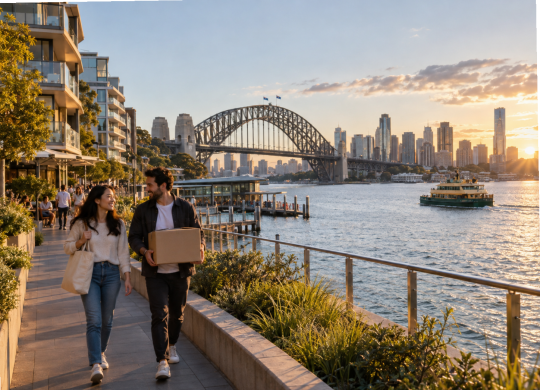
Sydney offers the largest job market, Perth offers high salaries in the resources sector, and Adelaide offers more affordable housing. Learn more about Australia’s best cities to live in, rental costs, employment, transportation, and family-friendly conditions

The best cities in Australia for expats to live in are Sydney, Melbourne, Brisbane, Perth, Adelaide, and Canberra. Sydney and Melbourne offer the most job openings, Perth stands out for its high salaries, Brisbane for its rapid development, Adelaide for more affordable housing, and Canberra for stable employment. The choice depends on your profession, budget, climate preferences, and willingness to drive.
In a previous article, we discussed the world’s best cities to live in, according to Generation Z.
Immigration rules vary depending on the country, the reason for relocation, and the applicant’s personal situation. A Visit World immigration attorney will help you choose the appropriate type of visa or residence permit, verify the requirements, and prepare the necessary documents. Professional consultation allows you to identify potential risks in advance and avoid mistakes when submitting your application.

Sydney: The Largest Job Market and the Most Expensive Housing
Sydney is located on Australia’s southeastern coast and stretches around a large natural harbor. It’s not just the central business district near the Opera House. The metropolitan area encompasses the Inner West, North Shore, Eastern Suburbs, Parramatta, and dozens of outlying residential neighborhoods.
Living in Sydney provides access to the country’s largest job market, an international airport, leading universities, and a well-developed public transit system. The main trade-off is expensive housing. Moving 20–30 kilometers from the city center reduces rent but can add over an hour to your daily commute.
Housing and Monthly Expenses
A one-bedroom apartment in the CBD, Surry Hills, Darlinghurst, or near the coast can cost A$850–950 per week. In Parramatta, Liverpool, Bankstown, and other western suburbs, options are available for A$550–700. Rents are typically higher near train stations.
Estimated cost of living in Sydney for one person:
- One-bedroom apartment – A$650–900 per week, or approximately A$2,820–3,900 per month
- Room in a shared apartment – A$300–500 per week
- Groceries – A$500–750 per month
- Electricity, water, gas, and internet – A$250–380
- Other expenses (excluding rent) – A$1,500–2,000
- Comfortable monthly budget for a private apartment – A$4,500–5,800
- GST – 10%, usually already included in the listed price
To secure a lease, you’ll often need proof of income, references, and a history of previous leases. Upfront, you’ll pay a security deposit—usually equivalent to four weeks’ rent—as well as rent for the first few weeks of your stay. Newcomers without a local rental history find it harder to compete for popular apartments.
Salaries and Employment
Jobs in Sydney are most readily available in finance, IT, consulting, healthcare, construction, education, logistics, and the creative industries. The CBD and Barangaroo are home to banks, insurance companies, and international corporations. Parramatta has emerged as a distinct business hub in the western part of the city.
Experienced professionals in technology, finance, engineering, and project management earn approximately A$90,000–150,000 gross per year. For administrative, sales, and customer service positions, the typical range is A$60,000–85,000. In medicine, construction, and certain technical professions, salaries can exceed A$120,000.
A high income does not guarantee a comfortable budget. On a salary of A$80,000, rent for a private apartment can take up about half of your after-tax income. To live on your own, it is advisable to aim for an annual income of at least A$100,000 or look for housing outside the central districts.
Transportation, English, and Family-Friendly Conditions
The transportation system includes commuter trains, subways, buses, light rail, and ferries. You can pay for all major trips with an Opal card or a debit card. The weekly cap for adults is A$50, but a separate fee for airport stations can increase costs.
If you don’t have a car, it’s convenient to live near a train or subway station. In outlying areas, routes often require transfers, and evening service is less frequent. Owning a car adds costs for fuel, insurance, tolls, and parking.
A strong command of English is required for employment. The city has large Chinese, Indian, Filipino, Vietnamese, and other international communities, but they are no substitute for professional-level language skills.
Sydney offers excellent public and private schools, universities, hospitals, beaches, and parks. At the same time, conditions for families depend on immigration status. Holders of certain temporary visas must pay tuition fees for their children to attend public schools, and not all newcomers are eligible for Medicare or the Child Care Subsidy. The full cost of daycare without a subsidy often exceeds A$150 per day.
In our previous article, we provided a step-by-step guide on opportunities for moving to Australia in 2026.
Melbourne: A Strong Job Market and Well-Developed Transportation System
Melbourne is located on the coast of Port Phillip Bay and is the capital of the state of Victoria. The central business district is surrounded by dense inner-city neighborhoods, including Carlton, Fitzroy, Richmond, Southbank, and South Yarra. Beyond these lies a large suburban area that stretches for dozens of kilometers.
Life in Melbourne is ideal for professionals, students, and families who need a large job market and convenient public transportation. Housing here is cheaper than in Sydney, but there remains a shortage of rental apartments. In the central districts, you can get by without a car, whereas in the outer suburbs, one is often necessary.
Housing and Monthly Expenses
The median weekly rent in Melbourne in 2026 is about A$600. One-bedroom apartments in the CBD, Southbank, Docklands, and inner-city neighborhoods typically cost A$500–700. More affordable options are available in Footscray, Sunshine, Broadmeadows, Dandenong, and other outlying areas.
Estimated cost of living in Melbourne for a single person:
- One-bedroom apartment – A$450–700 per week, or approximately A$1,950–3,030 per month
- Room in a shared apartment – A$250–420 per week
- Groceries – A$450–700 per month
- Electricity, water, gas, and internet – A$250–380
- Other expenses (excluding rent) – A$1,400–1,900
- Comfortable monthly budget for a private apartment – A$3,600–4,800
- GST – 10%, usually included in the listed price
Older homes in the inner suburbs may have poor insulation. In winter, this increases heating costs, although temperatures rarely drop below freezing. Before renting, it’s a good idea to check the heating system and the home’s energy efficiency.
Salaries and Employment
Jobs in Melbourne are available in finance, IT, healthcare, education, construction, biotechnology, logistics, and the creative industries. The city is also a major hub for pharmaceuticals, scientific research, design, film, and professional services.
Experienced IT professionals, engineers, financial analysts, and managers earn approximately A$85,000–145,000 gross per year. For administrative positions, sales, and customer service, the typical range is A$60,000–85,000. In medicine, construction, and cybersecurity, earnings can exceed A$120,000.
Competition for office jobs is high. For regulated professions—including medicine, teaching, and some engineering fields—proof of qualifications or local registration may be required. In skilled trades, employers often require Australian safety certifications.
Transportation, English, and Family Conditions
The network includes commuter trains, trams, and buses. In the central Free Tram Zone, tram rides are free. Starting in June 2026, the daily full-fare cap will be reduced to A$5.70, and passengers under 18 ride public transportation for free. These discounted rates are set to remain in effect until 2027.
In the CBD and inner-city areas, driving causes more expenses than benefits. Parking is expensive, and trams and trains cover the main routes. In the suburbs, buses run less frequently, so families often use cars.
English is required for work, but the international environment makes it easier to adapt. Melbourne is home to large Chinese, Indian, Vietnamese, Greek, and Italian communities.
The city has strong public schools, hospitals, and universities. The cost of renting a family home is lower than in Sydney, but the full price of daycare without a subsidy often exceeds A$140 per day. Access to public education, Medicare, and the Child Care Subsidy depends on your visa type and residency status.
The climate is changeable: a cool morning can turn into a hot day and rain in the evening. In summer, temperatures sometimes exceed +40 °C, and strong winds can carry smoke from wildfires.
Learn more about the new priorities for Australian work visas in 2026 by following the link.
Brisbane: Rapid Economic Growth and 50-Cent Public Transportation
Brisbane is the capital of Queensland and Australia’s third-most populous city. It is located on the Brisbane River, approximately 15 km from the coast. It’s not a beach city: you’ll need to drive or take a train to reach the Gold Coast or the Sunshine Coast.
The city is actively expanding its transportation and sports infrastructure ahead of the 2032 Olympic Games. The population is growing, new jobs are being created, but at the same time, housing costs are rising. Life in Brisbane can no longer be called a cheap alternative to Sydney.
Housing and Monthly Expenses
The median weekly rent in Brisbane has reached nearly A$680. A one-bedroom apartment typically rents for A$500–650. In central areas—particularly Brisbane City, Fortitude Valley, Newstead, and South Brisbane—new apartments can cost over A$700 per week.
Cheaper options can be found in Chermside, Moorooka, Mount Gravatt, Nundah, and the Logan suburbs. However, savings on rent must be weighed against the cost of a car and the commute time to work.
Estimated cost of living in Brisbane for one person:
- One-bedroom apartment – A$500–700 per week, or A$2,170–3,030 per month
- Room in a shared apartment – A$250–400 per week
- Groceries – A$450–700 per month
- Utilities and internet – A$250–400
- Other expenses excluding rent – A$1,300–1,800
- Comfortable overall budget – A$3,600–4,800 per month
- GST tax on most goods and services – 10%
In the summer, air conditioning accounts for a significant portion of the electricity bill. Before renting, it’s also a good idea to check the address on a flood risk map. Areas near rivers and waterways may be affected during heavy rainfall.
The rental market remains competitive. Landlords typically require proof of income, references from previous landlords, a security deposit, and rent paid in advance.
Salaries and Employment
Major employers operate in construction, healthcare, education, logistics, financial and professional services, IT, energy, and tourism. Infrastructure projects leading up to the Olympics are driving demand for engineers, project managers, construction workers, and technical specialists.
Skilled workers typically earn A$80,000–140,000 gross per year. In healthcare, engineering, cybersecurity, and construction project management, salaries can exceed A$120,000. For administrative positions, retail, hospitality, and customer support, the typical range is A$58,000–82,000.
Working in Brisbane often requires local licenses or professional registration. This applies to doctors, nurses, teachers, electricians, and some construction trades. A foreign degree does not always entitle you to start working immediately.
To rent an apartment on your own, it’s advisable to earn at least A$85,000–95,000 per year. With a lower income, shared housing or the outlying suburbs remain more realistic options.
Transportation, English, and Family-Friendly Conditions
Buses, commuter trains, and ferries are part of the Translink network. A standard fare costs A$0.50 regardless of the number of zones. A discounted fare is available at all times, but it does not apply to the private Airtrain service to the airport.
In the city center and areas along the rail lines, it’s possible to live without a car. In the outer suburbs, public transit routes are less convenient, so families often need a car. This adds fuel, registration, insurance, maintenance, and tolls to their regular expenses.
English is required for most job openings. The international community helps with adaptation, but limited language skills significantly narrow job options outside of tech and engineering teams.
Brisbane attracts families with its warm climate, more spacious housing, and abundance of parks. Public schools are assigned based on residential zones, so you should verify your address before signing a lease. Holders of certain temporary visas may be eligible to receive financial assistance for their children’s education.
The full cost of daycare is often A$130–170 per day before subsidies. Eligibility for the Child Care Subsidy and Medicare depends on immigration status. Climate-related drawbacks include high humidity, heat, severe thunderstorms, and the risk of flooding.
Previously, we discussed the Australian job market in 2026: how to obtain a work visa, which professions are in demand, and what has changed for foreigners.
Perth: High Salaries in the Resource Sector and Expensive Housing
Perth is located on the coast of the Indian Ocean and is the capital of Western Australia. It is separated from the nearest major Australian cities by thousands of kilometers. This geographical isolation affects the cost of airfare, shipping, and the choice of employers.
The city stretches along the coast and the Swan River. The central districts are compact, but most residential suburbs are located far from the CBD. Life in Perth is best suited for professionals in the mining, energy, construction, and engineering industries.
Housing and Monthly Expenses
According to REIWA, the median rent for an apartment in Perth is about A$700 per week, and for a one-bedroom apartment, it is A$620. In the Perth CBD, East Perth, South Perth, Subiaco, and coastal areas, the price of quality housing often exceeds A$700.
More affordable apartments can be found in Midland, Armadale, Gosnells, Balga, and parts of the northern suburbs. However, the commute to work can exceed 20–30 km, so savings on rent should be weighed against the cost of owning a car.
Estimated cost of living in Perth for one person:
- One-bedroom apartment – A$550–750 per week, or A$2,380–3,250 per month
- Room in a shared apartment – A$250–400 per week
- Groceries – A$450–700 per month
- Utilities and internet – A$250–400
- Other expenses (excluding rent) – A$1,300–1,800
- Comfortable overall budget – A$3,900–5,200 per month
- GST on most goods and services – 10%
The rental market remains tight. In September 2026, there were approximately 2,000 properties available throughout the metropolitan area. Prospective tenants are typically required to provide proof of income, references, a security deposit, and several weeks’ rent in advance.
Electricity costs rise in the summer due to air conditioning. When choosing a home, it’s worth checking the insulation, the availability of shade, and the efficiency of the cooling system.
Salaries and Employment
Perth’s economy is closely tied to the mining of iron ore, gold, lithium, natural gas, and other raw materials. The city is home to the offices of major resource companies, engineering contractors, and industrial equipment suppliers.
Jobs in Perth are also available in healthcare, construction, logistics, education, the public sector, and information technology. Western Australia faces a shortage of nurses, doctors, engineers, electricians, mechanics, welders, and construction workers.
Qualified professionals typically earn A$90,000–160,000 gross per year. Engineers, geologists, project managers, and mining industry workers can earn A$130,000–200,000 or more. For administrative, retail, and customer service positions, the typical range is A$60,000–85,000.
Some high-paying positions involve a fly-in, fly-out schedule. Employees live at a remote industrial site for several weeks and then return to Perth. The high salary compensates for long shifts, physical labor, and extended time away from home.
Foreign professionals should verify in advance whether their qualifications will be recognized. For regulated professions, a local license, professional registration, or additional training may be required.
Transportation, English, and Family Support
The Transperth system integrates trains, buses, and ferries. As of January 1, 2026, the maximum standard fare is A$3.50 in cash or A$2.80 with SmartRider and Autoload. A daily cap costs A$7.
Every Sunday, rides are free for passengers with a SmartRider or a contactless bank card. There is also a free transit zone in downtown Perth, and free CAT buses operate there.
The rail network is convenient for travel along the main lines. However, in outlying suburbs, a car is often necessary. When choosing a place to live, it’s worth checking not only the distance to the city center but also access to a train station and bus frequency.
Most job openings require a strong command of English. In the mining and construction industries, it’s also important to understand occupational safety instructions. Insufficient language skills can be a direct barrier to employment.
Perth offers families clean beaches, parks, public and private schools, universities, and a well-developed healthcare infrastructure. Enrollment in public schools is based on the neighborhood of residence. The conditions and possible fees for children of temporary residents depend on the type of visa.
The full cost of daycare is typically A$140–180 per day before subsidies are applied. Local risks include heat exceeding +40 °C, wildfires, and long distances between suburbs. Before moving, families should carefully evaluate transportation options, home cooling, and school accessibility.
In our previous article, we explained what Australia’s National Innovation Visa (NIV) is: requirements, benefits, and the application process.
Adelaide: More Affordable Housing and a Smaller Job Market
Adelaide is located between St. Vincent Gulf and the Mount Lofty Range. The city center is compact and surrounded by parkland, and the beaches of Glenelg and Henley Beach are about 20–30 minutes away.
The city is smaller and quieter than Sydney, Melbourne, and Brisbane. Life in Adelaide is well-suited for families, defense industry professionals, and people who don’t need access to the country’s largest job market. The main advantage is lower housing costs, although this gap is gradually narrowing.
Housing and Monthly Expenses
In early 2026, the median advertised rent in Adelaide reached A$620 per week. For apartments, the figure was around A$550, and for single-family homes, A$647.
One-bedroom apartments in the CBD, North Adelaide, Norwood, and coastal areas typically cost A$450–600 per week. More affordable options can be found in Salisbury, Elizabeth, Kilburn, Enfield, and parts of the southern suburbs.
Estimated cost of living in Adelaide for one person:
- One-bedroom apartment – A$450–600 per week, or A$1,950–2,600 per month
- Room in a shared apartment – A$220–350 per week
- Groceries – A$430–650 per month
- Utilities and internet – A$230–350
- Other expenses (excluding rent) – A$1,200–1,700
- Comfortable overall budget – A$3,300–4,400 per month
- GST tax on most goods and services – 10%
The most competition is for properties priced under A$500 per week. To apply, you’ll typically need proof of income, landlord references, documentation proving your right to stay in Australia, and a security deposit.
In older homes, it’s worth checking the insulation and the air conditioning system. Summer temperatures can exceed +40 °C, and poor insulation increases costs for both cooling and winter heating.
Salaries and Employment
Adelaide’s economy is driven by healthcare, education, manufacturing, the defense industry, construction, agri-processing, and the public sector. Space technology, cybersecurity, and shipbuilding are also growing sectors.
Major defense projects create demand for engineers, technicians, and specialists in software, project management, and supply chain management. At the same time, some defense positions require Australian citizenship and security clearance. Not all job openings in this sector are available to expats.
Jobs in Adelaide in medicine, elder care, education, and construction are more accessible to foreigners. However, doctors, nurses, teachers, and skilled tradespeople must undergo local recognition of their qualifications.
Experienced professionals earn approximately A$75,000–125,000 gross per year. In engineering, the defense sector, medicine, and cybersecurity, income can range from A$100,000 to A$150,000 or more. For administrative, retail, and customer service roles, the typical range is A$58,000–80,000.
Salaries are, on average, lower than in Sydney or Perth. However, with an annual income of A$80,000 or more, renting a private apartment here is a more realistic option. Finding a highly specialized job may take longer due to the smaller number of employers.
Transportation, English, and Family-Friendly Conditions
Adelaide Metro combines buses, trains, and trams. A single trip with a metroCARD costs A$4.55 during peak hours and A$2.60 during off-peak hours. The ticket is valid for two hours and allows you to transfer between different modes of transportation.
A 28-day pass costs A$119.10. Trams are free in the city center and between the CBD and South Terrace. Free City Connector buses also run through the central areas.
In the CBD and suburbs along rail and tram lines, you can get by without a car. In outlying areas, a car makes commuting to work, school, and stores much easier. Bus service there can be infrequent.
English is required for most job openings. International companies and universities have multinational teams, but limited English proficiency restricts job options in medicine, education, retail, and the service sector.
For families, Adelaide offers a compact city center, beaches, parks, and shorter distances than in Australia’s largest metropolitan areas. Public schools are assigned based on residential zones. Enrollment conditions and possible fees for children of temporary residents depend on their visa category.
Unsubsidized daycare typically costs A$130–170 per day. Eligibility for the Child Care Subsidy and Medicare should be verified before moving. For families with children, the school district and access to public transportation are often more important than proximity to the CBD.
In our previous article, we discussed the safest countries in the event of a global catastrophe.
Canberra: High Salaries, but Some Job Openings Are Closed to Expats
Canberra is located between Sydney and Melbourne and has no access to the ocean. The Australian capital was designed around Lake Burley Griffin, the government quarter, and several separate urban centers. There is no dense metropolitan development here, and residential areas are separated by green spaces.
The city’s economy relies on federal agencies, defense, consulting, and companies that work on government contracts. Life in Canberra offers stability and high incomes. At the same time, only part of the local job market is open to foreigners.
Housing and Monthly Expenses
In the second quarter of 2026, the median weekly rent for an apartment in Canberra was approximately A$595. The median price of a single-family home reached A$700 at the start of the year.
The most expensive apartments are concentrated in City, Braddon, Kingston, Barton, and near the lake. More affordable options can be found in Belconnen, Woden, Tuggeranong, Gungahlin, and older outer suburbs. However, the price difference should be weighed against transportation accessibility.
Estimated cost of living in Canberra for one person:
- One-bedroom apartment – A$500–650 per week, or A$2,170–2,820 per month
- Room in a shared apartment – A$250–380 per week
- Groceries – A$450–700 per month
- Utilities and internet – A$250–400
- Other expenses excluding rent – A$1,300–1,800
- Comfortable overall budget – A$3,600–4,800 per month
- GST on most goods and services – 10%
Approximately A$600 per week is the median rent for all apartments, not just studios. Compact apartments can be found for less, but new properties in central areas often cost more than A$650.
Canberra has colder winters than most cities on this list. At night, temperatures can drop below 0 °C. Before renting, it’s worth checking the apartment’s insulation, heating system, and energy efficiency.
Salaries and Employment
Canberra’s largest employers include federal agencies, the defense forces, universities, hospitals, consulting firms, and IT contractors. Professionals in cybersecurity, data analysis, project management, public policy, and procurement are particularly in demand.
Qualified professionals typically earn A$90,000–150,000 gross per year. In IT, consulting, the defense sector, and senior government positions, income can exceed A$150,000. For administrative and entry-level office positions, the typical range is A$65,000–95,000.
However, working in Canberra has a significant restriction for expats. Many positions in federal agencies require Australian citizenship. Positions related to defense, cybersecurity, and classified government information also require security clearance.
Typically, only Australian citizens can obtain such clearance. Exceptions are possible but rarely granted. As a result, the high average salary in Canberra does not mean that all well-paying jobs are open to foreign candidates.
More realistic fields for expats include medicine, education, construction, the hospitality industry, the private IT sector, and international consulting. Before moving, it’s advisable to look for job openings that do not explicitly require Australian citizenship or security clearance.
Transportation, English, and Family-Friendly Conditions
Canberra’s public transportation system consists of buses and a light rail line connecting the city center to Gungahlin. As of January 2026, a MyWay+ fare costs A$3.41 during peak hours and A$2.70 during off-peak hours.
The daily cap is A$10.16 on weekdays and A$6.22 on weekends and public holidays. After 40 paid trips within a calendar month, subsequent trips are free. Transfers between buses and the tram within 90 minutes are included in the fare.
For residents of Gungahlin and areas along the tram line, public transportation is convenient. In other parts of the city, driving often saves time. Canberra has a well-developed network of bike paths, but distances and winter weather limit daily bicycle use.
English is essential for virtually all professions. Government service and consulting require a particularly high level of written English, as the work involves preparing reports, analytical documents, and official correspondence.
Canberra offers families spacious neighborhoods, parks, bike routes, public and private schools, universities, and major medical centers. School districts affect enrollment eligibility, so you should verify your address before renting a home.
A daycare center without a subsidy can cost A$140–180 per day. Eligibility for the Child Care Subsidy and Medicare depends on immigration status. Separate payment terms for public schools may also apply to children of temporary residents.
Are you planning to relocate, legalize your stay, or renew your immigration documents? Contact a Visit World immigration lawyer. A specialist will analyze your situation, explain your available options, and help you complete the necessary procedures in accordance with the laws of your chosen country. Get personalized advice and a clear plan of action.
We remind you! New economic indicators show which countries have been able to increase their GDP and which have lost ground due to inflation and slowing growth. Ranking of the richest countries in the world in 2026 — follow the link.
Products from Visit World for a comfortable trip:
Travel guide for 200 countries;
Legal advice from a local specialist on visa and migration issues;
Travel insurance around the world (please select the country of interest and citizenship to receive services);
Medical insurance all over the world.
We monitor the accuracy and relevance of our information, so if you notice any errors or inconsistencies, please contact our hotline
Frequantly
asked questions
Which Australian city has the most affordable rent?
Where in Australia can expats earn the most?
In which Australian city can you live without a car?
Which Australian city is best suited for families?
Can a foreigner find a job in Australia with only a knowledge of English?
How much money does one person need to live in Australia?
Which Australian city is the best choice for an expat moving there for the first time?
Recommended articles
2 min
Work
Australia has a high standard of living and good career prospects, which is why this country attracts tens of thousands of migrants from all over the world every year. Learn more about the current rules for the employment of foreigners in Australia in 2026, the main changes in migration policy, popular categories of work visas, as well as professions that remain the most in demand in the Australian labor market
12 Jun. 2026
More details3 min
Expats
How to move to Australia in 2026: a step-by-step guide for migrants
Australia offers many opportunities for work, study and a fresh start abroad, but the immigration rules are quite strict. Having a clear understanding of the stages of relocation will help you save time, money, and nerves. Learn more about the main steps to move to Australia
27 Feb. 2026
More details3 min
Expats
Australia's National Innovation Visa (NIV): Requirements, Benefits, and Application Process
Australia has offered highly skilled professionals and entrepreneurs from around the world a new pathway to permanent residency—without a points test, employer sponsorship, or a fixed investment threshold. The National Innovation Visa grants resident rights from day one and opens access to one of the most dynamic economies in the Asia-Pacific region. Learn more about the conditions, requirements, and application process for the Australian NIV in 2026
22 Apr. 2026
More details2 min
Work
Australia's New Skilled Visa Priorities in 2026: Who Gets Faster Processing
Australia has changed the way skilled migration applications are processed, with the queue now based not only on occupation but also on the applicant's location. Find out which occupations and categories have been prioritised, what happened to regional applications and how the new rules could affect the timing of work visas
11 Aug. 2026
More detailsAll materials and articles are owned by VisitWorld.Today and are protected by international intellectual property regulations. When using materials, approval from VisitWorld.Today is required.