

The Safest Countries in the Event of a Global Catastrophe: Where You Have the Best Chance of Surviving the End of the World
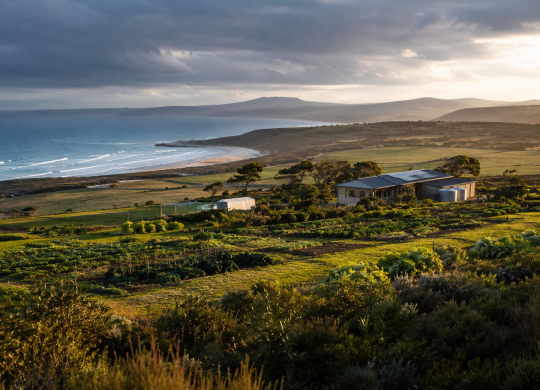
An international group of researchers has identified which countries are best equipped to protect their populations, food supplies, and critical infrastructure during a large-scale crisis. Learn more about the world’s most resilient countries and the risks that even Australia is not immune to

An international group of researchers has identified which countries have the best conditions for protecting their populations, food supplies, and critical infrastructure during a large-scale crisis. Learn more about the world’s most resilient countries and the risks that even Australia is not immune to
An international team of scientists has identified the countries most likely to preserve vital systems during a global catastrophe. The researchers considered the consequences of a nuclear war, a massive volcanic eruption, an asteroid impact, a pandemic, a global cyberattack, and a prolonged power outage.
The findings are presented in the scientific journal Global Challenges. The authors analyzed 152 scientific papers and reached a clear conclusion: there is no completely safe place on Earth. However, one country proved to be more resilient than others across the broadest range of scenarios.
In a previous article, we discussed the world’s best cities to live in, according to Generation Z.
Immigration rules vary depending on the country, the reason for relocation, and the applicant’s personal situation. A Visit World immigration attorney will help you choose the appropriate type of visa or residence permit, verify the requirements, and prepare the necessary documents. Professional consultation allows you to identify potential risks in advance and avoid mistakes when submitting your application.

What global catastrophes did the researchers consider?
The study’s authors focused not on local natural disasters but on events capable of causing mass casualties and disrupting the functioning of critical systems worldwide. By “global catastrophe,” they mean a crisis that could result in the deaths of at least 10% of the world’s population within a few months or years.
The researchers grouped all the analyzed threats into three main categories:
1. A sharp reduction in sunlight. This could be caused by a nuclear war, a supervolcano eruption, or the impact of a large asteroid. Particles of ash, dust, and soot enter the atmosphere, lowering temperatures and reducing crop yields.
2. Global loss of critical infrastructure. This refers to prolonged power outages caused by a large-scale cyberattack, a geomagnetic storm, or an electromagnetic pulse. Without electricity, transportation, communications, industry, water supply systems, and food production quickly grind to a halt.
3. Catastrophic biological threats. This group includes dangerous pandemics, accidental leaks of pathogens from laboratories, and the deliberate use of biological weapons. The main risks include mass mortality, an overwhelmed healthcare system, staff shortages, and disrupted supply chains.
The researchers assessed not only a country’s ability to withstand the initial impact. They also considered whether the country would be able to provide its population with food, energy, and medical care, restore critical systems, and adapt to a prolonged crisis.
Learn more about the best countries for digital nomads to live in by following the link.
What criteria were used to assess countries’ resilience?
The study is not a traditional ranking with scores and fixed positions. In the first stage, researchers identified approximately 3,200 publications related to global risks. After several rounds of selection and the inclusion of additional materials from subject-matter experts, 152 studies were included in the final review.
Countries were compared based on how frequently their strengths and weaknesses were mentioned in the scientific literature. Four factors emerged as the most important:
1. Geographic isolation. Large islands and remote territories can more easily restrict cross-border access. They are also less dependent on crises in neighboring countries.
2. Food self-sufficiency. A country must produce enough food and have a diverse agricultural sector. Reserves of seeds, fuel, and fertilizers are also important.
3. Quality of governance. Political stability, low corruption, public trust, and effective emergency response services help allocate resources more quickly and coordinate actions.
4. Decentralization of systems. Energy, food production, and governance should not depend on a single central hub. In this way, damage to a single facility does not lead to a complete collapse.
Additional advantages include a developed industrial sector, access to domestic energy resources, a strong healthcare system, and the ability to repurpose production. At the same time, some advantages can turn into vulnerabilities. For example, geographic isolation protects against pandemics but makes it difficult to receive international aid.
Earlier, we talked about the European countries where it is easiest to get a work visa and start a career abroad.
Why was Australia recognized as the most resilient country?
Australia was the only country that scientific sources directly identified as resilient across all three categories of global risks. It has the best starting conditions under scenarios involving a sharp cold snap, a large-scale infrastructure collapse, and a dangerous pandemic.
Australia’s main advantage lies in the combination of its remote location and significant domestic resources. The country can quickly restrict border crossings, yet it has sufficient land area, a developed industrial base, and a robust mining sector. Australian agriculture produces large volumes of food. This increases the chances of feeding the population even if international supply chains are disrupted.
The relatively warm climate could also be an advantage in the event of a nuclear or volcanic winter. The ocean moderates temperature fluctuations, and its location in the Southern Hemisphere reduces the likely severity of the consequences of a catastrophe originating in the northern hemisphere.
At the same time, Australia is not entirely self-sufficient. It depends on international trade for medicines, fuel, fertilizers, and certain industrial components. Therefore, even a country with the best indicators will need to maintain trade ties and cooperation with other nations.
In our previous article, we discussed the top 5 EU countries for starting an offline business in 2026.
Which other countries have a high chance of surviving?
After Australia, the study most frequently cited New Zealand, Japan, Switzerland, and Argentina. Each of these countries has significant advantages but remains vulnerable to certain types of global threats.
New Zealand
New Zealand, along with Australia and Japan, demonstrated resilience across all three categories of global risks. Its strengths include its remote island location, political stability, low levels of corruption, and significant food production.
The country also produces nitrogen fertilizers, and its soil phosphorus reserves could last for years or even decades. However, New Zealand has a small industrial base and is heavily dependent on foreign trade. Active volcanoes, geomagnetic storms, and tsunamis remain additional threats.
Learn more about low-tax countries for profitable business operations in 2026by following the link.
Japan
Japan has one of the world’s largest industrial bases, a well-developed healthcare system, and significant resources for responding to emergencies. The country also possesses space weather forecasting technologies, which help detect dangerous geomagnetic storms in advance.
At the same time, Japan relies on imports of food, fuel, and raw materials. High population density, an aging society, seismic activity, and proximity to active volcanoes also reduce its overall resilience.
Learn more about the most affordable countries for expats to live in 2026 by following the link.
Switzerland
Switzerland is characterized by stable democratic institutions, low inequality, and a reliable energy system. The country derives a significant portion of its electricity from hydroelectric power plants. This reduces its dependence on imported fuel. Some critical infrastructure also has additional protection.
The lack of a coastline reduces the risk of tsunamis, and the mountainous terrain can facilitate territorial isolation. However, its small size and location in the heart of Europe make the country dependent on trade and vulnerable to large-scale infrastructure collapse in neighboring countries.
Argentina
Argentina’s strengths stem primarily from its location in the Southern Hemisphere and its large agricultural sector. The country has a long growing season, extensive agricultural land, and produces large volumes of various crops.
Argentina is better equipped to withstand a sharp global cooling than many countries in the Northern Hemisphere. However, high levels of inequality and periods of political and economic instability complicate the effective management of resources during a protracted crisis.
In our previous article, we discussed the cost of living in the best EU countries in 2026.
Why Is There No Completely Safe Place on Earth?
No country is capable of withstanding all global threats equally well. An advantage in one scenario often becomes a problem in another. An island location helps control borders during a pandemic but makes it difficult to obtain resources and international aid after an infrastructure collapse.
A similar contradiction arises with industry. A large manufacturing base makes it possible to repair equipment, produce spare parts, and repurpose enterprises. At the same time, modern industry depends on electricity, digital systems, and complex international supply chains. Their disruption can quickly halt production.
The authors also caution that their findings should not be viewed as a definitive ranking. Australia and New Zealand have been studied more extensively than many other countries, which is why they appear more frequently in academic publications. Potentially resilient countries, such as Uruguay, may have received less attention simply due to a lack of specific studies.
The researchers’ main conclusion is not about finding the “last safe place.” Even the most self-sufficient countries will need international trade, technology exchange, and a coordinated response. Therefore, preventing global catastrophes remains a more effective strategy than preparing for their consequences.
Are you planning to relocate, legalize your stay, or renew your immigration documents? Contact a Visit World immigration lawyer. A specialist will analyze your situation, explain your available options, and help you complete the necessary procedures in accordance with the laws of your chosen country. Get personalized advice and a clear plan of action.
We remind you! New economic indicators show which countries have been able to increase their GDP and which have lost ground due to inflation and slowing growth. Ranking of the richest countries in the world in 2026 — follow the link.
Products from Visit World for a comfortable trip:
Travel guide for 200 countries;
Legal advice from a local specialist on visa and migration issues;
Travel insurance around the world (please select the country of interest and citizenship to receive services);
Medical insurance all over the world.
We monitor the accuracy and relevance of our information, so if you notice any errors or inconsistencies, please contact our hotline
Frequantly
asked questions
Which country is the safest in the event of a global catastrophe?
Which countries have the best chance of surviving a global catastrophe?
Where would it be safer in the event of a nuclear winter?
Why are islands better prepared for pandemics?
Is this study an official ranking of countries?
Recommended articles
3 min
Expats
Gen Z Names the Best Cities to Live in 2026: Which Global Cities Top the Ranking
Generation Z has named the cities around the world where young people feel most comfortable living, working, relaxing, and meeting new people. Tokyo topped the new Time Out ranking, and the top ten also includes cities in Europe, Australia, the U.S., and Asia. Learn more about the best cities for Gen Z in 2026 and the criteria that influenced their selection
16 Aug. 2026
More details1 min
Expats
Best Countries for Digital Nomads in 2026: Visas, Income Thresholds, Cost of Living
Five countries topped the global ranking for digital nomads in 2026. Find out which visa is right for you, how much you need to earn or have in your account, and how much it really costs to live in Kuala Lumpur, Lisbon, Chiang Mai, Tbilisi, and Taipei
15 Aug. 2026
More details3 min
Expats
The Best Country to Move to in 2026: Estonia Tops the Global Ranking
Estonia took first place in the global ranking of the best countries to move to in 2026. Learn more about its strengths, the rankings of other countries, and the criteria used to evaluate 192 countries and territories
24 Aug. 2026
More details1 min
Expats
Living on €500: Best Countries for Digital Nomads in 2026
Affordable living abroad is becoming a reality for remote workers. Find out which countries you can live comfortably on 500 euros and how to prepare for a move
02 Apr. 2026
More detailsAll materials and articles are owned by VisitWorld.Today and are protected by international intellectual property regulations. When using materials, approval from VisitWorld.Today is required.