

Studying in Denmark in 2026: New Rules for Foreign Students
Table of contents
- Studying in Denmark: Who Do the New Rules Affect?
- Job-Seeking Permit: One Year Instead of Three
- Student Families: Who Will No Longer Get a Permit
- What Awaits Those Who Applied Before 1 October
- Not the First Change: What Did Denmark Already Restrict in 2025?
- What Should Students and Applicants Do After the Changes?
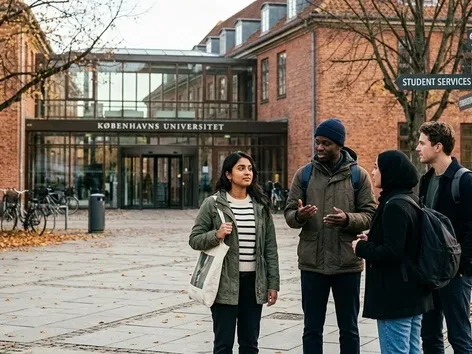
Denmark has changed the rules for students from non-EU countries as of 1 October 2026. Find out how the job-search period has been shortened and what has changed for bringing family members to Denmark

Denmark has revised its rules for foreigners studying in state-approved programmes. For anyone applying on or after 1 October 2026, studying in Denmark becomes less predictable. After graduation, students get only one year to look for a job, and a husband, wife or partner will no longer be able to follow them.
The Danish Agency for International Recruitment and Integration (SIRI) announced the changes on 30 September, and the new rules took effect the very next day. You can find more details about the new rules for studying in Denmark in this article.
VisitWorld's Education Lawyer helps you navigate studying abroad at every stage, from choosing a country and institution to preparing the documents for a student visa. The specialist also supports you in difficult situations and, if an academic dispute arises, can represent your interests in court. Help is available at every level of education, from preschool to postgraduate studies.
Select your citizenship and destination country on VisitWorld and find out how a lawyer can help you specifically.

Studying in Denmark: Who Do the New Rules Affect?
The restrictions apply to third-country nationals, meaning citizens of countries outside the EU and the EEA, who study in state-approved higher education programmes. They cover:
- professional bachelor's and bachelor's programmes;
- master's programmes, including those for people who combine study with work;
- joint Erasmus Mundus, Erasmus+ and Nordic Master programmes.
Doctoral students are not affected. PhD students can still get up to three years to look for a job after completing their doctorate, and their family members keep the right to a residence permit. There is one more exception: Turkish citizens covered by the EU–Turkey Association Agreement may still be entitled to the three-year period and to family permits.
We explain who Denmark is ready to hire in 2026 here.
Visit World services for tourists, migrants, and expats: Insurance | Guides | Legal advice
Job-Seeking Permit: One Year Instead of Three
Previously, a graduate could receive a residence permit for job seeking lasting up to three years. For applications submitted on or after 1 October 2026, this period has been cut to one year. That means that after getting a diploma, a foreign graduate will have far less time to find an employer and switch to a full residence and work permit.
A year can pass quickly, especially if your field is narrow or your Danish is not yet at the required level. So it is better to start looking for vacancies before graduation. It also makes sense to study in advance which scheme you could use to obtain a work permit. In Denmark, the options include, for example, the Pay Limit scheme and the Positive List of in-demand occupations.
For those who applied before 1 October, nothing has changed: the previous period of up to three years remains in place. What counts is the date of application, not the date on which SIRI processes it.
The cost of studying abroad in 2026 is covered here.
Student Families: Who Will No Longer Get a Permit
The second change hits families hard. If a student applied on or after 1 October 2026, their husband, wife, registered partner or cohabiting partner can no longer get a residence permit as an accompanying family member. The date of their own application makes no difference. The same goes for children: if the student applied after the new rules took effect, the child cannot be granted a permit on this basis.
In other words, family reunification through a student's status is closed to new applicants. Anyone who planned to study abroad together with a partner will now have to look for other routes.
For more on Denmark's education system, the best universities, admission requirements and costs, read this article.
What Awaits Those Who Applied Before 1 October
Transitional rules apply to earlier applications, and they are easy to mix up. For adult family members, two dates matter at once.
- The student applied before 1 October, and the partner also applied before 1 October: a permit as an accompanying family member can still be granted.
- The student applied before 1 October, but the partner applied on or after 1 October: the right to a permit is lost.
- The student applied before 1 October, and the child is under 18: a permit is possible even if the child's application is submitted after 1 October.
Not the First Change: What Did Denmark Already Restrict in 2025?
The current rules did not appear out of nowhere. Since 2 May 2025, third-country students at non-state-approved institutions have lost the right to a limited work permit, a six-month job search period and accompanying family members. According to the ministry's official explanation, Denmark wanted to grant permits only to those who genuinely come to study. Now similar restrictions have reached state-approved programmes, so the trend towards tightening is quite clear.
The 10 leading institutions in the world with English-taught programmes that are relevant for 2026 admissions are listed here.
What Should Students and Applicants Do After the Changes?
First, find out which application date applies to you. Then work out your budget without counting on your partner's earnings in Denmark. You also need a plan for the year after graduation, not for three years as before. Separately, check whether the programme truly has state approval, because your set of rights depends on it.
Immigration rules change often, so before submitting documents it is best to check the current version on nyidanmark.dk or consult a specialist.
VisitWorld's Education Lawyer can assess your situation before you file: they will help you choose a country and programme, check which rules will apply to you in particular, and prepare a full package for the embassy or consulate. If you are already studying, the specialist will advise you on what to do when things go off plan and, if needed, will represent you in court. A consultation on immigration matters will help you plan life after graduation in advance rather than in the final year. Enter your citizenship and destination country on VisitWorld and contact an education lawyer today.
Reminder! The amount a country invests in education reflects its priorities and affects the quality of education systems worldwide. A recent study covered 181 countries and revealed unexpected patterns: the top of the ranking is held not by wealthy economies but by small island states, while among the world's largest economies the Nordic countries stay in the lead. We have already covered which countries spend the largest share of GDP on education, how spending is distributed among the leading economies, and what factors determine the size of an education budget.
Photo: generated by Gemini
Products from Visit World for a comfortable trip:
Checklist for obtaining a visa and necessary documents in Denmark;
Legal advice on immigration to Denmark;
Travel insurance for foreigners in Denmark;
Medical insurance all over the world.
We monitor the accuracy and relevance of our information. Therefore, if you see any error or discrepancy, please write to our hotline.
Frequantly
asked questions
What happens if you fail to find a job within a year?
How can you find out whether a programme is officially approved by the government?
Can a partner come to Denmark through another route?
Recommended articles
3 min
Popular
How to Rent an Apartment in Denmark: A Practical Guide for Foreigners
Renting an apartment in Denmark requires a substantial initial budget and a careful review of the lease agreement. Learn more about prices, security deposits, finding an apartment, and move-in procedures
28 Aug. 2026
More details2 min
Education
Poland Changes University Admission Rules in 2026: New Opportunities for International Students
Poland is preparing major changes to the university admission system in 2026. Find out how the new rules will affect international students, what will change in the admission campaign and how to prepare for studying in Poland
18 Jun. 2026
More details2 min
Education
Australia is tightening rules for international students: what will change
Australia is preparing new restrictions for international students as part of a crackdown on immigration. Learn more about the new rules in Australia and who they will affect
18 Sep. 2026
More details2 min
Education
Top 10 Universities in Europe 2026: Rankings, Tuition Fees & How to Apply
European universities set a new bar for academic quality in 2026. Find out which universities topped the QS Europe 2026 rankings, how much tuition costs for foreigners, which scholarships cover the costs and where to start preparing for admission
23 May. 2026
More detailsAll materials and articles are owned by VisitWorld.Today and are protected by international intellectual property regulations. When using materials, approval from VisitWorld.Today is required.