

How to Rent an Apartment in Denmark: A Practical Guide for Foreigners
Table of contents
- What kinds of housing can you rent in Denmark?
- Where should foreigners look for housing in Denmark?
- How much does it cost to rent a place in Denmark?
- How much does rent cost in different cities in Denmark?
- What to Check in a Lease Agreement?
- How to Take Possession of an Apartment and Keep Your Security Deposit?
- What should you do after moving out?
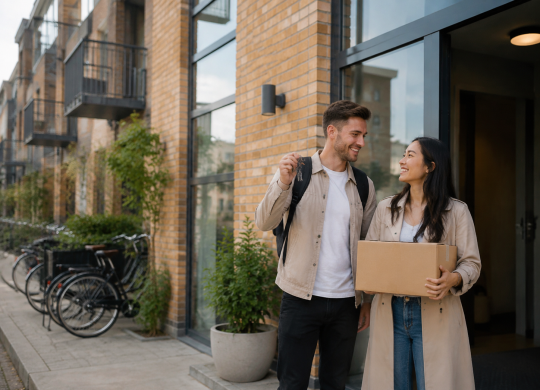
Renting an apartment in Denmark requires a substantial initial budget and a careful review of the lease agreement. Learn more about prices, security deposits, finding an apartment, and move-in procedures

Foreigners are allowed to rent housing in Denmark without a special permit, but finding a suitable option in Copenhagen or Aarhus can be difficult. There is no single registry of available private apartments in the country, so you have to search for listings simultaneously on several platforms, through agencies, housing organizations, and personal contacts.
A key feature of the Danish market is the high upfront costs when moving in. A landlord may require a security deposit of up to three months’ rent and up to three months’ rent in advance. Together with the first month’s rent, the initial payment can sometimes amount to seven months’ rent, not including utilities. In this article, we’ll explore where to look for housing in Denmark, how much rent costs, how to review a lease agreement, and how to avoid losing your security deposit.
In the previous article, we reported on the most expensive cities in the world to live in in 2026, according to Numbeo.
Are you planning to buy real estate abroad? Before concluding a deal, it is important to consider not only the price per square meter, but also tax liabilities, restrictions for foreigners, title checks, and additional costs. Visit World's real estate lawyers will help you analyze the property, assess legal risks, and accompany you at all stages of the transaction: from the initial consultation to the signing of the contract. Get professional support and confidence in every step.

What kinds of housing can you rent in Denmark?
The Danish rental market includes private apartments and houses, individual rooms, student dorms, and public housing. For many foreigners, their first place to live is a room in a shared apartment or a short-term sublet: these options are usually easier to find and require lower upfront costs.
Main types of rentals in Denmark:
1. Private apartment or house. Housing is rented out by owners, companies, or agencies. There is a wide selection, but in Copenhagen and Aarhus, demand for affordable apartments remains high.
2. A room in a shared apartment. One of the most affordable options for newcomers, students, and those who haven’t yet decided on a neighborhood for permanent residence.
3. Subleasing. In Denmark, it is common to temporarily rent a residence from the current tenant. Before moving in, you should verify that the tenant has written permission from the owner to sublet the apartment or room.
4. Student housing. International students can apply for rooms in dormitories through their university, educational institution, or specialized housing organizations.
5. Public housing, or almen bolig. These apartments are owned by nonprofit housing associations and are often cheaper than private rentals. Applicants must register directly with the organization and wait their turn.
According to the official Life in Denmark portal, the DanmarkBolig catalog features over 550,000 social rental units. In practice, however, it is difficult to secure such an apartment quickly: waiting lists in major cities can be long. Therefore, when moving, it is advisable to first look for private or temporary housing while continuing to search for a long-term option.
Learn more about the Top 5 real estate markets for investment in 2026by following the link.
Where should foreigners look for housing in Denmark?
Denmark does not have a single database of available private apartments. Landlords choose for themselves where to post listings and to whom to rent, so it’s best to search on several websites at once. It’s also helpful to set up alerts: available options in major cities can disappear quickly.
The most popular platforms for finding housing:
1. BoligPortal – one of Denmark’s largest portals for apartments, houses, rooms, and student housing. Users can set up automatic alerts for new listings.
2. Lejebolig.dk – offers private apartments, houses, rooms, shared housing, and sublets. A paid subscription is required to contact some landlords.
3. Housing Denmark – an agency focused specifically on foreign workers and companies. Listings cover Copenhagen and other regions of the country.
4. Findbolig.nu – a platform for rental apartments, youth housing, and student housing.
5. Findroommate.dk – a specialized service for finding rooms, roommates, and shared rentals.
6. DanmarkBolig.dk – a national catalog of public housing. To apply for an apartment, you need to contact the relevant housing organization and register on the waiting list.
When searching on Danish-language websites, you’ll need to know some basic terms: “lejebolig” means rental housing, “værelse” means a room, “lejlighed” means an apartment, “møbleret” means a furnished apartment, and “almen bolig” means social housing.
Listings are also posted in Facebook groups, local newspapers, and expat communities. However, social media carries a higher risk of fraud. The City of Copenhagen recommends not transferring money until you’ve viewed the property and signed a legal lease agreement. Searching through colleagues, acquaintances, or your university can also be successful, especially when looking for a room or a short-term sublease.
In our previous article, we discussed how to rent an apartment in Germany: the lease agreement, security deposit, and tenant rights.
How much does it cost to rent a place in Denmark?
Rent depends on the city, neighborhood, size, condition, and type of housing. Copenhagen remains the most expensive, where budget studios and small apartments are in particularly high demand. In Aarhus, finding an affordable option is also more difficult than in smaller cities and rural areas.
The City of Copenhagen provides the following approximate prices for the city center:
- A room for one person in a shared apartment – 4,000–6,000 DKK per month
- A studio or one- to two-bedroom apartment – 8,000–10,000 DKK
- Two- or three-bedroom apartment – 13,000–15,000 DKK
- Large apartment with four to six bedrooms – starting at 16,000 DKK
These amounts are not national averages and do not guarantee that you will be able to find an apartment at the listed price. In popular neighborhoods, new developments, and furnished complexes, actual rates may be higher. Cheaper options are best sought outside the city center or in suburbs with good public transportation access.
The monthly rent often does not include electricity, water, heating, gas, and internet. The lease agreement must specify which utilities are included and which the tenant pays for separately. Therefore, comparing listings based solely on the base rent is not enough: before signing the lease, you need to calculate the total amount of your regular expenses.
We previously discussed the specifics of renting an apartment in Belgium in 2026: prices, security deposits, documents, and rules for foreigners.
How much money do you need to have ready before moving in?
The first payment in Denmark can significantly exceed the monthly rent, as the landlord has the right to demand not only payment for the current month but also a security deposit and rent in advance. The maximum amounts are calculated based on the base rent excluding utilities.
Before moving in, the tenant may pay:
- A security deposit of up to three months’ rent—this covers any outstanding balances, damage to the property, and the cost of restoring the apartment after move-out
- Up to three months’ rent in advance—this money is applied toward the final months of occupancy before the lease ends
- The first month’s rent
- Utility bills or an advance payment for certain services, if they are not included in the base rent
For example, if an apartment costs 10,000 DKK per month, the maximum initial amount can reach 70,000 DKK: 30,000 DKK for the security deposit, 30,000 DKK for prepaid rent, and 10,000 DKK for the first month. Utility costs are not included in this calculation. When renting a single room, the security deposit is often one month’s rent in practice, but you should check the exact amount in the lease agreement.
The security deposit and prepaid rent serve different purposes. Prepaid rent is used to cover the final months of tenancy, while the landlord returns the security deposit after you move out, minus any verified expenses. You should transfer this money only after inspecting the property and signing the lease agreement.
In our previous article, we discussed the new rules for renting housing in Poland: what requirements apartment owners must meet.
How much does rent cost in different cities in Denmark?
Copenhagen remains the country’s most expensive and competitive market. Aarhus follows in terms of price and demand, while in Odense and Aalborg, you can usually rent a more spacious apartment for a similar budget. The cost depends not only on the city but also on the neighborhood, square footage, year of construction, furnishings, and distance to the city center.
The average rates listed below reflect current listings with various types and sizes of housing, so they should be used as a guideline rather than a fixed market price.
Copenhagen
The average listed rent in Copenhagen is approximately 15,077 DKK per month, and demand for housing is considered very high. In the city center, a room in a shared apartment costs approximately 4,000–6,000 DKK, a studio or small apartment costs 8,000–10,000 DKK, and a two- or three-room apartment costs 13,000–15,000 DKK. Larger apartments start at approximately 16,000 DKK.
The most expensive listings are concentrated in central and popular coastal areas. You can expand your options by broadening your search to the suburbs and the entire Greater Copenhagen region.
Aarhus
The average listed rent in Aarhus is approximately 9,651 DKK per month. Demand remains high, especially for small apartments and rooms near the city center, the university, and major transportation hubs.
City officials warn that affordable private apartments in Aarhus are rare. Students often opt for dorms, shared rentals, or housing 30–40 minutes away from campus. Rents are lower in outlying areas, but transportation costs must be factored into the budget.
Learn more about the best countries for foreigners to buy real estate in 2026 by following the link.
Odense
The average rent for active listings in Odense is about 8,634 DKK per month. The overall price level is lower than in Copenhagen and Aarhus, although apartments in the city center, near the university, and close to convenient transportation routes can be significantly more expensive.
Odense is a good fit for those seeking a balance between city size, transportation accessibility, and cost. For the same budget, you can usually get more living space here than in the country’s two largest cities.
Previously, we discussed the Turkish real estate market in 2026: where to buy property and what investors should look out for.
Aalborg
Aalborg remains the most affordable of Denmark’s four largest cities. The average listed rent is about 7,579 DKK per month, and demand is considered moderate.
The difference between central neighborhoods and the outskirts can be significant. According to BoligPortal data for the first half of 2025, the average two-bedroom apartment in the municipality of Aalborg cost about 5,500 DKK per month, while a three-bedroom apartment cost approximately 7,500 DKK. Moving to outlying areas can further reduce costs.
In our previous article, we reported that Spain has been named the best country for real estate investment in Europe for the first time.
What to Check in a Lease Agreement?
In Denmark, private rentals use the standard lease agreement “Typeformular A, 10th edition,” available in Danish and English on the website of the Ministry of Social Affairs and Housing. The document outlines the rights and obligations of the parties; however, before signing, you should check not only the basic payments but also any additional terms included by the landlord.
The contract must clearly specify:
- The full address and square footage of the apartment
- The amount of rent, security deposit, and advance payment
- Utilities included in the monthly payment
- Start date and term of the lease
- Procedure for rent increases
- The parties’ obligations regarding routine maintenance
- Notice period for moving out
- Rules regarding subletting, keeping pets, and use of common areas
- Inventory of furniture and appliances, if the apartment is rented furnished
- Ability to register for a CPR at this address
You should read the section on additional terms and conditions very carefully. This is where the landlord may specify special repair procedures, restrictions on early termination, or a requirement to return the property in a certain condition. If any provision of the contract is unclear, it’s a good idea to ask for a written explanation or seek advice before signing.
For open-ended leases, the standard notice period for moving out is up to three months, but different terms may apply to room rentals and fixed-term leases. Verbal promises regarding repairs, furniture, utility bills, or the return of the security deposit must be put in writing. Otherwise, it will be difficult to prove the agreement in the event of a dispute.
In our previous article, we discussed where apartment prices are rising the fastest, how much housing costs in different cities across Hungary, and what to expect from the market.
How to Take Possession of an Apartment and Keep Your Security Deposit?
The condition of the apartment at move-in directly affects the amount the tenant will receive upon moving out. If existing damage is not documented, the landlord may later deduct the cost of repairs from the security deposit.
Before receiving the keys or immediately after moving in, you should:
- Take photos of the walls, floor, ceiling, windows, and doors
- Inspect the furniture, appliances, plumbing fixtures, and lighting
- Record the meter readings
- Record a video of the general condition of each room
- Keep the property acceptance report, the lease agreement, and any correspondence with the landlord
You must notify the landlord in writing of any scratches, stains, malfunctioning appliances, moisture, or other defects no later than 14 days after moving in. It’s best to send the notification by email along with photos to ensure the date and confirmation of the report are recorded.
Before moving out, it’s also a good idea to conduct a joint inspection of the apartment and obtain a written list of observations. The landlord may withhold funds from the security deposit to cover unpaid rent, utility bills, or repairs for which the tenant is responsible. At the same time, normal wear and tear should not automatically be equated with damage.
After the final settlement, the landlord must return any unused portion of the security deposit. If the amount withheld seems unreasonable, you should request a detailed breakdown of the costs in writing and keep all documents for a possible appeal to the local rental commission.
We previously covered the most expensive EU capitals for renting in 2026.
What should you do after moving out?
After moving in, a foreign national must register their new place of residence in the CPR system. You can report a change of address no earlier than four weeks before moving, but you must do so no later than five days after actually moving in. Online registration is available using MitID; if you do not have a digital ID, you should contact your local Citizen Service.
You must verify whether you can register your CPR number at the rental address before signing the lease. The registration number is required to access public health insurance, open a bank account, and use other services. Housing offers that do not allow you to register your address are not suitable for full-fledged long-term residence.
Some tenants may be eligible for housing assistance (boligstøtte). Typically, this requires living in the rented dwelling on a permanent basis, being registered at that address, and having a separate kitchen or kitchen area. The amount of the benefit depends on the rent (excluding utilities), the size of the dwelling, the residents’ income and assets, and the number of adults and children. You can apply through Udbetaling Danmark.
If a dispute arises regarding rent, a security deposit, repairs, or utility bills, the tenant can contact the local Huslejenævn commission. The application should include the lease agreement, photographs, bills, bank statements, and correspondence with the landlord. Matters that fall outside the commission’s jurisdiction—including certain disputes regarding termination of the lease—are handled by the housing court.
Buying a home in another country is not only an investment but also a serious legal procedure. Mistakes in documents, unaccounted taxes or restrictions for foreigners can lead to financial losses. Consultation with a real estate lawyer from Visit World will help you to safely complete the transaction, check the seller and avoid hidden risks. Contact the experts to make your real estate purchase abroad as transparent and secure as possible.
We remind you! The Cypriot parliament is considering draft laws that could significantly change the conditions for buying real estate for citizens of countries outside the European Union. The initiatives include quantitative limits on properties, geographical bans and transparency requirements for transactions. Read more about the proposed restrictions, foreign purchases statistics and how to prepare for possible changes in the Cyprus real estate market.
Products from Visit World for a comfortable trip:
Travel guide for 200 countries;
Legal advice from a local specialist on visa and migration issues;
Travel insurance around the world (please select the country of interest and citizenship to receive services);
Medical insurance all over the world.
We monitor the accuracy and relevance of our information, so if you notice any errors or inconsistencies, please contact our hotline.
Frequantly
asked questions
Is it possible to rent an apartment in Denmark without a CPR number?
How much money do you need to move in?
Are utilities included in the rent?
How do I get my security deposit back after the lease ends?
Where should you turn in case of a dispute with the landlord?
Recommended articles
3 min
Popular
How to Rent an Apartment in Germany: Lease Agreement, Security Deposit, and Tenant Rights
Renting an apartment in Germany involves clear rules regarding the lease agreement, security deposit, repairs, utility bills, and termination of the lease. Even a minor mistake when moving in can result in additional costs or the loss of part of your security deposit. Learn more about tenants’ rights in Germany and the important terms you should check before signing a lease agreement
15 Jul. 2026
More details2 min
Popular
New Rules for Renting Housing in Poland: What Requirements Must Apartment Owners Meet?
New requirements have taken effect in Poland for property owners who rent out apartments, condos, or rooms on a short-term basis. From now on, landlords must install special safety sensors, and violations of the rules can result in a fine of up to 30,000 zlotys. Find out who is affected by these changes, what requirements must be met, and how to avoid liability
03 Jul. 2026
More details3 min
Popular
Renting an apartment in Belgium can cost anywhere from a few hundred to over €1,500 per month, but the rent itself is only part of the expenses. You’ll need to factor in a security deposit, utility bills, insurance, and other expenses—and the rules vary between Brussels, Flanders, and Wallonia. Learn more about housing prices in Belgium in 2026, the documents required to rent, and the expenses you should consider before signing a lease
19 Aug. 2026
More details2 min
Investment
Housing and Rent Prices in the EU in 2026: Where Did Prices Rise the Most, and Where Did They Fall?
The European real estate market entered 2026 with a noticeable increase in prices: housing and rent are rising in almost all EU member states, though the rates vary significantly. Eurostat has released data on the countries with the highest growth rates and the few where prices have fallen. Learn more about how housing and rental costs changed in the EU during the first quarter of 2026 and which countries topped the list of price increases
09 Jul. 2026
More detailsAll materials and articles are owned by VisitWorld.Today and are protected by international intellectual property regulations. When using materials, approval from VisitWorld.Today is required.