

Top 5 Real Estate Markets for Investment in 2026: Prices, Returns, and Risks
Table of contents
- Spain: Higher Entry Costs and Stable Demand
- Zanzibar, Tanzania: High Returns and More Complex Risks
- Turkey: Low barrier to entry and high currency risk
- Romania: A Moderate Entry Point and a Choice Between Two Models
- Maldives: High Price Tag and Dependence on the Operator
- Which market should you choose based on your budget and goals?
- What expenses reduce the actual yield?
- Five Mistakes When Buying Real Estate Abroad

The entry threshold for promising overseas real estate markets starts at €70,000, and the projected rental yield reaches 18% per year. Learn more about prices, costs, returns, and risks associated with investing in Spain, Turkey, Romania, Zanzibar, and the Maldives

Spain, Turkey, Romania, Zanzibar, and the Maldives offer various models for real estate investment: ranging from residential apartments priced at €70,000 to hotel properties with a stated annual return of up to 18%. However, a high percentage does not always mean a higher net profit. Taxes, management costs, seasonal downtime, currency fluctuations, and ownership regulations can significantly alter the final outcome.
Oleksandr Hrushetskyi, an expert in international real estate, compared five markets during Invest Fest based on entry barriers, rental yields, and transaction costs. Let’s examine each market separately and see to what extent these attractive figures align with actual market conditions.
In the previous article, we reported on the most expensive cities in the world to live in in 2026, according to Numbeo.
Are you planning to buy real estate abroad? Before concluding a deal, it is important to consider not only the price per square meter, but also tax liabilities, restrictions for foreigners, title checks, and additional costs. Visit World's real estate lawyers will help you analyze the property, assess legal risks, and accompany you at all stages of the transaction: from the initial consultation to the signing of the contract. Get professional support and confidence in every step.

Spain: Higher Entry Costs and Stable Demand
The Spanish market is characterized by high liquidity, steady rental demand, and rapid price growth. At the same time, it is the most expensive of the European markets under consideration: even for a starter investment, a budget of at least €150,000 is required, and acquisition costs can exceed 12% of the value of a new-build property.
How much does an investment in Spain cost?
According to Oleksandr Hrushetskyi, the typical entry threshold is €150,000–250,000. As an example of an investment property, the expert cited an apartment with a sea view in Finestrat, near Benidorm. The cost of this specific property was €312,900, and the estimated annual income ranged from €21,900 to €31,300, or approximately €1,825–2,608 per month.
You’ll need to add closing costs to your initial budget. A 10% VAT is levied on the purchase of a new home, and notary and registration fees can amount to an additional 2.5% or so. Thus, purchasing a new-construction property for €200,000 may require at least €225,000, excluding furniture, legal services, and other fees.
Key market indicators:
- Estimated entry threshold – €150,000–250,000
- Stated gross rental yield – 6–8% per year
- Potential capitalization during construction – up to 30%
- VAT on new homes – 10%
- Notary and registration fees – approximately 2.5%
A potential 30% increase in value cannot be considered an average figure for all of Spain. Such a result is primarily possible for specific projects purchased at an early stage of construction and depends on location, demand, and the developer’s adherence to deadlines.
Yields, Prices, and Key Risks
Demand for Spanish housing continues to grow.
According to data from Spain’s National Institute of Statistics, prices rose by 12.9% in the first quarter of 2026 compared to the same period in 2025. New-construction homes rose in price by 9.1%, while existing homes rose by 13.5%. Over the course of a single quarter, the overall price index increased by 3.5%.
The stated yield of 6–8% is gross. For example, for an apartment priced at €200,000, a 7% yield means €14,000 in annual rental income before deducting taxes, insurance, maintenance, repairs, management company fees, and periods without tenants. After these expenses, the net return will be lower.
Separately, you need to take into account the rules for short-term rentals. These vary depending on the autonomous community and municipality, and in some tourist cities, the number of licenses is limited. Therefore, a property without a tourist rental permit may generate significantly less income than indicated in the advertised financial model.
In our previous article, we reported that Spain was recognized for the first time as the best country for real estate investment in Europe.
Zanzibar, Tanzania: High Returns and More Complex Risks
Zanzibar offers a significantly lower entry barrier than Spain, but investors face a less predictable market. Income here depends on international tourism, seasonality, the quality of management, and the project’s legal structure. Potential annual returns of 8–15% offset the risks typical of an emerging market.
How much does real estate cost in Zanzibar?
According to an expert’s estimate, investment apartments can be purchased for $80,000–100,000. Additional costs for government fees, registration, and legal services amount to approximately 3–7% of the property’s value. Therefore, for a property priced at $90,000, you should budget an additional $2,700 to $6,300.
Most resort complexes are sold fully renovated but without a complete set of furniture and appliances. According to Oleksandr Hrushetskyi, furnishing an apartment for rent can cost around $5,000. The total budget for such a purchase, including registration and furnishing, will be approximately $97,700–101,300.
Key investment parameters:
- Entry threshold – $80,000–100,000
- Projected gross yield – 8–15% per year
- Registration and legal services – 3–7%
- Apartment furnishings – about $5,000
- Main segment – beachfront resort apartments
According to an expert’s estimate, beachfront real estate in Zanzibar has risen in price by 60–70% over the past five years. A property that cost $100,000 in 2019 may now be valued at $160,000–170,000. However, this is not an official price index for the entire market, but rather an assessment of a specific segment. It should not be used as a guaranteed forecast of future growth.
Tourist Demand and Actual Yield
Zanzibar’s rental market is directly dependent on the flow of foreign tourists. In July 2025, the archipelago welcomed 98,370 international visitors—a 44.2% increase compared to the same month in 2024. In June 2026, the number of arrivals reached 69,605, increasing by another 3.1% year-over-year, according to data from the Zanzibar Office of the Chief Statistician.
The stated yield of 8–15% applies primarily to resort properties with short-term rentals. For an apartment costing $90,000, this corresponds to gross annual income ranging from $7,200 to $13,500. However, management fees, cleaning costs, routine maintenance, utility bills, insurance, and losses due to seasonal downtime must be deducted from this amount.
The developer’s calculations must be scrutinized particularly carefully. The expert cites a projected annual income of €13,750–14,580 for a property valued at approximately €83,300. This corresponds to approximately 16.5–17.5% and exceeds the 8–15% range stated for Zanzibar. Without a detailed explanation of the methodology, occupancy rates, and costs factored in, such a forecast cannot be considered sufficiently substantiated.
What does a foreign buyer need to know?
The legal framework in Zanzibar differs significantly from that in Europe. According to the Land Tenure Act No. 12 of 1992, land on the archipelago has a special status. A foreign buyer does not acquire it as classic, perpetual private property.
One legal option for acquisition is to purchase an individual apartment or villa in an officially registered condominium. This model is provided for by the Zanzibar Condominium Act No. 10 of 2010. Other projects may operate through long-term land leases and approval from the Zanzibar Investment Promotion Authority.
Before making any payments, it is essential to verify the developer’s rights to the land plot, government permits, the term of the land lease, the possibility of registering the specific property, and the terms of resale. For Zanzibar, such a legal due diligence check is more important than the promised rate of return: an error in the ownership structure can render the asset illiquid regardless of tourism demand.
In our previous article, we discussed where apartment prices are rising the fastest, how much housing costs in different cities across Hungary, and what to expect from the market.
Turkey: Low barrier to entry and high currency risk
The Turkish market is going through a mixed period. The number of transactions is gradually recovering, developers are offering installment plans, and real estate remains more affordable than in Spain. At the same time, inflation, lira fluctuations, and rapid nominal price growth make it difficult to assess real returns.
Entry Threshold and Buyer Costs
According to Oleksandr Grushetskyi, the base budget for an investment is €70,000–100,000.
For this amount, one can consider small apartments in Alanya, Mersin, and other resort cities. In Istanbul, Bodrum, and the central districts of Antalya, a similar property will typically cost more.
The expert cites the example of a room in a five-star beachfront hotel in Alanya. Its price is €129,000, with an estimated annual income of €14,835 and a monthly income of about €1,235. This corresponds to a gross yield of approximately 11.5%, which is more typical of a hotel property than a standard residential one.
The following transaction costs must be added to the property’s price:
- Tax upon TAPU property registration—4%
- Notary fees, translation, registration procedures, and DASK insurance—an additional 1–2%
- General associated costs—approximately 5–6% of the property’s value
- Projected rental yield—6–8%
- Return on hotel properties – 10–12%
Formally, the 4% tax on the transfer of ownership can be split between the seller and the buyer, but in practice, the terms depend on the contract. A foreign investor should clarify in advance which portion of the payment each party is responsible for.
For example, if an apartment costs €90,000, purchase costs may amount to an additional €4,500–5,400. Thus, the actual initial budget rises to approximately €94,500–95,400, excluding furniture, renovations, and the broker’s commission.
What’s Happening with Sales and Prices
In June 2026, 129,979 residential properties were sold in Turkey—nearly 16% more than a year earlier. Foreigners purchased 2,015 properties, which was 20.1% higher than in June 2025. This marked the first year-over-year increase in sales to foreign buyers since December, although their share remained small—about 1.6% of all transactions.
However, a nominal increase in real estate prices does not imply a corresponding increase in the real value of the asset. According to the Central Bank of Turkey, in July 2026, housing prices rose by 25% year-over-year in lira, but after adjusting for inflation, its real value fell by 5.1%.
In the largest cities, the nominal trends were as follows:
- Istanbul – a 27.7% increase in prices over the year
- Ankara – 26.6%
- Izmir – 23.1%
- The Antalya, Burdur, and Isparta region – 22.6%
Rental rates for new leases rose by an average of 28.4% in lira in July. In Istanbul, the increase reached 32.4%, in Ankara – 28.6%, and in Izmir – 26.3%. At the same time, after adjusting for inflation, the nationwide new rental index fell by 2.6%.
Annual inflation in Turkey in July 2026 stood at 31.75%, according to TURKSTAT data. Therefore, it is not enough for an investor to simply observe an increase in price or rent in Turkish lira. It is necessary to convert the income into euros or dollars and account for exchange rate fluctuations over the entire period of ownership.
Residential or Hotel Format
A standard apartment can generate a predictable 6–8% gross annual return. This model is simpler, but the owner must find tenants on their own, pay for repairs, and bear the risk of vacancy. For long-term rentals, transportation accessibility, consistent demand, and proximity to universities or business districts are important.
Hotel rooms and serviced apartments offer up to 10–12%, but the return depends on the operator. Before signing a contract, you should verify the operator’s commission rate, occupancy forecasts, the revenue-sharing arrangement, the costs of renovating rooms, and the terms for early termination of the contract. The promised return may be fixed only for a limited period and may subsequently depend on the hotel’s actual performance.
Does purchasing property grant residency rights?
Purchasing real estate may serve as a basis for obtaining a short-term residence permit, but the purchase itself does not guarantee approval. Requirements regarding the property’s value and suitability must be verified separately for each specific region and type of permit.
The threshold for obtaining citizenship through investment is significantly higher. According to the Turkish Investment Office, a foreigner must purchase real estate worth at least $400,000 and not sell it for three years. Therefore, an apartment priced at €70,000–100,000 may be a rental investment but does not meet the financial requirements of the citizenship program.
In our previous article, we discussed the specifics of the Turkish real estate market in 2026: where to buy a home and what investors should look out for.
Romania: A Moderate Entry Point and a Choice Between Two Models
Romania combines prices lower than those in Western Europe with a dynamic housing market. An investor can choose a standard apartment for long-term rental or a unit in a hotel complex managed by an operator. The latter option promises higher returns but creates additional dependence on occupancy rates and contract terms.
How much does it take to buy real estate?
The approximate entry threshold for the Romanian market is €100,000–150,000. An additional 2–3% of the property’s value should be set aside for notary, registration, and legal fees. For a property priced at €120,000, these additional costs could amount to €2,400–3,600, bringing the total transaction budget to €122,400–123,600.
Key investment parameters:
- Initial budget: €100,000–150,000
- Gross return on residential property – 6–8% per year
- Stated return on hotel condos – 10–15%
- Processing and registration fees – approximately 2–3%
- Key markets – Bucharest, Cluj-Napoca, Brașov, and tourist regions
The lower limit corresponds to a yield of 6%, while the upper limit exceeds 18%. This is higher than the 10–15% range claimed for hotel condos, so investors should request a complete financial model. It should explain the projected occupancy rate, average room rate, operator’s commission, operating expenses, and profit-sharing terms.
Residential Property or Hotel Room
A standard apartment with a projected gross yield of 6–8% is a more straightforward investment. It can be rented out long-term, have its management company changed, or be used personally. Demand is primarily driven by workers, students, families, and foreign professionals, so the return is less dependent on the tourist season.
For an apartment costing €120,000, a 7% yield translates to €8,400 in gross annual income, or €700 per month. After taxes, repairs, insurance, maintenance, and downtime, the net figure will be lower. Additionally, you need to consider the currency of the rent payments: the price of the property may be fixed in euros, while the tenant will actually pay in Romanian lei.
A hotel condo works differently. The owner purchases a single room or apartment and transfers it to an operator who handles reservations, service, and marketing. A 10–15% return is possible only with sufficient occupancy and controlled expenses.
You should pay particular attention to the word “guaranteed.” A three-year guarantee is only valuable if the contract specifies the exact amount of payments, the terms, the currency, the operator’s liability, and the financial backing for its obligations. If the company paying the returns lacks sufficient assets, the stated guarantee does not protect the investor from insolvency.
How are prices and the economy changing?
In the first quarter of 2026, housing prices in Romania rose by 7.8% compared to the same period in 2025 and by 3.2% quarter-over-quarter. This is higher than the EU averages, where annual growth was 5.1% and quarterly growth was 1.2%, according to Eurostat data.
At the same time, the rapid rise in housing prices does not fully reflect the state of the economy.
According to a preliminary estimate by Romania’s National Institute of Statistics, the country’s real GDP contracted by 0.2% in the first quarter of 2026 compared to the previous quarter. Therefore, claims of economic growth that is supposedly twice the EU average should be viewed in a long-term historical context rather than as a characterization of the current situation.
For investors, this means that Romania’s potential is primarily linked to relatively affordable prices, urbanization, and the growth of major cities. However, one should not count solely on rapid GDP growth or an automatic increase in property values.
Legal Considerations for Foreigners
The right to purchase an apartment and the right to own land in Romania are regulated separately. The conditions regarding land depend on the buyer’s citizenship, international agreements, and the structure of the transaction. For investors from non-EU countries, in some cases a Romanian company is used to acquire the property and the associated land.
Before purchasing, it is necessary to verify the land registry, the seller’s title to the property, building permits, and the absence of liens and legal disputes. For hotel condos, the management agreement, the right to change the operator, and the terms for reselling a unit are also analyzed. These provisions determine whether the asset will remain liquid after the guaranteed payment period ends.
Learn more about sales of villas and guesthouses in Romania’s mountain resorts by following the link.
Maldives: High Price Tag and Dependence on the Operator
The Maldives has the highest entry barrier among the five markets considered, but also offers the highest potential return—up to 18% per year. This primarily involves not the traditional purchase of residential property, but rather hotel rooms or villas managed by a resort operator. Financial returns depend on hotel occupancy rates, the term of the island lease, and the terms of the contract.
Entry Threshold and Projected Profit
The minimum budget for entering the hotel segment is approximately €220,000. An additional 1–2% of the cost should be set aside for legal and registration fees.
For example, a hotel room on a private island managed by an international operator might have the following investment parameters:
- Property cost – €219,900
- Projected annual revenue – €26,400–39,580
- Projected monthly revenue – €2,200–3,300
- Stated gross yield – approximately 12–18%
- Administrative fees – approximately €2,200–4,400
The total initial budget in this case rises to €222,100–224,300. It is important to clarify separately whether the stated yield includes the operator’s commission, insurance, room maintenance, taxes, repairs, and periodic furniture replacements.
The Maldivian hotel model differs from a typical rental apartment. The investor does not seek out guests independently: the operator handles bookings, marketing, cleaning, and service. The owner receives a fixed payment or a share of the room’s revenue, depending on the terms of the contract.
Why does tourist demand remain high?
In 2025, the Maldives welcomed approximately 2.2 million tourists. The country welcomed its one-millionth visitor as early as June 21, 2026, and set an annual target of 2.5 million arrivals.
The expansion of Velana International Airport and the increase in the number of flights are supporting the flow of tourists. However, demand is unevenly distributed. Well-known resorts with international brands can maintain high occupancy rates, while new or remote complexes spend more on advertising and transfers.
The real estate supply is physically limited by geography. The Maldives consists of 1,192 islands, of which 187 are inhabited and 168 operate as resort islands. Another 293 islands have been designated for tourism development. Land accounts for only about 1% of the country’s territory, according to the government’s energy roadmap.
The shortage of suitable plots supports the value of existing resort properties but does not guarantee growth for every project. Profitability is influenced by distance to the international airport, transfer costs, the condition of the beach and reef, the brand’s reputation, and the operator’s financial stability.
What does a foreign investor actually purchase?
A foreign buyer typically does not acquire land as perpetual private property. The common model provides for a long-term right to a private villa or a room in a resort complex located on a state-owned island leased to a private operator. The maximum term of a long-term land lease can be up to 99 years.
The rules for long-term property-specific leases, introduced in 2023, allow for the allocation of individual villas and rooms in a strata format. The investor’s rights are set forth in a contract, which must be properly registered. At the same time, the term of ownership of an individual room depends on the term of the master lease for the entire resort island.
Before purchasing, you must verify:
- The remaining term of the island’s master lease
- The operator’s right to assign a specific room to an investor
- The procedure for registering the contract
- The amount of all management and service fees
- The terms for personal use of the room
- The procedure for calculating and paying out income
- Rules for reselling or transferring rights to another person
“Guaranteed” returns require special attention. If payments are provided solely by the management company—rather than a bank, insurer, or special reserve fund—the owner effectively assumes the risk of the company’s insolvency. A brand change, resort closure, or termination of the management agreement can reduce not only rental income but also the asset’s liquidity.
The Maldives are suitable for investors prepared for a high initial budget and a long-term hotel model. The potential 10–18% yield should be evaluated alongside the operator’s commissions, actual occupancy rates, the remaining lease term, and the ability to sell the asset on the secondary market.
Which market should you choose based on your budget and goals?
It is incorrect to compare these five destinations based solely on their stated returns. A potential 18% return in the Maldives requires an investment of at least €220,000 and depends on the hotel operator, whereas a 6–8% return in Spain or Romania can be achieved through a standard residential rental with a simpler management model.
For investors with different budgets, the breakdown looks like this:
- Up to €100,000 – Turkey or Zanzibar
- €100,000–150,000 – residential properties in Romania or certain regions of Turkey
- €150,000–250,000 – Spain or hotel properties in Romania
- From €220,000 – resort rooms and villas in the Maldives
With a starting budget of €90,000, residential real estate in Turkey with a gross yield of 6–8% can generate €5,400–7,200 per year before expenses. In Zanzibar, a property of similar cost with a yield of 8–15% would theoretically generate $7,200–13,500. Higher potential returns are accompanied by a more complex legal structure, seasonality, and lower liquidity.
In Romania, a €120,000 apartment with a 6–8% yield can generate €7,200–9,600 per year. The advantages include demand for long-term rentals in major cities and the ability to independently adjust the property’s usage model. Hotel condos can yield more, but require a thorough review of the contract with the operator.
Spain is suitable for investors who prioritize liquidity and long-term capital preservation. A property costing €200,000 with a gross yield of 6–8% can generate €12,000–16,000 per year. However, the costs of purchasing a new-construction property can exceed €25,000, so it takes longer to reach the break-even point.
In the Maldives, a €220,000 investment with a yield of 10–18% theoretically generates €22,000–39,600 per year. Such an asset cannot be evaluated like a standard apartment: payments depend on the resort operator, occupancy rates, commissions, and the remaining lease term for the island.
From an investment strategy perspective, the destinations can be categorized as follows:
- For capital preservation – Spain
- For long-term urban rentals – Romania
- For a lower entry threshold – Turkey
- For higher returns and risk tolerance – Zanzibar
- For a high-budget hotel model – the Maldives
The highest gross yield does not always guarantee the best final result. For an accurate comparison, you need to calculate net profit in a single currency, factor in the total entry cost, annual expenses, and the amount that can realistically be obtained after selling the property.
In our previous article, we discussed what to look for before buying an apartment in Poland and how to avoid common mistakes.
What expenses reduce the actual yield?
The advertised 6–18% figures typically refer to gross yield—the ratio of annual rental income to the property’s value, excluding expenses. This metric is most commonly used in developers’ presentations, although it does not reflect the amount the owner will actually receive.
Actual profit is reduced by:
- Taxes on rental income and property ownership
- Commissions paid to the management company or hotel operator
- Vacancies between tenants and seasonal drops in demand
- Repairs, replacement of furniture and appliances
- Insurance, utility, and service fees
- Cleaning, advertising, and booking fees
- Bank fees and currency conversion
- Legal and accounting services
For example, a property worth €150,000 with a stated yield of 8% should generate €12,000 per year. But if the management company takes 20%, the property is vacant for one month, and repairs and related expenses cost €2,000, the pre-tax income drops to approximately €6,600. The actual return will be 4.4%, not the advertised 8%.
For hotel real estate, the calculation is even more complex. The operator may retain a portion of the income for management, marketing, reservations, and infrastructure maintenance. Additionally, the owner sometimes makes contributions to a reserve fund, which is used to finance renovations of guest rooms, pools, restaurants, and common areas.
It is also important to consider the total cost of entry. If an apartment costs €200,000, but including taxes, registration, and furnishing, the investor spent €225,000, the yield must be calculated based on €225,000. With an annual income of €14,000, the gross yield will be not 7%, but approximately 6.2%.
The net yield is calculated using the formula:
(annual rental income − all annual expenses) ÷ total investment cost × 100%.
It is also important to evaluate income from property appreciation separately. This income is realized only upon sale, so projected capital gains should not be added to rental yield as a guaranteed annual profit. Taxes, agent commissions, legal fees, and potential currency losses must also be deducted from the sale price.
We previously covered the most expensive EU capitals for renting in 2026.
Five Mistakes When Buying Real Estate Abroad
Even a promising market cannot compensate for mistakes in property selection and the financial model. Most often, investors lose money not because of falling prices, but because of unverified documents, overoptimistic forecasts, and expenses that were not accounted for prior to the transaction.
1. Choosing a Property Based on Emotion
A view from the window, a well-known resort, or proximity to the sea do not guarantee high returns. An investment property should be evaluated based on price per square meter, rental demand, occupancy rates, expenses, and payback period. An apartment on the second or third line may be more profitable than a more expensive property right on the beach.
2. Focusing solely on the advertised yield
A yield of 10–18% is often gross or calculated based on an optimistic scenario. The forecast may assume nearly full occupancy, maximum seasonal rates, and no repairs. Before signing the contract, you should obtain a calculation with three scenarios: optimistic, base, and negative.
3. Ignoring the legal status
In different countries, a buyer may acquire ownership of an apartment, a long-term lease, a share in a condominium, or the right to use a unit. These are not equivalent assets. It is essential to verify the seller, land rights, building permits, encumbrances, the lease term, and the ability to register the transaction in the investor’s name.
4. Excessive reliance on the operator’s guarantees
Guaranteed returns only make sense when it is clear who is responsible for making the payments and what will happen if they cease. If the obligation is assumed by a small management company without a bank guarantee or a reserve fund, the investor risks being left without the promised income. It’s also worth checking whether you have the right to change operators and terminate the contract.
5. Lack of an exit strategy
Real estate may generate regular rental income but remain difficult to resell. Before purchasing, you need to determine who might potentially buy the property in five or ten years, whether assignment of rights is permitted, and what commissions are charged during the sale. For assets in Turkey, Zanzibar, and the Maldives, you must specifically consider currency risk and potential restrictions on foreign buyers.
Buying a home in another country is not only an investment but also a serious legal procedure. Mistakes in documents, unaccounted taxes or restrictions for foreigners can lead to financial losses. Consultation with a real estate lawyer from Visit World will help you to safely complete the transaction, check the seller and avoid hidden risks. Contact the experts to make your real estate purchase abroad as transparent and secure as possible.
We remind you! The Cypriot parliament is considering draft laws that could significantly change the conditions for buying real estate for citizens of countries outside the European Union. The initiatives include quantitative limits on properties, geographical bans and transparency requirements for transactions. Read more about the proposed restrictions, foreign purchases statistics and how to prepare for possible changes in the Cyprus real estate market.
Products from Visit World for a comfortable trip:
Travel guide for 200 countries;
Legal advice from a local specialist on visa and migration issues;
Travel insurance around the world (please select the country of interest and citizenship to receive services);
Medical insurance all over the world.
We monitor the accuracy and relevance of our information, so if you notice any errors or inconsistencies, please contact our hotline.
Frequantly
asked questions
Which market has the lowest barrier to entry?
Where can you get the highest rental yield?
Does purchasing real estate grant the right to residency?
How do you calculate a property’s net yield?
What documents should be reviewed before closing the deal?
Recommended articles
3 min
Popular
Countries with the Most Millionaires in 2026: Global Ranking
Over the past year, nearly 1 million new dollar millionaires have emerged worldwide, bringing their total number to 57.5 million. More than 40% of them live in just one country. Learn more about the world’s leaders in terms of the number of millionaires and the distribution of private wealth across regions
16 Jul. 2026
More details3 min
Popular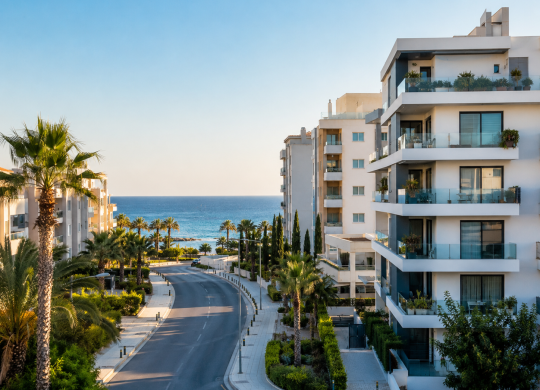
Cyprus remains one of the most popular real estate markets in the Mediterranean, but the budget for buying an apartment there varies greatly depending on the city. Find out where housing costs half as much as in Limassol, which regions are most attractive to foreigners, and how prices have changed in 2026
30 Jul. 2026
More details2 min
Expats
Portugal Property Prices 2026: Lisbon vs Porto vs Algarve Compared
Property prices in Portugal vary significantly by region, from Lisbon to the quieter inland provinces. Find out how much housing will cost in Lisbon, Porto and the Algarve in 2026, why the difference is several times higher and what you can actually buy for €400,000
10 Aug. 2026
More details3 min
Investment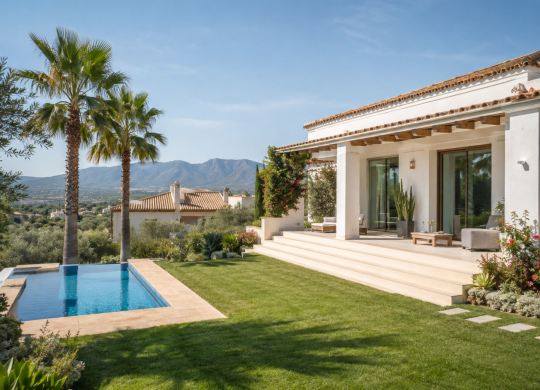
Mortgages in Spain in 2026: Who Are Banks More Willing to Lend Money to for a Home?
Spanish banks evaluate not only a potential borrower’s salary but also job stability, debts, savings, and future income prospects. Learn more about which categories of customers have the best chances of getting a mortgage in Spain and what financing terms they can expect
13 Aug. 2026
More detailsAll materials and articles are owned by VisitWorld.Today and are protected by international intellectual property regulations. When using materials, approval from VisitWorld.Today is required.