

Most expensive EU capitals for renting housing in 2026: where it is hardest to rent an apartment
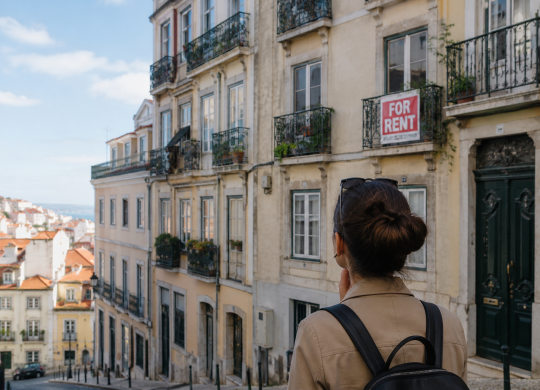
In many EU capitals, rental prices reached record highs in 2026, and in some cities, the minimum wage is no longer enough to cover rent. The situation is worst in Prague, Lisbon, and Dublin, where the housing crisis continues to worsen. Learn more about Europe’s most expensive capitals for renting, current prices, and the reasons behind the rapid rise in apartment costs

The housing crisis in Europe remains one of the major social issues of 2026. According to Euronews Business, in several EU capitals, the average rent for a one-bedroom apartment already exceeds the minimum wage after taxes. The most difficult situation is observed in Prague, Lisbon, Dublin, and Athens, where local residents are increasingly forced to move to the suburbs or share housing with neighbors.
The rise in prices is attributed to several factors: a housing shortage, the growth of short-term rentals through platforms like Airbnb, active tourism, and an increase in the number of foreigners in major cities. Against this backdrop, even countries with relatively high wages are facing a housing affordability crisis, and finding an apartment in popular European capitals has become a real challenge for students, migrants, and young professionals.
In the previous article, we reported on the most expensive cities in the world to live in in 2026, according to Numbeo.
Are you planning to buy real estate abroad? Before concluding a deal, it is important to consider not only the price per square meter, but also tax liabilities, restrictions for foreigners, title checks, and additional costs. Visit World's real estate lawyers will help you analyze the property, assess legal risks, and accompany you at all stages of the transaction: from the initial consultation to the signing of the contract. Get professional support and confidence in every step.

In which EU capitals do rent costs exceed the minimum wage?
In 2026, the housing affordability crisis became critical in several European capitals at once. A Euronews Business study showed that in some cities, the minimum wage after taxes is no longer enough to rent even a one-bedroom apartment. The situation is worst in Central and Southern Europe, where housing prices are rising faster than incomes.
Prague was named the least affordable EU capital for renters. In the Czech Republic’s capital, the average rent for a one-bedroom apartment exceeds the net minimum wage by about 30%. A similar situation is observed in Lisbon (Portugal), where the sharp rise in prices is linked to an influx of digital nomads, tourists, and foreign investors.
The list of the most expensive capitals also includes:
1. Dublin, Ireland – one of the tightest housing markets in Europe;
2. Athens, Greece – rents are skyrocketing amid a tourism boom;
3. Madrid, Spain – demand significantly outstrips supply;
4. Amsterdam, Netherlands – high prices even for small apartments;
5. Paris, France – a consistently expensive market with fierce competition.
In many capitals, young professionals and students are increasingly forced to rent rooms instead of entire apartments or move to the suburbs where housing is cheaper. Experts also note that high prices have hit low-income workers and new migrants particularly hard.

Ratio of minimum wage to rent in EU capitals. Source: Euronews Business.
In our previous article, we discussed what to look for before buying an apartment in Poland and how to avoid common mistakes.
Why are rents in European capitals skyrocketing?
Experts cite several reasons why housing in EU capitals has become less affordable. One of the main problems remains the shortage of apartments in major cities. The population of European capitals continues to grow, while the pace of new housing construction often fails to keep up with demand.
The popularity of short-term rentals through platforms like Airbnb and Booking has also had a significant impact. In tourist cities, apartment owners are increasingly renting out their properties daily, as this generates higher profits. As a result, the number of apartments available for long-term rent is decreasing, and prices continue to rise.
Other factors driving the market upward include:
1. High inflation and rising utility costs;
2. Rising mortgage rates;
3. Active labor migration to major cities;
4. An increase in the number of international students and digital nomads;
5. Real estate investment as a means of capital preservation.
The rise in housing costs is particularly noticeable in countries where wages are growing more slowly than rental rates. For example, in Portugal and the Czech Republic, rents have risen significantly faster than household incomes over the past few years, placing a greater burden on local residents.
In response, some EU countries have already begun introducing restrictions on short-term rentals and rent control programs. However, analysts warn that it will be difficult to stabilize the situation quickly due to a chronic housing shortage in popular European capitals.

Rent levels in EU capitals in 2026. Source: Euronews Business.
We previously reported that the Greek real estate market is shifting toward compact housing, which is showing faster growth in prices and demand.
Where is housing still relatively affordable?
Despite the general rise in rent prices across Europe, housing in some capitals is still considered relatively affordable compared to average or minimum wages. The best situation is observed in cities with high household incomes, well-developed social housing, or a stable real estate market.
Vienna remains one of the most livable cities for renters. The Austrian capital has been investing in municipal housing for many years and controls part of the rental market, which helps curb sharp price increases. That is why Vienna regularly ranks among the cities with the highest quality of life in the world.
The situation is also relatively better in:
1. Helsinki, Finland – high wages offset the expensive housing market;
2. Luxembourg – despite high prices, income levels remain among the highest in the EU;
3. Brussels, Belgium – rents are lower than in Paris or Amsterdam;
4. Berlin, Germany – after a sharp jump in prices, the market is gradually stabilizing;
5. Warsaw, Poland – housing is becoming more expensive, but remains more affordable than in Western Europe for now.
Analysts note that for foreigners, it is important to consider not only the cost of rent but also additional expenses: utilities, transportation, taxes, and a security deposit, which in many countries can amount to 2–3 months’ rent.

European cities with the best salary-to-rent ratio. Source: Euronews Business.
In our previous article, we reported that Spain has been named the best country for real estate investment in Europe for the first time.
What should foreigners consider before moving to EU capitals?
Finding housing in major European cities in 2026 has become significantly more difficult, especially for foreigners without a local employment contract or credit history. In popular capitals, good apartments can disappear from the market within hours of an ad being posted, and competition among tenants continues to grow.
In many countries, landlords require proof of stable income, an employment letter, and bank statements. In addition to rent, tenants are often required to pay the following upfront:
- A security deposit covering 1–3 months’ rent;
- An agency fee;
- The first month’s rent;
- Utilities and internet separately.
Due to high prices, coliving spaces and shared apartment rentals are becoming increasingly popular. This is particularly common among students, young professionals, and digital nomads in Lisbon, Barcelona, Amsterdam, and Berlin.
Experts also advise carefully researching the neighborhood before renting. In many capital cities, apartments in the center can cost twice as much as those in areas with good public transportation outside the city center. That is why many locals and migrants are increasingly choosing the suburbs over central districts.
We previously reported that housing prices in the EU have risen by 65% over 10 years.
Buying a home in another country is not only an investment but also a serious legal procedure. Mistakes in documents, unaccounted taxes or restrictions for foreigners can lead to financial losses. Consultation with a real estate lawyer from Visit World will help you to safely complete the transaction, check the seller and avoid hidden risks. Contact the experts to make your real estate purchase abroad as transparent and secure as possible.
We remind you! The Cypriot parliament is considering draft laws that could significantly change the conditions for buying real estate for citizens of countries outside the European Union. The initiatives include quantitative limits on properties, geographical bans and transparency requirements for transactions. Read more about the proposed restrictions, foreign purchases statistics and how to prepare for possible changes in the Cyprus real estate market.
Products from Visit World for a comfortable trip:
Travel guide for 200 countries;
Legal advice from a local specialist on visa and migration issues;
Travel insurance around the world (please select the country of interest and citizenship to receive services);
Medical insurance all over the world.
We monitor the accuracy and relevance of our information, so if you notice any errors or inconsistencies, please contact our hotline.
Frequantly
asked questions
Which EU capital will have the highest rent in 2026?
Why are rental prices in Europe rising so quickly?
Where in Europe is renting still more affordable?
How much money is needed to rent an apartment in an EU capital?
Is it difficult for foreigners to rent housing in Europe in 2026?
Recommended articles
2 min
Investment
Dubai Real Estate Market Drops by 38% in 2026: Causes, Prices, and Forecasts
Dubai's real estate market is plummeting amid the Middle East conflict. Find out why prices are falling, how investors are reacting and what the predictions are for 2026
26 Mar. 2026
More details2 min
Investment
Compact Apartments in Greece Are Rising Faster: A New Real Estate Trend
The Greek real estate market is shifting towards compact housing, which is seeing faster price and demand growth. Find out why small apartments are becoming more attractive to investors and buyers
16 Apr. 2026
More details3 min
Popular
How to Buy an Apartment in Poland in 2026: Prices, Taxes and Key Requirements
Housing prices in Poland remain high, but the market is offering new opportunities for buyers—including discounts of up to 10% and stable rental income of 5–7% per year. However, the buying process involves many details: from taxes and document verification to choosing a city and property type. Find out what to look for before buying an apartment in Poland and how to avoid common mistakes
30 Apr. 2026
More details3 min
Investment
Real Estate Market in Bulgaria 2026: Prices, Demand, and Investment Opportunities
The European real estate market no longer appears uniformly stable: in some countries, prices have already peaked, while in others, new demand is just beginning to emerge. Against this backdrop, Bulgaria is gradually coming into focus for investors as an affordable and relatively straightforward investment destination. Learn more about prices, demand, and real investment opportunities in Bulgaria in 2026
01 May. 2026
More detailsAll materials and articles are owned by VisitWorld.Today and are protected by international intellectual property regulations. When using materials, approval from VisitWorld.Today is required.