

The Best Cities in the UAE for Expats to Live in 2026
Table of contents
- Dubai: The Largest Job Market and the Highest Cost of Living
- Abu Dhabi: High Salaries and Family-Friendly Infrastructure
- Sharjah: More Affordable Housing Near Dubai
- Ras al-Khaimah: A Coastal Resort, Industry, and Lower Living Costs
- Ajman: the most affordable rent and a limited job market
- Migration Guide from Visit World: Everything You Need to Know About Moving to the UAE

The UAE offers not only high-paying jobs in Dubai and Abu Dhabi, but also more affordable options for those looking to relocate. Learn more about rent, salaries, transportation, and living conditions for families in five cities across the country

The UAE is often associated solely with Dubai, although living conditions vary significantly across the country’s different cities. With the same income, an expat can rent a small apartment near the business district, a spacious home in a neighboring emirate, or a house near the coast. The best options for relocation include Dubai, Abu Dhabi, Sharjah, Ras al-Khaimah, and Ajman. The choice between them is determined not by skyscrapers and beaches, but by job availability, rent costs, daily commutes, health insurance, and the cost of children’s education.
Are you planning to move to the United Arab Emirates and don’t know where to start with the paperwork?
Visit World’s immigration guide compiles all the latest information on UAE residence visas—including visa categories, applicant requirements, a list of required documents, and a step-by-step application process.

Dubai: The Largest Job Market and the Highest Cost of Living
Dubai stretches along the Persian Gulf coastline for more than 70 km. It is not a compact city with a single center, but rather a system of business, residential, and resort districts. The main employment clusters are located in Downtown Dubai, Business Bay, DIFC, Dubai Internet City, Dubai Media City, Jebel Ali, and near the international airport.
The neighborhood you live in directly affects your budget and commute time. Dubai Marina is convenient for employees of Media City and Internet City; Business Bay is ideal for those working in the city center; and Jumeirah Village Circle and Arjan offer more affordable housing. The more remote Dubai South and International City allow you to reduce rental costs but often require a car.
Housing and Monthly Expenses
Rent in Dubai is typically quoted on an annual basis. Landlords may require payment in one or several checks. The fewer payments, the easier it is to negotiate a discount. Initial costs also include a security deposit, Ejari contract registration, agent’s commission, and utility hookups.
In the first half of 2026, a one-bedroom apartment cost an average of AED 56,000 per year in Al Nahda, AED 61,000 in International City, and AED 79,000 in JVC or Arjan. In Business Bay, the average rate was AED 104,000; in Dubai Marina, AED 103,000; and in Downtown Dubai, AED 133,000 per year.
Estimated cost of living in Dubai for one person:
- One-bedroom apartment – AED 4,700–11,100 per month, depending on the neighborhood
- Groceries – AED 800–1,200
- Electricity, water, air conditioning, and internet – AED 700–1,200
- Transportation – AED 230–1,500, depending on whether you use the metro, taxis, or a car
- Other basic expenses excluding rent – approximately AED 4,000–4,200
- Comfortable budget with your own apartment – approximately AED 12,000–15,000 per month
Tenants also pay a municipal housing fee separately. It amounts to 5% of the annual rent and is typically included in monthly utility bills. Expenses rise in the summer due to constant use of air conditioning.
Salaries and Employment
Jobs in Dubai are concentrated in finance, IT, logistics, aviation, construction, real estate, tourism, retail, marketing, and professional services. Candidates with experience at international companies, knowledge of the local market, and a proven track record have the widest range of job opportunities.
In 2026, software engineers will earn approximately AED 20,000–28,000 per month, while senior-level specialists will earn AED 25,000–37,000. The salary for a financial analyst ranges from AED 18,000 to 25,000, for a marketer from AED 12,000 to 18,000, for an office administrator from AED 8,000 to 12,000, and for a sales manager from AED 18,000 to 35,000. These amounts include base pay and possible allowances for housing and transportation.
There is no personal income tax on salaries in the UAE. However, evaluating an offer based solely on the salary amount is insufficient. It is important to check whether the employer covers health insurance, flights home, housing, transportation, and children’s education. The difference in benefits packages can amount to tens of thousands of dirhams per year.
Transportation and Family-Friendly Conditions
The metro connects the airport, Downtown Dubai, Business Bay, Dubai Marina, Jebel Ali, and some residential areas. It is supplemented by trams, buses, and water transportation. A monthly pass costs AED 140 for one zone, AED 230 for two zones, and AED 350 for all zones.
If you don’t have a car, it’s convenient to live near metro stations. In JVC, Dubai Hills, Arabian Ranches, Dubai South, and many new neighborhoods, a car significantly reduces travel time. When choosing a place to live, it’s worth checking the route to work during rush hour: a short distance on the map can turn into an hour-long trip.
Most expat children attend private schools. Dubai has schools offering British, American, Indian, French, and other curricula. Tuition ranges from approximately AED 15,000 to over AED 100,000 per year per child. School bus service, uniforms, meals, textbooks, and extracurricular activities are billed separately. For the 2026/2027 school year, Dubai authorities have frozen tuition fees at private schools.
Health insurance is mandatory. The employer provides a policy for the employee, but insurance for the spouse and children may remain the resident’s responsibility. Therefore, families should agree on a comprehensive benefits package before signing an employment contract.
We previously reported that Dubai abolished the minimum real estate purchase requirement for a two-year investor visa in 2026.
Abu Dhabi: High Salaries and Family-Friendly Infrastructure
Abu Dhabi is the capital of the UAE and the administrative center of the emirate of the same name. The central part of the city is located on an island, where government institutions, offices, the Corniche promenade, and older residential neighborhoods are concentrated. New districts are developing on the islands of Al Reem, Yas, and Saadiyat, as well as on the mainland.
The city is quieter and less tourist-oriented than Dubai. It is well-suited for professionals working in energy, finance, government, aviation, construction, medicine, and education. For families, key advantages include spacious residential areas, international schools, parks, and fewer tourists.
Housing and Monthly Expenses
Rent prices depend on proximity to the city center, the coast, and business districts. More affordable apartments are concentrated in Khalifa City, Al Shamkha, and Al Nahyan. Al Reem Island attracts residents with its modern residential complexes near the city center. Yas Island, Al Raha Beach, and Saadiyat Island are among the more expensive locations.
In the first half of 2026, the average annual rent for a one-bedroom apartment was AED 59,000 in Khalifa City, AED 63,000 in Al Shamkha, and AED 66,000 in Al Nahyan. On Hamdan Street, a similar apartment cost AED 74,000; in Al Khalidiyah, AED 84,000; and on Al Reem Island, AED 94,000. On Yas Island, the rate reached AED 113,000 per year.
Estimated cost of living in Abu Dhabi for one person:
- One-bedroom apartment – AED 4,900–9,400 per month
- Groceries – AED 900–1,500
- Utilities and internet – AED 650–1,100
- Transportation – AED 80–1,300 depending on whether you use the bus, a taxi, or a car
- Basic expenses excluding rent – approximately AED 3,500–4,500
- Comfortable budget with your own apartment – about AED 10,000–14,000 per month
A municipal fee of 5% of the annual lease value is added to the rent. It is usually included in the monthly utility bill. In June 2026, Abu Dhabi temporarily reduced the permissible annual rent increase from 5% to 0%, which limited price increases during lease renewals.
Salaries and Employment
Jobs in Abu Dhabi are often with large state-owned and semi-state-owned companies. Major employers operate in the oil and gas industry, renewable energy, the banking sector, investments, the defense industry, aviation, construction, and healthcare.
Financial analysts earn approximately AED 18,000–25,000 per month, while financial managers earn AED 25,000–35,000.
A software engineer’s salary ranges from AED 20,000 to 28,000, a cybersecurity specialist’s from AED 25,000 to 40,000, and a cloud systems engineer’s from AED 15,000 to 30,000. Administrative staff typically earn AED 8,000–15,000.
Competition for positions in the public sector is high. Some job openings are available only to UAE citizens under the Emiratization policy. It is easier for foreign candidates to find employment with international companies, in consulting, healthcare, private education, and the technology sector. Knowledge of Arabic broadens job opportunities, but English remains the primary working language in international business.
Transportation and Conditions for Families
Public transportation consists mainly of buses. A single ride costs from AED 2, and a monthly Hafilat pass costs AED 80. There is no metro system in the city. The bus network is sufficient for travel to the central island, but residents of Khalifa City, Yas Island, Al Raha, and other outlying areas find it more convenient to have a car.
Private schools follow British, American, Indian, French, and international curricula. Annual tuition ranges from approximately AED 15,000 at budget-friendly schools to AED 80,000–100,000 at prestigious schools. Bus transportation, meals, uniforms, and extracurricular activities are paid for separately. Employers in the energy, financial, and public sectors sometimes reimburse a portion of educational expenses.
Health insurance is mandatory for residents. The employee’s policy is usually paid for by the employer. Coverage for family members depends on the terms of the contract. Before moving, it’s worth checking the network of clinics, treatment limits, and coverage for dental care, pregnancy, and chronic conditions.
Learn more about the best places to visit in Abu Dhabi by following the link.
Sharjah: More Affordable Housing Near Dubai
Sharjah borders Dubai, and certain residential neighborhoods effectively form a shared urban area. Al Nahda and Al Taawun are located near the border, Al Majaz and Al Khan are near the waterfront, and Muwaileh is closer to the university district and the international airport.
People choose this city primarily for its more spacious and affordable housing. However, these savings must be weighed against the time spent commuting. A trip from the border areas to Dubai can take 20–30 minutes without traffic, but during morning and evening rush hours, it often takes over an hour.
Housing and Monthly Expenses
Rent in Sharjah is significantly cheaper than in Dubai. A one-bedroom apartment in Muwaileh costs an average of about AED 43,000 per year. In Al Nahda, Al Taawun, and Al Majaz, expect to pay approximately AED 37,000–50,000.
New complexes in Aljada and Al Mamsha may be more expensive due to their modern layouts, swimming pools, and gated communities.
Estimated cost of living in Sharjah for one person:
- One-bedroom apartment – AED 3,100–4,200 per month
- Groceries – AED 800–1,300
- Electricity, water, air conditioning, and internet – AED 500–900
- Public transportation – starting at AED 225 per month
- Trips to Dubai by car or taxi – AED 800–2,000
- Comfortable budget – approximately AED 6,500–9,000 per month
A low rent does not always mean low upfront costs. In addition to the first month’s rent, you’ll need to pay a security deposit, an agent’s commission, contract processing fees, and SEWA service connection fees. In new buildings, you’ll need to clarify the cooling fee separately.
Salaries and Employment
The local economy relies on manufacturing, logistics, education, healthcare, retail, and small businesses. Job opportunities are concentrated in industrial zones, Khalid Port, the Hamriyah and SAIF Zone free economic zones, the university district, and private schools.
Jobs in Sharjah typically pay less than comparable positions in Dubai. Accountants and office workers often earn AED 4,000–8,000 per month, teachers earn AED 4,000–10,000, and engineers and logistics specialists earn AED 7,000–15,000. Management positions and jobs at international companies can pay AED 15,000–25,000.
For an employee earning a local salary, Sharjah is only cost-effective if rent is moderate. If the job is located in Dubai, you should factor in not only fuel and parking costs but also the time lost each day. The most convenient scenario is remote or hybrid work with a few trips to Dubai per week.
Transportation and Conditions for Families
Local buses are paid for with the Sayer card. A single ride costs AED 6, and an unlimited monthly pass costs AED 225. Intercity buses run between Sharjah and Dubai metro stations, but their schedules also depend on traffic conditions.
There is no metro in Sharjah. For regular trips between outlying areas, a car remains the most convenient option. Living near the border with Dubai shortens the distance, but this is where the worst traffic jams occur. Muwaileh and Aljada are better suited for people who work in Sharjah itself or have flexible schedules.
The city offers a wide selection of private schools with British, American, Indian, and international curricula. Many of these schools are located in Muwaileh. Annual tuition typically ranges from AED 10,000 to 40,000, though it exceeds AED 50,000 at some schools.
Sharjah adheres to stricter social norms than Dubai. The sale of alcohol is prohibited in the emirate, and dress codes and behavioral expectations in public places are more conservative. For families, this means a more peaceful environment, but these rules should be taken into account before moving.
In our previous article, we explained how to obtain a residence permit in the UAE.
Ras al-Khaimah: A Coastal Resort, Industry, and Lower Living Costs
Ras al-Khaimah is located in the north of the UAE, between the Persian Gulf and the Hajar Mountains. It is about 100 km from Dubai. The drive takes approximately 60–90 minutes, so commuting between the cities daily is inconvenient.
The residential areas vary significantly. Al Nakheel and Al Seer are located closer to the traditional city center. Al Hamra Village, Mina Al Arab, and Al Marjan Island are coastal developments featuring beaches, hotels, and new apartments. Rent here is more expensive but still lower than in popular areas of Dubai.
Housing and Monthly Expenses
The most affordable apartments can be found in Al Seer, Yasmin Village, Al Nakheel, and areas near the city center. A one-bedroom apartment in Al Seer costs an average of about AED 26,000 per year, while in Yasmin Village it costs AED 28,000. Prices are higher in coastal complexes: AED 51,000 in Al Hamra Village, AED 59,000 on Al Marjan Island, and AED 60,000 in Mina Al Arab.
Approximate cost of living in Ras al-Khaimah for one person:
- One-bedroom apartment – AED 2,200–5,000 per month
- Groceries – AED 800–1,200
- Utilities and internet – AED 600–1,000
- Car, gas, and insurance – AED 900–1,800
- Other basic expenses – AED 1,000–1,800
- Comfortable monthly budget – approximately AED 6,000–9,000
The difference between the city center and the resort area isn’t just about rent. On Al Marjan Island and in Al Hamra Village, food, delivery, and residential complex maintenance fees may be more expensive. Before renting an apartment, you should check whether air conditioning is included in the rent and who pays the service fees.
Salaries and Employment
Jobs in Ras al-Khaimah are concentrated in tourism, the hotel industry, manufacturing, construction materials production, logistics, real estate, and retail. A major business hub is the RAKEZ economic zone, which is home to manufacturing, trading, and service companies.
Employees in hotels, retail, and customer service typically earn AED 3,000–7,000 per month. Salaries for skilled technical specialists, engineers, and mid-level managers range from approximately AED 7,000 to 18,000. Experienced managers at international companies can earn AED 20,000–35,000.
There are fewer job openings than in Dubai or Abu Dhabi. Moving there without a pre-signed contract is risky, especially for professionals in finance, IT, and marketing. The city is better suited for people who work remotely or are employed in tourism, industry, and the local free economic zone.
Transportation and Conditions for Families
RAKTA operates city and intercity buses, including routes to Dubai, Sharjah, and Ajman. However, the network does not serve all residential complexes with sufficient frequency. On Al Marjan Island, in Mina Al Arab, and in Al Hamra Village, a car is practically a necessity.
The lower density of development makes getting around easier, and traffic jams are significantly less frequent than in Dubai and Sharjah. At the same time, distances between the city center, industrial zones, schools, and coastal neighborhoods can exceed 20–30 km.
Ras al-Khaimah has private schools offering British, American, Indian, and international curricula. Tuition costs approximately AED 10,000–50,000 per year. The selection is more limited than in Dubai, so families should choose a school first and then decide on a neighborhood to live in.
The city is ideal for families who value beaches, nature, light traffic, and more spacious housing. The Hajar Mountains, Jebel Jais, and coastal areas offer more opportunities for outdoor recreation. For specialized medical services, residents sometimes have to travel to Dubai or Sharjah.
In our previous article, we discussed the Remote Working Visa in the UAE 2026: conditions, requirements, and how to work remotely from the Emirates.
Ajman: the most affordable rent and a limited job market
Ajman is the smallest of the seven emirates of the UAE. Its urban area blends seamlessly into Sharjah, so it’s easy to miss the border between them. The distance from downtown Ajman to Dubai is about 40 km, but during rush hour, the drive can take 60–90 minutes or longer.
The city is more compact and less complex than Dubai or Abu Dhabi. The main residential areas are Al Nuaimiya, Al Rashidiya, Al Jurf, Ajman Downtown, and Corniche Ajman. New villas are concentrated in Al Yasmeen, Al Zahya, and Al Helio.
The coastline is lined with hotels and residential towers, while Al Zorah stands out for its beaches, golf club, and mangrove reserves.
Housing and Monthly Expenses
Rent in Ajman remains among the cheapest in the country. In 2026, a one-bedroom apartment cost an average of AED 27,000 per year in Al Nuaimiya, AED 28,000 in Al Rashidiya and Ajman Downtown, AED 29,000 in Al Rawda, and AED 30,000 in Al Jurf. A two-bedroom apartment in these areas cost approximately AED 38,000–42,000 per year.
Estimated cost of living in Ajman for one person:
- One-bedroom apartment – AED 2,250–2,600 per month
- Groceries – AED 700–1,100
- Electricity, water, and internet – AED 550–900
- Public transportation – AED 200–300
- Car and trips to other emirates – AED 900–1,800
- Comfortable budget – about AED 5,000–7,000 per month
In cheaper apartments, you should check the condition of the air conditioners, parking, maintenance, and how cooling costs are billed. The low price of an apartment in an older tower may be offset by high utility bills and regular repair costs.
Salaries and Employment
The local job market is significantly smaller than in neighboring emirates. Jobs in Ajman are available in retail, construction, manufacturing, logistics, education, healthcare, the hospitality sector, and the Ajman Free Zone.
Administrative staff, salespeople, and customer service representatives typically earn AED 3,000–6,000 per month. Accountants, teachers, healthcare professionals, and technical specialists earn AED 5,000–10,000. Engineers and mid-level managers can earn AED 8,000–18,000.
With local salaries, Ajman allows you to keep rental costs under control but offers fewer opportunities for career growth. Many residents work in Sharjah or Dubai. This option makes sense with a hybrid work schedule. A daily commute to Dubai takes up a significant portion of your savings and free time.
Transportation and Family-Friendly Conditions
City buses are paid for with the Masaar Money card. The network is expanding: in the first half of 2026, nearly 2 million passengers used Ajman’s public transportation, a 7% increase from the previous year. Buses also connect the emirate with Sharjah and Dubai.
For travel within the compact city center, a bus or taxi is sufficient. Residents of Al Yasmeen, Al Zahya, Al Helio, and the outlying areas of Al Jurf find it more convenient to have a car. If you work in Dubai, you’ll need to factor in fuel costs, Salik tolls, parking, and car maintenance into your budget.
Ajman has private schools offering British, American, Indian, and UAE Ministry of Education curricula. Tuition typically ranges from AED 8,000 to 35,000 per year. The selection is smaller than in Dubai or Sharjah, but families can rent a two-bedroom apartment for the price of a studio in certain areas of Dubai.
Ajman is suitable for families, remote workers, and people with moderate incomes. For a professional seeking rapid career growth or who commutes daily to central Dubai, the city presents more transportation challenges than financial advantages.
Migration Guide from Visit World: Everything You Need to Know About Moving to the UAE
Applying for a resident visa in the Emirates requires careful preparation, from choosing the right visa category to gathering a complete set of documents. You can find up-to-date information on moving to the United Arab Emirates for citizens of any country in the immigration guide from Visit World. All necessary information is sent to your email address in PDF format within a few minutes after submission.
The immigration guide from Visit World includes step-by-step instructions for applying for a residence visa, a complete list of documents for each visa category, financial requirements, the procedure for undergoing a medical examination and obtaining an Emirates ID, as well as practical advice on settling into the country.
Order the migration guide from Visit World and prepare for your move to the UAE well in advance and without unnecessary risks!
We remind you! In a previous article, we reported that the UAE is launching high-speed trains between Dubai and Abu Dhabi.
Products from Visit World for a comfortable trip:
Checklist for obtaining a visa and necessary documents in UAE;
Legal advice on immigration to UAE;
Travel insurance for foreigners in UAE;
Medical insurance all over the world.
We monitor the accuracy and relevance of our information, so if you notice any errors or inconsistencies, please contact our hotline.
Frequantly
asked questions
Which city in the UAE is best for expats?
What salary is needed for a comfortable life in the UAE?
Where in the UAE is it cheapest to rent a place to live?
Which is better for work—Dubai or Abu Dhabi?
How much does it cost to live in the UAE for a family with children?
Recommended articles
1 min
Employment
The UAE has updated its remote working visa in 2026. Find out in our guide who can apply for a Remote Working Visa, what the income and document requirements are, and how to move with your family
29 Jan. 2026
More details3 min
Travels
What to see in Abu Dhabi: top 10 places for your first trip to the UAE capital
Abu Dhabi combines modern architecture, world-class cultural spaces, and locations that reveal the history and traditions of the Emirates. The city is suitable for both a first trip to the UAE and a deeper exploration of the region beyond tourist stereotypes. Learn more about the key places to include in your Abu Dhabi itinerary
13 Feb. 2026
More details1 min
Investment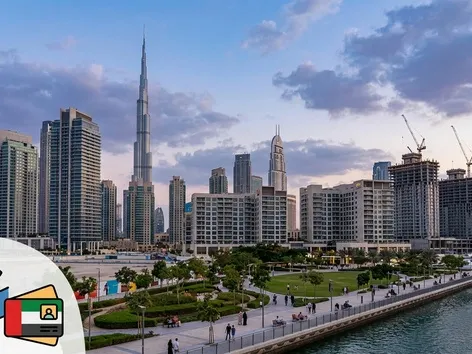
Dubai Removes Minimum Property Value for 2-Year Investor Visa in 2026: What is known?
In April 2026, the Dubai Land Department removed the minimum property value threshold of AED 750,000 for sole owners applying for a two-year investor visa. Find out what the conditions are now, how the joint ownership requirements have changed, how the two-year visa differs from the Golden Visa, and what these reforms mean for foreign investors in Dubai property
21 May. 2026
More details3 min
Residence permit
Residency in the UAE: How to Obtain a Residence Permit in the Emirates?
A UAE residency visa provides access to work, business, education, and investment in one of the world’s most dynamic economies—ranging from short-term work permits to the 10-year Golden Visa for investors and top professionals. Each category has its own requirements for applicants, financial resources, and documentation. Learn more about the types of UAE residency visas, the eligibility criteria, and the procedure for obtaining a residence permit for foreigners
17 Jul. 2026
More detailsAll materials and articles are owned by VisitWorld.Today and are protected by international intellectual property regulations. When using materials, approval from VisitWorld.Today is required.