

Halloween 2026: History, Traditions and Fascinating Facts About the Spookiest Holiday
Table of contents
- When is Halloween in 2026?
- The History of Halloween—Where Does the Holiday Come From?
- The Main Halloween Traditions and What They Mean
- How is Halloween celebrated in different countries around the world?
- Interesting facts about Halloween that not everyone knows
- Where are the best places to celebrate Halloween in 2026?
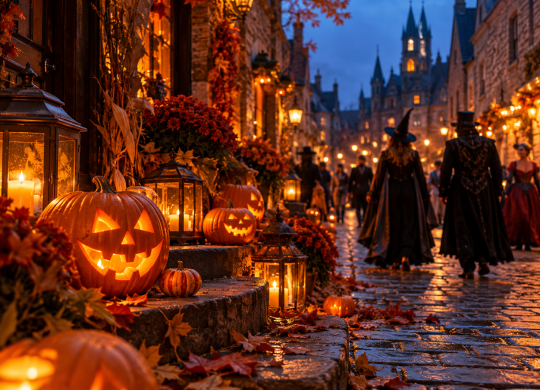
Halloween is celebrated around the world on October 31 with spooky costumes, glowing pumpkins, and mysterious legends. In 2026, it falls on a Saturday, bringing themed parties, festivals, and nighttime entertainment to many countries. Learn more about the history of Halloween, unusual traditions, and celebrations around the world

Halloween in 2026 will be celebrated on Saturday, October 31. This holiday originated from ancient seasonal customs and later became one of the most famous fall events in the world. Today, Halloween is associated with costume parties, carved pumpkins, candy, and spooky stories. It is celebrated on a particularly large scale in the United States, Canada, Ireland, and the United Kingdom, although many other countries have their own traditions for celebrating it as well.
Planning a trip abroad and want to protect yourself from unforeseen situations?
Travel insurance from Visit World will cover medical expenses, flight delays, and lost luggage in any country. Get a policy online in a few minutes and travel with confidence!

When is Halloween in 2026?
Halloween is celebrated annually on October 31, the eve of All Saints’ Day. In 2026, the holiday falls on a Saturday, so themed parties, costume parades, and nighttime festivals can be held without being tied to the workweek. In many cities, festive events begin several days before the main date.
Halloween is not a public holiday in most countries around the world. In the U.S., Canada, the United Kingdom, and Ireland, October 31 is usually a regular workday unless it falls on a weekend. At the same time, for the entertainment industry, it is one of the busiest periods of the fall.
A distinctive feature of Halloween is that it is celebrated mainly after sunset. It is in the evening that children go trick-or-treating, houses are lit with jack-o’-lanterns, and the streets are filled with witches, ghosts, vampires, and other characters. Festive events often last until late at night or the morning of November 1.
Interestingly, October 31 coincides with other holidays in some countries. For example, in nine federal states of Germany, Reformation Day (Reformationstag) is observed on this day, which is an official holiday. In Finland and Sweden, October 31, 2026, falls on All Saints’ Day.
In our previous article, we wrote about the most mystical places in Europe to celebrate Halloween 2026.
The History of Halloween—Where Does the Holiday Come From?
The history of Halloween spans over two thousand years. Its origins are linked to the ancient Celtic festival of Samhain, which was celebrated in late October in what is now Ireland, Great Britain, and other regions of Europe. It symbolized the end of the harvest season and the beginning of the dark half of the year.
The Celts believed that on the night of October 31 to November 1, the boundary between the world of the living and the dead became thinner. According to folk beliefs, spirits could return to earth. People lit large bonfires, performed rituals, and wore masks to protect themselves from supernatural forces.
The modern name “Halloween” comes from the English phrase “All Hallows’ Eve,” meaning “the evening before All Saints’ Day.” With the spread of Christianity, ancient seasonal customs gradually became intertwined with traditions of honoring the dead.
How did Halloween become popular around the world?
Irish and Scottish immigrants played a key role in spreading the holiday, bringing their traditions to North America in the 19th century. There, Halloween gradually evolved into a mass celebration featuring costumes, candy, and decorated homes.
In the 20th century, American movies, television, and popular culture made Halloween recognizable far beyond the borders of the United States. The custom of going from house to house asking for candy—known as “trick-or-treating”—became particularly popular in the mid-20th century.
Fun fact: the first Halloween lanterns were carved not from pumpkins, but from turnips and other root vegetables. Irish immigrants to America began using pumpkins because they were larger, more readily available, and much easier to carve.
Ancient Halloween customs also included fortune-telling and games with apples and nuts. Some of these traditions have survived to this day and remain popular at holiday parties.
Learn more about the best amusement parks and festivals in Europe for Halloween 2026 by following the link.
The Main Halloween Traditions and What They Mean
It’s hard to imagine Halloween without pumpkins with spooky faces, costume parties, and children going door-to-door in search of candy. Most of these customs have a centuries-old history, although their meanings have changed over time.
The most famous Halloween traditions:
- Jack-o'-lanterns. Faces are carved into pumpkins, and candles or LED lights are placed inside. The tradition is linked to an Irish legend about Jack, who was doomed to wander in the darkness with a lantern. In the past, turnips were used for this purpose.
- Costumes of witches, ghosts, and monsters. The custom of dressing up is linked to ancient beliefs about spirits. Today, not only scary costumes are popular, but also those of movie characters, celebrities, and video game characters.
- Trick-or-treating. Children in costumes go from house to house in the neighborhood and receive candy. This tradition is especially widespread in the U.S., Canada, Ireland, and the United Kingdom.
- Decorating homes. Spiderwebs, skeletons, tombstones, bats, and light displays transform ordinary yards into spooky settings. In some American neighborhoods, residents even compete for the best holiday decorations.
- Apple games. One of the oldest pastimes is “apple bobbing,” where participants try to retrieve an apple from water without using their hands. In the past, such games were also associated with love divination.
- Parties and horror movie marathons. Modern Halloween is accompanied by themed festivals, nighttime tours, scavenger hunts, visits to haunted houses, and movie marathons.
Fun fact: The modern tradition of trick-or-treating has several possible origins. One of them is the medieval custom of “souling,” when people went from house to house, received special baked goods (soul cakes), and in return prayed for the hosts’ deceased relatives. Over time, religious rituals gave way to children’s entertainment and sweets.
Today, the most recognizable colors of Halloween are orange and black. The former is associated with the fall harvest and pumpkins, while the latter is linked to night, darkness, and the mystical.
We previously wrote about where to celebrate Halloween 2026 in Europe: the best cities and locations.
How is Halloween celebrated in different countries around the world?
Halloween has its own unique traditions in different parts of the world. In some places, the streets turn into massive costume parties; in others, fire festivals are held; and in still others, ancient rituals and folk legends are preserved.
- Ireland – The Birthplace of Halloween. Bonfires, fortune-telling, and the traditional fruit bread barmbrack are still popular here. In the past, symbolic items were hidden in the bread: a ring promised a quick marriage, and a coin promised wealth. The city of Derry is famous for its large-scale Halloween festival featuring parades, performances, and fireworks.
- The United States — the land of pumpkins and spooky decorations. Americans decorate their homes with huge skeletons, fake spiderwebs, and hundreds of pumpkins. Children go trick-or-treating, adults attend costume parties, and theme parks put on nighttime shows. The holiday takes on a special atmosphere in Salem, known for its history of witch trials.
- Great Britain – ghosts, castles, and ancient legends. Night tours of historic castles, spooky mazes, and family festivals are popular here. In Scotland, the tradition of “guising” has been preserved: children dress up and perform songs, jokes, or short skits in exchange for treats.
- Canada – pumpkin festivals and costume parades. Canadian families decorate their yards, carve jack-o’-lanterns, and organize festive activities for children. Major cities host themed parties, while farms offer pumpkin patches and corn mazes.
- Germany – Halloween with a local twist. Costume parties and themed events at castles and amusement parks are popular throughout the country. In some regions, children go trick-or-treating, shouting “Süßes oder Saures!”—the German equivalent of “trick or treat.” At the same time, Reformation Day is celebrated here on October 31.
- Japan – vibrant costumes and city parties. Japanese Halloween is primarily associated with cosplay, themed cafes, amusement parks, and holiday merchandise. Unlike in the U.S., the custom of going door-to-door for candy hasn’t caught on here. In Tokyo, some large-scale street celebrations are restricted due to safety concerns and overcrowding.
- Mexico – colorful traditions honoring the dead. At the end of October, you can see Halloween costumes and decorations here, but the Day of the Dead (Día de los Muertos) holds the greatest cultural significance. It is celebrated mainly on November 1–2. Families set up altars with photographs of loved ones, decorating them with marigolds, candles, and the deceased’s favorite foods.
Fun fact: In 2026, the Derry Halloween festival in Ireland will celebrate its 40th anniversary. The festivities will run from October 28 to November 1. And the Mexican Day of the Dead, which is often confused with Halloween, has been inscribed on UNESCO’s List of Intangible Cultural Heritage. It is a distinct holiday with its own origins and traditions.
Halloween takes on a unique character in every country: from ancient Irish rituals to modern Japanese cosplay festivals. It is this diversity that makes October 31 an interesting date for travelers.
We previously wrote about The Day of the Dead: Traditions of Celebrating Dia de los Muertos in Mexico.
Interesting facts about Halloween that not everyone knows
Halloween has long since gone beyond being just a regular costume party. Every year, millions of people spend money on decorations, candy, and entertainment, and some traditions have been around for several centuries.
Here’s a selection of unusual facts about the spookiest night of the year:
- Americans will spend a record $13.5 billion on Halloween in 2026. According to a forecast by the National Retail Federation, average spending will total $115.14 per person. Most of the money will go toward costumes, decorations, and candy.
- 74% of Americans plan to celebrate Halloween in 2026. Meanwhile, 49% began buying Halloween items as early as September or even earlier. Halloween has effectively evolved from a single night into an entire fall season of entertainment.
- The most popular costume among adults is a witch. In 2026, approximately 4.8 million Americans plan to dress up as witches, and 4.2 million as vampires. Spider-Man leads the way among children: about 4.6 million young revelers have chosen this look.
- Even pets get Halloween costumes. Americans plan to spend about $920 million on them. The most popular costumes for pets are a pumpkin, a hot dog, and a ghost.
- The famous candy corn was originally called “Chicken Feed.” These tri-colored candies appeared in the U.S. in the 1880s and were initially associated with the fall harvest rather than Halloween. Their popularity as a holiday treat grew in the 20th century.
- Pumpkins became a symbol of Halloween thanks to immigrants. In Ireland, lanterns were traditionally made from turnips. In the U.S., immigrants began carving faces into pumpkins, which were larger and easier to work with.
Interestingly, Halloween continues to gain popularity. According to the National Retail Federation, the percentage of Americans planning to celebrate the holiday has risen from 69% in 2016 to 74% in 2026.
In our previous article, we discussed where millions of tourists go for Halloween: The Top 10 Places in the World.
Where are the best places to celebrate Halloween in 2026?
In many cities, Halloween turns into a large-scale tourist festival featuring parades, light shows, spooky tours, and costume parties. Some celebrations last several weeks, and certain locations attract tens of thousands of tourists every year.
Here are four interesting places to celebrate Halloween in 2026:
- Derry, Northern Ireland. From October 28 to November 1, the city hosts Derry Halloween, which is celebrating its 40th anniversary this year. More than 120,000 visitors are expected. The main event on October 31 is a carnival parade at 7:00 p.m., followed by fireworks. Other attractions include light installations, street performances, and characters from Celtic folklore.
- Salem, USA. This city in Massachusetts is known for the historic trials of people accused of witchcraft in 1692. Throughout October, it hosts the Haunted Happenings festival. Tourists can enjoy themed tours, costume events, magic shows, and visits to historical sites.
- Rust, Germany. The Europa-Park amusement park hosts the Traumatica nighttime horror festival, featuring actors, spine-chilling rides, and special shows. In 2026, the program runs from September 23 to November 7, including October 31. Evening events are intended for visitors ages 16 and older.
- Tokyo, Japan. Tokyo Disneyland and Tokyo DisneySea are hosting Disney Halloween from September 16 through October 31, 2026. The program includes festive parades, fireworks, themed cuisine, and meet-and-greets with Disney characters. On October 31, visitors are allowed to wear full-body character costumes in accordance with the parks’ rules.
For lovers of ancient legends, Derry is the most intriguing choice; for fans of the mystical and history, Salem is the best option. Those seeking thrills should check out Traumatica, while Tokyo’s theme parks are ideal for family celebrations.
No matter how well thought-out your itinerary is, there is always room for force majeure when traveling. Unexpected medical expenses, transportation delays, or luggage problems can ruin your plans and budget. Travel insurance helps you avoid unnecessary worries in such situations. You can apply for a travel insurance policy for a specific trip online at Visit World - quickly and without unnecessary bureaucracy!
Take out a policy online at Visit World and enjoy your trip without any unnecessary worries!
We remind you! Skyscanner has highlighted 10 travel destinations for 2027 that have seen a noticeable surge in interest: from Bishkek to Samos, Greece. Read more about the top picks, their main attractions, and the best time to visit.
Products from Visit World for a comfortable trip:
Travel guide for 200 countries;
Legal advice from a local specialist on visa and migration issues;
Travel insurance around the world (please select the country of interest and citizenship to receive services);
Medical insurance all over the world.
We monitor the accuracy and relevance of our information, so if you notice any errors or inconsistencies, please contact our hotline
Frequantly
asked questions
When is Halloween in 2026?
Where does Halloween come from?
Why do people carve pumpkins on Halloween?
In which countries is Halloween celebrated on the largest scale?
Is October 31 an official holiday?
Recommended articles
3 min
Events
Day of the Dead: traditions of celebrating Dia de los Muertos in Mexico
Mexicans are known worldwide for their unique attitude to life and death. It is in this country that the Day of the Dead is celebrated annually, when people honor the memory of their deceased loved ones with loud celebrations. Learn more about the history, symbols, and traditions of Dia de los Muertos in Mexico
17 Aug. 2024
More details3 min
Events
The Most Mystical Places in Europe to Celebrate Halloween 2026
Abandoned fortresses, haunted castles, and places linked to spine-chilling historical events attract tourists from all over the world. Learn more about Europe’s most mysterious locations worth visiting on Halloween 2026
21 Oct. 2026
More details3 min
Events
Where to Celebrate Halloween 2026 in Europe: Best Cities and Places
In 2026, you can turn Halloween into a full-fledged fall getaway featuring festivals, nighttime shows, and unique venues. Learn more about the most interesting places and events for celebrating Halloween in Europe
10 Oct. 2026
More details3 min
Events
The Best Amusement Parks and Festivals in Europe for Halloween 2026
Amusement parks and cities across Europe are preparing for Halloween 2026 with spooky mazes, costume parades, and evening shows. Learn more about the most exciting festivals, event dates, and activities for children and adults
13 Oct. 2026
More detailsAll materials and articles are owned by VisitWorld.Today and are protected by international intellectual property regulations. When using materials, approval from VisitWorld.Today is required.