

10 Unusual Places to Visit in the UK You Shouldn't Miss
Table of contents
- Yoxman – an eight-meter-tall bronze giant in Suffolk
- Portmeirion – a little Italy in the middle of Wales
- Mannakin Hall – A Spooky Mannequin Graveyard in Lincolnshire
- White Scars – Yorkshire’s Mysterious Stone Landscape
- Library in the Woods—a cabin with thousands of messages on the island of Arran
- Sultan the Pit Pony – a giant earth horse in Wales
- Crystal Grotto – a fairy-tale crystal grotto in Surrey
- St. Patrick’s Tombs – Mysterious Burials in the Cliffs of Lancashire
- Blackchurch Rock – a massive stone arch on the Devon coast
- Tilted Globe—a mysterious stone globe in the Scottish Highlands
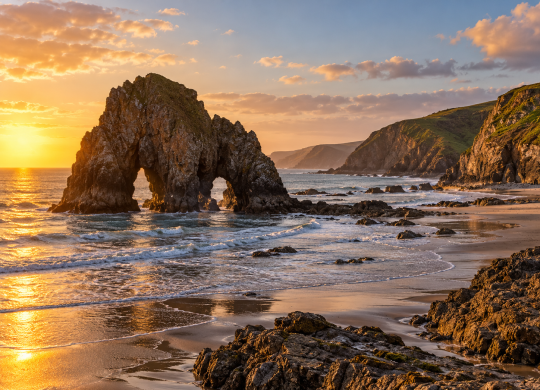
The United Kingdom is home to many amazing places that not all tourists know about. Huge sculptures, mysterious caves, unusual architectural landmarks, and natural wonders. Learn more about 10 unique locations in the United Kingdom that are worth adding to your travel itinerary

Great Britain isn’t just Big Ben, Buckingham Palace, and famous castles. Off the beaten path, you can find an eight-meter-tall bronze giant, an entire cemetery of mannequins, an 18th-century crystal grotto, and a giant horse sculpture made from coal rock. Some of these places are hidden among forests and mountains, while others are located near small British towns. We’ve compiled a list of 10 unusual landmarks in Great Britain that will reveal a completely unexpected side of the country.
Dreaming of the perfect trip—free of stress, unpleasant surprises, and unnecessary expenses? Start planning with the travel guide from Visit World! In it, you’ll find important information about entry rules, visa requirements, necessary documents, and other details of international travel. Spend less time searching for answers and more time feeling confident and excited about new adventures!

Yoxman – an eight-meter-tall bronze giant in Suffolk
Near the village of Yoxford in the English county of Suffolk stands an unusual bronze figure nearly 8 meters tall. This is Yoxman—a giant sculpture of a man standing in the middle of a green field by the A12 highway. From a distance, the giant resembles a mysterious traveler who has stopped to take in the British countryside.
The sculpture was created by British artist Laurence Edwards. He worked on Yoxman for about four years, and in November 2021, the monument was installed on the grounds of the historic Cockfield Hall estate. The sculpture consists of 50 bronze parts and weighs several metric tons. According to the artist’s concept, the giant symbolizes humanity’s connection to nature and serves as a reminder of environmental changes.
How to see it: Yocksman is located near the A12 road, not far from Yaxford, about 30 km from Ipswich. The sculpture is clearly visible from the road, so it can be included in a road trip through Eastern England. You don’t need to enter the estate’s private grounds to view it.
In our previous article, we wrote about Scotland’s historic sites: 5 places to visit.
Portmeirion – a little Italy in the middle of Wales
Imagine an Italian town with colorful houses, graceful arches, fountains, and Mediterranean gardens—but instead of Italy, picture the coast of North Wales. That’s exactly what Portmeirion looks like—a unique tourist village on a private peninsula near the Aeryri (Snowdonia) National Park. Its pastel-colored facades, decorative towers, and narrow streets create the atmosphere of the authentic Italian Riviera.
Portmeirion was designed by the Welsh architect Clough Williams-Ellis. Construction lasted from 1925 to 1976, and the village welcomed its first visitors in 1926. The architect sought to prove that new buildings could harmoniously complement the natural landscape. Interestingly, some of the architectural elements were transported here from other parts of Great Britain. Portmeirion later became famous thanks to the British TV series *The Prisoner*, which was filmed there in the 1960s.
How to visit: Portmeirion is located in the county of Gwynedd, near the town of Portmadog. There is an admission fee; tickets can be purchased on-site or in advance through the official website. The village is open year-round, though hours vary by season. In addition to strolling through the picturesque streets, visitors can explore the botanical gardens, cafes, shops, and observation decks offering views of the coast.
Mannakin Hall – A Spooky Mannequin Graveyard in Lincolnshire
In Lincolnshire, there’s a place that looks more like the set of a horror movie than a typical tourist attraction. Mannakin Hall is a vast estate housing over 15,000 mannequins. Hundreds of plastic figures stand out in the open, hide among the trees, or lie amid piles of arms, legs, and heads. Some mannequins are dressed in vintage outfits, while others look damaged, creating a surreal atmosphere.
Behind this unusual project is British artist Roz Edwards, who rescues old mannequins from landfills. They are repaired, sold, or rented out for film shoots, TV shows, and art installations. Interestingly, the Mannakin Hall site was formerly part of the RAF Fulbeck military base during World War II. Now, the former military facilities are home to one of the strangest collections in Great Britain.
How to visit: Mannakin Hall is located in Fulbeck Lowfields, near the town of Grantham. It is private property, so there is no general public access. Special open houses, photo sessions, and themed events are organized for tourists.
Learn more about the best cities in the UK for expats to live in by following the link.
White Scars – Yorkshire’s Mysterious Stone Landscape
In the Yorkshire Dales National Park lies an amazing place that resembles the surface of another planet. White Scars is a vast limestone plateau near Mount Ingleborough, covered with thousands of natural fissures. The stone slabs form a whimsical labyrinth, with grass, moss, and small plants sprouting between them. The contrast between the gray rocks and the green hills of Yorkshire is particularly striking.
This unusual landscape has been shaped over millennia. During the Ice Age, glaciers exposed and polished the limestone, while rainwater gradually widened the natural cracks. This is how the distinctive stone mosaic, known as limestone pavement, came to be. A unique microclimate has formed in the deep gorges, allowing ferns and other plants to thrive here. Beneath the plateau lies the famous White Scar Cave, featuring underground waterfalls, stalactites, and vast chambers.
How to visit: The White Scars are located near the village of Ingleton in North Yorkshire. The best way to see the rocky landscapes is to hike the mountain trails around Ingleborough. Be sure to choose a dry day and wear hiking boots, as the terrain is uneven and deep crevices can be dangerous. If you’d like to continue your adventure underground, you can visit White Scar Cave separately, where guided tours are available.
Library in the Woods—a cabin with thousands of messages on the island of Arran
Hidden in the dense forest on the Scottish island of Arran is a small wooden cabin that holds thousands of people’s stories. This is the Library in the Woods—an unusual library near Eas Mòr Waterfall. Its walls and ceiling are covered with notes, poems, drawings, and personal messages from travelers from all over the world. Here you can find declarations of love, life advice, memories of loved ones, and simply warm words left by strangers.
The cabin was created as part of the Eas Mor Ecology conservation project, using wood from trees felled by a storm. Inside, bookshelves were installed, and paper and pens were left so that every visitor could share their own story. Over the years, the library has turned into a kind of collective diary that is constantly being updated with new messages. A picturesque waterfall is located nearby, so a visit to the cabin can be combined with a walk through the Scottish forest.
How to get there: The library is located in the south of the Isle of Arran, near the village of Kildonan. A forest trail leads to it from the Eas Mor Ecology site near the A841 road. The walk is relatively short, but the route has some steep sections, so it’s best to wear comfortable shoes. There’s a parking area near the trailhead, and you can reach the island by ferry from mainland Scotland.
In our previous article, we talked about where to go in England besides London: the country’s most beautiful places.
Sultan the Pit Pony – a giant earth horse in Wales
At Parc Penallta in Wales, you can see one of the largest earth horses in the world. Sultan the Pit Pony is a giant sculpture 200 meters long and 15 meters tall, created directly on the ground. Its body is covered with grass and wildflowers, so from a distance, the horse appears to be part of the natural landscape. The massive figure is best viewed from above, as it’s difficult to take in its entirety from the ground.
The sculpture was created by artist Mick Petts between 1996 and 1999 using approximately 60,000 metric tons of coal mining waste. The Penallta Colliery once operated at this site, and horses were used to transport coal underground. The monument was named after Sultan—one of the last pit ponies in the region. What’s particularly interesting is that visitors can literally walk along the back of the giant horse and climb up to its ear, where they can enjoy views of the surrounding valleys.
How to visit: Sultan the Pit Pony is located in Parc Penallta, near the town of Ystrad Mynach, about 25 km from Cardiff. The grounds are open for walking, and well-maintained trails lead to the sculpture. In addition to the earthen horse, the park is worth visiting for the High Point Observatory, a walk through the willow tunnel, and the chance to admire the natural beauty of South Wales.
Crystal Grotto – a fairy-tale crystal grotto in Surrey
Hidden in Surrey, not far from London, is a veritable underground palace whose walls sparkle with thousands of crystals. Crystal Grotto is an artificial cave in the historic Painshill Landscape Park. Inside, visitors are greeted by sparkling stalactites, stone arches, small pools, and whimsical rock formations. Sunlight streams through special openings in the ceiling, reflects off the crystals, and creates the impression that the cave is glowing from within.
The Crystal Grotto was built between 1765 and 1770 according to the design of Charles Hamilton, who transformed the Painshill estate into one of England’s most famous landscape gardens.
In the mid-20th century, the structure fell into disrepair and its roof collapsed. Thanks to a large-scale restoration, the grotto was successfully restored and reopened to visitors. It is now considered one of the park’s most spectacular historical landmarks.
How to visit: The Crystal Grotto is located in Painshill Park near the town of Cobham, approximately 30 km from central London. Admission to the grotto is included in the park’s entrance ticket. The grotto is usually closed on Mondays for maintenance, except on certain public holidays. Hours of operation vary by season, so it’s a good idea to check the schedule on the official Painshill website before your trip. The park also features a Gothic tower, abbey ruins, an ornamental chapel, and a picturesque lake.
Learn more about the new UK ETA border crossing rules by following the link.
St. Patrick’s Tombs – Mysterious Burials in the Cliffs of Lancashire
On the rocky coast of Morecambe Bay in the English county of Lancashire lies one of Great Britain’s most mysterious historical sites. Near the ruins of the ancient St. Patrick’s Chapel, you can see six burial sites carved directly into the sandstone. The stone recesses mimic the contours of the human body, and near the head of some of them, there are preserved holes where wooden crosses were likely once placed.
Historians believe that these unusual tombs date back to around the 11th century and were intended for the burial of influential or wealthy individuals. In total, eight rock-cut graves have been discovered near the chapel. According to local legend, Saint Patrick landed on this coast in the 5th century after a shipwreck and founded a small chapel. However, there is no historical evidence of this event. Interestingly, the stone tombs can be seen on the cover of the album *The Best of Black Sabbath* by the British rock band Black Sabbath.
How to visit: The tombs are located on Chapel Hill in the seaside village of Heysham, near the town of Morcam. The site is managed by the National Trust and is open for self-guided walks. A walking trail leads to the chapel ruins, and from the top, there is a picturesque view of Morcam Bay and the mountains of the Lake District.
Blackchurch Rock – a massive stone arch on the Devon coast
On the wild coast of North Devon stands the remarkable Blackchurch Rock, which resembles a massive stone cathedral in the middle of the sea. Its main feature is two natural arches through which, at low tide, you can see the Atlantic coastline. The rock is located near the secluded Mouthmill Beach, surrounded by high cliffs and dense forests. Thanks to its unusual shape and nearly untouched natural setting, this place is considered one of Devon’s most spectacular geological landmarks.
The history of Blackchurch Rock dates back approximately 320 million years, when layers of sand and silt accumulated at the bottom of an ancient sea. Later, the collision of ancient continents during the formation of the supercontinent Pangaea deformed these rocks, creating the characteristic curved layers. Over millions of years, ocean waves gradually eroded the rock, forming two enormous arches. Fossils of goniatites—ancient marine mollusks related to modern nautiluses—are also found in the surrounding rocks.
How to get there: Blackchurch Rock is located on Mouthmill Beach, near the picturesque village of Clovelly. The most convenient option is to park at the National Trust parking lot in Brownsham, from where a forest trail about 2 km long leads to the coast. Admission is free, but the route passes through uneven terrain. It’s important to plan your walk during low tide, as access to the rock becomes dangerous when the water level is high.
We previously discussed which city to choose for a short trip from London—Oxford or Cambridge.
Tilted Globe—a mysterious stone globe in the Scottish Highlands
Amid the rugged mountains of the Scottish Highlands, near the Knockan Crag Nature Reserve, stands a massive stone sphere that appears to be frozen on a hillside. This is the Tilted Globe—an unusual sculpture composed of hundreds of thin stone slabs without the use of cement. It was created by British artist Joe Smith, who transformed the traditional art of dry stone walling into a true work of art. Against the backdrop of the mountain peaks and Lochan an Ais, the stone globe looks particularly impressive.
The sculpture was created in 2001 and is made of local metamorphic rocks. Its location holds special significance: Knockan Crag is one of Scotland’s most important geological landmarks. It was here that scientists studied the Moine Thrust, formed by the collision of ancient continents.
As a result of powerful tectonic processes, ancient rock formations shifted approximately 70 km and came to rest atop younger layers. The stone globe symbolically serves as a reminder of the immense forces that have shaped the Earth’s surface over millions of years.
How to get there: The Tilted Globe is located in the Knockan Crag Nature Reserve, about 21 km north of the town of Ullapool, near the A835 road. A marked hiking trail leads from the parking lot to the sculpture. Admission to the nature reserve is free, and you can combine your walk with a visit to the Rock Room visitor center and viewing platforms offering panoramic views of the Scottish Highlands. Please note: The nature reserve will be closed from November 3 to 5, 2026, due to rock stabilization work.
Travel should be about unforgettable experiences, not endless worries about paperwork and logistics! Order the Visit World travel guide and get a practical guide with useful information to help you prepare for your trip. Everything you need is in one place, so you can focus on new discoveries, vivid experiences, and enjoying every moment of your journey!
We remind you! Popular tourist destinations are becoming increasingly overcrowded, while there are still dozens of interesting places around the world where, on the contrary, travelers are more than welcome. Read more about little-known travel gems worth adding to your plans for 2027.
Products from Visit World for a comfortable trip:
Travel guide for 200 countries;
Legal advice from a local specialist on visa and migration issues;
Travel insurance around the world (please select the country of interest and citizenship to receive services);
Medical insurance all over the world.
We monitor the accuracy and relevance of our information, so if you notice any errors or inconsistencies, please contact our hotline
Frequantly
asked questions
What unusual places are worth visiting in the United Kingdom?
What unusual places in Great Britain can you visit for free?
What is there to see in the UK near London?
When is the best time to explore the UK’s unique destinations?
Is it possible to see all 10 unique places in a single trip?
Recommended articles
3 min
Travels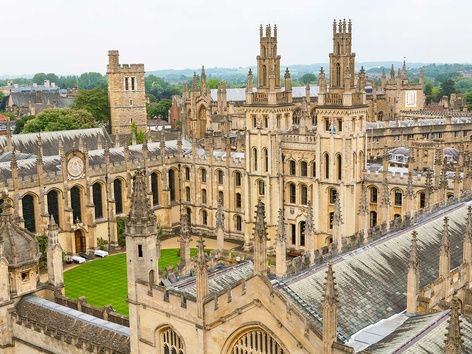
Oxford vs Cambridge: which city to choose for a short trip from London
The UK is famous for its historic cities with rich cultural heritage and outstanding universities. Oxford and Cambridge are prominent university cities, offering unique cultural and historical experiences. Find out more about the best places to travel from London
20 Mar. 2026
More details3 min
Popular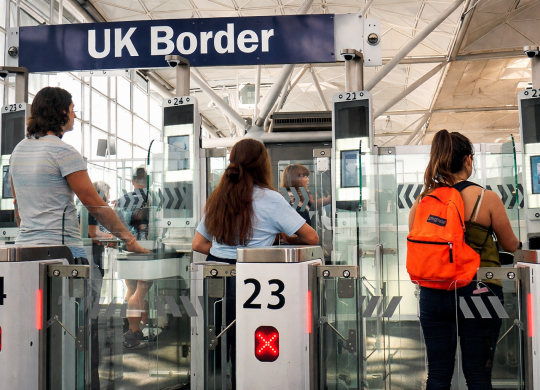
New UK border crossing rules: how ETA works from 25 February 2026
Starting today, new requirements for traveling to the United Kingdom are in place with the electronic travel authorization ETA. Without this permit, some passengers may not be allowed to board flights or other transportation. Learn more about who is affected by the new rules and what you need to check before traveling
25 Feb. 2026
More details3 min
Travels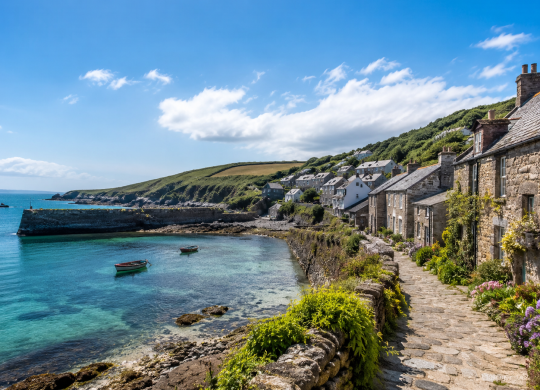
Where to Go in England Besides London: The Country's Most Beautiful Places
London remains the UK’s top tourist destination, but more and more travelers are seeking out less crowded and more atmospheric destinations. From islands with turquoise waters to medieval towns and picturesque coastlines, England has far more to offer than meets the eye. Learn more about the country’s most interesting places to add to your itinerary in 2026
31 May. 2026
More details3 min
Travels
Historic Sites in Scotland: 5 Places to Visit
Scotland’s castles, ancient settlements, and mountain valleys bear the marks of centuries of history. Learn more about 5 of the country’s historic sites
03 Oct. 2026
More detailsAll materials and articles are owned by VisitWorld.Today and are protected by international intellectual property regulations. When using materials, approval from VisitWorld.Today is required.