

New Visa Restrictions in 2026 in Canada, the US, UK and Australia
Table of contents
- Why are visa refusals rising in Canada, the US, Australia and the UK?
- Why is Canada refusing international study permits at record levels?
- Why are US student and visitor visas refused so often?
- How does Australia's Genuine Student test affect applicants?
- Why do technical errors lead to UK visa refusals?
- What do experts say about the new visa environment?
- How can applicants reduce the risk of a visa refusal?
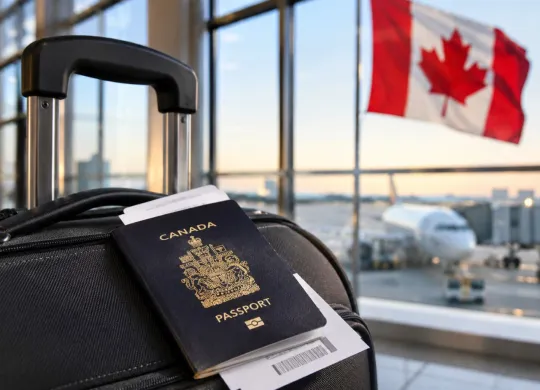
Canada, the United States, Australia and the United Kingdom have tightened immigration rules, and visa refusals for students, workers and tourists have reached historic highs. Learn more about why applications are refused in each country and how to prepare your documents

Visa refusals for international students, skilled workers and tourists have climbed to historic highs. According to Travel And Tour World, Canada, the United States, Australia and the United Kingdom have tightened their immigration policies over the past year, and visa processing centres around the world now turn down applications that would once have been approved.
The change matters to anyone planning to study, work or travel in these four countries. Stricter proof of funds, more probing interviews and lower annual intake numbers mean that a minor gap in the paperwork can now end an application without a second chance.
Planning to study, work or move to Canada, the United States, Australia or the United Kingdom and worried about a refusal?
With refusal rates at record levels, every document in an application counts. A Migration lawyer on the Visit World portal will assess your case, check your financial evidence and proof of home ties, and help you choose the right visa route. Book a consultation with a migration lawyer before you submit your application.

Why are visa refusals rising in Canada, the US, Australia and the UK?
Travel And Tour World links the trend to the efforts of governments to slow rapid population growth. The four Western destinations cite a shortage of housing, overstretched infrastructure and public services, and economic changes after the pandemic.
According to the publication, an analysis of global immigration data suggests that refusals are being used as a coordinated tool to cut the number of visas issued. Applicants now face three main types of pressure:
- stricter requirements for proof of funds;
- closer checks of the applicant's real intentions;
- tight limits on how many people may enter each year.
The publication calls this a major milestone for global mobility: applicants who meet the formal criteria are no longer guaranteed a positive decision.
About new visa fees, biometrics and stricter requirements in the U.S., the EU, Canada and the U.K. — read more at the link.
Why is Canada refusing international study permits at record levels?
Canada has introduced some of the toughest limits on temporary residents in its recent history. After nationwide caps on international student permits came into force and fast-track streams were closed, Immigration, Refugees and Citizenship Canada (IRCC) raised its refusal thresholds to historic highs.
What lies behind Canadian refusals
- Strict annual intake limits for international students.
- Higher financial documentation requirements: applicants must show considerably larger liquid funds to cover living costs.
- Closer scrutiny of dual-intent applications by IRCC officers.
- Routine refusals, without a chance to explain or correct, for applications flagged for insufficient proof of funds or weak economic ties to the home country.
The tightening is not limited to students. Canada has also changed the rules for work permits, as we described in our article on Canada's stricter C20 work permit rules.
Why are US student and visitor visas refused so often?
The United States keeps high refusal rates for both F-1 student visas and B1/B2 visitor visas. According to Travel And Tour World, US consular officers work within a rigid legal framework that requires an immediate refusal if an applicant cannot overcome the legal presumption about long-term intent.
What Section 214(b) means for applicants
Under Section 214(b) of the US Immigration and Nationality Act, every applicant is presumed to be an intending immigrant until proven otherwise. The burden of proof lies with the applicant, not the consulate.
During a short face-to-face interview, the consular officer has broad discretion to decide whether the applicant has strong social, economic and family ties to the home country. Two points often lead to a refusal:
- insufficient evidence of ties to the home country;
- discrepancies between the information in the online forms and the answers given at the interview.
Visit World services for tourists, migrants, and expats: Insurance | Guides | Legal advice
How does Australia's Genuine Student test affect applicants?
Australia has rebuilt its framework for educational migration to curb what the government considers unsustainable population growth and to protect the integrity of the education sector. The earlier subjective entry criteria were replaced with a stricter Genuine Student (GS) assessment designed to filter out non-genuine enrolments.
What the Genuine Student test requires
Applicants must give detailed explanations, backed by evidence, on three points:
- how the course fits their academic progression;
- why they chose the particular institution;
- what value the qualification will bring them in the home country's labour market.
Other Australian restrictions
- Visa application fees have been increased.
- Switching to another visa while in Australia has been restricted, to prevent visitors from extending their stay indefinitely.
- Higher-risk vocational and language courses have seen unprecedented refusal rates.
About the record cost of an Australian student visa and the new rules for international students — read more at the link.
Why do technical errors lead to UK visa refusals?
The United Kingdom has strengthened administrative compliance across its entry routes so that temporary migration matches national economic priorities. Overall approval levels remain stable, but applications that miss precise formatting and evidence requirements are refused automatically.
Where UK applicants most often fail
- Financial evidence: the Home Office applies zero tolerance to unverified third-party funds.
- Account balances: applicants who do not meet the rules on keeping the required balance continuously are refused immediately.
- University sponsorship letters: these must meet the formal requirements in full.
- Dependants: policy changes have restricted family members joining students on standard postgraduate courses, which has narrowed the approval criteria.
What do experts say about the new visa environment?
Anup Kumar Keshan, founder and editor-in-chief of Travel And Tour World, describes the tightening as a profound shift for international applicants. In his view, when host countries quickly raise financial thresholds and lower caps, the heaviest burden falls on genuine students and skilled workers who have prepared for years.
He notes that governments are now prioritising housing stability and domestic infrastructure, so small paperwork errors lead to immediate refusals. Careful preparation, fully transparent documents and an understanding of the changing legal rules have become essential.
How can applicants reduce the risk of a visa refusal?
Travel And Tour World stresses that across all four destinations a minor oversight or insufficient documentation now regularly ends in a formal refusal. Before applying, it makes sense to:
- check the current rules on the official portals, such as IRCC for Canada or the US Department of State visa services;
- prepare complete and verified financial documents that meet the current thresholds;
- avoid third-party funds that cannot be verified, and keep the required balance for the whole period demanded;
- gather clear evidence of social, economic and family ties to the home country;
- make sure every answer at the interview matches the information in the online forms;
- for Australia, prepare a written, evidence-based explanation of the study plan and its value at home;
- for the UK, check the dependant rules before planning to bring family on a postgraduate course.
A single inconsistency in the forms or a gap in the bank statements can now mean a refusal with no chance to correct it. Book a consultation with a Migration lawyer on Visit World and have your documents checked before you apply.
We remind you! In our previous article, we wrote about entry requirements and legal immigration options for moving to the U.S. in 2026.
Products from Visit World for a comfortable trip:
Travel guide for 200 countries;
Legal advice from a local specialist on visa and migration issues;
Travel insurance around the world (please select the country of interest and citizenship to receive services);
Medical insurance all over the world.
We monitor the accuracy and relevance of our information, so if you notice any errors or inconsistencies, please contact our hotline.
© 2018-2026, Visit World. Use, copying or reprinting of materials on this site is permitted only with a link (hyperlink for online publications) to Visit World. All rights reserved.
Frequantly
asked questions
Why are visa refusals rising in Canada, the US, Australia and the UK?
Why does Canada refuse international study permits?
What is Section 214(b) of the US Immigration and Nationality Act?
What is Australia's Genuine Student test?
What causes UK visa refusals for students?
Recommended articles
2 min
Expats
April 2026 brought a wave of updates to visa regulations for several popular destinations—from the introduction of biometric checks in Europe to increases in consular fees in the UK and Canada. The changes affected the conditions for employment, study, and long-term stays abroad. Learn more about the new visa rules in the U.S., the EU, Canada, the UK, and other countries
07 Apr. 2026
More details1 min
Work
Canada Tightens C20 Work Permit Rules in 2026: What Changed for Employers
Canada has introduced new C20 work permit requirements for foreign professionals. Find out exactly what has changed in the rules from July 2026, who will be affected by the new criteria, and what alternative work permits remain available to employers
05 Aug. 2026
More details2 min
Education
Australia Student Visa Cost Reaches Record 2000 AUD in 2026: New Rules for International Students
Australia has tightened rules for international students in 2026, raising the cost of a student visa to a record AUD 2000. Find out how entry requirements, application requirements and post-study employment opportunities have changed
24 Jun. 2026
More details3 min
Expats
Moving to the U.S. in 2026: Entry Requirements and Immigration Options
In 2026, the U.S. changed its visa rules and tightened screening procedures. Learn more about entry requirements and legal immigration options
25 Sep. 2026
More detailsAll materials and articles are owned by VisitWorld.Today and are protected by international intellectual property regulations. When using materials, approval from VisitWorld.Today is required.