

Moving to the U.S. in 2026: Entry Requirements and Immigration Options
Table of contents
- U.S. Entry Rules in 2026: What You Need to Know
- 2026 Travel Ban: List of Countries with Restricted Entry to the U.S.
- How to Obtain a U.S. Visa in 2026: Where to Apply?
- Legal Ways to Immigrate to the U.S.: How to Get a Green Card?
- DV-2027 Green Card Lottery: Is registration open?
- U.S. Work and Investor Visas: H-1B, E-2, and Green Card
- Citizens of which countries have simplified access to employment in the U.S.?

In 2026, the U.S. changed its visa rules and tightened screening procedures. Learn more about entry requirements and legal immigration options

The U.S. attracts those who plan to work, study, or move there permanently. In 2026, the rules for entry and obtaining visas changed significantly: new restrictions were introduced for citizens of certain countries, background checks on applicants were tightened, and some immigration programs were revised.
We’ll explain the current rules, how to obtain a visa, what legal immigration pathways are available, and which countries’ citizens have an advantage in the article below.
Are you planning to move to the U.S. but aren’t sure which visa is right for you?
An immigration lawyer from the Visit World portal will analyze your situation, recommend a legal path to immigration, and help you prepare your application.

U.S. Entry Rules in 2026: What You Need to Know
Most foreign nationals need a visa to enter the U.S. Citizens of countries participating in the Visa Waiver Program may stay in the U.S. for up to 90 days for tourism or business purposes without a visa, but must obtain ESTA authorization in advance. Citizens of other countries, as well as those planning to stay longer than 90 days, must apply for a visa. Effective January 1, 2026, Proclamation 10998 is also in effect, restricting entry for citizens of 39 countries.
The ESTA application fee is currently $40.27; it was previously $21. The State Department is also expanding its screening of applicants: starting October 1, online presence reviews will apply to I, TN, and TD visas, and applicants in these categories are asked to make their social media profiles public. This requirement was previously introduced for F and M student visas, H-1B work visas, J exchange visas, and other categories.
About the cost of living in the U.S. in 2026 — read more at the link.
2026 Travel Ban: List of Countries with Restricted Entry to the U.S.
Proclamation 10998 was signed on December 16, 2025, and took effect on January 1, 2026. The document completely bars entry to citizens of 19 countries, including Afghanistan, Iran, Haiti, Laos, Syria, Sudan, and Yemen, as well as holders of Palestinian Authority documents. For 20 other countries, including Cuba, Venezuela, Nigeria, and Turkmenistan, the restrictions are partial.
A separate measure—a suspension on the issuance of immigrant visas to citizens of 75 countries, implemented in January 2026—is no longer in effect. On August 21, 2026, a federal court ruled the policy unlawful, and the State Department confirmed that the suspension was lifted as of that date.
Visas issued before January 1, 2026, under Proclamation 10998 will not be revoked.
How to Obtain a U.S. Visa in 2026: Where to Apply?
Foreign nationals apply for a U.S. visa at the consulate in their country of citizenship or permanent residence. The State Department implemented this rule on July 15, 2026. Citizens of countries where the U.S. does not conduct regular processing of nonimmigrant visas must apply at a specifically designated consulate. Applicants who apply in other countries face greater difficulty in obtaining a visa, and the fee paid is neither refundable nor transferable.
The consular fee for a B tourist visa, F and M student visas, and J exchange visitor visa is $185; for petition-based work visas (H, L, O, P, Q, R), it is $205; and for E visas, it is $315. Applicants submitting documents at their place of residence must confirm their residence in that country.
The 20 fastest-growing professions in the U.S. through 2035—listed here.
Legal Ways to Immigrate to the U.S.: How to Get a Green Card?
Permanent resident status (a green card) in the U.S. can be obtained based on family ties, employment, refugee or asylum status, through the Diversity Visa lottery, or under special categories. The immediate relatives of a U.S. citizen are considered to be a spouse, unmarried children under the age of 21, and parents of citizens over the age of 21. The main options are:
- Family-based immigration — for the immediate relatives of U.S. citizens, as well as for other relatives of citizens and permanent residents within certain priority categories.
- Employment-Based Immigration—categories EB-1 (individuals with extraordinary abilities, leading scientists, and executives of multinational companies), EB-2 (professionals with advanced degrees or exceptional abilities), and EB-3 (skilled workers).
- Refugee or Asylum Status—you can apply for a green card one year after receiving this status.
- Diversity Visa—an annual program offering up to 55,000 immigrant visas to citizens of countries with low levels of immigration to the U.S.
- Gold Card—a new pathway within the EB-1 and EB-2 NIW categories, tied to a financial contribution.
DV-2027 Green Card Lottery: Is registration open?
As of the end of September 2026, registration for the DV-2027 lottery had not yet opened.
The State Department announced changes to the application process and promised to announce the start date at a later time. The visa processing period for DV-2027 winners remains unchanged—from October 1, 2026, to September 30, 2027. The U.S. government has not yet announced a new registration date.
On August 31, 2026, the State Department suspended the issuance of all diversity visas while it reviews the program’s security procedures: applicants may undergo interviews, but visas are not being issued, and no exceptions are being made. DV-2026 participants must obtain a visa or adjust their status by September 30, 2026.
We previously wrote about working in the U.S. in 2026, the required visas and documents, as well as the cost of legal employment.
U.S. Work and Investor Visas: H-1B, E-2, and Green Card
One of the main ways to work in the U.S. is through the H-1B visa, for which the employer files a petition. New petitions filed on or after September 21, 2025, were required to be accompanied by an additional fee of $100,000. In June 2026, a court overturned the guidelines regarding this fee, and in July, an appeals court denied the government’s request to stay the ruling. DHS is complying with the court’s decision but plans to collect the fee in the event it is overturned.
In September 2026, the President signed a new proclamation restricting the entry of certain H-1B workers. The E-2 investor visa is available to citizens of countries that have a treaty with the U.S., including Germany, Poland, Japan, and Ukraine. For affluent applicants, the Gold Card program is available: the personal contribution is $1 million per person on the petition; if filed by a company, it is $2 million for the principal applicant, plus a $15,000 fee for each applicant.
Read about the best U.S. cities for immigrants to live in in this article.
Citizens of which countries have simplified access to employment in the U.S.?
Citizens of Canada and Mexico have simplified conditions for employment in the U.S. thanks to the USMCA agreement. TN status allows them to work in the U.S. in specific professions within pre-approved activities. Canadians do not need a visa: the status is granted directly at the port of entry. For Mexican citizens, the application process differs; the current requirements are published on the U.S. Department of State website. Permanent residents of Canada and Mexico are not eligible for TN status.
Citizens of Australia can obtain an E-3 visa. This category has been in effect since September 2, 2005, and is intended for work in a specialty that requires at least a bachelor’s degree or its equivalent.
Important! The choice of visa category depends on your citizenship, the purpose of your trip, and your personal circumstances, and U.S. immigration rules change frequently throughout 2026. An immigration attorney from the Visit World portal can help you assess your situation, select a legal path to moving to the U.S., and prepare your application.
Schedule a consultation on the Visit World website and get professional help with legalizing your status in the U.S.!
Reminder! In our previous article, we explained what the USCIS Public Charge Rule 2026 is and what has changed since September 18 for green card applicants.
Photo: Magnific
Products from Visit World for a comfortable trip:
Checklist for obtaining a visa and necessary documents in the USA;
Legal advice on immigration to the USA;
Travel insurance for foreigners in the USA;
Medical insurance all over the world.
We monitor the accuracy and relevance of our information, so if you notice any errors or inconsistencies, please contact our hotline.
Frequantly
asked questions
Will a visa be required to enter the U.S. in 2026?
Where should you apply for a U.S. visa?
Recommended articles
2 min
Expats
U.S. Citizenship by Birth: Trump Signs New Executive Orders to Restrict the Right in 2026
The Donald Trump administration continues to pursue a policy of tightening immigration, despite the U.S. Supreme Court’s ruling on birthright citizenship. New executive orders dated August 6, 2026, impose additional restrictions and exclude certain categories of individuals from automatically qualifying for U.S. citizenship. Learn more about the content of the new orders, the groups of people they will affect, and the legal prospects for challenging these orders
10 Aug. 2026
More details3 min
Expats
Cost of Living in the U.S. in 2026: State Rankings
The cost of housing, groceries, transportation, and healthcare can vary significantly from state to state in the U.S. Hawaii, Massachusetts, and California topped the rankings, while Oklahoma had the lowest costs. Learn more about the cost of living in each U.S. state and the factors that most significantly impact your budget
06 Sep. 2026
More details2 min
Popular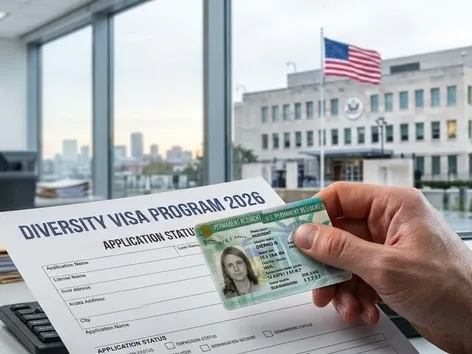
US Resumes Diversity Visa Issuance Ahead of Sept 30 Deadline
The U.S. Department of State resumed issuing Diversity Visas in 2026 following a court ruling. Find out who is affected and why the deadline is September 30
08 Sep. 2026
More details2 min
Work
20 Fastest-Growing Professions in the US Through 2035
By 2035, the fastest-growing careers in the US are expected to be concentrated in healthcare, energy, and IT. Find out which professions will be in the highest demand and offer the most competitive salaries
15 Sep. 2026
More detailsAll materials and articles are owned by VisitWorld.Today and are protected by international intellectual property regulations. When using materials, approval from VisitWorld.Today is required.