

Turkey Residence Permit in 2026: A Complete Guide
Table of contents
- What types of residence permits exist in Turkey?
- Short-term residence permit in Turkey: grounds and requirements
- Documents for a residence permit in Turkey
- How to apply: step-by-step instructions
- Turkish residence permit: cost and processing time
- Why applications are refused and how to avoid it
- How to get a long-term residence permit and citizenship
- What to check before applying
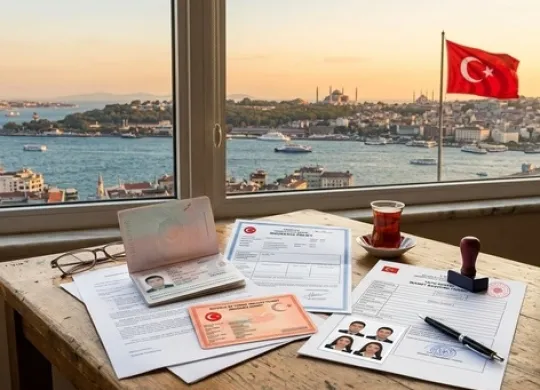
A residence permit in Turkey is obtained through the e-ikamet system. Find out about the types of residence permits, required documents, fees, and application steps in 2026

You can stay in Turkey without a residence permit only for a limited time: usually up to 90 days, or as long as your visa or visa-free regime allows. Beyond that you need a residence permit in Turkey, and it is what separates a long holiday from legal life in the country. Getting one, though, is harder than the stories of people who have already been through it make it sound.
In 2026 applications are filed through an electronic system, but that has not reduced the paperwork. The migration authority looks first of all at one thing: whether the stated purpose matches the documents in the file. Below we go through the types of permits, who can count on which one, what to collect, how much it costs and why refusals happen.
The migration lawyer at VisitWorld knows the immigration law of different countries and helps you prepare a complete set of documents and obtain the permits you need. Enter your citizenship and destination country on VisitWorld and choose a service.

What types of residence permits exist in Turkey?
Turkey's migration authority (Göç İdaresi) distinguishes six types of permits: short-term, family, student, long-term, humanitarian, and for victims of human trafficking. The rules are set out in Law No. 6458 on Foreigners and International Protection. Most readers will need one of the first four, since the last two categories concern special circumstances.
A work permit is a separate matter. The employer arranges it, and it also gives you the right to live in the country, so there is no need to look for a residence permit on top of it. A residence permit itself, including a short-term one, does not allow you to work. This is what people forget most often.
The main rule: apply for the category that matches your real purpose, not the one that seems easier. The migration authority compares the stated reason with the documents, and any mismatch is spotted at once.
Read here about where in the EU you can get a residence permit the fastest.
Visit World services for tourists, migrants, and expats: Insurance | Guides | Legal advice
Short-term residence permit in Turkey: grounds and requirements
This is the most common option. A short-term permit is issued for up to two years at a time and suits those who want to stay longer than their visa or visa-free period allows. Grounds may include owning property in Turkey, an extended stay as a tourist, business ties, medical treatment, scientific research, educational programmes or internships. The list is set out in Articles 31–33 of the law.
Tourist residence permit
It is chosen by those who are not buying property, starting a company or enrolling at a university, but simply want to live in the country for longer than three months. You will need proof of accommodation (a rental agreement or a booking), health insurance for the whole period and a declaration of available funds. Practitioners advise treating it as a bridge for a few months or a year rather than a long-term plan.
Extensions are filed online through e-ikamet, and deadlines are critical here. Missing them risks a fine and, in the worst case, deportation.
Residence permit through property
Buying a home gives you the right to apply, but does not guarantee the outcome. The migration authority requires the property to be residential and used as such. According to practising lawyers, the benchmark in 2026 remains a value of at least USD 200,000 as assessed by a licensed valuer. The ground holds as long as the flat belongs to you: sell it, and there is no basis left for renewing the permit.
There is also a catch. In neighbourhoods where foreigners make up more than 20% of residents, new people are not registered at the address. You can buy property there, but you cannot base a residence permit on it. The status of a neighbourhood is checked on the day you apply, not on the day you buy, so look into it before signing the contract.
Read more about the Turkish property market in 2026 here.
Business, medical treatment and educational programmes
A permit is also granted for business ties (for example, a company registered in Turkey), long-term medical treatment, language courses, exchange programmes and scientific work. In each case a document confirming the purpose is added to the file: the company's registration papers, a certificate from the clinic, or a letter from the educational institution or organisation. You still cannot work on such a permit, so a work permit is arranged separately.
Also read about doing business in Turkey in 2026: company types, capital, taxes.
Family residence permit
It is granted to the foreign spouse and minor children of a Turkish citizen, as well as to relatives of a foreigner who lives in the country legally on a residence permit. If your partner is a Turkish citizen, there is no minimum residence requirement. If the sponsor is a foreigner, they must have lived in Turkey on a permit for at least a year.
A family permit is issued for up to three years at a time, and its term cannot exceed that of the person you are joining. You will need a marriage certificate with translation and notarisation, proof of accommodation, insurance and a stable income. The marriage must not be entered into for the sake of a permit, and this is checked separately.
Student residence permit
A student residence permit is issued for the period of study at a Turkish institution. You can apply only after entering the country and enrolling at the university, and you must attend the migration office appointment with your original passport. The file includes a letter of enrolment and proof of financial means: a scholarship, a letter from a sponsor or a bank statement.
A student's relatives do not receive the same kind of permit. They can, however, apply for a family permit, with the student as the sponsor.
Work permit: how it differs from a residence permit
Employment follows a separate route. First you sign an employment contract with the employer, then the company applies for the work permit. It is the work permit that becomes the basis for residence, and no additional residence permit is needed. The employer is responsible for filing, so the candidate should make sure the application goes in before the first working day.
You cannot work without a permit. A fine threatens both the employee and the employer, and the foreigner may also be deported.
The procedure for obtaining a work permit in Turkey is described here.
Documents for a residence permit in Turkey
The exact list depends on the type of permit, and the current version is shown on the migration authority's official website. The basic file for a short-term permit looks like this:
• an application completed online;
• the original passport, valid for at least 60 days beyond the requested permit term;
• a biometric photo (not a selfie and not black and white);
• health insurance for the whole term of the permit;
• proof of address: a rental agreement, a title document (tapu) or other;
• a declaration of sufficient and regular funds;
• receipts for payment of the fee and the card cost;
• documents confirming the purpose of stay.
Notarised copies, a certificate of no criminal record and a Turkish language certificate, which turn up in old instructions, do not appear in the basic list for a short-term permit. However, the local migration office is entitled to ask for additional papers, so it is better to check when you receive your appointment. Foreign documents such as marriage or birth certificates require translation and notarisation.
How much money you need in your account is a separate question. There is no single figure for everyone: the migration authority relies first of all on your declaration and asks for statements and income certificates if doubts arise. The "USD 500 a month" or "10,000 in the account" figures circulating online are not an official requirement.
We explain where the birth of a child gives parents the right to residence in this article.
How to apply: step-by-step instructions
A first application can be filed only in Turkey and only while your visa or visa-free period is still valid: once it has ended, applying is no longer possible. The steps are as follows:
1. Determine the type of permit according to your real purpose of stay.
2. Collect the documents, take out insurance for the full term and check how long your passport remains valid.
3. Create the application on e-ikamet.goc.gov.tr and upload a biometric photo. The system calculates the fee itself.
4. Pay the fee and the card cost before the appointment date.
5. On the appointed day, go to the local migration office with your documents and the original passport. If you fail to appear without a valid reason, the application will be treated as not submitted.
6. Wait for the decision. If something is missing, you may be given up to 30 days to complete the file.
7. Collect your card: it is sent by post to the address you provided.
The application can be filed by the foreigner, their legal representative or a lawyer acting under a power of attorney.
Turkish residence permit: cost and processing time
The costs consist of fees (harç) and the cost of the card itself. In 2026 the card costs 964 lira. The amount of the fee depends on citizenship and the term of the permit, and the system calculates it automatically once the application is filled in. For citizens of certain countries the fee is waived, but everyone pays for the card. On top of this, add insurance, translations and a property valuation if one is required.
Pay only to the details shown by the official system. If someone asks you to transfer a "migration service fee" to a personal account or a company IBAN, that is a reason to stop and check. The law provides for a decision no later than 90 days after a complete file is submitted, and in practice lawyers speak of one to two months.
Why applications are refused and how to avoid it
A refusal rarely happens because of one small thing. More often several minor inconsistencies add up: the wrong type of permit was chosen, the purpose of stay is not supported by documents, the passport is valid for too short a time, the insurance does not cover the whole term, or the address on the form does not match the rental agreement or title deed. One reason stands apart as the most serious: false information in the application. It can lead not only to a refusal but also to cancellation of the permit and deportation.
If you do receive a refusal, first read its reasoning carefully and do not miss the appeal deadlines. The decision can be challenged in an administrative court, but filing a claim does not automatically extend your legal stay. Your status during that period is assessed separately.
How to get a long-term residence permit and citizenship
A long-term residence permit has no expiry date, so you will no longer have to go for renewal every year. It requires at least eight years of continuous legal residence on permits, no state social assistance during the last three years, and valid health insurance. The migration authority counts the eight years backwards from the date of application and checks them against border-crossing records.
Citizenship is a separate matter. Under the general procedure, it can be applied for after five years of continuous residence, subject to the other conditions of the law, and a long-term residence permit is not required for this. There is also a faster investment route: according to lawyers, as of 2026 this means property worth at least USD 400,000 with a ban on resale for three years, or USD 500,000 placed in a deposit, bonds or funds. The amounts and conditions change from time to time, so check them on the date of application.
What to check before applying
Before applying, check four things once more: whether the type of permit matches your purpose, whether your passport is valid for at least 60 days beyond the requested term, whether the insurance covers the whole period, and whether the address in the application matches the supporting documents. If any of this raises doubts, it is better to fix it before the appointment than to explain it afterwards.
A Turkish residence permit seems simple until you reach the details: which category suits you and whether the flat you bought will qualify. A mistake in the type of permit or a missing certificate can end in a refusal at the very end of the procedure. Choose a migration lawyer at VisitWorld by entering your citizenship and destination country, and they will help you assemble a file that fits your purpose.
Reminder! Registering a business does not yet guarantee the right to reside in Europe. We have already explained how it works in Poland, Slovakia and Spain in 2026.
Photo: generated by Gemini
Products from Visit World for a comfortable trip:
Checklist for obtaining a visa and necessary documents in Turkey;
Legal advice on immigration in Turkey;
Travel insurance for foreigners in Turkey;
Medical insurance all over the world.
We monitor the accuracy and relevance of our information, so if you notice any errors or inconsistencies, please contact our hotline.
Frequantly
asked questions
Does a residence permit make a person a Turkish tax resident?
Can I apply through a representative instead of in person?
What should I do if the basis for my stay has changed?
Recommended articles
2 min
Expats
Deportation from Turkey 2026: reasons, time limits, appeals
In 2026, Turkey’s deportation rules became stricter. Find out what can lead to deportation, how long an entry ban may last, and how to appeal the decision
25 Sep. 2026
More details3 min
Expats
e-Devlet in Turkey: how to access government services in minutes
In Turkey, most government services are already available online through the e-Devlet system. It allows you to handle important matters without waiting in line or dealing with paperwork. Learn more about how to register and use the portal
10 Apr. 2026
More details3 min
Expats
The Turkish “green passport” (Hususi Damgalı Pasaport) grants its holders visa-free entry to the Schengen Area and approximately 158 other countries worldwide. In addition to high-ranking government officials, investors who have established an export business in Turkey with an annual turnover of over $500,000 are eligible for this document. Learn more about the requirements, application process, and processing times for obtaining a “green passport” in 2026
16 Apr. 2026
More details3 min
Investment
Tax Holidays in Turkey 2026: 20-Year Tax Exemption and Real Estate Investments in Istanbul
Turkey has introduced one of the world’s longest-running special tax regimes for foreign investors, offering a 20-year tax exemption on foreign income. At the same time, the Istanbul real estate market remains the primary focus for participants in Turkey’s citizenship-by-investment program. Learn more about the terms of the new tax regime, investment options, and the features of serviced apartments in Istanbul
12 Jul. 2026
More detailsAll materials and articles are owned by VisitWorld.Today and are protected by international intellectual property regulations. When using materials, approval from VisitWorld.Today is required.