

Slovakia by Car in 2026: Traffic Rules, Fines, Vignettes, and Toll Roads
Table of contents
- Traffic Rules in Slovakia: Where Drivers Should Be Especially Careful
- Fines for Drivers in Slovakia: Speeding Can Cost Hundreds of Euros
- E-Znamka in Slovakia: Prices, Validity Periods, and Rules for Trailers
- When is a separate vignette required for a trailer?
- Which highways in Slovakia are toll roads?
- What happens if you drive on a toll road without an eZnamka?
- Parking in Bratislava: How the PAAS System Works
- Documents and Vehicle Equipment: What to Check Before Your Trip
- When are winter tires mandatory in Slovakia?
- Green Card for International Travel
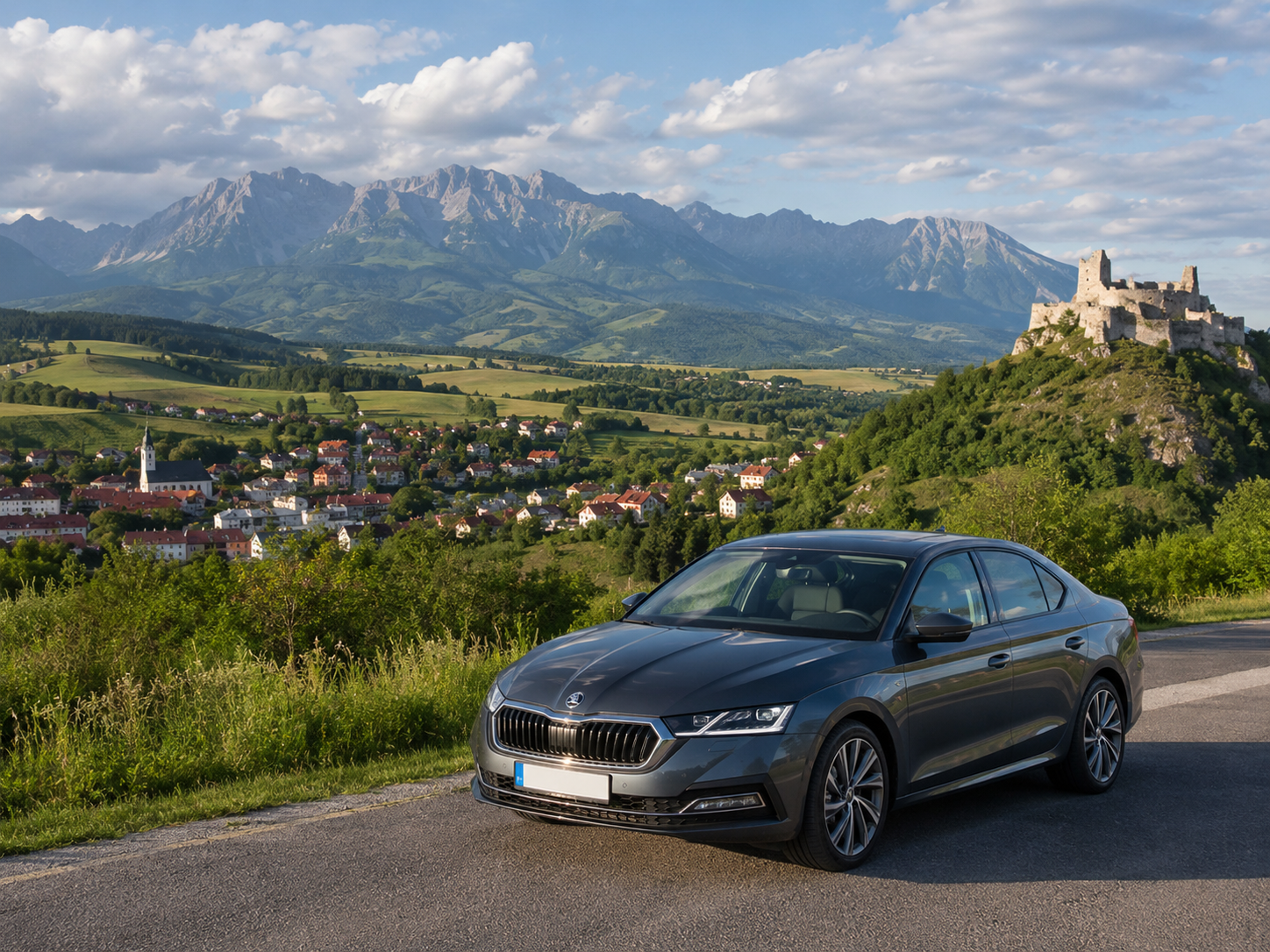
It’s easy to drive through Slovakia in a few hours, but a single mistake with eZnamka can make a short transit much more expensive. Toll highways here are monitored by license plate numbers, separate rules apply to trailers, and in winter, drivers also have to contend with the weather in the Tatra Mountains. Let’s break down how much Slovakia’s roads will cost in 2026, where a vignette is required, and which rules you shouldn’t ignore

Slovakia is a compact country, but by no means an “easy” one for drivers to navigate—it has its own unique quirks. Even as you approach Bratislava, Žilina, or Poprad, your route may take you onto a toll section marked D or R, where automatic license plate recognition replaces the traditional toll gate. Add to that specific rules for trailers, mountain roads, winter driving requirements, and city parking—and even a simple transit trip requires a bit of preparation.
In this guide, we’ve compiled what you’ll really need behind the wheel: current traffic rules and fines, eZnamka prices for 2026, a map of toll roads, rules for trailers, parking, required documents, and seasonal requirements.
Are you planning a trip to Europe by car?
In many countries, highways are tolled and require an electronic road vignette. This is a digital permit that confirms payment for the use of toll roads and is checked automatically by the license plate number - without stickers and paper receipts. Making a vignette online before you travel will help you avoid fines, travel delays, and unpleasant situations during inspections.

Traffic Rules in Slovakia: Where Drivers Should Be Especially Careful
Slovak roads don’t present many surprises if you know a few basic rules. Problems most often arise due to speed, sudden changes in speed limits near populated areas, and driving on mountain roads, where even the posted speed limit isn’t always safe.
For passenger cars, the standard speed limits are as follows:
- 50 km/h — in populated areas
- 90 km/h — outside built-up areas
- 130 km/h — on highways.
For vehicles towing a trailer weighing more than 750 kg, the maximum speed is reduced to 90 km/h, including on highways. A lower limit may also be indicated by a traffic sign, and that sign takes precedence.
Slovakia has a zero-tolerance policy for drunk driving. This means that even a small amount of alcohol consumed before driving poses a risk of violation—the 0.5‰ limit common in many European countries does not apply here.
Another rule that’s easy to forget on a sunny day: vehicles must drive with daytime running lights or appropriate lighting on year-round. Seat belts are mandatory for all passengers, and children must be transported using a restraint system appropriate for their size.
On Slovakian highways, it’s also important to remember the emergency corridor. When traffic slows down or a traffic jam forms, drivers must leave a clear path for emergency services between the far-left lane and the lane to its right.
To learn more about which European countries have introduced new speed limits on highways, follow the link.
Fines for Drivers in Slovakia: Speeding Can Cost Hundreds of Euros
In Slovakia, it’s especially easy to get a ticket where speed limits change over short distances. Speed cameras and police patrols are active not only on highways but also in cities, at the entrances to populated areas, and in other high-risk zones. For violations recorded automatically and linked to the vehicle owner, the law establishes a specific scale of fines.
In built-up areas, it looks like this:
- Exceeding the limit by 6–10 km/h — €15
- By 16–20 km/h — €66
- 26–30 km/h over the limit — €141
- 36–40 km/h over the limit — €270
- 46–50 km/h over the limit — €402
- 56–60 km/h over the limit — €540
- More than 70 km/h over the limit — €798
Outside built-up areas, the scale is different. For example, exceeding the speed limit by 31–35 km/h costs €162, by 46–50 km/h — €342, and by 66–70 km/h — €600. In other words, the difference between “speeding a little” and seriously exceeding the limit very quickly adds up to several hundred euros.
Slovak law also takes a strict stance on drunk driving. There is a zero-tolerance policy for drivers of motor vehicles: it is prohibited to drive if alcohol is still present in the body after consumption.
Dangerous passing, running a red light, using a cell phone while driving, failing to yield the right of way, and other actions that create a risk of a traffic accident are also considered serious violations. Depending on the circumstances, the penalty may not be limited to a fine: the law also provides for a driving ban.
We previously discussed the most common reasons tourists are fined on European roads in 2026.
E-Znamka in Slovakia: Prices, Validity Periods, and Rules for Trailers
In Slovakia, toll sections of highways and expressways are paid for using the eZnamka electronic vignette. There are no stickers on the windshield: when purchasing, you must provide the license plate number, country of registration, and start date, after which the vehicle is added to the electronic database.
For passenger cars in 2026, the rates remain at the 2025 level:
- 1 day — €8.10;
- 10 days — €10.80;
- 30 days — €17.10;
- 365 days — €90.
A one-day vignette is valid not for 24 hours from the time of purchase, but until 11:59:59 p.m. on the selected calendar day. In contrast, the 10-, 30-, and 365-day options are counted from the start date specified by the driver. You can purchase a vignette in advance: its validity can be postponed by up to 60 days.
In our previous article, we discussed where in Europe it’s cheapest and fastest to charge an electric vehicle.
When is a separate vignette required for a trailer?
There is an important detail here that is not found in many neighboring countries. If an M1 or N1 vehicle is towing an O1 or O2 trailer and the combined maximum permissible weight of the vehicle and trailer exceeds 3.5 metric tons, you must purchase two vignettes: one for the vehicle and one for the trailer. The price of the eZnamka for a trailer is the same as for the vehicle.
If the total permissible mass of the combination does not exceed 3.5 metric tons, an additional vignette for the trailer is not required.
Another practical detail is where to purchase an eZnamka. The Slovak NDS advises using only the official eZnamka website, the mobile app, or official sales points at the border. The reason is quite practical: according to NDS data, in 2025, drivers overpaid third-party online intermediaries more than €4.5 million in additional service fees alone.
We previously reported that Europe is introducing new measures to combat drunk driving: cars won’t start after alcohol consumption.
Which highways in Slovakia are toll roads?
In Slovakia, an eZnamka is not required on the entire D and R road network. Only certain sections are toll roads, so it’s best to check the official map before planning your route rather than buying a vignette simply because your navigation system shows a highway.
As of 2026, the main toll routes include:
- D1 — a key corridor through Bratislava, Žilina, Poprad, Prešov, and Košice
- D2 — a route from the Czech border through the western part of the country and on to Hungary
- D3 — a route toward the Polish border
- D4 — selected sections around Bratislava
- R1 — an important route through Nitra to the central part of the country
- Certain sections of R2, R3, R4, R6, and R7
However, some sections of the highways may be temporarily or permanently exempt from tolls. For example, the official 2026 list specifically identifies toll-free sections of the D1 and D2. That is why the road number alone does not indicate whether an eZnamka is required on a specific route.
For transit drivers, the D1 and D2 are the most important. The D1 crosses a significant portion of the country from west to east, while the D2 connects the Czech Republic, Bratislava, and Hungary. If your route passes through these corridors, you will almost certainly need an eZnamka for at least part of the journey.

Learn more about current toll rates in Poland for 2026 by following the link.
What happens if you drive on a toll road without an eZnamka?
In Slovakia, the absence of a toll gate does not mean there is no enforcement. Toll sections are monitored by cameras and patrols: the system cross-checks the vehicle’s license plate against a database of valid electronic vignettes. In July 2026, during one of the summer raids, the NDS and police inspected nearly 5,300 vehicles, and about 60 drivers were fined for not having an eZnamka.
For using a toll highway without a valid vignette, the vehicle operator faces a fine ranging from €150 to €500. If the violation is detected automatically and the case is processed by a district authority, the standard fine is €150.
The problem isn’t limited to the complete absence of an eZnamka. Before paying, you must correctly enter the license plate number, country of registration, and vehicle type; for combinations weighing over 3.5 metric tons, in cases specified by law, you must also obtain a separate vignette for the trailer.
If you notice an error immediately after purchase, it’s best not to delay correcting it. Under current eZnamka rules, certain details can be corrected through official procedures, and if purchased at a point of sale, a request for a change must be submitted within a specified short timeframe.
Here’s another reason not to buy a vignette from the first website that comes up in a search: in 2026, NDS issued a separate warning about fake websites that mimic eZnamka. The only official sales website is eZnamka.sk; the official app and retail locations are also available.
Learn more about the world’s best countries for road trips in 2026 by following the link.
Parking in Bratislava: How the PAAS System Works
In Bratislava, paid parking is gradually expanding to cover more and more areas, so leaving your car “somewhere near the center” without checking the zone is now risky. The capital uses the PAAS system, in which the rules depend on the specific area, the time the regulation is in effect, and the rate category.
There are four basic rate tiers for visitors:
- Zone A — €2 per hour
- Zone B — €1.50 per hour
- Zone C — €1 per hour
- Zone D — €0.50 per hour
However, the same tariff letter does not mean the same schedule in all areas. Each zone has its own parking hours, so you should check the information on the sign near the parking spot before paying. Green PAAS signs indicate spots available to non-residents and display the zone code required for payment.
You can pay for parking via mobile apps, parking meters, partner locations, or SMS. A separate service fee of 20% of the parking cost applies to SMS payments, so the app may be more cost-effective for longer parking sessions.
In 2026, the PAAS network continues to expand. For example, the system went live at the new SM5 Lanfranconi/Podhradie location on July 15, and at KV1a Dlhé Diely 1 on August 19. This is important for those who have visited Bratislava before: a spot that used to be free may now be part of a regulated zone.
If you don’t need a car to get around the city center, P+R facilities near public transportation may be a more convenient alternative. This option allows you to avoid wasting time looking for a parking spot in densely built-up areas and to avoid the risk of mistakenly entering the wrong fare zone.
Learn more about traffic rules, fines, toll roads, and regulations for driving in Austria in 2026 by following the link.
Documents and Vehicle Equipment: What to Check Before Your Trip
To drive a car in Slovakia, the driver must have a valid driver’s license and a vehicle registration document. For foreign vehicles, it is also important that the liability insurance is valid within the country.
It’s also worth checking the vehicle’s mandatory equipment. For passenger cars, the following are required:
- A warning triangle
- A reflective vest or other certified high-visibility garment, which must be within reach from the driver’s seat
- A spare tire, tire iron, and jack, or an approved alternative tire repair kit
- A first-aid kit compliant with the regulations of the vehicle’s country of registration
It’s best not to leave the vest under the luggage in the trunk. If the car breaks down or there’s an accident and the driver needs to step onto the roadway, the high-visibility garment must be put on before exiting the vehicle.
In our previous article, we discussed traffic rules in Italy in 2026, Autostrade tolls, fines, and key considerations for road travel.
When are winter tires mandatory in Slovakia?
For passenger cars, there is no rule here stating that “winter tires are mandatory from a specific date regardless of the weather.” Road conditions are the deciding factor: winter tires are required if the road surface is covered with a continuous layer of snow, ice, or frost. They must be installed on all axles of the vehicle.
This is especially important for routes through the Tatra Mountains. The weather in Poprad, on the mountain pass, and in the valley can vary on the same day, so during the cold season, it’s a good idea to check road conditions right before you set out.
In a previous article, we reported that Europe is introducing mandatory surveillance cameras to monitor drivers.
Green Card for International Travel
If your vehicle requires a Green Card for travel in Europe, check not only whether you have one but also the policy’s validity period and coverage area. This is especially important if Slovakia is just one of several countries on your itinerary.
You can apply for a Green Card online through Visit World before departure. For a transit trip, it’s more convenient to select an insurance period that covers the entire route right away, so you don’t have to apply for a new policy once you’re abroad.
Are you traveling abroad with your own car or a rented car?
Before traveling, it is important to check whether a road vignette is required for toll roads in the countries of your route. Failure to have a valid vignette can result in fines and automatic camera recordings of violations. Getting an electronic vignette from Visit World is an easy way to travel more relaxed, without unnecessary expenses and surprises on the road!
We remind you! Traveling through Europe in 2026 does not have to be expensive, even despite the general rise in prices. Analysts have compiled a rating of the most affordable destinations where you can combine relaxation, experiences, and moderate expenses. Follow the link to learn about budget locations in Europe that are worth considering for your 2026 vacation.
Products from Visit World for a comfortable trip:
Travel guide for 200 countries;
Legal advice from a local specialist on visa and migration issues;
Travel insurance around the world (please select the country of interest and citizenship to receive services);
Medical insurance all over the world.
We monitor the accuracy and relevance of our information, so if you notice any errors or inconsistencies, please contact our hotline.
Recommended articles
3 min
Transport
Podróżowanie po Chorwacji samochodem: Mandaty, Autostrady, Parkowanie i Ważne Zasady Ruchu Drogowego
Chorwacja nie ma winiety drogowej, ale większość głównych autostrad to drogi płatne, a wysokość opłaty zależy od trasy i kategorii pojazdu. Dodatkowo występują sezonowe korki na drogach prowadzących do Adriatyku, fotoradary oraz specyficzne zasady parkowania w popularnych miastach turystycznych. Dowiedz się, jak działają chorwackie autostrady, jakie zasady ruchu drogowego i mandaty obowiązują w 2026 roku oraz na co powinieneś zwrócić uwagę przed wyruszeniem w podróż samochodową
20 sie. 2026
More details3 min
Transport
Podróż samochodowa przez Czechy: Drogi, winiety, parkowanie i mandaty w 2026 roku
Na większości płatnych autostrad w Czechach samochody osobowe wymagają elektronicznej winiety, a jej cena zależy nie tylko od okresu ważności, ale także od rodzaju napędu. W 2026 roku standardowa 10-dniowa winieta kosztuje 300 CZK, a pojazdy elektryczne mogą korzystać z płatnych dróg za darmo, pod warunkiem spełnienia wymagań dotyczących zwolnienia. Dowiedz się, jak działa eDalnice, jakie przepisy ruchu drogowego obowiązują w Czechach i co powinieneś sprawdzić przed podróżą samochodową
23 sie. 2026
More details3 min
Transport
Driving in Austria in 2026: Traffic Rules, Fines, Vignettes, and Toll Roads
To travel through Austria by car, it’s not enough to simply purchase a vignette: additional tolls apply on certain Alpine routes, and violations of the rules can result in significant fines. Drivers should also be aware of speed limits, the Rettungsgasse emergency lane, winter equipment requirements, and the specifics of the digital vignette. Learn more about traffic laws, fines, toll roads, and the rules for driving in Austria in 2026
16 sie. 2026
More details3 min
Transport
Toll Roads and Traffic Rules in Hungary in 2026: What Tourists Need to Know
To drive on most Hungarian highways, you need an e-matrica, and its category depends on the vehicle’s specifications and the number of passenger seats. In 2026, the system introduced new regional products, and an error in the license plate number or an incorrect category may result in an additional charge. Here’s how Hungary’s toll roads work, what traffic rules apply in the country, and what you need to know before your trip
27 sie. 2026
More detailsAll materials and articles are owned by VisitWorld.Today and are protected by international intellectual property regulations. When using materials, approval from VisitWorld.Today is required.