

Traveling to Italy by Car in 2026: Traffic Rules, Fines, Toll Roads, and ZTLs
Table of contents
- Basic Traffic Rules in Italy in 2026
- Fines for Traffic Violations in Italy in 2026
- ZTL in Italy: What Is It and How Can You Avoid a Fine?
- Toll Roads in Italy: How Autostrade Work
- Is a vignette required in Italy in 2026?
- Environmental Zones in Italy: Where Vehicle Restrictions Apply
- Parking in Italy: What the Blue, White, and Yellow Lines Mean
- What documents are required to travel through Italy by car?
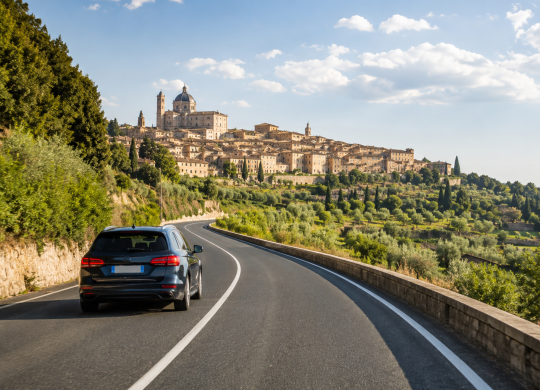
Traveling through Italy by car makes it easy to reach small towns, the coast, and regions that are much harder to reach by public transportation. At the same time, drivers need to be aware of toll highways, restricted traffic zones (ZTL), parking rules, and hefty fines for traffic violations. Learn more about traffic rules in Italy in 2026, Autostrade tolls, fines, and the key details of traveling by car

Driving remains one of the most convenient ways to travel through Italy, especially if your route takes you through Tuscany, the Dolomites, the Amalfi Coast, Sicily, or small towns that aren’t always easy to reach by train. However, driving in Italy comes with quite a few rules that foreign tourists may not be aware of.
In addition to standard speed limits and regulations regarding alcohol or cell phone use while driving, Italy has toll highways (Autostrade), restricted traffic zones (ZTL), environmental restrictions, and various parking rules. Moreover, some violations are recorded by cameras, so a driver may not find out about a fine until after the trip is over. Starting in December 2024, amendments to the Codice della Strada will also take effect, increasing penalties for a number of dangerous violations.
This article covers everything you need to know before driving through Italy in 2026: from speed limits and fines to tolls, ZTL zones, parking, documents, and other rules that will help you avoid unexpected expenses during your trip.
Are you planning a trip to Europe by car?
In many countries, highways are tolled and require an electronic road vignette. This is a digital permit that confirms payment for the use of toll roads and is checked automatically by the license plate number - without stickers and paper receipts. Making a vignette online before you travel will help you avoid fines, travel delays, and unpleasant situations during inspections.

Basic Traffic Rules in Italy in 2026
Italy is governed by the Codice della Strada—the national traffic code—whose latest major revision took effect on December 14, 2024. For tourists, most of the rules are familiar; however, enforcement of speed limits, cell phone use while driving, and other violations is quite strict, and automated cameras are used throughout the country. In 2025, the Ministry of Transportation even launched a national registry of approved speed control systems.
For passenger cars, the basic speed limits are:
- 50 km/h — in built-up areas
- 90 km/h — on ordinary rural roads
- 110 km/h — on major suburban roads (strade extraurbane principali)
- 130 km/h — on highways (autostrade)
During rain or other precipitation, the limits are reduced: on highways to 110 km/h, and on major suburban roads to 90 km/h. Lower limits may apply on certain sections, so road signs always take precedence.
The driver and passengers must wear seat belts, and children must be transported using an appropriate restraint system. Children under 150 cm in height must use a car seat or other certified device selected according to the child’s size.
Using a cell phone while holding it in your hand while driving is prohibited. Following amendments to the traffic code, penalties for this violation have become stricter and may include not only a fine but also a temporary suspension of the driver’s license.
A separate rule applies to headlights. Outside built-up areas, vehicles must drive with low beams or daytime running lights on, even during the day. On highways, this requirement is also in effect at all times.
In Italy, it’s especially important to pay close attention to local signs and speed cameras.
In addition to standard autovelox cameras, the Tutor system is used on highways; it can monitor not only the speed at a specific point but also the vehicle’s average speed over a defined stretch of road.
To learn more about which European countries have introduced new speed limits on highways, follow the link.
Fines for Traffic Violations in Italy in 2026
In Italy, the amount of the fine depends on the type of violation and its severity; in some cases, drivers risk not only a fine but also a temporary suspension of their driver’s license. Significant speeding, using a cell phone while driving, and driving under the influence of alcohol are punished particularly severely. The current rules are based on the updated Codice della Strada, which took effect on December 14, 2024.
Here are the main penalties tourists should be aware of:
1. Holding a phone while driving — a fine of €250 to €1,000 for the first offense; additionally, your license may be suspended for 15 days to 2 months
2. Repeated use of a cell phone within two years—a fine ranging from €350 to €1,400, and your driver’s license may be suspended for 1–3 months
3. Failure to wear a seatbelt or violating child passenger safety rules—a fine starting at €83; a repeat offense may result in a license suspension
4. Speeding by more than 10 but no more than 40 km/h — fines ranging from €173 to €694
5. For a repeat speeding violation of the same nature in a built-up area within one year, the fine can reach €880, and the driver’s license may be suspended for 15–30 days.
Penalties are significantly harsher for more serious speeding violations. If a driver exceeds the speed limit by more than 60 km/h, the fine can range from approximately €847 to €3,389, and the driver’s license is suspended for a period of 6 to 12 months.
A separate system of penalties applies to driving under the influence of alcohol. For most drivers, the permissible blood alcohol concentration is 0.5 g/L. If the level is between 0.5 and 0.8 g/L, the fine ranges from €543 to €2,170, and the driver’s license may be suspended for 3–6 months. At higher concentrations, penalties become more severe and may include criminal sanctions.
For novice drivers, individuals under the age of 21, and certain professional drivers, the permissible alcohol level is zero. Therefore, even a small amount of alcohol before driving can cause problems.
It is also important to note that having a foreign-registered vehicle does not protect you from fines. Violations may be recorded by automated cameras, and if you’re driving a rental car, the rental company may share the driver’s information with authorities and charge an additional administrative fee for processing the request. This is why a fine for speeding or entering a restricted zone sometimes arrives after you’ve already returned from Italy.
We previously discussed the most common reasons tourists are fined on European roads in 2026.
ZTL in Italy: What Is It and How Can You Avoid a Fine?
One of the most important aspects of driving in Italy is the ZTL (Zona a Traffico Limitato), or restricted traffic zone. These zones are primarily located in historic city centers, where entry is permitted only to certain categories of vehicles or cars with special permits. In 2026, ZTLs continue to be widely used in Rome, Florence, and many other tourist cities.
At the entrances to these zones, there are road signs and electronic cameras that automatically read license plates. If a vehicle does not have a permit, the violation is recorded without the need for the police to stop the vehicle. However, the ZTL operating hours, the categories of vehicles permitted to enter, and the conditions for obtaining permits vary by city.
Tourists should be especially careful if they:
- Book a hotel or apartment in the historic center
- Are driving a rental car
- Are following a route suggested by their GPS through the old part of the city
- Are looking for parking directly within the ZTL
If your hotel is located within the ZTL, do not automatically assume that your reservation grants you entry. You must check with the hotel in advance to see if they can register your vehicle’s license plate or obtain the necessary permit. For example, in Florence, for certain types of access, you must obtain a permit before actually entering, and as a general rule, you cannot retroactively register your trip.
At the same time, a ZTL does not mean that the entire city center is closed to cars around the clock. In some cities, restrictions apply only during certain hours or on certain days. For example, in Rome, there are separate daytime and nighttime ZTLs, and the schedules vary by district. In the summer of 2026, the nighttime ZTLs in Trastevere and San Lorenzo will be in effect from 9:30 p.m. to 3:00 a.m. from Wednesday through Saturday, including holidays.
In Rome, starting January 15, 2026, a general speed limit of 30 km/h has also been established within the ZTL of the historic center. And starting July 1, 2026, even fully electric and hydrogen-powered vehicles will need a special permit to enter Rome’s ZTLs—the previous automatic right of access for such vehicles has been revoked.
Another important change concerns fines. Following the update to the Codice della Strada, the rules have been adjusted so that a driver is not penalized multiple times for what is effectively a single brief ZTL violation—for example, for entering and exiting the same zone within a few minutes. This, however, does not waive the fine for illegal entry.
Therefore, before traveling to the center of Rome, Florence, Milan, Bologna, Pisa, or any other Italian city, it’s best to check the official rules for that specific ZTL separately. The safest option for a tourist without a permit is to leave the car in a parking lot outside the zone and continue the journey on foot or by public transportation.
In our previous article, we discussed where in Europe it’s cheapest and fastest to charge an electric vehicle.
Toll Roads in Italy: How Autostrade Work
Most of Italy’s major highways, marked with the letter A and green road signs, are toll roads. The toll depends on the distance traveled, the specific highway, and the vehicle category. For a passenger car, the toll is usually calculated automatically between the entry and exit points.
Most routes use a closed-loop toll system. Upon entering the highway, the driver receives a ticket, and upon exiting, inserts it into a machine or hands it to an operator. The system determines the distance traveled and calculates the amount due. It is important not to lose the ticket; otherwise, the toll may be calculated based on the longest possible route to the exit point.
On certain sections, an open system is in place, where a fixed toll is charged for a specific stretch of road regardless of the actual distance traveled. Italy is also gradually adopting barrier-free Free Flow systems, where the vehicle does not stop at the toll booth, and the license plate or electronic device is read automatically.
For tourists, the most important thing is to choose the correct lane at the toll booth. In Italy, they are color-coded:
- White lanes — cash payment;
- Blue lanes — payment by bank card;
- Yellow lanes — for the Telepass electronic system and compatible devices only.
If you do not have an electronic device, you should not enter the yellow lane. Doing so may result in your trip being recorded as unpaid, and you will have to settle the fee separately.
You can check the cost of your trip in advance through the official Autostrade per l’Italia service by specifying your entry and exit points. This is especially useful on long routes between the north and south of the country, where tolls can account for a significant portion of your travel budget.
It’s also worth noting that not all roads in Italy are toll roads. Regular state and regional roads, as well as a significant portion of the “strade statali” (state highways), are toll-free, so you can plan a route that avoids the Autostrade if you wish. However, such a trip usually takes longer and often passes through populated areas.

What is Telepass?
Telepass and other compatible electronic toll collection (telepedaggio) systems allow you to pass through toll plazas without receiving a ticket or paying manually. The device is installed in the car, automatically recognized at entry and exit, and the toll is charged to a linked account.
For a short tourist trip, Telepass is not mandatory: you can use the highway without it by paying the toll with a card or cash. The main thing is not to enter the yellow electronic toll lane without a compatible device.
If a driver accidentally exits through the wrong lane or is otherwise unable to pay the required amount, the system may issue a Rapporto di Mancato Pagamento Pedaggio—a notice of unpaid toll. This debt should not be ignored: it can be paid off without additional charges within 15 days of the document’s issuance date. After that, administrative fees will be added to the amount.
Learn more about current toll rates in Poland for 2026 by following the link.
Is a vignette required in Italy in 2026?
Unlike Austria, Switzerland, the Czech Republic, or Slovenia, Italy does not have a nationwide vignette for passenger cars. To use most toll highways, drivers pay directly for a specific route, and the amount depends on the distance traveled and the vehicle category.
This means you do not need to purchase a separate toll sticker or electronic vignette before entering Italy. If your route includes a toll Autostrada, payment is made at the exit or automatically via the telepedaggio system.
At the same time, when traveling internationally by car, it’s important to consider the countries your route through on the way to Italy. For example, if you’re traveling through Austria, Switzerland, or Slovenia, those countries have their own vignette systems, and you’ll need to purchase them separately in accordance with each country’s regulations.
In addition to standard highways, some tunnels, mountain passes, or special road structures in Italy may require separate tolls. Therefore, before a long trip—especially through the Alps—it’s worth checking not only the total cost of the Autostrade but also any possible additional tolls on specific sections.
It’s also important not to confuse road tolls with urban restrictions. ZTLs, environmental zones, and tolls for entering certain urban areas are not vignettes and have their own access and payment rules.
Learn more about the world’s best countries for road trips in 2026 by following the link.
Environmental Zones in Italy: Where Vehicle Restrictions Apply
Italy does not have a single nationwide environmental vignette like France’s Crit’Air. Instead, cities and regions set their own restrictions on vehicles based on emission class, engine type, district, and time of day. That’s why, before entering a major city, it’s important to check not only the ZTL but also local environmental regulations.
The best-known example is Milan, where two systems operate simultaneously. Area B covers a significant portion of the city and restricts access for the most polluting vehicles. It is in effect on weekdays, and you can check whether a specific car is allowed to enter by entering its license plate number via the city’s official service. There is no entry fee for vehicles that meet the requirements.
Area C is located in central Milan and operates differently: access is granted to certain vehicles only after paying a special fee, while the most polluting vehicles are prohibited from entering. The permit is valid for one day and allows for multiple entries into and exits from Area C in the same vehicle.
Tourists driving a rental or foreign vehicle should pay special attention to the following:
- Their vehicle’s Euro emissions standard
- Fuel type and year of first registration
- Whether their route passes through Area B, Area C, or another local zone
- The hours and days when restrictions are in effect
- Whether they need to pre-register their license plate or purchase a permit
Similar restrictions exist in other major cities and regions of Italy, but their conditions vary. Therefore, there is no universal rule for the entire country: before traveling to Rome, Bologna, Turin, Florence, or other cities, you should check the information specifically on the website of the relevant municipality.
In a previous article, we reported that Europe is introducing mandatory surveillance cameras to monitor drivers.
Parking in Italy: What the Blue, White, and Yellow Lines Mean
In Italy, parking rules are largely determined by the color of road markings. For tourists, this is one of the easiest ways to quickly figure out whether you can leave your car in a specific spot, but you should always check the traffic signs next to the parking space as well.
The main colors of the markings mean:
1. Blue lines — paid parking;
2. White lines — free parking spaces, unless signs indicate additional restrictions;
3. Yellow lines — spaces reserved for specific categories of users, such as residents, people with disabilities, service vehicles, or loading and unloading zones.
For blue parking spaces, the rate, payment hours, and maximum permitted parking time are indicated on the nearest sign or at a parking meter. In many cities, you can pay at a meter or via a mobile app, though specific payment methods vary by municipality.
Following amendments to the Italian Highway Code, the rules regarding liability for unpaid or underpaid parking have become clearer. If a driver has not paid for parking in a “strisce blu” zone at all, the administrative fine may be supplemented by the full daily parking rate for that zone. If the paid time has simply expired, the penalties depend on how long the driver exceeded the paid period.
You should be especially careful in historic city centers. Just because a parking space is legal doesn’t mean you’re allowed to drive there without restrictions: the parking lot may be located within a ZTL, so you need to check the entry rules separately before planning your route.
For tourists, the most convenient option is often large municipal or private parking lots on the outskirts of the city center. This allows you to avoid the risk of accidentally entering a ZTL, saves you from having to search for an open spot on narrow historic streets, and lets you continue your journey on foot or by public transportation.
We previously reported that Europe is introducing new measures to combat drunk driving: cars won’t start after alcohol consumption.
What documents are required to travel through Italy by car?
Before traveling through Italy, it’s important to check your driver’s license, vehicle registration, and insurance documents separately. For travelers from the EU, the process is straightforward: a valid driver’s license issued by an EU country is recognized in other EU member states, and mandatory third-party liability insurance obtained in one EU country is valid in all other EU countries.
While on the road, it is recommended to have the following:
- A valid driver’s license recognized in Italy
- Vehicle registration certificate
- Proof of liability insurance
- A passport or other document required for crossing the border, if applicable based on the traveler’s citizenship
- Documents from the rental company, if the vehicle is rented
For licenses issued outside the EU, the rules may vary depending on the country of issuance and international agreements. Therefore, before your trip, you must check whether your national license is sufficient or if an international driver’s permit is also required.
If you are traveling in a car with foreign registration, also make sure that your insurance covers Italy. For vehicles registered in EU countries, mandatory liability insurance is valid throughout the entire EU. For vehicles from other countries, you must verify the terms of insurance coverage separately before crossing the border.
If you’re driving a rental car, keep the rental agreement in the vehicle and review its terms before leaving the region or country. This is especially important if your route involves crossing borders, taking a ferry, or having multiple drivers use the vehicle.
It’s also helpful to have a European Accident Statement or a similar European accident report form. It does not replace insurance, but it simplifies the process of documenting the circumstances of an accident and the subsequent settlement of an insurance claim.
If you’re traveling through Italy in a car with foreign registration, check in advance whether your liability insurance is valid for the entire route. For cars from countries where the Green Card international insurance certificate is used for travel abroad, it’s best to obtain it before departure.
On Visit World, you can apply for a Green Card online before your road trip through Europe. The policy confirms the driver’s liability insurance coverage abroad and helps meet the insurance requirements of the countries along your route. Before applying, simply select the desired coverage period and verify that the insurance covers all countries on your planned trip.
Are you traveling abroad with your own car or a rented car?
Before traveling, it is important to check whether a road vignette is required for toll roads in the countries of your route. Failure to have a valid vignette can result in fines and automatic camera recordings of violations. Getting an electronic vignette from Visit World is an easy way to travel more relaxed, without unnecessary expenses and surprises on the road!
We remind you! Traveling through Europe in 2026 does not have to be expensive, even despite the general rise in prices. Analysts have compiled a rating of the most affordable destinations where you can combine relaxation, experiences, and moderate expenses. Follow the link to learn about budget locations in Europe that are worth considering for your 2026 vacation.
Products from Visit World for a comfortable trip:
Travel guide for 200 countries;
Legal advice from a local specialist on visa and migration issues;
Travel insurance around the world (please select the country of interest and citizenship to receive services);
Medical insurance all over the world.
We monitor the accuracy and relevance of our information, so if you notice any errors or inconsistencies, please contact our hotline.
Frequantly
asked questions
Do I need a vignette to drive in Italy?
What is a ZTL, and can tourists drive there?
How do you pay for toll highways in Italy?
What should you do if you were unable to pay the toll?
Can a tourist receive a fine after returning from Italy?
Recommended articles
2 min
Travels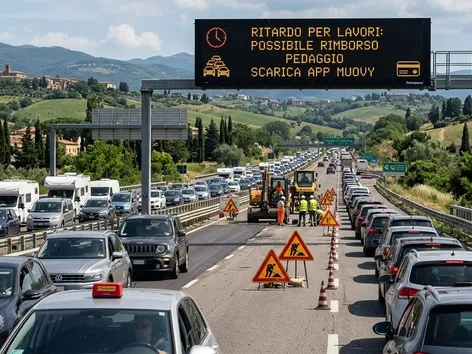
Italy Introduces Toll Refunds for Traffic Jams in 2026: Who Can Claim Compensation
Italy has introduced a new compensation system for drivers who have lost time in traffic jams on toll motorways due to roadworks. Find out who is entitled to a refund, what amounts can be received and how to apply for a refund correctly
08 Jun. 2026
More details2 min
Transport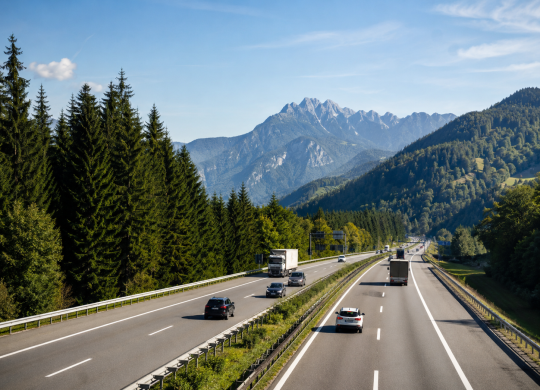
Speed limits on European highways are changing: here's where you can now drive up to 150 km/h
More and more European countries are revising their highway speed limits. In the Czech Republic, speeds of up to 150 km/h are already permitted on a specific section of highway, while the Netherlands is gradually reinstating a speed limit of 130 km/h. Learn more about where the new speed limits are already in effect and what to keep in mind before taking a road trip through Europe.
12 Jul. 2026
More details2 min
Transport
Electronic Toll in Belgium 2027: How Much Will Drivers Pay to Use the Roads?
Belgium is preparing to launch a toll system for highways and regional roads. The new rates will apply to owners of passenger vehicles weighing up to 3.5 metric tons, and the toll amount will depend on the vehicle’s environmental class. Learn more about the terms of the new electronic vignette, categories of exemptions, fine amounts, and the system’s launch date
15 Jul. 2026
More details2 min
Transport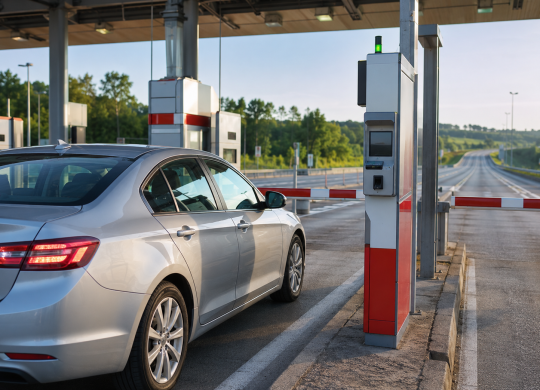
Toll Roads in Poland in 2026: Current Rates and Payment Methods
Most Polish highways are toll-free for passenger cars, but tolls apply on certain sections of the A1, A2, and A4. Learn more about current rates, available payment methods, and the rules for using the e-TOLL system in 2026
07 Aug. 2026
More detailsAll materials and articles are owned by VisitWorld.Today and are protected by international intellectual property regulations. When using materials, approval from VisitWorld.Today is required.