

Electronic Toll in Belgium 2027: How Much Will Drivers Pay to Use the Roads?
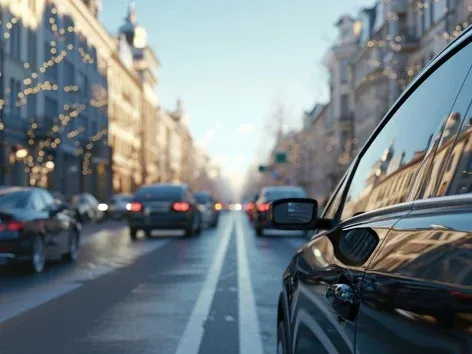
Belgium is preparing to launch a toll system for highways and regional roads. The new rates will apply to owners of passenger vehicles weighing up to 3.5 metric tons, and the toll amount will depend on the vehicle’s environmental class. Learn more about the terms of the new electronic vignette, categories of exemptions, fine amounts, and the system’s launch date

The Belgian government is working on a bill that will significantly change the rules for using the country’s roads. The authorities plan to introduce a national electronic vignette—a mandatory fee for most passenger cars. The reform will affect not only local residents but also foreign drivers passing through Belgium in transit.
We’ll cover the details of the new fee, the rates for different vehicle categories, the list of exemptions, and the system’s launch date in this article.
Planning a road trip on Belgian roads soon?
A Green Card remains a mandatory requirement for crossing the border and legally traveling on European roads.

The Essence of the Reform: Why Belgium Is Introducing a Road Toll
Travel on most highways and regional roads in Belgium is currently free for passenger car owners. Discussions regarding the introduction of a road toll have been ongoing in the country for several years, and now the federal government has decided to move forward with implementing the idea.
According to the drafters, the goal of the new measure is to ensure a fair distribution of the costs associated with maintaining road infrastructure. The government aims to involve all road users—including foreign drivers in transit—in financing road repairs and maintenance. The country’s leadership emphasizes that the overall tax burden on Belgians will not increase—they plan to offset the toll by reducing other tax payments.
We previously reported that speed limits on European highways are changing.
Electronic vignette rates: How much will it cost to use Belgium’s roads?
The annual fee will depend on a vehicle’s environmental performance. This approach will encourage drivers to choose vehicles with lower carbon dioxide emissions. The fee will apply to vehicles weighing up to 3.5 metric tons.
There will be three main rate categories:
- 90 euros per year — for electric vehicles with zero CO₂ emissions;
- 100 euros per year — for vehicles that meet an environmental standard of at least Euro 4;
- 125 euros per year — for all other vehicles with older engines.
Technically, the system will be based on automatic license plate recognition. Payment will be tied to the vehicle’s mileage and calculated on a per-kilometer basis.
New rules for campers in the EU — summarized here.
Visit World services for tourists, migrants, and expats: Insurance | Guides | Legal advice
Who will be exempt from the fee, and what fines are in place?
Not all road users will be subject to the new toll. The government has identified categories of vehicles for which the rules will remain unchanged or for which no fee will be charged at all.
The following are exempt from paying the electronic vignette:
- motorcycles;
- buses;
- agricultural tractors.
For trucks, the current toll system will remain in place—no specific changes will be introduced for carriers. Drivers who ignore the new rules will have to pay a fine of 70 euros per violation.
Financial Projections and Next Steps for the Belgian Government
According to estimates by Belgian officials, the Flanders region alone will receive approximately 130 million euros annually from the vignette. The funds are planned to be used for the modernization and maintenance of the country’s road network.
The reform still needs to go through several more stages. The draft must be approved by regional authorities and agreed upon with European institutions. Only after all formal procedures are completed will the law take effect.
The official launch of the electronic vignette is scheduled for May 1, 2027. By that time, the government must finalize the project’s approval at all levels and prepare the technical infrastructure for the system to operate.
Read also: Where in Europe is it cheapest and fastest to charge an electric car?
Get a Green Card for your trip to Belgium with Visit World!
Preparing for a road trip through European Union countries requires not only knowledge of road tolls but also a valid insurance policy. The Green Card is an international motor vehicle liability insurance policy valid in Belgium and other European countries, and it is a mandatory requirement for legal entry.
Get your Green Card online on the Visit World portal in just a few minutes and set off on your journey through Europe with confidence and without unnecessary risks!
Reminder! In our previous article, we discussed the most common reasons tourists are fined on European roads in 2026.
Photo: Magnific
Products from Visit World for a comfortable trip:
Travel guide for 200 countries;
Legal advice from a local specialist on visa and migration issues;
Travel insurance around the world (please select the country of interest and citizenship to receive services);
Medical insurance all over the world.
We monitor the accuracy and relevance of our information, so if you notice any errors or inconsistencies, please contact our hotline.
Frequantly
asked questions
How much will an electronic vignette cost in Belgium in 2027?
Who is exempt from paying the new road tax in Belgium?
Recommended articles
2 min
Transport
Europe introduces a new anti-drunk driving system: cars won't start after alcohol consumption
The EU continues to strengthen road safety measures. One of the new tools in the fight against drunk driving is the alcolock system, which prevents a vehicle from starting after alcohol consumption. Learn more about how this technology works, in which countries it is already in use, and what changes drivers can expect in the coming years
29 May. 2026
More details2 min
Transport
Where in Europe Is It Cheapest and Fastest to Charge an Electric Car: A Ranking of Countries in 2026
Europe continues to actively develop its electric vehicle infrastructure: the number of public charging stations has exceeded 1.3 million, and competition among countries is driving more affordable rates and faster charging. Learn more about where in Europe it’s cheapest to charge an electric vehicle, which countries have the most developed network of charging stations, and what to consider before taking a road trip
29 Jun. 2026
More details2 min
Transport
New Rules for RV Owners in the EU: Which Safety Systems Will Become Mandatory Starting July 7
Starting July 7, 2026, a new phase of safety requirements for campers and motorhomes will take effect in the European Union. All new vehicles registered for the first time after this date must be equipped with modern driver-assistance systems. Find out who is affected by these changes, which technologies will become mandatory, and whether owners of already registered campers will need to retrofit their vehicles
05 Jul. 2026
More details2 min
Transport
Speed limits on European highways are changing: here's where you can now drive up to 150 km/h
More and more European countries are revising their highway speed limits. In the Czech Republic, speeds of up to 150 km/h are already permitted on a specific section of highway, while the Netherlands is gradually reinstating a speed limit of 130 km/h. Learn more about where the new speed limits are already in effect and what to keep in mind before taking a road trip through Europe.
12 Jul. 2026
More detailsAll materials and articles are owned by VisitWorld.Today and are protected by international intellectual property regulations. When using materials, approval from VisitWorld.Today is required.