

Ebola 2026: Which Countries Have Restricted Entry for Travelers
Table of contents
- Why has the Ebola outbreak triggered such a strong response from governments?
- Countries that have closed their borders entirely
- Where quarantine and health checks apply instead of an outright ban
- The US has extended its restrictions for another month
- India launches an online health declaration
- Uganda restricts transport links with the DRC
- What should you do before your trip?
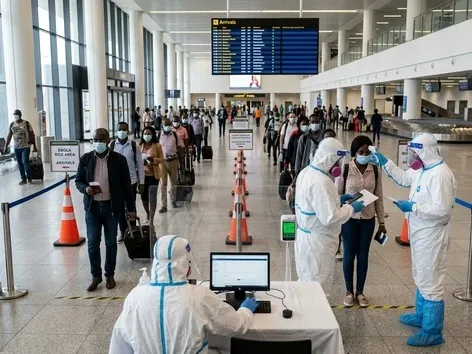
In 2026, dozens of countries introduced entry restrictions due to the Ebola outbreak. Find out which countries are affected and what travelers should consider before their trip

The Ebola outbreak that has been unfolding in Central Africa since early 2026 continues to reshape the rules of international travel. As of late August, the list of countries that have introduced some form of entry restriction already runs to more than two dozen — and that list isn't closed yet. Some countries have shut their borders entirely to travelers from affected regions, while others have limited themselves to enhanced health screening or mandatory quarantine.
Here's a look at where entry rules have actually changed and what to expect if a trip or a move abroad is on your horizon.
Read about the destinations leading the 2026 wellness retreat rankings and what makes them so appealing.
When entry rules are shifting this fast, and you might be asked to undergo an extra health check or even quarantine at the border, health insurance is what gives you peace of mind instead of anxiety. It covers treatment costs abroad, which matters most in countries where healthcare for foreigners is expensive. You can get a policy in a few minutes, entering just your citizenship and destination country.
Choose coverage that fits your route, and set off with confidence!

Why has the Ebola outbreak triggered such a strong response from governments?
The current outbreak originated in the Democratic Republic of Congo, where the disease — caused by the Bundibugyo strain of the Ebola virus — has since spread to neighboring Uganda. According to the latest figures, the DRC has recorded over 4,300 confirmed cases and more than 2,000 deaths, numbers that keep climbing week after week. The situation is serious enough that the World Health Organization has declared the outbreak a Public Health Emergency of International Concern. That declaration is what pushed dozens of governments worldwide to act preemptively rather than wait for the virus to reach their own borders.
Countries that have closed their borders entirely
The strictest stance has come from Bahrain, Israel, Qatar, and Kuwait — all of them bar entry to travelers arriving directly from the DRC, South Sudan, or Uganda, or who have been in those countries within the past three weeks. The usual exception applies only to their own citizens, and even they typically can't avoid quarantine.
Lebanon took a similar approach, closing its border to citizens of the DRC and Uganda, as did Curaçao, which has banned entry from six countries in total — Angola, Rwanda, and Tanzania joined the list alongside the others.
Curaçao adds an extra wrinkle: even Dutch citizens who recently relocated there can't enter the island until they've lived in the Netherlands for at least six months.
Taiwan has restricted entry for citizens and residents of the DRC and Uganda, though it kept humanitarian exceptions in place — for students, spouses, and minor children of Taiwanese passport holders.
Saudi Arabia went further still: it not only stopped issuing visas to arrivals from affected countries but also banned its own citizens from traveling to the DRC, Uganda, and South Sudan.
Visit World services for tourists, migrants, and expats: Insurance | Guides | Legal advice
Where quarantine and health checks apply instead of an outright ban
Some countries have taken a less categorical approach.
Canada is one of the clearest examples: foreign nationals who have been in the DRC within the past 21 days are turned away right at boarding, and immigration documents for residents of the DRC, Uganda, and South Sudan have been suspended until at least September 28. Anyone who is allowed in — including Canadian citizens — must complete a 21-day quarantine, and the government will even provide a place to isolate if travelers don't have one.
Jordan and Rwanda operate along similar lines: their own citizens are let in, but only with a mandatory three-week quarantine at home or in a designated facility.
Mauritius and Trinidad and Tobago combine health screening with three weeks of daily health monitoring afterward, while the Bahamas applies enhanced checks depending on how many days have passed since a traveler was in the risk zone.
The Philippines takes a selective approach: travelers without symptoms or confirmed exposure simply stay under observation, while anyone with confirmed contact faces mandatory quarantine at a designated facility.
In Thailand, arrivals from the DRC or Uganda must enter specifically through Suvarnabhumi Airport in Bangkok, where screening takes place.
Also worth reading: the world's quietest countries in 2026.
The US has extended its restrictions for another month
The United States deserves special mention, since it's one of the most popular destinations for business travel, education, and immigration. The Centers for Disease Control and Prevention (CDC) suspended entry back in May for foreign nationals who had been in the DRC, Uganda, or South Sudan within the previous three weeks, and has been renewing the order regularly ever since — most recently on August 12, extending the restrictions to at least September 11, 2026. The CDC has directly linked the extension to a significant rise in cases and deaths in the DRC compared to the previous month.
India launches an online health declaration
India has taken a somewhat different route: instead of a ban or quarantine, the country introduced a self-declaration system called AIR SUVIDHA 2.0. All international passengers arriving in Delhi must fill out an electronic form covering their three-week travel history, contacts, and any symptoms — this can be done up to 24 hours before departure. At the airport's health desk, travelers need to present proof of registration, either printed or digital.
Uganda restricts transport links with the DRC
Another wrinkle concerns not so much incoming travelers as regional transport: Uganda has suspended all flights to and from the DRC, along with the ferry crossing on the Semliki River and cross-border bus routes. Movement between the two countries is now possible only through official checkpoints and only for essential travel.
Top countries with the best healthcare in the world in 2026 — see the full ranking.
What should you do before your trip?
If your route passes through any of the regions mentioned, or touches countries that have tightened controls, it's worth building in extra time for surprises:
- Check the destination country's current requirements right before buying tickets, since the rules can change literally week to week;
- Carry proof of where and when you arrived from — it can speed up screening at the border;
- Factor in the possibility of quarantine or flight delays and build extra buffer time into your itinerary.
The Ebola outbreak is a clear reminder that travel plans can change abruptly — a new quarantine order, a canceled flight, or a health check required right at the airport. Health insurance in a case like this covers not just treatment, but emergency medical evacuation, trip cancellation or interruption, and other unexpected situations. That matters most for anyone planning to stay abroad long-term — expats, students, or business travelers, for whom a private clinic visit without coverage can run into the thousands of dollars. You can choose a policy term to fit your needs, from a few days to a year or more. It isn't an expense — it's a way to protect yourself from a financial hit at a moment when you'll already have enough logistics to deal with. Pick a policy that matches your route, and travel knowing you have support if something goes wrong.
A reminder: Aruba, the Cayman Islands, and Malta top the new ranking of the world's calmest travel destinations. We've already covered which other islands made the 2026 top 10 safest list and why they're worth a look.
Photo - generated by Gemini
Products from Visit World for a comfortable trip:
Travel guide for 200 countries;
Legal advice from a local specialist on visa and migration issues;
Travel insurance around the world (please select the country of interest and citizenship to receive services);
Medical insurance all over the world.
We monitor the accuracy and relevance of our information, so if you notice any errors or inconsistencies, please contact our hotline.
Recommended articles
3 min
Popular
Nowe zasady dla zagranicznych banków w UE od 2027 roku
Aktualizacje europejskiego prawa bankowego wpłyną na miliony mieszkańców UE, którzy korzystają z usług zagranicznych instytucji finansowych. Nowe wymagania CRD VI ustanawiają jasne ramy dla usług transgranicznych i przewidują kilka wyjątków, o których warto wiedzieć z wyprzedzeniem. Dowiedz się więcej o zasadach UE dotyczących zagranicznych banków od 2027 roku i jak wpłyną na posiadaczy kont
26 sie. 2026
More details3 min
Travels
The 10 Most Beautiful Places in the Balkans: Where to Go on Vacation
The Balkans have much more to offer than just a typical beach vacation. In this region, it’s easy to combine the Adriatic and Ionian coasts, Alpine lakes, national parks, ancient cities, and UNESCO sites. Find out which 10 places travel experts recommend visiting first
22 sie. 2026
More details2 min
Travels
Bezwizowy tranzyt do Chin 2026: 240 godzin dla 57 krajów
Chiny rozszerzyły swój bezwizowy tranzyt do 240 godzin dla 57 krajów. Sprawdź wymagania wjazdowe, listę kwalifikujących się krajów oraz zasady rejestracji podczas pobytu
25 sie. 2026
More details2 min
Podróż samolotem
The World's Most Expensive Airlines in 2026: Delta, Ryanair, and United Top the List
Delta Air Lines has become the world’s most valuable publicly traded airline, with a market capitalization of $58.5 billion, while Asian carriers account for half of the spots in the top 20. Learn more about the leaders in the ranking and the differences in their market values
29 sie. 2026
More detailsAll materials and articles are owned by VisitWorld.Today and are protected by international intellectual property regulations. When using materials, approval from VisitWorld.Today is required.