

Residence permit in the Philippines: how does the FIV investor visa work in 2026?
Table of contents
- Obtaining a residence permit in the Philippines in a matter of days: a new standard of speed
- Who applies for an FIV investor visa to the Philippines: countries and professions of applicants
- Investment requirements for obtaining a residence permit in the Philippines
- Comparison of the FIV investor visa with other residence permit programs in the Philippines
- How to apply for a residence permit in the Philippines: stages and terms of processing
- Why do investors choose the Philippines for relocation and residence?
- Legal support for real estate investments for residence permits abroad
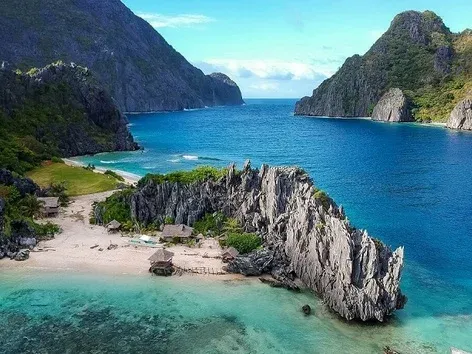
The Philippines is increasingly attracting foreign investors by offering fast and straightforward mechanisms for legalizing residency. The FIV investor visa has already attracted the attention of entrepreneurs and families from dozens of countries thanks to its combination of prompt application processing and flexible participation conditions. Learn more about the possibilities of obtaining a residence permit in the Philippines through the FIV program

The Philippines is actively strengthening its position in the investment migration market in Asia. The Investor Visa (FIV) program boasts record-short processing times for residence permits and is attracting applicants from around the world.
In this article, we will tell you how long it takes to obtain residency, who most often applies, what investment opportunities are available, and how FIV differs from other options for legalization in the Philippines.
Are you planning to invest in real estate abroad or apply for a residence permit through investment?
A real estate lawyer from Visit World will help you check your documents, analyze the contract, and assess the legal risks before you sign the deal. Consulting with a specialist allows you to protect your interests at the investment preparation stage.

Obtaining a residence permit in the Philippines in a matter of days: a new standard of speed
The FIV investor program has set a new pace for processing permanent residence applications. The fastest recorded case of a residence card being issued took three working days from the moment the applicant arrived in the country. The average processing time within the first full year of the program was four working days, and the maximum waiting period did not exceed five days.
The program is administered through the Freeport Area of Bataan (FAB) special economic zone. During the first year, 20 residence permits were processed. This efficiency significantly distinguishes FIV from other programs in the region, where processing times are usually measured in months.
Who applies for an FIV investor visa to the Philippines: countries and professions of applicants
Since its launch in 2024, the program has attracted 529 potential participants from 102 countries around the world. The largest share of applicants are citizens of India — 24.9%. They are followed by the United States (18.3%), Germany (11.8%), the United Kingdom (10.9%), and Canada (10.9%). The top ten also includes Pakistan, Australia, Taiwan, Bangladesh, and China.
In terms of professional structure, entrepreneurs predominate, accounting for 27.7%. Senior managers make up 20.3%, IT specialists 13.8%, engineers 11.1%, and financial specialists 9.2%. The program also attracts retirees, medical professionals, and other skilled professionals.
A significant portion of applications are submitted together with family members. Independent applicants make up 44.4%, families of three — 22.2%, families of four — 22.2%, and married couples — 11.1%. More than half of the participants move to the Philippines with their families.
Investment requirements for obtaining a residence permit in the Philippines
The basic requirement of the program is a fixed deposit of $75,000 through approved partners. In addition to the traditional option, participants have access to so-called high-yield investment options.
These include premium club formats that include access to sports and recreational infrastructure, as well as options for investing in business projects and coworking centers within the economic zone. For certain investment formats, the use of cryptocurrency is possible.
The organizers emphasize the transparency of the investment structure and the integration of funds into the development of specific objects within the special economic zone.
Are there any citizenship restrictions for the FIV investor visa?
FIV accepts applicants regardless of citizenship. This approach expands access to the program for individuals who face restrictions in other jurisdictions.
The absence of national quotas or individual restrictions creates a more universal format for participation and makes it possible to consider the Philippines as an alternative location for long-term residence in Asia.
Comparison of the FIV investor visa with other residence permit programs in the Philippines
One of the well-known legalization tools in the Philippines is a special visa for resident retirees (SRRV). It has age criteria and requires mandatory residence in the country for several months while the application is being processed.
The FIV works differently. The program does not set a minimum mandatory stay, does not require the purchase of real estate, and does not require reporting on income earned outside the country. Participants can live in any region of the Philippines and include family members without additional investment contributions.
Tax aspects also remain an important component. Income from abroad is not subject to local reporting under this program. The Philippines maintains banking confidentiality in accordance with Republic Act No. 1405, and deposits are not subject to automatic information exchange under the CRS standard.
How to apply for a residence permit in the Philippines: stages and terms of processing
The application procedure is structured to accompany the applicant at every stage. After consultation, a cooperation agreement is concluded and documents are prepared for preliminary review. Preliminary approval is usually received within seven business days.
After that, the applicant completes the selected investment and makes an organized trip to the Philippines for final processing. The ACR-I resident card is issued within three to five business days of staying in the country.
Why do investors choose the Philippines for relocation and residence?
The Philippines demonstrates stable economic growth and active infrastructure development in key urban clusters. English is widely used in the business environment, which facilitates the integration of foreign investors.
Digital updates to the program include the option of virtual registration for annual reporting and the integration of modern financial instruments. This approach creates a more flexible environment for international participants.
Legal support for real estate investments for residence permits abroad
Obtaining residency through investment is often associated with the purchase of residential property or investment in commercial real estate. In such cases, it is important to ensure full legal control of the transaction and verification of all accompanying documents.
A real estate lawyer from Visit World accompanies transactions with residential and commercial real estate: prepares and verifies purchase and sale agreements, analyzes additional agreements, title documents, assists in resolving disputes between landlords and tenants, advises on zoning, building requirements, and tax issues. A specialist will also be useful when investing in foreign real estate or settling debts and property disputes.
Contact a real estate lawyer from Visit World to conduct a transaction safely and with all legal nuances taken into account!
Reminder! Legal residence in the Philippines is also available with a visa for Digital Nomads. For more information about the digital nomad visa for the Philippines, click here.
Products from Visit World for a comfortable trip:
Checklist for obtaining a visa and necessary documents in the Philippines;
Legal advice on immigration to the Philippines;
Travel insurance for foreigners in the Philippines;
Medical insurance all over the world.
We monitor the accuracy and relevance of our information, so if you notice any errors or inconsistencies, please contact our hotline.
Frequantly
asked questions
What is an FIV investor visa in the Philippines?
How long does it take to obtain a residence permit under the FIV program?
What is the minimum investment amount to obtain a residence permit in the Philippines?
Recommended articles
3 min
Travels
Europe without crowds: 10 little-known travel destinations in 2026
European megacities are increasingly suffering from overtourism, museum queues and sky-high prices during the season. In 2026, more and more travelers are choosing less popular cities where they can travel more relaxed and feel the country's atmosphere more deeply. Find out more about 10 lesser-known destinations in Europe that will be an ideal alternative to the popular tourist capitals in 2026
16 Feb. 2026
More details3 min
Expats
Indonesia has officially launched the Global Citizenship program, a new migration status often referred to as “quasi-citizenship.” Despite the loud name, it is not a passport, but a lifetime right to reside for certain categories of foreigners. Learn more about the conditions, requirements and real opportunities of Global Citizenship status in Indonesia
12 Feb. 2026
More details3 min
Work
Minimum wage ranking in Europe 2026: leaders and outsiders
Minimum wages in European countries vary significantly: in some countries, they are more than two thousand euros, while in others they are several times less. In 2026, the difference between countries became even more pronounced, especially when the cost of living is taken into account. Learn more about where in Europe the minimum wage is the highest and what these figures mean in practice
13 Feb. 2026
More details3 min
Expats
Cost of living ranking in the world in 2026: the most expensive countries in the world
The cost of living varies significantly from country to country, and 2026 is no exception. The Numbeo global index has recorded a significant increase in the cost of housing and food in dozens of countries, while some countries remain relatively affordable to live in. Learn more about the most expensive countries in the world, key price trends, and Ukraine's position in the ranking
12 Feb. 2026
More detailsAll materials and articles are owned by VisitWorld.Today and are protected by international intellectual property regulations. When using materials, approval from VisitWorld.Today is required.