

Ramadan in 2026: dates, traditions and what travelers should know
Table of contents
- What is Ramadan and why is it considered the holiest month?
- When does Ramadan begin in 2026?
- Why do Ramadan dates change every year?
- Basic traditions and rules during Ramadan
- Do's and don'ts during Ramadan
- What does life look like in Muslim countries during Ramadan?
- End of Ramadan - Eid al-Fitr (Eid al-Adha)
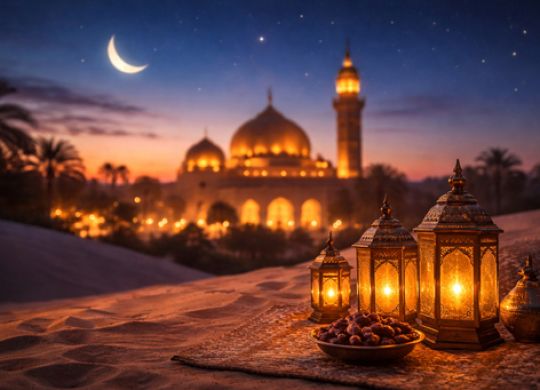
Ramadan is the most important month in the Islamic calendar, during which the daily life of entire countries changes. In 2026, it will begin in winter, which makes the fasting period physically easier for believers, but affects the operation of facilities and services. Learn more about Ramadan in 2026 and what it means for travelers

Ramadan is the holiest month in Islam, which has a special spiritual significance for millions of Muslims around the world. During this period, believers fast from dawn to dusk, pray more, give to charity, and try to pay attention to their inner spiritual development.
In 2026, Ramadan falls in the winter, which changes the usual rhythm of life in many countries of the Middle East, North Africa and Asia. For tourists, this means different opening hours for cafes, shops, transportation, and services, as well as a special atmosphere in cities after sunset.
Understanding the traditions of Ramadan helps not only to better prepare for the trip, but also to avoid awkward situations related to local rules and cultural norms.
Choose a reliable health insurance policy on the Visit World portal to protect yourself from unforeseen expenses during your move. Support from a trusted insurance agent with a guaranteed payout in just a couple of clicks!

What is Ramadan and why is it considered the holiest month?
Ramadan is the ninth month of the Islamic calendar, which has a special spiritual significance for Muslims. It was during this period, according to Islamic tradition, that the first verses of the Qur'an were revealed to Prophet Muhammad. That is why Ramadan is considered a time of spiritual purification, rethinking of one's own actions and intense prayer.
The essence of Ramadan is not only physical abstinence from food and water during daylight hours. For believers, this month is associated with self-discipline, patience, and control over emotions. During this time, special attention is paid to avoiding quarrels, lies and insults, trying to help others more and do good deeds.
From a spiritual point of view, Ramadan is perceived as an opportunity to get closer to God through prayer, reading the Quran, and charity. That is why this month has a much deeper meaning than just a period of fasting and affects the daily life of Muslim communities around the world.
When does Ramadan begin in 2026?
In 2026, the holy month of Ramadan will tentatively begin on Wednesday, February 18, and end on the evening of March 19. Accordingly, the celebration of Eid al-Fitr (Eid al-Adha), which symbolizes the end of the fast, will take place on March 20, 2026. It is important to keep in mind that the final date of the beginning of Ramadan in each country may be announced upon the observation of the new moon.
This year, Ramadan falls in the winter, which is considered more comfortable for fasting. Due to the shorter daylight hours, the period of abstinence from food and water lasts fewer hours than in the summer months, and the cooler weather reduces the feeling of thirst and physical activity.
For travelers, these dates are important primarily from a practical point of view. In Muslim countries, the opening hours of shops, restaurants, public transport, and government agencies may change during this period, and tourist locations operate in a quieter mode during the day, becoming more active after sunset.

Why do Ramadan dates change every year?
The Islamic calendar is based on the lunar cycle, not the solar year, like the Gregorian calendar used by most countries. The lunar year is shorter by about 10-11 days, so the beginning of Ramadan shifts back each year and gradually “passes” through all seasons: from winter to summer and vice versa.
The beginning of Ramadan is officially announced after the new moon is observed. In some countries, the decision is made by religious councils or spiritual administrations based on astronomical calculations, while in others it is based on actual visual confirmation of the new moon. That is why the dates of the beginning of the fast may vary slightly from region to region.
Basic traditions and rules during Ramadan
Ramadan significantly changes the daily rhythm of life in Muslim countries. During this period, religious practices come to the fore, and the usual daily schedule is adjusted during fasting and prayer. For travelers, this is noticeable both in the changed work schedules of establishments and in the general atmosphere of cities.
Key traditions and rules of Ramadan:
1. Fasting from dawn to dusk, during which believers abstain not only from food and drink, but also from smoking and intimate relationships;
2. Suhoor is an obligatory early meal before the start of the fast, which helps to physically prepare for a long day without water and food;
3. Iftar is an evening meal after sunset, which is often held with family or friends and is accompanied by prayer;
4.
Additional collective taraweeh prayers in mosques, which are read only during Ramadan;
5. More active reading of the Qur'an and participation in religious events for the purpose of spiritual purification;
6. Charity and assistance to the needy, including donations and participation in volunteer initiatives.
All of this creates a special lifestyle for the month: working days often start later or end earlier, and the busiest times in cities are in the evening and at night. Tourists should take these changes into account when planning excursions, meals, and getting around the city.
Do's and don'ts during Ramadan
During Ramadan, Muslim countries have not only religious rules for believers, but also unspoken norms of behavior in public space. It is important for tourists to understand these peculiarities to avoid awkward situations and show respect for local traditions.
Basic rules and restrictions during Ramadan:
1. Do not eat, drink or smoke in public during the day in countries where the majority of the population professes Islam;
2. Refrain from loud behavior, demonstrative displays of emotion and aggression;
3. Choose more restrained clothing, especially when visiting religious places;
4. Respect the time of prayer and not interfere with those who are fasting;
5. Take into account the changed working hours of restaurants, shops and services;
6. Be aware of exceptions for children, the sick, pregnant women and travelers among the local population who may not observe the fast.
These rules do not mean strict prohibitions for foreigners, but observing basic respect for local customs greatly simplifies communication and makes traveling more comfortable. In tourist areas, restrictions are usually less strict, but in small towns and traditional regions, behavioral norms are more pronounced.
What does life look like in Muslim countries during Ramadan?
During Ramadan, the rhythm of life in Muslim countries changes significantly. During the day, cities usually look calmer: some establishments open later, some cafes and restaurants are closed until sunset, and the pace of life is generally slower. At the same time, in tourist areas, services often continue to operate, but with a limited schedule.
After sunset, cities literally come to life. People take to the streets, restaurants open, shops and night markets are open, and more transportation appears. At this time, you can see families and friends gathering together and public spaces filling with life. For tourists, this is a convenient period for walking, dining out, and visiting popular locations.
In practice, this means that day planning requires more flexibility. Excursions, museum visits, or trips out of town should be planned with shorter working hours in mind, and meals should be scheduled for the evening. Such a regime may seem unusual, but at the same time, it gives you the opportunity to see cities in an atmosphere that does not exist in other periods of the year.
End of Ramadan - Eid al-Fitr (Eid al-Adha)
Eid al-Fitr, or Eid al-Adha, is celebrated immediately after the end of Ramadan. It is one of the most important holidays in Islam, symbolizing the end of the period of fasting and spiritual purification. Celebrations usually begin with morning prayers, after which families and friends gather together, greet each other and spend time in a festive atmosphere.
In many countries, these days are official holidays, so the work of government agencies, banks and some businesses may be suspended or limited. At the same time, in tourist regions, activity often even increases due to festive events, domestic travel by locals, and the influx of people to popular locations. This can affect the availability of transportation and accommodation.
For travelers, the Eid al-Fitr period means increased demand for tickets and hotels, as well as a livelier atmosphere in cities. If your trip falls on these days, you should book your accommodation and plan your travel in advance to avoid unexpected delays and congestion on popular routes.
When planning a trip abroad, it is important to take care of financial protection in case of unforeseen situations in advance. Medical insurance from Visit World allows you to avoid significant expenses in case of illness, injury or the need to seek help outside your home country. Taking out an insurance policy before your trip helps you feel more relaxed and focus on your trip rather than on possible risks. Convenient online services allow you to choose and arrange a suitable insurance option before you leave.
We remind you! In times of geopolitical turbulence, some people consider moving to countries that have long maintained a policy of neutrality and avoided military alliances. Such states offer relative stability and clear paths for residency or long-term residence. Read more about countries that remain neutral and realistic options for moving to them.
Products from Visit World for a comfortable trip:
Travel guide for 200 countries;
Legal advice from a local specialist on visa and migration issues;
Travel insurance around the world (please select the country of interest and citizenship to receive services);
Medical insurance all over the world.
We monitor the accuracy and relevance of our information, so if you notice any errors or inconsistencies, please contact our hotline.
Frequantly
asked questions
How long does Ramadan last?
Can tourists eat and drink during the day in Muslim countries during Ramadan?
Are shops and restaurants open during Ramadan?
Is it safe to travel during Ramadan?
Why can the start date of Ramadan differ from country to country?
Recommended articles
3 min
Travels
Europe without crowds: 10 little-known travel destinations in 2026
European megacities are increasingly suffering from overtourism, museum queues and sky-high prices during the season. In 2026, more and more travelers are choosing less popular cities where they can travel more relaxed and feel the country's atmosphere more deeply. Find out more about 10 lesser-known destinations in Europe that will be an ideal alternative to the popular tourist capitals in 2026
16 Feb. 2026
More details3 min
Events
Carnival February 2026: four spectacular celebrations in Rio, Venice, Tenerife, and Barranquilla
February 2026 will unite the world in the rhythm of the planet's most vibrant carnivals, from fiery samba to exquisite historical masks. Rio de Janeiro, Venice, Tenerife, and Barranquilla are preparing unique programs that combine traditions, large-scale parades, and a true festive atmosphere. Learn more about the most spectacular carnivals of February 2026
15 Feb. 2026
More details4 min
Events
The 2026 Olympics in Milan: medal count, records, scandals, and major sensations of the Winter Games
The 2026 Winter Olympics in Italy have already given spectators historic records, unexpected triumphs, and heated debates. From Norway's dominance in the medal count to South America's first winter gold, these Games will be remembered for a long time. Learn more about the main characters, scandals, and sensations of the 2026 Milan-Cortina Olympics
16 Feb. 2026
More details3 min
Events
Chinese New Year 2026: exact date of celebration, traditions and meaning of the holiday
The Chinese New Year is one of the most colorful and large-scale holidays in the world, which falls on different dates every year. In 2026, it will again be celebrated not according to the usual calendar, but according to ancient lunar cycles. Learn more about the exact date of the celebration, the reasons for its changes, and the main traditions of this holiday
17 Feb. 2026
More detailsAll materials and articles are owned by VisitWorld.Today and are protected by international intellectual property regulations. When using materials, approval from VisitWorld.Today is required.