

A sandstorm has hit Crete: flights canceled, power outages, and a “red” sky
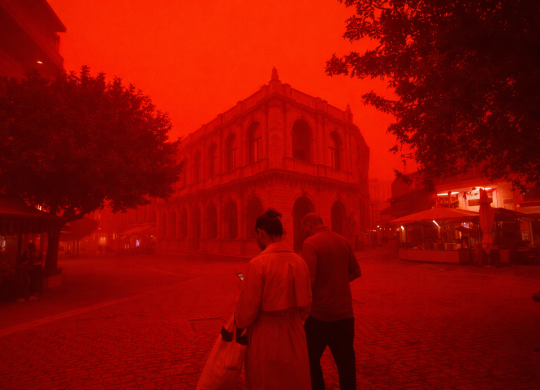
A powerful sandstorm originating in Africa swept across the Greek island of Crete on April 1, 2026, causing major disruptions to power supplies and air travel. Visibility dropped sharply, dozens of flights were canceled or rerouted, and some areas were left without power. Learn more about the aftermath of the storm and the current situation on the island

On April 1, 2026, the Greek island of Crete was hit by a powerful sandstorm that originated in North Africa and was intensified by Cyclone Erminio. The sky over the region took on an unusual orange-red hue, and dust concentrations in the air reached dangerous levels.
The storm caused widespread disruptions to infrastructure: power outages occurred, air travel was disrupted, and traffic accidents increased on the roads. A red alert has been issued in some areas, and authorities and emergency services are urging residents and tourists to exercise extreme caution.
In a previous article, we discussed new tourist taxes in Europe in 2026 and which countries will require tourists to pay more.
Planning a trip abroad and want to protect yourself from unforeseen situations?
Travel insurance from Visit World will cover medical expenses, flight delays, and lost luggage in any country. Get a policy online in a few minutes and travel with confidence!

What Happened in Crete: A Sandstorm, a “Red” Sky, and Critical Dust Levels
On April 1, 2026, Crete was engulfed by a massive cloud of African dust, which radically altered the island’s appearance and created dangerous living conditions. The sky over the region turned orange-red, and visibility deteriorated sharply.
According to the National Observatory of Athens, dust concentrations in the city of Rethymno exceeded 1,000 μg/m³, which is dozens of times higher than normal. Such levels are hazardous to health, especially for people with respiratory conditions.
Local residents and the media describe the situation as “Martian”—the island’s familiar landscapes have literally vanished behind a thick veil of dust. The cause of this phenomenon was a strong southerly wind that carried dust from North Africa, as well as Cyclone Erminio, which brought additional rain and storm gusts.
The storm did not affect only Crete. Similar conditions were observed on other Greek islands, including Naxos, Santorini, Tinos, and Syros, where heavy rainfall and storms compounded the dust.
Learn more about the best European cities for a short budget trip by following the link.
Power outages and flight disruptions: how the storm paralyzed infrastructure
The storm dealt a serious blow to the island’s key infrastructure—the power grid and air travel were hit hardest. Due to the combination of dust, strong winds, and rain, the situation quickly became critical.
The biggest problems arose in the Heraklion area. Due to extensive damage to the power grid, a significant part of the region was left without electricity. Dust and strong gusts of wind caused power lines to snap, leading to widespread power outages.
Serious disruptions were also reported at airports. At Heraklion International Airport, visibility on the runway dropped to a critical 1,000 meters, making it impossible to land aircraft normally. As a result, 7 flights were canceled, and another 12 were diverted to other cities, including Athens, Corfu, and Chania.
In fact, not a single plane was able to land in Heraklion throughout the day.
In addition, dangerous conditions developed on the roads. Due to poor visibility, a traffic accident occurred in the Heraklion area—a female motorcyclist was injured and hospitalized. Isolated tornadoes were also reported in the Messara region: one of them even overturned a truck.
Due to the widespread impact of the severe weather, a red alert has been issued for parts of the island, and emergency services are urging people to avoid unnecessary travel.
Earlier, we wrote about the best beach destinations in Europe to visit as early as late spring.
Health risks and what tourists should keep in mind
The sandstorm has caused not only transportation and infrastructure problems but also a serious health threat. Due to the extremely high concentration of dust, air quality in Crete has deteriorated sharply.
Emergency services warn that these conditions are particularly dangerous for people with asthma, allergies, chronic lung diseases, as well as for children and the elderly. Even healthy people may experience symptoms—eye irritation, coughing, difficulty breathing, and a general feeling of malaise.
The situation is complicated by the fact that dust remains in the air for a long time and, combined with strong winds, spreads rapidly across the entire island. That is why authorities have implemented additional safety measures, including the temporary closure of schools.
Tourists and local residents are advised to:
1. Limit time spent outdoors
2. Keep windows closed
3. Use protective masks or respirators
4. Avoid non-essential travel
5. Monitor official warnings
According to meteorologists’ forecasts, the situation may remain difficult for several more days. It is expected that dust levels will begin to gradually decrease only after the wind direction changes.
No matter how well thought-out your itinerary is, there is always room for force majeure when traveling. Unexpected medical expenses, transportation delays, or problems with luggage can ruin your plans and budget. Travel insurance helps you avoid unnecessary worries in such situations. You can apply for a travel insurance policy for a specific trip online at Visit World - quickly and without unnecessary bureaucracy!
Take out a policy online at Visit World and enjoy your trip without any unnecessary worries!
We remind you! Some countries are island states with political neutrality, which means that the likelihood of military conflict is quite low. Read more about the countries that are likely to participate in World War III and the top safest countries in the world.
Products from Visit World for a comfortable trip:
Travel guide for 200 countries;
Legal advice from a local specialist on visa and migration issues;
Travel insurance around the world (please select the country of interest and citizenship to receive services);
Medical insurance all over the world.
We monitor the accuracy and relevance of our information, so if you notice any errors or inconsistencies, please contact our hotline
Frequantly
asked questions
Why did the sky turn red in Crete?
How dangerous is the dust level on the island?
What is happening with flights to Crete?
Are there power outages?
When will the situation in Crete improve?
Recommended articles
2 min
Residence permit
Italy Offers €15,000 Grant for Moving to Sardinia: New Residents Incentive
Dreaming of living on a sunny island with clean beaches and a relaxed atmosphere? Find out about the Sardinia relocation program, a €15,000 grant and additional payments for families looking to settle in the island's small towns
01 Apr. 2026
More details3 min
Travels
The EU will launch the EES in full operation starting in April 2026: new border crossing rules
The European Union is finalizing the rollout of a new border control system—the Entry/Exit System (EES)—which will be fully operational starting in April 2026. It replaces passport stamps with digital records and biometric data. Learn more about how the border crossing process will change and what you need to consider before your trip
01 Apr. 2026
More details3 min
Travels
In 2026, Greece cemented its status as one of the world’s top wellness destinations thanks to a unique combination of thermal springs, Mediterranean cuisine, and eco-friendly initiatives. Wellness tourism brings billions of euros to the country and is reshaping the tourism landscape across regions from Crete to the Peloponnese. Learn more about Greece’s ranking in the 2026 Global Wellness Tourism Index and the most popular destinations for wellness travel
02 Apr. 2026
More details1 min
Expats
Living on €500: Best Countries for Digital Nomads in 2026
Affordable living abroad is becoming a reality for remote workers. Find out which countries you can live comfortably on 500 euros and how to prepare for a move
02 Apr. 2026
More detailsAll materials and articles are owned by VisitWorld.Today and are protected by international intellectual property regulations. When using materials, approval from VisitWorld.Today is required.