

Europe's Most Beautiful Architecture: Lonely Planet's Top 8 Cities
Table of contents
- Córdoba, Spain: Andalusia’s Moorish heritage
- Bath, United Kingdom: Georgian elegance on the banks of the Avon
- Basel, Switzerland: The Capital of Avant-Garde Architecture
- Lecce, Italy: The Baroque Limestone City of Apulia
- Copenhagen and Malmö: Scandinavian Modernism on Two Shores
- Coimbra, Portugal: a medieval university gem
- Barcelona, Spain: From Gothic to Gaudí
- Bergen, Norway: the wooden architecture of a Hanseatic port
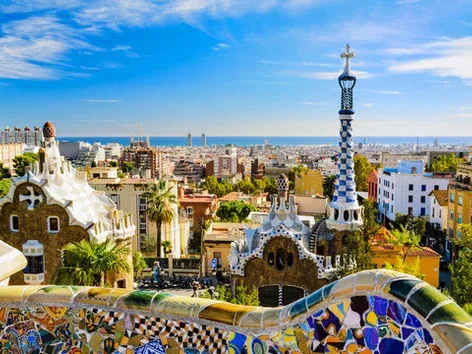
European cities are home to architectural masterpieces from various eras—from Moorish mosques and Roman baths to Baroque cathedrals and futuristic skyscrapers. Lonely Planet has selected eight destinations worth visiting specifically for their architecture. Learn more about Europe’s most fascinating architectural cities and their main landmarks

Europe preserves an architectural heritage spanning millennia, from Roman baths and Moorish palaces to Scandinavian skyscrapers and Catalan modernism. Lonely Planet has compiled a selection of eight European cities whose architecture impresses with its scale, style, and historical context. Among them are well-known tourist destinations and less obvious spots on the map that deserve attention precisely because of their buildings.
We’ll tell you more about each of these cities and their main architectural landmarks in the article below.
Want to travel through Europe without worrying about documents, insurance, and organizational details?
The travel guide from the Visit World portal contains all the practical information you need for a comfortable trip.

Córdoba, Spain: Andalusia’s Moorish heritage
Córdoba remains in the shadow of Granada and Seville, though it is in no way inferior to them in terms of the richness of its Moorish architecture. The city boasts four UNESCO World Heritage sites, the most prominent of which is the 8th-century Mezquita (Great Mosque) with its mihrab, star-shaped stone vaults, and interlaced horseshoe arches. Beyond the mosque, the city unfolds into a labyrinth of cobblestone streets in the medieval center, featuring wrought-iron balconies, flower-filled patios, and buildings of golden stone. Other highlights include the ruins of the Medina de Azahara, the 10th-century palace city of Caliph Abd al-Rahman III, and the Alcázar de los Reyes Cristianos with its terraced gardens, fish ponds, and fountains.

Photo: iStock
Bath, United Kingdom: Georgian elegance on the banks of the Avon
Bath in Somerset is one of England’s most architecturally cohesive cities, built primarily from local limestone. John Wood the Younger’s Royal Crescent and The Circus, inspired by the Colosseum, are considered icons of Georgian architecture; this is where “Bridgerton” was filmed, and where Jane Austen lived from 1801 to 1806. Bath’s history goes back much further: about two thousand years ago, the Romans built baths here dedicated to the goddess Sulis-Minerva, drawn by hot springs with a temperature of 46 °C. Bath’s Roman baths have survived to this day and are one of the finest examples of ancient thermal complexes in the world.
Basel, Switzerland: The Capital of Avant-Garde Architecture
Basel, located at the junction of the borders of Switzerland, Germany, and France, stands out among Swiss cities precisely for its concentration of modern architecture—it is home to buildings by several Pritzker Prize laureates, and every year the city hosts the Art Basel art fair. Key landmarks include the BIS Tower and the Jean Tinguely Museum by Mario Botta, the copper-clad SBB Central Signal Box, and the energy-efficient Roche Towers by Herzog & de Meuron, as well as Frank Gehry’s deconstructivist Vitra Design Museum and Renzo Piano’s Fondation Beyeler. Two-hour architectural tours of Basel allow you to learn more about the history of each landmark and its architect.

Photo: iStock
Lecce, Italy: The Baroque Limestone City of Apulia
Lecce in southern Apulia boasts a completely unique architectural style—barocco leccese—created by local 17th-century masters, notably Francesco Antonio Cimballo and his grandson Giuseppe. The facades, made of local honey-colored limestone, are lavishly decorated with gargoyles, columns, floral garlands, and figures of fantastical creatures. The main attraction is the Basilica of Santa Croce, with allegorical beasts and cherubs adorning its façade, while Piazza del Duomo is framed by the Baroque cathedral, the bell tower, and the bishop’s palace. Beneath the square lies a 2nd-century Roman amphitheater—a reminder that Lecce’s architectural history predates the Baroque era by centuries.

Photo: iStock
Copenhagen and Malmö: Scandinavian Modernism on Two Shores
Copenhagen, UNESCO World Capital of Architecture for 2023–2025, combines Arne Jacobsen’s modernist legacy with ultra-contemporary projects: the Ørestad district on the island of Amager showcases the Upcycle Studios residential complex made from recycled materials, BIG’s 8 House with green roofs, and the Royal Arena clad in wooden fins. The Dansk Arkitektur Center in Rem Koolhaas’s BLOX building offers walking tours of the capital’s architectural landmarks. Across the Øresund Bridge—in Malmö, Sweden—stands Santiago Calatrava’s Turning Torso: a 57-story skyscraper 190 meters tall, twisted 90 degrees—the tallest building in Scandinavia.
Visit World services for tourists, migrants, and expats: Insurance | Guides | Legal advice
Coimbra, Portugal: a medieval university gem
Coimbra, Portugal’s third-largest city between Lisbon and Porto, rises dramatically above the Mondego River and preserves architectural traces of the Celts, Romans, Visigoths, and Moors. The cryptoporticus beneath the Machado de Castro National Museum is the remnant of a Roman forum, while the imposing Arco de Almedina from the Moorish era still leads to the upper part of the city. The 12th-century Romanesque Sé Velha Cathedral impresses with its crenellated façade featuring narrow windows, while the University of Coimbra, founded in 1290 and a UNESCO World Heritage Site, attracts visitors with its Baroque Biblioteca Joanina, adorned with gold and frescoes.

Photo: iStock
Barcelona, Spain: From Gothic to Gaudí
Barcelona is preparing to become a UNESCO World Capital of Architecture in 2026, spanning all eras—from the Roman ruins and Gothic churches of the Barri Gòtic to the Catalan Modernism of Antoni Gaudí. His La Sagrada Família, with spires resembling wax candles, is set to be completed in 2026—144 years after construction began. Casa Batlló, with its dragon-back-shaped roof, and the undulating La Pedrera (Casa Milà), a UNESCO World Heritage Site, showcase Gaudí’s style featuring trencadís—a mosaic of broken tiles. Park Güell on the hill completes the picture with its fairy-tale columns and mosaic benches overlooking Barcelona and the sea.
Bergen, Norway: the wooden architecture of a Hanseatic port
Bergen in Norway’s Western Fjords was the country’s medieval capital and a member of the Hanseatic League, and its main architectural landmark—Bryggen—is a UNESCO World Heritage Site. The old pier, lined with wooden buildings featuring gabled roofs and ochre-red facades, stretches along the Vagen harbor. King Haakon’s Hall (1247–1261), with its vaulted ceiling, and the Hanseatic Museum in an 18th-century wooden building tell the story of the maritime trade era.
The best time to visit Bryggen is early in the morning or in the evening, after the day-trippers have left—a 1.5-hour “Essence of Bergen” walking tour of the historic center’s architectural landmarks is also available.

Photo: iStock
Planning a trip to Europe? Use the Visit World travel guide!
The Visit World portal offers travel guides with up-to-date practical information for traveling through European countries, from visa requirements and insurance to tips on transportation and accommodation.
Get your travel guide on Visit World to plan your architectural journey conveniently and effortlessly!
Reminder! European summer resorts are packed with tourists every year, and vacations often turn into a scramble for a spot on the beach. But even in popular countries, there are destinations where you can enjoy peace and quiet, nature, and an authentic atmosphere. We’ll tell you about three underrated European destinations worth visiting this summer right here.
Photo: Adobe Stock
Products from Visit World for a comfortable trip:
Travel guide for 200 countries;
Legal advice from a local specialist on visa and migration issues;
Travel insurance around the world (please select the country of interest and citizenship to receive services);
Medical insurance all over the world.
We monitor the accuracy and relevance of our information, so if you notice any errors or inconsistencies, please contact our hotline.
Frequantly
asked questions
Where should you go in Europe to see ancient architecture?
Which European city is the capital of modern architecture?
Recommended articles
3 min
Travels
The EU will launch the EES in full operation starting in April 2026: new border crossing rules
The European Union is finalizing the rollout of a new border control system—the Entry/Exit System (EES)—which will be fully operational starting in April 2026. It replaces passport stamps with digital records and biometric data. Learn more about how the border crossing process will change and what you need to consider before your trip
01 Apr. 2026
More details3 min
Travels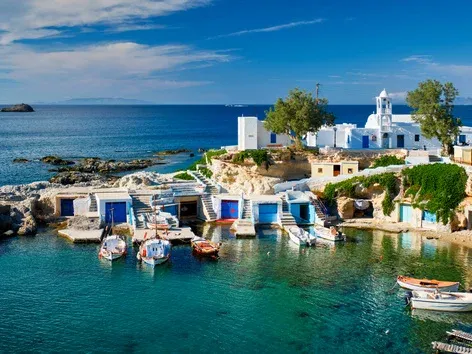
In 2026, Greece cemented its status as one of the world’s top wellness destinations thanks to a unique combination of thermal springs, Mediterranean cuisine, and eco-friendly initiatives. Wellness tourism brings billions of euros to the country and is reshaping the tourism landscape across regions from Crete to the Peloponnese. Learn more about Greece’s ranking in the 2026 Global Wellness Tourism Index and the most popular destinations for wellness travel
02 Apr. 2026
More details3 min
Travels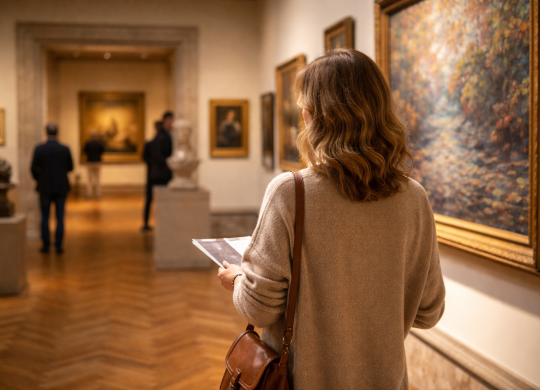
The Museum Afternoon That Fixes a Bad Mood: Why Slow Culture Days Work
The fast pace of life, noise, and constant busyness often only exacerbate stress and fatigue. At times like these, simple things like a trip to a museum can be a surprisingly effective way to recharge. Learn more about how “slow culture days” can help improve your mood and restore your inner balance
03 Apr. 2026
More details3 min
Travels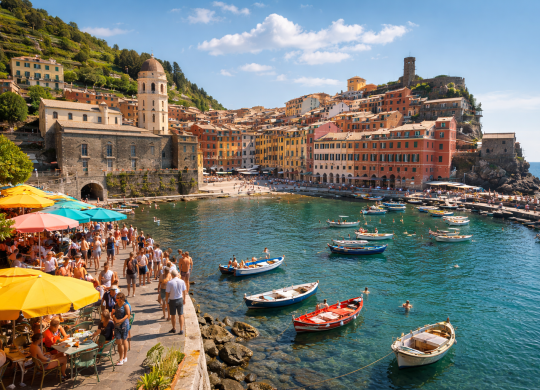
Italy is introducing new rules for tourists: key changes in 2026
Italy is gradually introducing new restrictions for tourists due to overcrowding at popular destinations. In 2026, these changes will affect Rome, Venice, Florence, Capri, and other regions. Learn more about the new rules and how they will affect travel
04 Apr. 2026
More detailsAll materials and articles are owned by VisitWorld.Today and are protected by international intellectual property regulations. When using materials, approval from VisitWorld.Today is required.