

Mexico's Most Beautiful Historic Cities: 5 Destinations to Explore the Country's Colonial Heritage
Table of contents
- Why is Mexico becoming a popular destination for cultural travel?
- Oaxaca de Juárez: The Gastronomic Capital of the South
- Puebla: City of Blue Talavera Pottery
- San Miguel de Allende: a favorite city of artists and expats
- Santiago de Querétaro: the pearl of the central plateau
- Veracruz: Mexico’s Gateway to the Sea
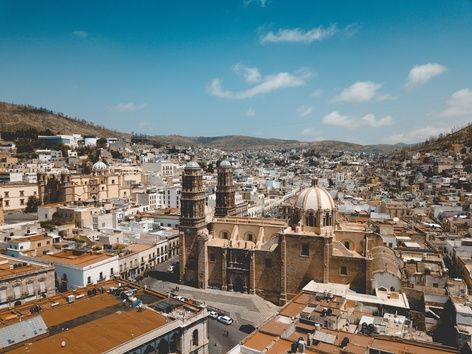
Mexico’s colonial heritage attracts travelers just as much as the beaches of Cancún and Tulum, and some of the country’s historic centers are listed as UNESCO World Heritage Sites. Travel off Path has compiled a list of five cities that best capture the authentic character of Mexican architecture, cuisine, and culture. Learn more about Mexico’s best historic destinations for a cultural trip

Mexico is most often associated in travelers' minds with the turquoise waters of the Caribbean Sea, all-inclusive resorts, and the beaches of the Riviera Maya. However, the country’s true character is best experienced far from the resort areas—in cities featuring colonial architecture from the 16th to 18th centuries, monasteries, colorful facades, and culinary traditions that have evolved over centuries. These are precisely the destinations recommended by Travel off Path, which has compiled a list of five historic cities worth a separate trip.
Which colonial centers in Mexico have best preserved their authentic appearance, what Oaxaca, Puebla, and San Miguel de Allende are known for, and where to find the most striking examples of Baroque architecture—we’ll tell you more in this article.
Planning a trip and looking for reliable protection in case of unforeseen situations on the road?
The Visit World portal will help you arrange travel insurance covering medical expenses, emergency evacuation, and other risks during your trip.

Why is Mexico becoming a popular destination for cultural travel?
The country ranks among the top ten nations in the world for the number of UNESCO sites, and most of them are the historic centers of colonial cities. Writer Carlos Fuentes once remarked that Mexico is a country where the past never ends, and the present always bears the traces of several eras at once. This description aptly explains why even a short stroll through the center of any Mexican city evokes a sense of depth and complexity.
An additional advantage of the destination is the relatively simple entry logistics for travelers from many countries around the world, including citizens of Israel, Italy, Australia, and Greece. Domestic air service between historic centers is well-developed, and the distances between cities are ideal for road trips lasting from a few days to two weeks.
Visit World services for tourists, migrants, and expats: Insurance | Guides | Legal advice
Oaxaca de Juárez: The Gastronomic Capital of the South
Oaxaca is located in the south of the country and is considered one of Mexico’s most distinctive regions thanks to the blend of Spanish heritage with the culture of the indigenous Zapotec and Mixtec peoples. The central Zócalo square is surrounded by arcaded buildings, and nearby stands the Santo Domingo de Guzmán Church—a striking example of Mexican Baroque with gilded interiors and painted ceilings.
The city is also known for the Mercado 20 de Noviembre, where traditional state dishes are served—seven types of mole sauce, tlajudías, and fried grasshoppers (chapulines).

Photo: Advisor.Travel
Just outside the city center, travelers will find the Monte Albán archaeological complex—the former capital of the Zapotec civilization, situated on a plateau overlooking the valley. Pyramids, ball courts, and rulers’ residences offer a glimpse into pre-Columbian architecture. Craft enthusiasts should set aside time to visit the villages around Oaxaca, where alebrijes—carved wooden figurines with bright paintings—are made.
Puebla: City of Blue Talavera Pottery
Puebla, founded by the Spanish in 1531, became one of the first cities in New Spain that had no predecessor from the Aztec era. The center of Puebla is distinguished by facades adorned with Talavera ceramic tiles—a blue-and-white technique that local artisans adopted from the Spanish town of Talavera de la Reina. The city’s main architectural landmark is the Cathedral of the Immaculate Conception, with two bell towers whose height makes it one of the tallest Catholic churches in the country.

Photo: Viator
Among the must-see attractions is the Palafoxiana Library, founded in 1646 and recognized by UNESCO as the first public library in the Americas. Its wooden shelves hold over forty thousand volumes, some of which date back to the 15th century. A twenty-minute drive from Puebla lies Cholula—a town home to the world’s largest pyramid by volume, atop which the Spanish built the yellow-and-white Church of Santa María Tonantzin.
San Miguel de Allende: a favorite city of artists and expats
Over the past two decades, San Miguel de Allende in the state of Guanajuato has become a magnet for the artistic community from around the world. The parish church of San Miguel Arcángel, with its pink neo-Gothic towers that set it apart from most of Mexico’s colonial churches, has become the city’s central landmark. Galleries, studios, designer clothing boutiques, and restaurants serving signature cuisine are clustered around the main garden, Jardín Principal.

Photo: Pan Ukraine
The city is also known for the Instituto Allende art school, founded in 1951, and the Fabrica La Aurora art center, located on the site of a former textile factory. A stroll through the streets of Aldama and Calle Recoletos reveals the city’s characteristic ochre facades, wrought-iron balconies, and carved wooden doors. San Miguel regularly ranks among the world’s best small cities according to leading travel publications.
Santiago de Querétaro: the pearl of the central plateau
Querétaro lies about two hundred kilometers northwest of Mexico City and is often overlooked by major tourist routes. The city’s historic center was added to the UNESCO list back in 1996 thanks to a combination of Spanish and indigenous street layouts that is rare in Mexico. The city’s symbol is an aqueduct with 74 arches, built in the first half of the 18th century to supply water to the Capuchin convent.

Photo: Viator
Several landmark events in Mexican history took place in Querétaro—it was here in 1917 that the country’s new constitution was signed, and the Republic Theater still houses the hall where the session was held. Among the architectural masterpieces, the Santa Rosa de Viterbo Church stands out with its richly decorated Churrigueresque façade and the inner courtyard of the former monastery. The local wine and cheese industry also makes Querétaro an attractive destination for culinary tourism.
Veracruz: Mexico’s Gateway to the Sea
Unlike other historic centers in the country, Veracruz is located on the coast of the Gulf of Mexico and has a completely different atmosphere than the inland cities of the highlands. It was here in 1519 that Hernán Cortés landed, marking the beginning of the Spanish colonization of mainland Mexico. The architecture of the port area blends colonial arcades, Caribbean motifs, and influences from Afro-Mexican culture, which developed through maritime trade.

Photo: Expedia
The city’s main historical landmark remains the San Juan de Ulúa Fortress, built on an island to defend against attacks by pirates and Dutch and English fleets. The arched portal of Vasco Núñez, the Malecón promenade, and the central Zócalo square form the heart of the old town, where musicians of son jarocho—a traditional regional genre—gather in the evenings.
Veracruz cuisine is known for its seafood and the dish wachinango a la veracruzana—red snapper in a sauce with tomatoes, olives, and capers.
Traveling through historic cities involves long journeys, visiting archaeological sites at high altitudes, and sampling local cuisine—all of which pose additional health risks for travelers. Medical care at private clinics in the country is expensive, so having travel insurance is essential for a comfortable trip.
You can purchase travel insurance for a trip to Mexico on the Visit World portal—the company offers policies covering medical expenses, evacuation, lost luggage, and trip cancellation.
Purchase insurance on the Visit World website before departure so you can focus on exploring colonial Mexico without unnecessary worries!
Reminder! Italy has much more to offer than the tourist-packed cities of Rome, Venice, or Florence. Which five lesser-known Italian cities will become the best alternative to popular destinations in 2026 and why they deserve your attention—find out by following the link.
Photo: Freepik
Frequantly
asked questions
Which Mexican cities are listed by UNESCO?
When is the best time to visit Mexico’s historic cities?
Recommended articles
3 min
Travels
Travel Apps for Europe: What Should You Download on Your Smartphone Before Your Trip?
Modern mobile apps can greatly simplify both the planning and the actual journey through Europe, from handling border formalities to finding cheap tickets and splitting expenses among friends. Euro News has compiled a list of the most useful apps for travelers planning a trip through European countries. Learn more about the apps for traveling in Europe that you should download to your smartphone before your trip
11 Apr. 2026
More details2 min
Travels
5 Underrated Italian Towns to Visit in 2026: Hidden Gems Beyond the Tourist Crowds
Italy has much more to offer than the tourist-crammed cities of Rome, Venice and Florence. Find out which five lesser-known cities will be the best alternatives to popular destinations in 2026 and why they are worth your attention
11 Apr. 2026
More details3 min
Travels
Europe's most beautiful cities without the crowds: 5 alternatives to Paris and Rome
Europe isn’t just Paris and Rome—there are cities that leave a much stronger impression without the crowds of tourists. These are the ones experienced travelers choose after dozens of trips across the continent. Learn more about 5 underrated European cities that are sure to surprise you
12 Apr. 2026
More details1 min
Travels
Food Tourism in Europe: Why Florence Is the Best City for Food Lovers
Foodie travel offers a new perspective on Europe through flavors and traditions. Find out why Florence tops the list of best foodie cities and what other destinations are worth visiting
12 Apr. 2026
More detailsAll materials and articles are owned by VisitWorld.Today and are protected by international intellectual property regulations. When using materials, approval from VisitWorld.Today is required.