

The Top 10 Best Universities in Europe According to the 2026 QS Rankings
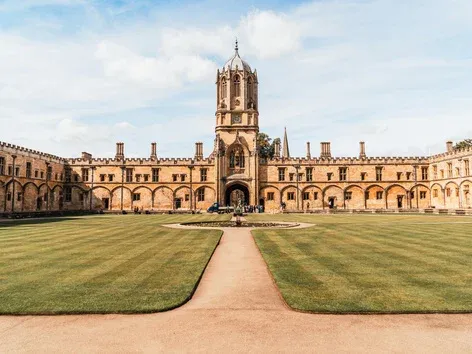
QS has updated its regional ranking of Europe’s top universities for 2026. The top ten includes seven British institutions, two Swiss ones, and one French one, with the University of Oxford topping the list with the highest score across five key indicators. Learn more about the top 10 European universities according to QS 2026 and their distinctive features

Europe remains one of the most attractive destinations for pursuing higher education abroad. The leading ranking agency Quacquarelli Symonds (QS) has published its updated regional rankings for 2026, featuring over 950 institutions from 42 countries.
Which universities made the list of the best, what criteria were used to evaluate the institutions, what the top ten looks like, and what you should know about the ranking leaders—we’ll cover all of this in the article below.
Planning to apply to one of Europe’s leading universities but don’t know where to start preparing?
The education lawyers at Visit World will help you choose a country and institution, gather a complete set of documents, and obtain a student visa without delays.

QS Europe 2026 Ranking Overview: Key Trends
The QS World University Rankings Europe 2026 covers over 950 universities from 42 countries and territories across the European region. To compile the regional list, experts use 12 performance indicators, including citations per publication, publications per faculty member, international student diversity, and inbound and outbound student exchange figures. This approach allows for a more accurate and meaningful comparison among European institutions.
The University of Oxford took first place in the pan-European ranking, achieving the maximum score across five key indicators. The institution secured the top spot thanks to improvements in sustainability metrics and the proportion of international students, surpassing ETH Zurich and Imperial College London. Of the region’s top ten universities, seven are from the United Kingdom, two from Switzerland, and one from France. Western Europe remains the most represented subregion, while Ireland showed the greatest progress among countries with five or more ranked institutions.
Top 10 European Universities in the QS 2026 Ranking
The top ten of the ranking consists mainly of British institutions that have historically developed as centers of research and teaching. The list of leaders is as follows:
1. University of Oxford (Oxford, United Kingdom);
2. ETH Zurich (Zurich, Switzerland);
3. Imperial College London (London, United Kingdom);
4. UCL — University College London (London, United Kingdom);
5. University of Cambridge (Cambridge, United Kingdom);
6. The University of Edinburgh (Edinburgh, United Kingdom);
7. King’s College London (London, United Kingdom);
8. Université PSL (Paris, France);
9. The University of Manchester (Manchester, United Kingdom);
10. EPFL — École polytechnique fédérale de Lausanne (Lausanne, Switzerland).
Visit World services for tourists, migrants, and expats: Insurance | Guides | Legal advice
What should you know about Europe’s most popular universities?
● University of Oxford — the oldest English-speaking university in the world.
The University of Oxford is considered the oldest university in the English-speaking world and has an unbroken history of teaching dating back to 1096. The institution’s active development began in 1167, when English students stopped attending the University of Paris and gradually formed their own academic community in Oxford. The oldest colleges—University College, Balliol College, and Merton College—were founded between 1249 and 1264 and laid the foundation for the collegiate structure that remains to this day.
Today, Oxford comprises 38 colleges and six private halls, where students from around the world study. Among the university’s most notable achievements in recent years is its collaboration with AstraZeneca on the development of a COVID-19 vaccine: by early 2022, over 2.6 billion doses of the vaccine had been delivered to more than 180 countries, primarily those with low and middle incomes. Oxford also ranks highest in employer reputation in the 2026 QS European rankings.
● ETH Zurich — world-class technical education in Switzerland.
The Swiss Federal Institute of Technology in Zurich (ETH Zurich) was founded in 1854 as the Swiss Federal Polytechnic School and admitted its first students in 1855. The institution specializes in science, technology, engineering, and mathematics (STEM) and is part of the Swiss Federal Institutes of Technology Domain consortium alongside its sister institution, EPFL in Lausanne. As of 2024, ETH Zurich had 26,198 students from over 120 countries, including more than 4,000 PhD candidates.
Among the institution’s alumni and professors are 22 Nobel laureates, including Albert Einstein, Wolfgang Pauli, Fritz Haber, and Niklaus Wirth, the creator of the Pascal programming language and winner of the 1984 Turing Award. Historically, the university has gained recognition in chemistry, mathematics, physics, and computer science. A distinctive feature of education at ETH Zurich is the system of basic exams (Basisprüfungen) at the end of the first year, which even half of the students in math-oriented programs do not always pass.
● Imperial College London — science, engineering, medicine, and business.
Imperial College London was founded in 1907 through the merger of the Royal College of Science and the Royal School of Mines, and in 1910, City and Guilds College joined it. The institution’s earliest roots date back to 1845, when the Royal College of Chemistry was founded with the support of Prince Albert, husband of Queen Victoria. In 2007, Imperial left the University of London and became an independent university with the right to award its own degrees.
The university is organized according to a faculty model—it consists of four faculties: Engineering, Medicine, Natural Sciences, and the Imperial Business School. Among the institution’s alumni and scholars are 14 Nobel laureates, three Fields Medalists, and over 70 members of the Royal Society. Imperial’s main campus is located in the South Kensington area near the Natural History Museum, the Science Museum, and the Royal Albert Hall, and the medical school collaborates with five teaching hospitals in London.
● UCL — University College London: London’s tradition of open education.
University College London was founded on February 11, 1826, as a secular alternative to the religious universities of Oxford and Cambridge. In 1836, the institution became part of the newly formed University of London as one of its two founding colleges. UCL received the right to award its own degrees in 2005 and official status as a full-fledged university in 2023.
UCL became the first university in England to admit women on equal terms with men in 1878. Today, the institution comprises 11 faculties—ranging from arts and humanities to medical and social sciences—which house over 100 departments and research centers. The main campus is located in London’s Bloomsbury district, with an additional campus—UCL East—in Queen Elizabeth Olympic Park. Among the approximately 33 Nobel laureates associated with UCL is chemist William Ramsay, who discovered the noble gases and received the Nobel Prize in Chemistry in 1904.
● University of Cambridge — the cradle of outstanding scientific discoveries.
The University of Cambridge was founded in 1209 when a group of Oxford scholars migrated to Cambridge to escape conflicts between townspeople and students. In 1231, the university received a royal charter from Henry III, and in 1284, the first college—Peterhouse—was founded.
Over the following centuries, such renowned colleges as King’s (1441), St John’s (1511), and Trinity—founded by Henry VIII in 1546—were established.
Today, Cambridge comprises 31 colleges and over 150 academic departments, faculties, and research institutes, grouped into six schools. Among the institution’s alumni and affiliates are 126 Nobel laureates, 47 heads of state, and 217 Olympic medalists. As of December 2024, Cambridge had over 333,000 living alumni worldwide. Cambridge University Press is the oldest university press in the world. Among the institution’s most famous alumni are Isaac Newton, Charles Darwin, and John Maynard Keynes.
● The University of Edinburgh — a historic Scottish institution.
The University of Edinburgh was founded in 1583 by the City Council of Edinburgh under a royal charter granted by James VI in 1582. It is the sixth-oldest university in the United Kingdom and the oldest public institution of higher education in the English-speaking world. In the 18th century, the institution was at the epicenter of the Scottish Enlightenment—among its alumni from that period were philosopher David Hume, chemist Joseph Black, and the founder of modern geology, James Hutton.
The university comprises three colleges: the College of Arts, Humanities, and Social Sciences; the College of Medicine and Veterinary Medicine; and the College of Science and Engineering. There are 21 schools within these colleges. The Edinburgh Medical School was historically considered one of the most prestigious in the English-speaking world throughout the 18th century and the first half of the 19th century. The university’s alumni include naturalist Charles Darwin, writers Walter Scott and Robert Louis Stevenson, and telephone inventor Alexander Graham Bell; Sir Arthur Conan Doyle, a graduate of the medical school, created the character of Sherlock Holmes under the influence of one of his professors.
● King’s College London — Anglican tradition and a modern research focus.
King’s College London was founded in 1829 by King George IV and Prime Minister the Duke of Wellington. The institution emerged as an Anglican alternative to the secular UCL and in 1836 became one of the two founding colleges of the University of London. Throughout the 20th century, King’s underwent significant expansion through mergers with Queen Elizabeth College and Chelsea College (1985), the Institute of Psychiatry (1997), and the United Medical and Dental Schools of Guy’s and St Thomas’ Hospitals (1998).
The university comprises nine academic faculties, including those of medical sciences, law, business, arts, and humanities. The institution has five main campuses in London, most of which are located near the Thames. The Florence Nightingale Faculty of Nursing, Midwifery & Palliative Care is the direct successor to the world’s first professional school of nursing, founded by Florence Nightingale in 1860. Among King’s 14 Nobel laureates are Archbishop Desmond Tutu (1984 Peace Prize) and biophysicist Michael Levitt (2013 Chemistry Prize).
● Université PSL — a consortium of elite Parisian schools.
Paris Sciences et Lettres (PSL) — a university that is young in its current form but rich in historical traditions, founded in 2010 as a consortium of Paris’s leading scientific and educational institutions. PSL officially received the status of a full-fledged university in November 2019 pursuant to a decree of the French government. The consortium includes such renowned institutions as the École normale supérieure, the Collège de France, MINES Paris, the Observatoire de Paris, ESPCI Paris, Paris-Dauphine, Chimie ParisTech, the Curie Institute, and a number of others.
Today, PSL has approximately 17,000 students, and its research community comprises 2,900 faculty members and researchers working in 140 laboratories. The institution covers a wide range of disciplines—from natural and technical sciences to the humanities, social sciences, and the arts. Among those associated with PSL and its constituent schools are 28 Nobel laureates, 11 Fields Medalists, three Abel Prize laureates, as well as 50 César Award winners and 79 Molière Award recipients.
● The University of Manchester — the birthplace of graphene and the modern scientific revolution.
The modern University of Manchester was established in 2004 through the merger of UMIST and the Victoria University of Manchester (founded in 1851 as Owens College). The institution’s roots date back to 1824—the year the Manchester Mechanics’ Institution was founded, which eventually evolved into UMIST. The university is a member of the Russell Group and is one of the UK’s largest institutions in terms of student enrollment—each year, the university receives over 92,000 applications for undergraduate programs.
Manchester has an exceptional scientific heritage: 26 Nobel laureates are associated with the university and its predecessor institutions. Within the university’s walls, Ernest Rutherford conducted research that led to the splitting of the atom. In June 1948, a team led by Tom Kilburn and Freddie Williams launched the world’s first stored-program electronic computer—a machine known as “The Baby.” In 2010, Andre Geim and Konstantin Novoselov received the Nobel Prize in Physics for their discovery of graphene, conducted in Manchester. The university also owns the Jodrell Bank Observatory—a UNESCO World Heritage Site.
● EPFL — École polytechnique fédérale de Lausanne: a technology hub on the shores of Lake Geneva.
EPFL is Switzerland’s second federal institute of technology after ETH Zurich, located on the shores of Lake Geneva in Lausanne. The institution’s history dates back to 1853, when the private École Spéciale de Lausanne was founded with just 11 students. It acquired the status of a federal institute under its current name in 1969, following its separation from the University of Lausanne. As of 2024, EPFL has over 14,000 students from more than 130 countries, with foreign nationals making up about half of the student body.
The university specializes in STEM disciplines and comprises five schools and two colleges that coordinate the work of over 500 laboratories. The campus near Lake Geneva spans 55 hectares. The institution is one of the few in Europe to operate a research nuclear reactor, a thermonuclear facility, and the Blue Gene/Q supercomputer. Among its alumni and professors are Jacques Dubochet, winner of the 2017 Nobel Prize in Chemistry, and Marina Vyazovska, who in 2022 was awarded the Fields Medal for her research in number theory.
Studying Abroad: When Do You Need an Education Lawyer?
Admission to one of Europe’s leading universities often involves a complex preparatory phase: selecting a program and country, gathering documents, applying for a student visa, and preparing for interviews. At each of these stages, legal and organizational nuances may arise that affect the success of your admission and your subsequent stay in a foreign country.
That is why the support of an education lawyer becomes an important investment in your educational journey.
An education law specialist provides the following types of assistance:
● consultations on choosing an educational institution — searching for a country, institution, and program for studying abroad;
● preparing documents and obtaining a student visa — support with immigration matters and compiling a complete set of documents for submission to an embassy or consulate;
● assistance with academic differences between educational systems;
● consultations in emergency situations — explaining students’ rights and options for resolving crises at the educational institution;
● representation in court in the event of an academic dispute.
Studying abroad opens up new opportunities for students, but there are also certain risks involved. Many applicants are unprepared for the legal and cultural differences of their host country and find themselves in situations with serious consequences—ranging from expulsion to legal liability or even deportation. Only a lawyer specializing in the immigration and education laws of a specific country is capable of resolving such issues promptly and competently.
The experts at Visit World will help you avoid common admission mistakes, save time and money, and most importantly—achieve your goal of successfully enrolling and pursuing your education at your chosen faculty of a leading European university.
Contact a Visit World education lawyer for a consultation to receive professional support at every stage!
Reminder! In 2026, more and more students from around the world are looking for opportunities to study abroad without a financial burden. Read about the most up-to-date scholarship programs for 2026, which open a real path to education in the U.S., Europe, Canada, and Asia—follow the link.
Photo: Freepik
Products from Visit World for a comfortable trip:
Travel guide for 200 countries;
Legal advice from a local specialist on visa and migration issues;
Travel insurance around the world (please select the country of interest and citizenship to receive services);
Medical insurance all over the world.
We monitor the accuracy and relevance of our information, so if you notice any errors or inconsistencies, please contact our hotline.
Frequantly
asked questions
Which university took first place in the QS Europe 2026 rankings?
What documents are required for admission to a European university?
Recommended articles
3 min
Education
Free and affordable education in Europe in 2026: 5 countries with accessible education
In 2026, you can get a higher education in Europe at an affordable price or even for free, depending on the country and language of instruction. Each country has its own admission requirements, preparatory programs, and opportunities for international students. Learn more about the five most affordable countries for applicants
11 Mar. 2026
More details3 min
Education
Higher Education in Europe After Age 35: How to Obtain a Student Residence Permit in 2026?
Higher education in the European Union remains one of the most accessible ways to obtain long-term legal residency. In 2026, five EU countries will offer tuition-free education at public universities with no age restrictions for applicants. Learn more about admission requirements, language requirements, preparation periods, and opportunities for a student residence permit in our article
18 Mar. 2026
More details2 min
Education
Top Scholarships to Study Abroad in 2026: How to Get Full Funding
Planning to study abroad in 2026 but worried about the cost? Find out which fully-funded scholarships are available, what the eligibility requirements are, and how to apply correctly to increase your chances of admission
21 Mar. 2026
More details2 min
Education
Best Countries to Study and Live Abroad in 2026: Overview, Tips & Opportunities
Studying abroad is a strategic step for career development and international experience. Find out which countries are the most attractive for students in 2026, work-while-study opportunities, costs and tips for successful admission
27 Mar. 2026
More detailsAll materials and articles are owned by VisitWorld.Today and are protected by international intellectual property regulations. When using materials, approval from VisitWorld.Today is required.