

Heatwave in Europe 2026: Where to Find Free Cooling Centers
Table of contents
- Germany: cool maps and tap water
- France: islands of coolness on every map
- Italy: Coolness in the Palazzo and Water from the “Spout”
- Spain: Climatic shelters for everyone
- Austria: Cool Spots and water mist
- Poland, the Netherlands and Hungary: libraries, water curtains and swimming pools
- How to take care of safety during the heat?
- How to find coolness in any city in Europe?
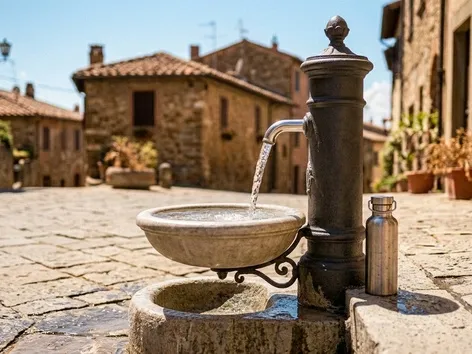
Europe was hit by record-breaking heatwaves in the summer of 2026. Find out where to find free cooling points, drinking water and practical safety tips in Berlin, Paris, Rome, Madrid, Vienna and other cities

This summer will be remembered by Europeans for a long time. Cooling points are becoming an increasingly popular salvation, as temperatures above +37 °C are now recorded not only in Spain or Italy, but also in Germany, Poland, the Czech Republic and the Netherlands. Meteorologists explain this by the phenomenon of “omega block” – when a mass of hot air is trapped between colder atmospheric systems and the temperature rises day by day, preventing cities from cooling down even at night. According to estimates by the World Meteorological Organization, Europe is heating up more than twice as fast as the global average, so such heat waves are no longer the exception and are becoming a regular summer scenario.
How heat is changing tourist habits and what this means for your travels, read in our previous article.
The World Health Organization has called this year's heat wave a "dress rehearsal" - according to the WHO Regional Director for Europe, Hans-Henri Kluge, such episodes will become more frequent, longer and more intense. In June 2026, several countries on the continent already recorded historical temperature records, and according to preliminary estimates, in just one of the hottest weeks, the number of excess deaths in the affected regions exceeded 20 thousand. Western, Central and Southern Europe was hit the hardest - it is there that high humidity and "heat islands" in large cities do not allow the air to cool down even at night.
In response, municipalities across Europe are creating networks of cooling spaces - places where you can wait out the hottest hours for free, drink water and catch your breath. We tell you where to find coolness in different countries of the continent - and what travelers who find themselves in Europe in the summer should pay attention to.
Find the rules for safe travel during the heat at the link.
When traveling in Europe during the hottest months of the year, it is easy to underestimate the risks - from heat stroke to dehydration or a sudden worsening of a chronic disease.
Health insurance allows you not to worry about the cost of treatment if something goes wrong, and to get help quickly, without unnecessary stress. You can take out a policy before you leave, choosing coverage for a specific country and the duration of your trip. This is one of the easiest ways to make your trip safer. Learn more about the conditions of health insurance at Visit World now.

Germany: cool maps and tap water
Berlin has an interactive Hitzekarte Berlin - a cool map, which marks shaded areas, large parks, swimming pools and points with drinking water. It is complemented by a network of public drinking fountains, and the Refill Deutschland service helps you find a place where you can refill your bottle for free: hundreds of shops, cafes and public institutions have joined it.
If the heat takes you by surprise, local authorities advise not to hesitate to visit museums, churches, shopping centres or even administrative buildings - staying there is free.
France: islands of coolness on every map
The Parisian system of îlots de fraîcheur - “islands of coolness” - unites parks, squares, sports complexes, municipal buildings and specially open air air-conditioned halls. There are about 1,200 public fountains in the capital itself, including the famous Wallace fountains; in other cities, it is worth focusing on the eau potable label, since not all water from city fountains is suitable for drinking.
In the summer of 2026, the heat wave was so early and intense that some regions of France imposed temporary restrictions on the sale of alcohol outdoors to reduce the risk of dehydration and heatstroke among people on the streets. During the hottest hours, Parisians traditionally take refuge in large shopping malls, the metro or historic churches, where the thick stone walls keep them cool even without air conditioning.
Visit World services for tourists, migrants, and expats: Insurance | Guides | Legal advice
Italy: Coolness in the Palazzo and Water from the “Spout”
The municipalities of Rome, Milan and other cities open cool centers in public buildings and ancient palazzos during heat waves. In Florence, a separate program, Emergenza Caldo, operates, which provides information about the addresses of such places.
A special pride of Rome is the nasoni fountains: there are over 2,500 of them, and almost all of them provide high-quality drinking water. Basilicas, museums, supermarkets and metro stations remain no less popular shelters from the heat.
Spain: Climatic shelters for everyone
In Madrid and Barcelona, the Refugios Climáticos program continues to operate - libraries, schools, sports centers and cultural institutions that open their doors to everyone during the heat. In spring 2026, Spain expanded this network, and Madrid opened additional climate shelters targeting the homeless and the most vulnerable, a signal of how seriously the city is taking the risks of this summer.
Barcelona has over 1,700 public drinking fountains, which are easy to find through the Fonts BCN service. Traditionally, Spaniards wait out the heat in museums, air-conditioned bars, ancient churches or on the metro.
The ranking of the cleanest lakes in Europe for swimming in summer 2026 is here.
Austria: Cool Spots and water mist
Vienna was one of the first cities in Europe to develop a network of Cool Spots - free places to cool off in libraries, cultural centers and other public spaces. Dozens of water mist sprayers operate on the main streets, and in total there are over 1,300 public drinking fountains in the city. You can also escape the heat in museums, the metro or old palaces.
Poland, the Netherlands and Hungary: libraries, water curtains and swimming pools
Warsaw, Krakow and other Polish cities are developing a network of Miejsca Ochłody – libraries, social centres and shopping complexes where you can wait out the heat for free. Water curtains (kurtyny wodne) are increasingly being installed in squares, and Warsaw has over 200 public fountains.
In the Netherlands, municipalities are opening Koelplekken – cool public spaces; you can find a suitable location on the GGD Amsterdam cooling map. Look for free water at train stations, in parks or through the Refill Nederland service. When the heat intensifies, Amsterdammers often take refuge in museums, churches or even on ferry crossings, where the wind is always blowing.
In Budapest, during the heat, special cool rooms are opened in public buildings, and water sprayers are installed on tourist routes. One of the most popular ways to survive the heat here is the historic Gellért and Széchenyi baths.
Also look for the best islands in Europe for travel in 2026 and the destinations that are most suitable for beach, active and gastronomic holidays in this material.
How to take care of safety during the heat?
Doctors remind of a few simple rules that any traveler should remember, regardless of the country of stay:
- drink water every hour, even if you do not feel thirsty;
- avoid being in direct sunlight in the middle of the day;
- keep the apartment in the shade during the day and ventilate at night;
- regularly check the condition of the elderly and those who travel or live alone;
- know the signs of heatstroke – confusion, very high body temperature, hot dry skin – and seek medical attention immediately if they appear.
Where to go on vacation in August 2026? Ideas from Visit World here.
How to find coolness in any city in Europe?
Even if you find yourself in a city you know almost nothing about, finding shelter from the heat is not so difficult. First of all, it is worth checking the official website of the municipality - more and more European cities are creating interactive maps with marked cooling points, drinking fountains, parks and public buildings. Local services such as Refill Deutschland, Fonts BCN or Refill Nederland will also be useful, which help you find places where you can get drinking water for free.
And if you plan a trip to a hot region in advance, it is worth taking care of medical protection in case of heat stroke or other unforeseen situation abroad.
Extreme heat is not an abstract risk, but a real reason for seeking emergency care every summer in dozens of European cities. Heat stroke, dehydration, or exacerbation of a chronic illness can happen even to those who carefully follow all the recommendations of doctors.
The health insurance policy from Visit World covers outpatient and inpatient treatment, as well as medical evacuation if the situation turns out to be more serious than initially thought. In addition, the policy can compensate for expenses in case of cancellation or interruption of the trip due to illness. For travelers traveling to regions with an increased risk of heat - Spain, Italy or Southern France - this is a particularly relevant insurance. Registration takes a few minutes online, and coverage is valid from the first day of the trip.
Apply for health insurance from Visit World and travel through hot Europe without unnecessary worries.
Let us remind you! European islands remain one of the most popular destinations for summer vacations, but choosing the perfect place among dozens of options can be difficult. The new ranking compares 80 islands based on weather, gastronomy and the number of green spaces. We have already talked about the best islands in Europe to travel to in 2026 and the destinations that are most suitable for beach, active and gastronomic holidays.
Photo – generated by Gemini
Products from Visit World for a comfortable trip:
Travel guide for 200 countries;
Legal advice from a local specialist on visa and migration issues;
Travel insurance around the world (please select the country of interest and citizenship to receive services);
Medical insurance all over the world.
We monitor the accuracy and relevance of our information, so if you notice any errors or inconsistencies, please contact our hotline
Frequantly
asked questions
Can you receive free medical care if you become ill due to extreme heat while traveling abroad?
Who is most at risk during extreme heat?
Will heatwaves in Europe become even more severe in the coming years?
Recommended articles
3 min
Air travel
Summer is traditionally the busiest season for European airports, but in 2026, the situation could prove particularly challenging. Experts are already warning of possible flight delays, long lines, and overcrowding at certain transportation hubs. Learn more about which European airports are likely to cause the most problems for travelers this summer and how to prepare for your trip
27 Jun. 2026
More details2 min
Popular
The record-breaking heatwave that has swept across most of Europe is already affecting not only people’s health but also transportation, business operations, and city regulations. Across various countries, trains are being canceled or delayed, working conditions are being adjusted, temporary restrictions are being imposed, and tourists are being urged to pay close attention to warnings from authorities. Learn more about how extreme heat is changing travel in Europe and what restrictions you should be prepared for
26 Jun. 2026
More details1 min
Travels
Safest European Cities for Tourists in Summer 2026 where to go without unnecessary stress
Most European megacities remain safe travel destinations even in peak season. Find out which five European cities received the highest safety ratings from travelers in 2026 and what to consider before traveling
27 Jun. 2026
More details3 min
Travels
Europe's Most Beautiful Train Routes: Travel and Leisure's Top 5 Train Trips
Europe’s rail routes have long gone beyond being mere transportation links and have become tourist destinations in their own right. Travel and Leisure magazine has compiled a list of the five most spectacular train journeys across the continent—from Provence in France to the Balkan Mountains and the Italian coast. Learn more about Europe’s picturesque train routes, their unique features, and key scenic highlights
04 Jul. 2026
More detailsAll materials and articles are owned by VisitWorld.Today and are protected by international intellectual property regulations. When using materials, approval from VisitWorld.Today is required.