

Italy's Education System in 2026: What Families Moving Abroad Need to Know

Italy's education system combines a ten-year compulsory education with flexible conditions for children of foreigners. Find out at what age children start school, how the levels of education are structured and the cost of higher education, and what families moving abroad need to know about enrolment, language adaptation and university entrance

Moving to Italy with children inevitably raises the question of how to accommodate them in a local school and what to expect from the educational process. The Italian educational model has several features that are worth knowing in advance, from the age of starting compulsory education to the conditions for enrolling children without knowledge of the language. In 2026, these rules remain relevant, although the procedure for entering schools is slightly adjusted each year by new orders of the Ministry of Education.
Read the best cities in Italy for moving and working here.
Issues of educating children abroad are rarely limited to choosing a school - sooner or later, difficulties arise with documents, recognition of a certificate or registration of a residence permit for study. In such situations, the Visit World team of lawyers helps to deal with the paperwork and defend the rights of a child or student in a particular educational institution. Specialists accompany families at every stage - from selecting a program to resolving conflict situations at school or university. Leave a request, and an education lawyer will choose a solution for your situation.

Preschool in Italy: Optional, but Widespread
The first years of a child's life in Italy include a nursery (Asilo Nido) for children from zero to three years old and a kindergarten (Scuola dell'Infanzia) for children from three to six. Both levels remain voluntary, but the vast majority of Italian families still send their children to kindergarten - there they teach less to read and write, and more to develop communication skills, creative thinking and independence, which later facilitates adaptation to first grade.
Italy pays volunteers to live in the Alps. Who can apply, read here.
Compulsory education: from six to sixteen years old
The main thing to remember: compulsory education in Italy lasts ten years and covers the ages of six to sixteen. It is divided into three stages.
Primary school (Scuola Primaria) lasts five years and accepts children from the age of six.
This is followed by lower secondary school (Scuola Secondaria di Primo Grado) – three years of study, after which at the age of fourteen students take their first state exam and choose their direction of further education.
The compulsory cycle is completed by high school (Scuola Secondaria di Secondo Grado), designed for five years, although only the first two are legally mandatory. At this stage, students decide on a profile – academic (lyceums of various directions: classical, scientific, linguistic, artistic), technical or vocational – and this decision largely determines their further trajectory.
Employment quotas in Italy for 2026-2028 here.
At the end of high school, graduates take the Maturità – a state exam, which is both a certificate of complete secondary education and a pass to university. The school year is traditionally divided into two semesters, and the start of the new academic cycle is in September.
An important detail for newly arrived families: the right to education in Italy does not depend on the legality of the family's stay in the country. The child is obliged to be enrolled in school regardless of the status of the parents, and the enrollment process for the 2026/2027 school year takes place online through the Ministry's unified educational platform, usually in January-February. If the family arrives in the middle of the year, this is not an obstacle - foreign children are accepted at any time, and the class is determined mainly by age, although the school may take into account the level of previous training or language skills.
Visit World services for tourists, migrants, and expats: Insurance | Guides | Legal advice
Public and private educational institutions in Italy
Italian schools are divided into public and private, and both types are subordinate to the Ministry of Education. The difference is mainly in the payment and administrative status: private schools operate on a fee-based basis, and some of them do not have the right to independently issue graduation certificates - in which case students take final exams in a public institution. Private schools often attract with smaller classes and additional administrative support, and for children with special educational needs, separate support mechanisms are provided - from exemption from certain exams to an individual curriculum.
The ranking of countries by education costs in this article.
Higher education in Italy: structure and cost
Italian higher education is built on the Bologna three-cycle model: bachelor's degree - three years, master's degree - two years, doctorate - approximately three years. Separately, there are integrated programs such as medicine or law, which last five to six years without an intermediate bachelor's degree.
The financial part here is arranged atypically for Europe: public universities do not charge a fixed fee, but calculate it according to the ISEE system, which takes into account the income and property status of the student's family. In practice, this means that tuition can cost from about 150–200 euros per year for applicants with low incomes and up to 3,900–4,000 euros for families with higher incomes - while all students receive the same diploma and sit in on the same lectures. For foreign applicants, family income is confirmed by a special ISEE Parificato document. Private universities set their own tariffs, which usually range from 6,000 to 20,000+ euros per year, depending on the institution and program. Italy also offers over 600 master's programs in English and regional scholarships (DSU), which can cover not only tuition, but also accommodation and meals.
Who can get a DSU scholarship in Italy and how to apply for it, read this material.
Another point that is often overlooked: to enter a bachelor's degree, you need to have twelve years of schooling. In countries where the certificate is issued earlier, this means an additional step - the first year of university in your homeland or a preparatory Foundation Year directly in Italy. And within eight days of arrival, the student must apply for a temporary residence permit (permesso di soggiorno), which opens up access to official work and social benefits for the duration of your studies.
Find the world's leading universities where you can study in English here.
How does the Italian education system work in practice?
Public schools in Italy are free at all levels of compulsory education. Lack of knowledge of the Italian language is not a reason for refusal of enrollment - most schools, especially in large cities, have language adaptation programs and intercultural teachers who help children catch up with the class during the first year. The Maturità certificate obtained in Italy opens the way to admission not only to Italian universities, but also to universities in other EU countries.
However, it is at the stage of document recognition, choosing between high school profiles or obtaining a residence permit that difficulties most often arise for the student, which are better solved with a specialist, rather than by trial and error.
As practice shows, the greatest difficulties arise precisely at the junction of two educational systems - when it is necessary to confirm a school program from another country before an Italian educational institution, apply for a student visa or prove the child's right to enroll despite the family's residence status.
An education lawyer accompanies the family at all these stages: advises on the choice of country, institution and study program, prepares a full package of documents for the embassy or consulate, helps resolve the issue of academic differences between education systems, and, if necessary, represents the client's interests in court in the event of a conflict at an educational institution. This relieves parents of the need to independently understand foreign legislation at a time when there is already enough stress from moving.
Contact Visit World to get advice from an education lawyer at the very first step of planning your child's education.
Let us remind you! Studying in Europe is becoming one of the most realistic ways to obtain a residence permit. We have already told you which countries offer the best chances of staying after studying, finding a job and moving to permanent residence.
Photo – Magnific
Products from Visit World for a comfortable trip:
Checklist for obtaining a visa and necessary documents in Italy;
Legal advice on immigration to Italy;
Travel insurance for foreigners in Italy;
Medical insurance all over the world.
We monitor the accuracy and relevance of our information. Therefore, if you see any error or discrepancy, please write to our hotline.
Frequantly
asked questions
Can a child transfer to an Italian school in the middle of the school year?
Is a secondary school diploma from another country recognized for admission to an Italian university?
What should I do if my child does not speak enough Italian to study at school?
Recommended articles
2 min
Education
Top 10 Universities in Europe 2026: Rankings, Tuition Fees & How to Apply
European universities set a new bar for academic quality in 2026. Find out which universities topped the QS Europe 2026 rankings, how much tuition costs for foreigners, which scholarships cover the costs and where to start preparing for admission
23 May. 2026
More details2 min
Travels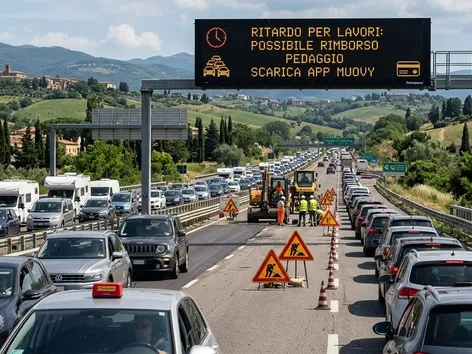
Italy Introduces Toll Refunds for Traffic Jams in 2026: Who Can Claim Compensation
Italy has introduced a new compensation system for drivers who have lost time in traffic jams on toll motorways due to roadworks. Find out who is entitled to a refund, what amounts can be received and how to apply for a refund correctly
08 Jun. 2026
More details2 min
Treatment
Long Wait Times for Doctors in Italy: How to Get an Appointment Faster Through the SSN
Due to long wait times in Italy’s National Health Service (SSN), patients are sometimes asked to wait several months for an appointment or test. However, if the deadline set for your referral is not met, you can contact your local health authority and request an alternative way to receive care. Find out what urgency categories are in place in Italy and how to protect your right to timely care
31 Jul. 2026
More details2 min
Popular
Italy is offering up to €15,000 to move to Sardinia: who is eligible for the money
Sardinia offers a support program for those who purchase or renovate a home in a small municipality on the island. The non-repayable grant can be up to €15,000, but applicants must cover at least half of the costs themselves and meet the requirements for registering their place of residence. Learn more about the program’s terms, eligible towns, and the application process
04 Aug. 2026
More detailsAll materials and articles are owned by VisitWorld.Today and are protected by international intellectual property regulations. When using materials, approval from VisitWorld.Today is required.