

Forest fires swept across Europe in 2026: Which countries were hit the hardest?
Table of contents
- Has 2026 set a record for the scale of wildfires in Europe?
- Which European countries were hardest hit by wildfires in 2026?
- The fire threat is spreading beyond southern Europe
- How Large-Scale Fires Affect Tourists and the Local Economy
- Why does the risk of wildfires in Europe remain high?
- What should tourists keep in mind when traveling in Europe?
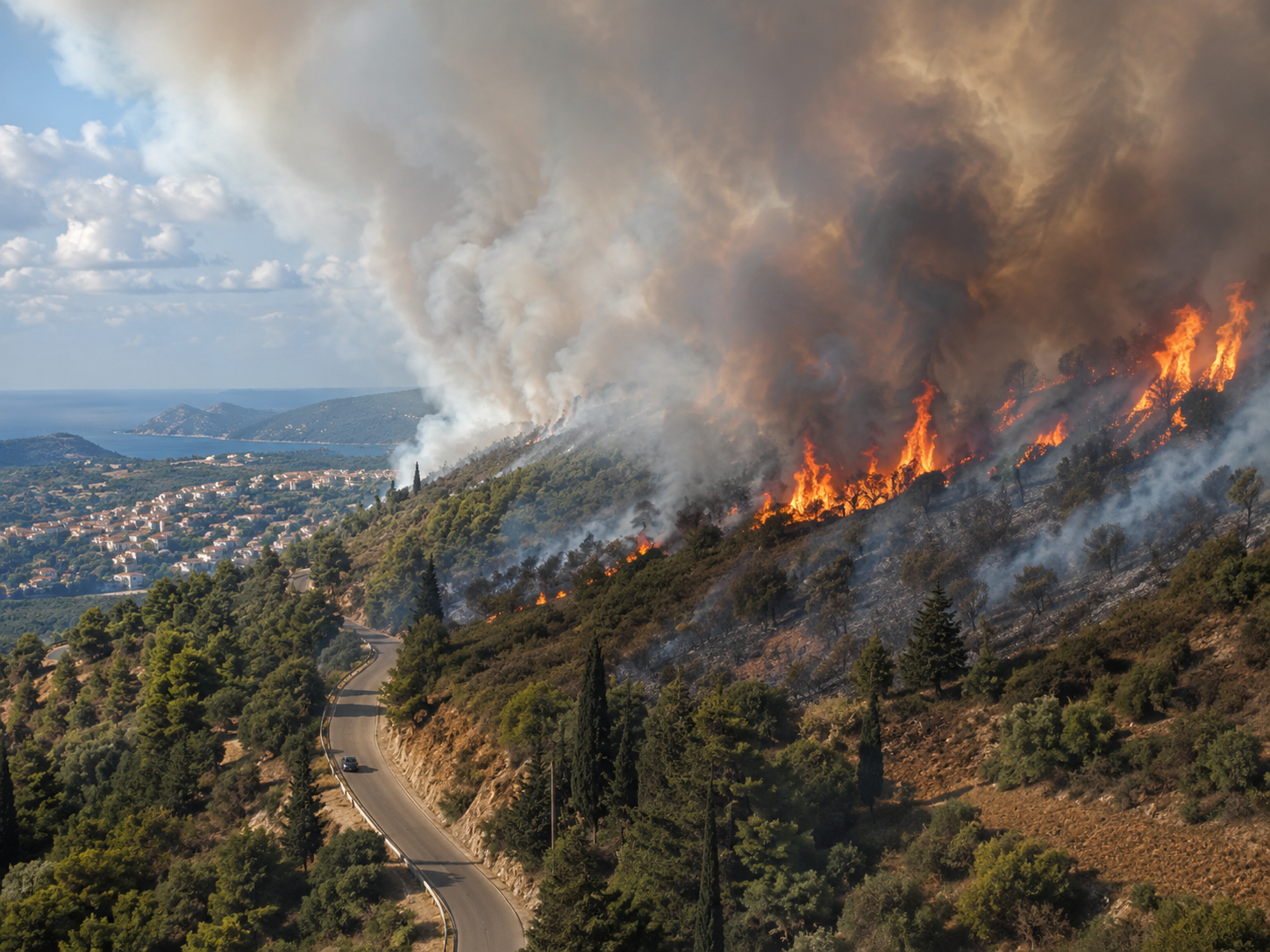
Forest fires in Europe during the summer of 2026 engulfed hundreds of thousands of hectares, and in some countries, the scale of the fires significantly exceeded long-term averages. The situation was most severe in Spain and France, while high fire danger levels also extend to other parts of the continent. Learn more about the extent of the fires in Europe, the countries most affected, and the current risks for travelers

The summer of 2026 was one of the most challenging wildfire seasons Europe has seen in recent years. According to the latest data from the European Forest Fire Information System (EFFIS), as of August 12, 554,788 hectares of land had been burned in EU countries since the beginning of the year, while the average for the period 2006–2025 at this date was approximately 243,000 hectares. At the same time, 2026 has not yet surpassed the record set in 2025, when more than 713,000 hectares of land had been burned by the same date.
The area affected by fires began to grow particularly rapidly in late July and early August amid a heat wave and prolonged drought. The largest fires this summer are concentrated in southwestern Europe, primarily in Spain and France. At the same time, European experts warn that the fire risk is increasingly extending beyond the traditionally vulnerable Mediterranean region and spreading to the central and northern parts of the continent.
Planning a trip abroad?
Insurance from the Visit World portal will help you avoid unnecessary risks. The policy covers the costs of medical treatment, emergency assistance, and unforeseen situations abroad, so that even in the event of delays or route changes, you remain protected and can focus on your trip rather than on problems.

Has 2026 set a record for the scale of wildfires in Europe?
Despite the large number of major wildfires this summer, 2026 has not yet become the worst year for the EU in terms of the area of land burned. As of the end of the 31st week of the year, fires had destroyed 489,826 hectares. This is the fourth-highest figure for the available observation period: more land had burned by this date in 2012—863,122 hectares—in 2022—799,040 hectares—and in 2017—743,906 hectares.
At the same time, the situation in 2026 is significantly worse than average. Between 2012 and 2025, an average of about 434,711 hectares had burned in the EU by the end of the 31st week. This year’s figure exceeds that value by approximately 55,000 hectares, or 13%. However, the statistics vary by country: for some nations, the current season has already become one of the most severe in the last 15 years.
The fires are not limited to forests. The fires are damaging shrublands, pastures, and agricultural land, and some blazes are reaching populated areas and suburbs. The consequences also extend far beyond the loss of natural habitats: the fires are destroying homes and businesses, impacting tourism, agriculture, and public health, and creating additional costs for governments and insurance companies.
We previously reported that France and Spain are engulfed in wildfires: tourists have been warned about dangerous areas.
Which European countries were hardest hit by wildfires in 2026?
The most severe situation unfolded in the countries of Southern and Western Europe. Spain took the top spot in terms of the area of land burned: as of early August, fires had engulfed 185,948 hectares, or about 38% of the total burned area in the EU. This is more than double Spain’s average for 2012–2025—about 85,600 hectares for this time of year.
France came in second, where fires destroyed 99,092 hectares, or approximately 20% of the EU total. For France, 2026 has already become the worst year in terms of fire area since 2012: the average for the previous 14 years was only 31,648 hectares.
The top five hardest-hit countries also included:
- Italy — 79,084 hectares
- Portugal — 47,776 hectares
- Greece — 23,839 hectares
For Italy and Portugal, 2026 was the fifth-worst year for wildfires in the past 15 years as of early August. The situation in Greece this season is also serious, though the country has experienced significantly larger wildfires in previous years.
We previously reported that in Greece, a state of emergency was declared on seven islands due to water shortages.
The fire threat is spreading beyond southern Europe
In 2026, a sharp increase in the area affected by fires has also been recorded in countries not typically associated with large-scale wildfires. In Austria, as of early August, 1,687 hectares had burned, compared to an average of 513 hectares; in Denmark, 1,177 hectares compared to 404 hectares; and in Germany, 6,045 hectares compared to 3,098 hectares. The difference is particularly noticeable in the Netherlands: 1,677 hectares compared to an average of just 352 hectares over the previous 14 years.
The situation is also serious in the United Kingdom, where fires have engulfed 22,206 hectares—nearly twice the average of 12,311 hectares. According to Euronews, for the United Kingdom and several other European countries, 2026 has already become the worst year in the last 15 years in terms of the area of land burned, as of early August.
These figures highlight a significant shift: the risk of major wildfires is no longer limited to the Mediterranean. Prolonged heat waves and dry vegetation create conditions conducive to the rapid spread of fire even in Central and Northern Europe. For example, in southern England alone, more than 20,000 hectares have been burned this summer.
We previously reported that massive wildfires have swept across southern Europe: tourists are being evacuated in Greece, Spain, France, and Portugal.
How Large-Scale Fires Affect Tourists and the Local Economy
Forest fires are already affecting not only natural areas but also daily life in popular tourist regions. In France and Spain alone, more than 320,000 people were evacuated by the end of July due to the threat of fire. In areas with active fires, authorities may block roads, close nature parks and tourist routes, and temporarily evacuate residents and vacationers.
The economic losses are also significantly greater than the cost of restoring forests. Wildfires destroy homes, businesses, farmland, and crops, and disrupt the tourism industry and manufacturing. Additional costs arise from emergency response efforts, infrastructure restoration, the health impacts of air pollution, and potential increases in insurance premiums.
For travelers, this means that when visiting regions with a high risk of wildfires, it’s important to monitor more than just the weather forecast. Before departing, check local civil protection alerts, information on road closures and evacuations, as well as the status of national parks and nature reserves. The situation can change within a matter of hours, especially during heat waves and strong winds.
In a previous article, we reported that Europe’s tallest volcano, Mount Etna, has erupted in Italy—a red alert has been issued for aviation.
Why does the risk of wildfires in Europe remain high?
One of the main causes of the challenging wildfire season has been prolonged heat and a lack of rainfall. According to data from the European Commission’s Joint Research Center (JRC), by the end of July, 50% of the territory of the EU and the United Kingdom was experiencing varying levels of drought, and 9% of the territory was already at the highest alert level. The most affected areas were reported in France, Germany, Hungary, Romania, and the United Kingdom.
High temperatures, dry soil, and vegetation create conditions under which even a small fire can quickly spread over a large area. It was precisely in June and July that the number of burned areas in the EU increased sharply, and in late July and early August, the largest fires were concentrated in southwestern Europe, primarily in Spain and France. At the same time, similar risks are increasingly occurring much further north.
The situation can change rapidly throughout August. To check the current fire situation before traveling, you can use the European Forest Fire Information System (EFFIS): the service updates a map of active fire hotspots and perimeters daily and also provides a fire danger forecast for the next six days.
What should tourists keep in mind when traveling in Europe?
Large-scale fires do not mean you should cancel trips to Spain, France, Italy, or other affected countries. However, in August, the risk can vary significantly even between neighboring regions, so relying solely on the overall situation in a country is not enough. Travelers planning road trips, camping, hiking, or vacations near forests and nature parks should be especially cautious.
Before your trip, it is recommended that you:
- Check the map of active wildfires and the fire danger level in your specific region;
- Follow announcements from local authorities and civil protection services;
- Check whether roads, national parks, campgrounds, and hiking trails are open;
- Do not ignore evacuation orders and do not attempt to approach fire zones;
- Be mindful of air quality, especially if you have respiratory or cardiovascular conditions;
- If possible, have an alternative route or accommodation option.
It’s also worth checking the terms of your travel insurance. The policy may cover some of the costs if your trip is canceled or interrupted due to a natural disaster, but the specific terms and exclusions depend on the insurance company. If the fire was already known at the time you purchased the policy or made your reservation, it may be more difficult to receive compensation for related losses.
Are you preparing for a trip abroad in 2026?
Medical insurance from the Visit World portal will provide reliable support during your trip, especially in the context of flight changes and unstable schedules. The policy covers medical expenses, emergency assistance, and other unforeseen situations outside the country, so you can feel confident even when plans have to be adjusted at the last minute.
We remind you! Croatia is stepping up its fight against drunken tourists by introducing new restrictions in popular resort cities. Split became the first city in the country to introduce strict rules on alcohol sales this summer. Read more about the new bans, hefty fines for tourists, and changes in Croatia's tourism strategy.
Products from Visit World for a comfortable trip:
Travel guide for 200 countries;
Legal advice from a local specialist on visa and migration issues;
Travel insurance around the world (please select the country of interest and citizenship to receive services);
Medical insurance all over the world.
We monitor the accuracy and relevance of our information, so if you notice any errors or inconsistencies, please contact our hotline
Frequantly
asked questions
Was 2026 the worst year on record for forest fires in Europe?
Which European country was hardest hit by wildfires in 2026?
Where else is the wildfire situation particularly severe?
Is it safe to travel to Spain, France, or Italy right now?
Where can you find an up-to-date map of forest fires in Europe?
Recommended articles
2 min
Popular
Large-scale wildfires have simultaneously engulfed several popular tourist regions in Southern Europe. Due to extreme heat, wind, and drought, authorities are conducting evacuations, closing roads, and issuing high-risk warnings. Find out more about which countries and resorts have been hardest hit, where evacuations are underway, and what tourists should keep in mind before traveling
07 Jul. 2026
More details2 min
Popular
Seven Greek islands have declared a state of emergency due to drought and a severe shortage of fresh water. Learn more about the affected areas, possible restrictions for tourists, and how to prepare for your trip
22 Jul. 2026
More details2 min
Travels
Belgium Leads Europe in Heatwave Deaths 2026: How Spain, France and Germany Were Affected
The summer heatwave of 2026 was the deadliest on record for several European countries at the same time. Find out why Belgium had the highest excess mortality rate on the continent and how Spain, France and Germany were affected
28 Jul. 2026
More details2 min
Popular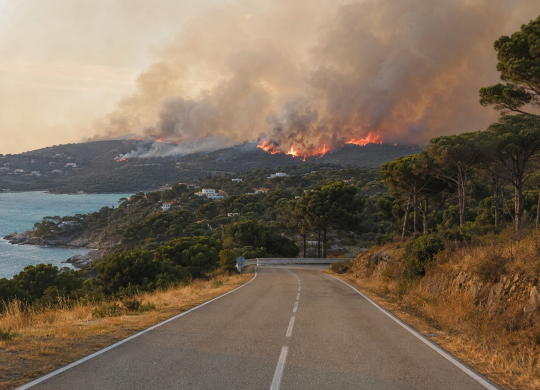
France and Spain Are Ravaged by Wildfires: Tourists Have Been Warned About Dangerous Areas
Large-scale wildfires in France and Spain have led to the evacuation of more than 300,000 people and the closure of roads, campgrounds, and tourist attractions. Travelers are advised to temporarily avoid the affected areas of Gironde, Landes, Madrid, and Ávila. Learn more about the extent of the disaster and the destinations where it’s best to postpone your trip
28 Jul. 2026
More detailsAll materials and articles are owned by VisitWorld.Today and are protected by international intellectual property regulations. When using materials, approval from VisitWorld.Today is required.