

Toll Roads and Traffic Rules in Hungary in 2026: What Tourists Need to Know
Table of contents
- What should you pay attention to while driving in Hungary?
- Fines in Hungary: What Can Cost You the Most
- E-matrica in Hungary: How Much It Costs and Which Category to Choose
- What happens if you choose the wrong e-matrica or drive without one?
- Which roads in Hungary are toll roads, and where is an e-matrica required?
- Parking in Budapest: What Changed in 2026
- What documents and equipment are required for a trip through Hungary?
- Winter Tires and Chains: Are There Seasonal Requirements in Hungary
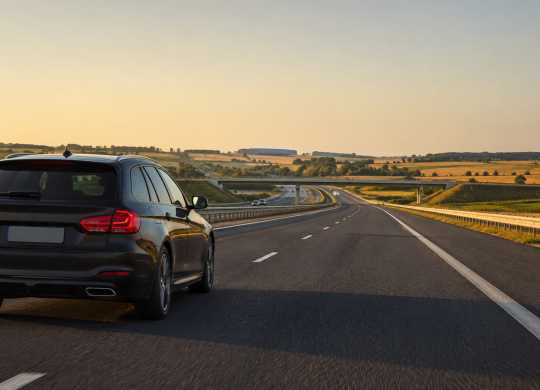
To drive on most Hungarian highways, you need an e-matrica, and its category depends on the vehicle’s specifications and the number of passenger seats. In 2026, the system introduced new regional products, and an error in the license plate number or an incorrect category may result in an additional charge. Here’s how Hungary’s toll roads work, what traffic rules apply in the country, and what you need to know before your trip

Hungary is often not only a final destination but also a transit country on routes between Central Europe, the Balkans, and the Adriatic. The most important thing to find out before hitting the highway is whether your vehicle requires an e-matrica and which toll category it falls into.
In 2026, the country offers daily, 10-day, monthly, annual, and regional electronic vignettes. In this guide, we’ll cover not only their costs but also current traffic laws, fines, toll enforcement, parking rules, and other nuances of driving through Hungary.
Are you planning a trip to Europe by car?
In many countries, highways are tolled and require an electronic road vignette. This is a digital permit that confirms payment for the use of toll roads and is checked automatically by the license plate number - without stickers and paper receipts. Making a vignette online before you travel will help you avoid fines, travel delays, and unpleasant situations during inspections.

What should you pay attention to while driving in Hungary?
Hungarian traffic rules have a few points that are easy to overlook during a transit trip. First and foremost, these include a zero-tolerance policy for alcohol, the mandatory use of headlights outside populated areas, and paying attention to local speed limits.
For passenger cars, the standard limits are as follows:
- 50 km/h — in built-up areas
- 90 km/h — on regular roads outside cities
- 110 km/h — on expressways
- 130 km/h — on highways
Lower speed limits may apply on certain sections, so when driving on the M1, M3, M5, M7, and other highways, you should follow road signs first and foremost.
Hungary is one of the countries with a complete ban on drinking and driving: the legal limit is 0.0‰. This rule applies to tourists as well, so even a small amount of alcohol before driving can have legal consequences.
Outside built-up areas during the day, you must use low beams or daytime running lights. At night and in conditions of poor visibility, vehicle headlights are, of course, mandatory regardless of where you are driving.
Drivers and passengers must wear seat belts. Special rules apply for transporting children based on their height and the type of car seat used. Holding a phone while driving is also prohibited; use a hands-free device for calls or navigation.
Another practical feature of the highways is the absence of traditional toll booths. The e-matrica is verified via the license plate, so a driver can physically enter a toll road even without a valid vignette. For this reason, it’s best to check your status before starting your trip, rather than after entering the highway. In 2026, the e-matrica system will be extended to passenger cars, motorcycles, buses, certain vehicles weighing up to 3.5 metric tons, and—following changes effective January 1—all campers regardless of their weight.
To learn more about which European countries have introduced new speed limits on highways, follow the link.
Fines in Hungary: What Can Cost You the Most
In Hungary, some traffic violations are recorded automatically, so a fine can be issued even without the police stopping your vehicle. Such violations include, in particular, speeding, running a red light, improper use of the emergency lane, violations of entry rules into restricted zones, and failure to wear a seatbelt.
Administrative fines for these offenses range from 16,000 to 468,000 HUF, depending on the severity of the violation.
Most often, tourists face speeding tickets. The Hungarian police actively use fixed and mobile cameras, as well as the Traffibox system. For example, in 2026, a driver traveling at 94 km/h in a 50 km/h zone was fined 140,000 HUF. For driving at 115 km/h in a 50 km/h zone, the fine was 210,000 HUF.
Speed enforcement is truly extensive. During the week-long ROADPOL Speed operation in April 2026 alone, the Hungarian police recorded 17,491 speeding violations, with over 10,000 of them detected without stopping the vehicle—in such cases, fines are sent directly to the vehicle owners.
Drunk driving is also strictly enforced. Hungary has a zero-tolerance policy, and the police regularly conduct large-scale checks. During just one week of the ROADPOL Alcohol & Drugs operation in June 2026, over 147,000 drivers were checked, and 482 cases of driving under the influence of alcohol or drugs were detected.
It’s also important for foreign tourists to know that fines shouldn’t be ignored after leaving the country. The Hungarian police have a dedicated online service where you can view photos of the recorded violation and pay the fine using the decision number and the vehicle’s license plate number.
Therefore, in Hungary, it’s safest not to base your speed on the flow of traffic. Cameras may be operating on stretches where the speed limit drops sharply before a populated area or an interchange, and the fine for a serious speeding violation can easily reach hundreds of thousands of forints.
We previously discussed the most common reasons tourists are fined on European roads in 2026.
E-matrica in Hungary: How Much It Costs and Which Category to Choose
Hungarian toll highways operate using the e-matrica electronic system. There is no need to purchase a windshield sticker: during registration, the driver provides the license plate number, country of registration, vehicle category, and validity period. This information is then verified by the monitoring system.
For a standard passenger car in category D1, the following rates apply in 2026:
- 1 day — 5,550 HUF
- 10 days — 6,900 HUF
- 1 month — 11,170 HUF
- 1 year nationwide — 61,760 HUF
- Annual vignette for a single region — 7,190 HUF
However, the key consideration in Hungary is correctly determining the vehicle category. Category D1 does not apply to every vehicle weighing up to 3.5 metric tons. Classification is based on the information in the registration document, specifically the vehicle category, maximum allowable weight, and number of passenger seats. Some vans, minivans, and other vehicles require the more expensive D2 category. In 2026, a 10-day D2 vignette will cost 10,040 HUF, and a monthly one will cost 15,820 HUF.
A trailer may also change the payment scheme. For D2-category vehicles with a trailer, you must additionally purchase a U vignette. For a D1-category passenger car, a separate U vignette for the trailer is not required. That is why, before purchasing, it is better to verify the category based on the vehicle’s technical specifications rather than just by eye.
In our previous article, we discussed where in Europe it’s cheapest and fastest to charge an electric vehicle.
What’s new in 2026?
On January 1, 2026, Hungary introduced the new M1 regional e-matrica. It provides one-year access to the toll highway network in four counties along the M1 corridor: Pest, Fejér, Komárom-Esztergom, and Győr-Moson-Sopron. For the D1, this vignette costs 15,000 HUF; for the D2, 30,000 HUF.
Also, starting in 2026, the toll network has expanded: specifically, the M6 has become a toll road up to Ivándárda near the Croatian border. This is particularly relevant for transit routes toward the Balkans and the Adriatic.
For a tourist who is simply passing through the country or spending a few days here, a 10-day e-matrica is usually the most practical option. Regional passes, on the other hand, make sense mainly for those who regularly use the same Hungarian highways.
We previously reported that Europe is introducing new measures to combat drunk driving: cars won’t start after alcohol consumption.
What happens if you choose the wrong e-matrica or drive without one?
In Hungary, problems can arise not only from the complete absence of a vignette. The system also considers it a violation if the wrong vehicle category was purchased, there is an error in the license plate number, or the wrong country of registration was selected. Enforcement is electronic, so such errors can be detected without stopping the vehicle.
In 2026, using a toll road without the proper right of way will result in a surcharge of 27,790 HUF if paid within 60 days. After this period, the amount increases to 95,730 HUF.
If an e-matrica has been purchased but is for a lower category than the vehicle actually requires, the difference in the surcharge—rather than the full surcharge—will apply. In 2026, this amounts to 15,530 HUF if paid within 60 days and 49,190 HUF after this period expires.
This is particularly relevant for minivans, vans, campers, and vehicles with trailers, where it is easy to confuse the D1, D2, and U categories. Therefore, before paying, it is best to verify the category using the vehicle registration certificate rather than relying solely on the vehicle’s appearance.
After purchase, you should also carefully check:
- License plate number
- Country of registration
- Toll category
- Validity period and start date
- Type of vignette purchased—national, regional, or county
The Hungarian system provides mechanisms for correcting individual errors and resolving surcharges that have already been assessed. For example, under certain conditions, you can submit a request to correct the license plate number or take advantage of the “surcharge amnesty” procedure if several instances of unpaid tolls have accumulated over a short period.
Therefore, it is best to keep the receipt or electronic confirmation of your e-matrica purchase at least until the end of your trip, and to verify all details immediately after purchase.
Learn more about current toll rates in Poland for 2026 by following the link.
Which roads in Hungary are toll roads, and where is an e-matrica required?
In Hungary, an electronic vignette is not required for all roads, but for most of the network of highways and expressways. The toll system covers the country’s main transit corridors, including the M1, M2, M3, M4, M5, M6, M7, M15, M19, M25, M30, M31, M35, M43, M44, M51, M70, M76, M85, and M86, although there may be toll-free sections on certain routes.
That is why you should not rely solely on the road number. For example, part of the expressway network will remain toll-free even in 2026. The official list of toll-free sections includes, in particular:
- The section of the M4 between Vecsés and the road to Budapest International Airport
- The section of the M4 between Törökszentmiklós and Kisújszállás
- The M8
- The M80
- Certain sections of the M9
- The southwestern bypass of Pécs on the M60
For tourists, the most important routes typically follow the M1 toward Austria, the M3 to the eastern part of the country, the M5 to Serbia, the M7 to Croatia and Slovenia, and the M6 toward the Croatian border. In 2026, the toll road network was expanded, so it’s best to check the map right before your trip.
A unique feature of Hungary is its regional annual vignettes. These allow you to use toll roads only within a specific county and up to the first exit beyond its borders. This option is better suited for those who regularly travel within a single region; for tourists crossing the country, it’s usually easier to purchase a national 10-day e-matrica.
In 2026, the M1 regional e-matrica was also introduced, covering the toll road network of four counties along the main western transportation corridor: Pest, Fejér, Komárom-Esztergom, and Győr-Moson-Sopron.

Learn more about the world’s best countries for road trips in 2026 by following the link.
Parking in Budapest: What Changed in 2026
An important change took effect in Budapest on July 1, 2026: paid street parking in the city has become entirely cashless. Parking meters are being phased out, and parking can be paid for via a mobile app, SMS, or phone call. For tourists, this means it’s no longer advisable to rely solely on cash or a bank card at a parking meter.
At the same time, the city has raised rates and retained the division into four zones:
- Zone A — 800 HUF/hour, on weekdays generally from 8:00 a.m. to 10:00 p.m.
- Zone B — 600 HUF/hour, from 8:00 a.m. to 8:00 p.m.
- Zone C — 400 HUF/hour, from 8:00 a.m. to 6:00 p.m.
- Zone D — 300 HUF/hour, from 8:00 a.m. to 6:00 p.m.
In Zones A, B, and C, the maximum parking time is 3 hours. You cannot simply start a new payment period after this time has elapsed—you must move your vehicle. There is no such restriction in Zone D.
At the same time, the specific hours during which paid parking applies may vary by neighborhood. Therefore, the sign at the parking spot remains the main guide: new signs indicate the zone number, rate, payment hours, maximum parking time, and a QR code for mobile payment.
Another important detail concerns electric vehicles. Cars with Hungarian “green” license plates retain the right to free parking in the capital until December 31, 2026, but this privilege is set to end on January 1, 2027.
For tourists, the most convenient approach in central Budapest is not to look for a spot at random, but to check in advance which zone you’re in and which mobile payment methods are available. This is especially important now that the city has switched to a digital system, as the familiar parking meter nearby may no longer be there.
Learn more about traffic rules, fines, toll roads, and regulations for driving in Austria in 2026 by following the link.
What documents and equipment are required for a trip through Hungary?
For a road trip through Hungary, the driver must have valid identification, vehicle registration, and insurance. If a driver’s license was issued in an EU country, it is recognized throughout the Union. For licenses from non-EU countries, the rules should be checked separately depending on the country of issue.
It’s advisable to have the following in the car:
- Driver’s license
- Vehicle registration certificate
- Passport or other document required for crossing the border
- Proof of valid liability insurance
- Rental agreement, if the car is rented
For vehicles registered in EU countries, mandatory third-party liability insurance is valid in other EU member states as well. At the same time, the European Commission recommends carrying your insurance documents with you: they can significantly simplify the inspection process or the handling of a traffic accident.
There are also several requirements regarding vehicle equipment. The Hungarian police list a first-aid kit and a warning triangle among the mandatory items. It is better to keep a reflective vest inside the passenger compartment rather than in the trunk: if, after an unscheduled stop, a person exits the vehicle outside a populated area at night or in poor visibility, they are already considered a pedestrian and must wear the vest. The police recommend having one for each person in the car.
In our previous article, we discussed traffic rules in Italy in 2026, Autostrade tolls, fines, and key considerations for road travel.
Green Card for International Travel
If your vehicle requires a Green Card during a trip abroad, it’s best to obtain it before you begin your journey and ensure that the insurance is valid in all transit countries.
On Visit World, you can apply for a Green Card online before traveling through Hungary and other European countries. This is especially convenient for transit routes through multiple countries: simply verify your travel dates and the policy’s coverage area in advance.
In a previous article, we reported that Europe is introducing mandatory surveillance cameras to monitor drivers.
Winter Tires and Chains: Are There Seasonal Requirements in Hungary
Unlike in Austria or the Czech Republic, there is no general, calendar-based requirement in Hungary to switch to winter tires for passenger cars. However, the Hungarian police recommend using them during the cold season, as summer tires perform significantly worse on wet, snow-covered, or icy roads at low temperatures.
The rule regarding snow chains works differently. If a sign indicating their mandatory use is posted on the road, you may continue driving only with chains on at least the wheels of one drive axle. You may not use them on dry pavement.
There is also an important detail to note for international travel. If a sign mandating snow chains is posted at the border crossing, only vehicles carrying a set of chains for at least one drive axle will be allowed to enter Hungary.
Therefore, for a typical summer trip through Budapest or on the M1–M7 highways, no special winter equipment is required. However, if your trip takes place during the cold season—especially during heavy snowfall—having a set of chains in the trunk may not just be helpful, but essential for continuing your journey.
Are you traveling abroad with your own car or a rented car?
Before traveling, it is important to check whether a road vignette is required for toll roads in the countries of your route. Failure to have a valid vignette can result in fines and automatic camera recordings of violations. Getting an electronic vignette from Visit World is an easy way to travel more relaxed, without unnecessary expenses and surprises on the road!
We remind you! Traveling through Europe in 2026 does not have to be expensive, even despite the general rise in prices. Analysts have compiled a rating of the most affordable destinations where you can combine relaxation, experiences, and moderate expenses. Follow the link to learn about budget locations in Europe that are worth considering for your 2026 vacation.
Products from Visit World for a comfortable trip:
Travel guide for 200 countries;
Legal advice from a local specialist on visa and migration issues;
Travel insurance around the world (please select the country of interest and citizenship to receive services);
Medical insurance all over the world.
We monitor the accuracy and relevance of our information, so if you notice any errors or inconsistencies, please contact our hotline.
Frequantly
asked questions
Do you need a vignette to drive in Hungary?
How much will a 10-day vignette cost in Hungary in 2026?
What happens if you drive on the highway without an e-matrica?
Is it allowed to drive in Hungary after consuming alcohol?
Are winter tires mandatory in Hungary?
Recommended articles
3 min
Transport
Driving in Austria in 2026: Traffic Rules, Fines, Vignettes, and Toll Roads
To travel through Austria by car, it’s not enough to simply purchase a vignette: additional tolls apply on certain Alpine routes, and violations of the rules can result in significant fines. Drivers should also be aware of speed limits, the Rettungsgasse emergency lane, winter equipment requirements, and the specifics of the digital vignette. Learn more about traffic laws, fines, toll roads, and the rules for driving in Austria in 2026
16 Aug. 2026
More details3 min
Transport
Traveling Through Croatia by Car: Fines, Highways, Parking, and Important Traffic Rules
Croatia does not have a road vignette, but most major highways are toll roads, and the toll amount depends on the route and vehicle category. Added to this are seasonal traffic jams on roads leading to the Adriatic, speed cameras, and specific parking rules in popular tourist cities. Find out how Croatian highways work, what traffic rules and fines are in effect in 2026, and what you should consider before taking a road trip
20 Aug. 2026
More details3 min
Transport
A Road Trip Through the Czech Republic: Roads, Vignettes, Parking, and Fines in 2026
On most toll highways in the Czech Republic, passenger cars require an electronic vignette, and its price depends not only on the validity period but also on the type of powertrain. In 2026, a standard 10-day vignette costs 300 CZK, and electric vehicles can use toll roads for free provided they meet the exemption requirements. Learn how eDalnice works, what traffic rules apply in the Czech Republic, and what you should check before a road trip
23 Aug. 2026
More details2 min
Transport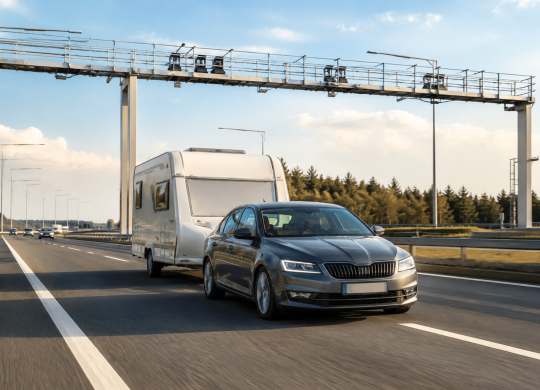
Poland to Waive Road Tolls for Some Drivers: What Will Change Starting in September 2026
Starting September 21, 2026, the rules for using the e-TOLL system in Poland will change for passenger vehicles with trailers. Some drivers will no longer be required to pay the electronic toll, but users with a balance remaining in their account will have to request a refund on their own. Here’s who the new rules apply to and what you should do before closing your account
18 Aug. 2026
More detailsAll materials and articles are owned by VisitWorld.Today and are protected by international intellectual property regulations. When using materials, approval from VisitWorld.Today is required.