

The Safest and Most Dangerous Major Cities in the World in 2026
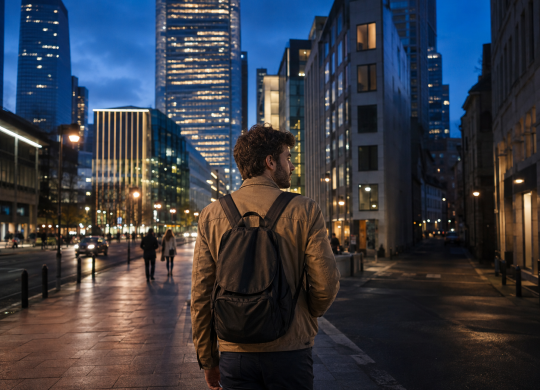
Doha topped the ranking of the world’s safest major cities, while Caracas received the lowest score. No European metropolises made it into the top ten; instead, most of the spots were taken by cities in Asia and the Middle East. Learn more about the results of the Numbeo Safety Index 2026 and the details of its methodology

Safety is increasingly becoming a key factor in choosing a destination, on par with prices, climate, and transportation accessibility. However, the 2026 global ranking revealed an unexpected result: not a single European metropolis made it into the top ten safest major cities in the world. Cities in the Middle East and Asia took the top spots, with Doha leading the way with a score of 84.6 out of 100.
At the same time, major cities in South Africa and Latin America received the lowest scores. Caracas came in last with a score of 18.5, slightly ahead of Johannesburg and Durban. The ranking is based on the Numbeo 2026 Mid-Year Safety Index, which covers 401 cities. For the purpose of comparing major cities, only those with a metropolitan area of at least 2 million residents were included. These figures reflect users’ perceptions of safety rather than official crime statistics.
Planning a trip abroad?
Insurance from the Visit World portal will help you avoid unnecessary risks. The policy covers the costs of medical treatment, emergency assistance, and unforeseen situations abroad, so that even in the event of delays or route changes, you remain protected and can focus on your trip rather than on problems.

How does Numbeo assess city safety?
The Numbeo Safety Index is compiled based on surveys of the platform’s users. Participants rate their own sense of safety and their level of concern regarding various types of crime. Responses are converted to a scale from 0 to 100: the higher the total score, the safer the city is considered to be.
The following factors are taken into account in the calculation:
- Overall perception of crime levels
- Safety when traveling alone during the day and at night
- Risk of robbery, assault, or car theft
- Prevalence of theft, break-ins, and vandalism
- Concerns about violent crime, harassment, and discrimination
- Problems with drugs, corruption, and bribery
The Safety Index is essentially the opposite of the Crime Index: a high safety score corresponds to a low perceived crime rate. For the current index, Numbeo uses data collected over the past five years, sets a minimum number of respondents required for a city to be included, and filters out suspicious responses. Historical data is updated twice a year.
At the same time, Numbeo emphasizes that the index is not a substitute for statistics from the police or government agencies. It reflects the subjective perception of risks by residents and platform users. These assessments may be influenced by personal experience, neighborhood, respondent activity, and people’s willingness to report issues.
Where are the world’s safest major cities located?
The top ten in the ranking are entirely made up of cities in the Middle East, East Asia, and Southeast Asia. Doha and Dubai were the only megacities in the sample to score over 80 points. The difference between first and tenth place is exactly 10 points.
The Top 10 Safest Major Cities in the World in 2026:
1. Doha, Qatar – 84.6 points. Qatar’s capital took first place among megacities, edging out Dubai by 0.8 points.
2. Dubai, UAE – 83.8 points. The largest city in the United Arab Emirates ranked second in the world and was one of only two megacities to score above 80.
3. Taipei, Taiwan – 83.4 points. The Taiwanese capital trails Dubai by just 0.4 points.
4. Hong Kong – 78.2 points. After the top three, the score drops by 5.2 points.
5. Singapore – 77.7 points. The city-state took fifth place, ahead of Tokyo by 1.8 points.
6. Tokyo, Japan – 75.9 points. Japan’s largest metropolitan area ranked sixth on the global list.
7. Shenzhen, China – 75.5 points. One of China’s major technology hubs trailed Tokyo by just 0.4 points.
8. Riyadh, Saudi Arabia – 75.4 points. The kingdom’s capital took eighth place, trailing Shenzhen by a narrow margin.
9. Jeddah, Saudi Arabia – 75.1 points. Saudi Arabia was the only country represented in the top ten by two cities.
10. Seoul, South Korea – 74.6 points. The South Korean capital rounds out the ranking of the safest megacities.
Thus, six spots went to cities in East and Southeast Asia, and another four to megacities in the Middle East. Not a single major city from Europe, Africa, North or South America, or Oceania made it into the top 10.

The world’s safest and most dangerous major cities in 2026. Source: Visual Capitalist based on the Numbeo Safety Index 2026 Mid-Year.
Why are there no European megacities in the top 10?
Europe’s absence from the top 10 does not mean that all cities in the region are less safe than those in Asia or the Middle East. For this comparison, only cities with a metropolitan area population of at least 2 million were selected. Because of this threshold, many European cities with high Numbeo ratings were excluded from the sample.
For example, in Numbeo’s overall ranking, Tallinn scored 78.3 points, Ljubljana 78.2, Tampere 78.2, Zurich 75.9, Reykjavík 75.4, and Prague 75.3. Their scores match those of the leaders or even exceed that of Seoul, which ranked tenth. However, these cities do not meet the established criterion for metropolitan area size. Among major European tourist destinations, Madrid had the best result—71 points.
Other popular megacities ranked lower:
- Lisbon — 67.1 points
- Berlin — 55.4 points
- Rome — 53.3 points
- Barcelona — 47.9 points
- London — 44.7 points
- Paris — 42.1 points
Thus, this conclusion applies specifically to major cities, not to Europe as a whole. A city’s size also cannot be considered a direct cause of a lower rating. In large metropolitan areas, scores can vary significantly depending on the neighborhood, time of day, and the experiences of individual respondents. Numbeo combines these responses into a single average index, which does not reflect all local differences.
Which major cities received the lowest scores?
At the opposite end of the ranking are megacities in South Africa and Latin America. All ten cities scored less than 30 out of 100 points. The lowest score was recorded in Caracas, which trailed the ranking’s leader, Doha, by 66.1 points.
Top 10 Major Cities with the Lowest Safety Index:
1. Caracas, Venezuela – 18.5 points. The Venezuelan capital received the lowest score among the major cities included in the sample.
2. Johannesburg, South Africa – 19.2 points. The country’s largest city is separated from last place by just 0.7 points.
3. Durban, South Africa – 19.5 points. Another South African megacity scored below 20 points.
4. Salvador, Brazil – 23.5 points. The city was the first of four Brazilian representatives in the anti-ranking.
5. Fortaleza, Brazil – 24.1 points. The difference between Fortaleza and Salvador is only 0.6 points.
6. Rio de Janeiro, Brazil – 24.6 points. One of the country’s most visited tourist destinations ranked sixth from the bottom.
7. Recife, Brazil – 25 points. Four Brazilian cities appeared consecutively in the ranking.
8. Guayaquil, Ecuador – 25.3 points. Ecuador’s largest city received the eighth-lowest score among major cities.
9. Cape Town, South Africa – 26.4 points. In total, South Africa is represented in the anti-ranking by three major cities.
10. Cali, Colombia – 29.1 points. The city rounds out the top ten and is the only one with a score above 29 points.
Brazil holds the most spots at the bottom of the list—four in total. Three cities are located in South Africa, with one each in Venezuela, Ecuador, and Colombia. However, a low score does not mean that the risk is the same in every neighborhood or for every traveler: the index reflects respondents’ overall perception of the situation.
How can you check a city’s safety before traveling?
A city’s overall ranking in the global index isn’t enough to plan a trip. You need to check not only the country or city but also the specific neighborhood, the route from the airport, available transportation, and the situation on the dates of your trip.
Before booking, it’s worth taking a few steps:
1. Review official recommendations. Government travel advisories contain information on crime, protests, military risks, natural disasters, local laws, and areas that are advised to be avoided.
2. Check the neighborhood where you’ll be staying. Even in a city with a high Safety Index, there may be neighborhoods with an increased risk of theft or assault. It’s worth evaluating reviews of the location, street lighting, distance to public transit stops, and the ability to return safely in the evening.
3. Plan your route from the airport or train station. Find out in advance which transportation options are available at the time of your arrival. If your flight is late, it’s best to use an official taxi, a hotel shuttle, or a trusted ride-sharing app.
4. Check the latest local news. Ratings are based on data collected over a long period and do not always reflect sudden protests, riots, strikes, outbreaks of violence, or extreme weather events.
5. Save emergency service contacts. The numbers for the police, ambulance, your insurance company, and the nearest consulate should be accessible offline. It’s best to keep copies of your passport, tickets, and insurance policy separate from the originals.
6. Review your insurance coverage. The policy must be appropriate for the country, duration, and nature of your trip. It’s important to clarify any exclusions in advance, especially for areas with official travel warnings, active recreational activities, or already declared states of emergency.
This combination of sources provides a more accurate picture than a single global index. A rating shows a general trend, whereas decisions about your itinerary should be based on up-to-date information for a specific date.
Are you preparing for a trip abroad in 2026?
Medical insurance from the Visit World portal will provide reliable support during your trip, especially in the context of flight changes and unstable schedules. The policy covers medical expenses, emergency assistance, and other unforeseen situations outside the country, so you can feel confident even when plans have to be adjusted at the last minute.
We remind you! Croatia is stepping up its fight against drunken tourists by introducing new restrictions in popular resort cities. Split became the first city in the country to introduce strict rules on alcohol sales this summer. Read more about the new bans, hefty fines for tourists, and changes in Croatia's tourism strategy.
Products from Visit World for a comfortable trip:
Travel guide for 200 countries;
Legal advice from a local specialist on visa and migration issues;
Travel insurance around the world (please select the country of interest and citizenship to receive services);
Medical insurance all over the world.
We monitor the accuracy and relevance of our information, so if you notice any errors or inconsistencies, please contact our hotline
Frequantly
asked questions
Which major city is the safest in 2026?
Which major city had the lowest Safety Index score?
Is the Numbeo ranking an official crime statistic?
Why didn’t any European cities make it into the top 10?
Should you cancel your trip because of a low Safety Index?
Recommended articles
3 min
Popular
An international group of researchers has identified which countries are best equipped to protect their populations, food supplies, and critical infrastructure during a large-scale crisis. Learn more about the world’s most resilient countries and the risks that even Australia is not immune to
31 Aug. 2026
More details3 min
Travels
The Best Places in Europe for a Fall Trip: Top Spots and Destinations
This fall in Europe, you can extend the beach season in Cyprus and the Canary Islands, explore the vineyards of Tuscany, or visit lakes and medieval towns. This selection includes 15 destinations with varying weather conditions, budgets, and vacation styles. Learn more about the best places to travel in Europe this fall
05 Sep. 2026
More details3 min
Travels
The Best Cities for Nightlife in 2026
Time Out, in partnership with Intrepid Travel, has compiled a ranking of the nightlife capitals for 2026. Learn more about the 10 cities with the most vibrant nightlife
31 Aug. 2026
More details3 min
Events
Oktoberfest 2026 in Munich: Dates, Program, Prices, and Rules for Tourists
Oktoberfest 2026 will kick off in Munich on September 19 and run for 16 days. This year, a liter of festival beer will cost up to 15.90 euros, and the most popular tents may fill up before noon. Learn more about the festival program, table reservations, admission rules, and travel costs
01 Sep. 2026
More detailsAll materials and articles are owned by VisitWorld.Today and are protected by international intellectual property regulations. When using materials, approval from VisitWorld.Today is required.