

The United Kingdom Has Resumed Its Refugee Program: Who Will Be Eligible to Relocate
Table of contents
- The UK Resettlement Scheme: What Changed in 2026
- Who Can Move to the UK Under the UK Resettlement Scheme?
- New programs for refugees in the UK: work, study, and sponsorship
- When will the new refugee programs in the UK open in 2026–2027?
- How do you apply for a refugee program in the UK?
- What status will refugees receive after moving to the UK?
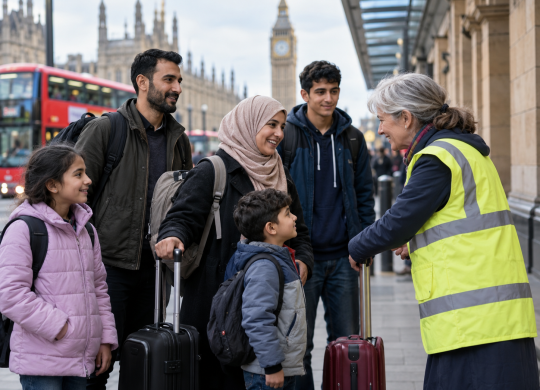
The United Kingdom has resumed accepting new applications under the UK Resettlement Scheme and is preparing three additional pathways for refugees through communities, universities, and employers. Here’s who will be eligible for these programs, how the selection process will work, and when the first arrivals are expected
The United Kingdom will once again accept refugees under the UK Resettlement Scheme (UKRS). On September 28, 2026, the government officially resumed accepting new referrals under the program. At the same time, the country is launching three new resettlement routes through civil society organizations, universities, and employers. The first arrivals under the UKRS are expected by the end of 2026, while the new sponsorship routes will begin accepting participants in 2027.
Moving to the UK requires not only choosing a city but also selecting the correct immigration basis. The immigration lawyers at Visit World will help you determine the appropriate visa category, verify your employer and the terms of sponsorship, prepare documents for you and your family members, and minimize the risk of a refusal due to errors in the application or insufficient evidence. Book a personalized consultation to receive a step-by-step plan for legally moving to, working in, and living in the UK.

The UK Resettlement Scheme: What Changed in 2026
On September 28, 2026, the UK Home Office announced the resumption of new intakes under the UK Resettlement Scheme (UKRS). The program is once again operating as a safe and legal route for people in need of international protection, with the first new arrivals expected by the end of 2026.
The UK Resettlement Scheme does not operate like a typical immigration program where individuals submit an online application on their own. Candidates are identified and referred to the UK through partner organizations. The government has confirmed its collaboration with UNHCR and the International Refugee Assistance Project (IRAP), which select individuals according to established procedures, taking into account their need for protection and level of vulnerability.
The most vulnerable groups will receive special priority under the reinstated program. According to the government’s plan, approximately one in four placements will be for Afghan women and girls and Palestinian refugees fleeing war and persecution. At the same time, UKRS remains a broader resettlement program and is not limited solely to these categories or to citizens of specific countries.
Upon arrival, support will be provided in collaboration with local authorities and other partners. The British government funds assistance with housing, access to basic services, and the integration of UKRS participants. Current regulations provide for such support for a period of up to five years.
Learn more about the best cities in the UK for expats to live in by following the link.
Who Can Move to the UK Under the UK Resettlement Scheme?
The UK Resettlement Scheme is designed for refugees who need international protection and cannot safely return to their country of origin. The program does not maintain a single list of eligible nationalities. What matters most are an individual’s specific circumstances, their need for protection, and their vulnerability.
The main feature of the UKRS is that individuals cannot apply to resettle in the UK on their own. Potential participants are identified and referred through established mechanisms. Since the program’s relaunch, the British government has been working with the UNHCR and the International Refugee Assistance Project (IRAP), which are responsible for identifying and referring refugees.
During this new phase of the UKRS, special attention will be given to the most vulnerable groups. Approximately 25% of all referrals are to be allocated to Afghan women and girls and Palestinian refugees fleeing war or persecution. However, this does not mean that the remaining spots are reserved exclusively for certain nationalities.
In general, the process works as follows:
- A partner organization identifies a person in need of resettlement
- The candidate undergoes the required checks and assessments
- The information is forwarded to the British side for further consideration
- Upon approval, relocation and ongoing support in the United Kingdom are arranged
It’s important not to confuse UKRS with regular British visas. This is a humanitarian resettlement pathway, not a way to move to the country of one’s own volition through a standard application form. That’s why the lack of an open online form for individual applications doesn’t mean the program isn’t working: participation begins with a referral through partner organizations.
In our previous article, we discussed UK work visas: new rules for foreigners.
New programs for refugees in the UK: work, study, and sponsorship
Along with the resumption of the UK Resettlement Scheme, the UK is preparing three additional legal pathways for refugees. These will operate through sponsorship by civil society organizations, universities, and employers. The government expects that, initially, all four pathways combined will admit hundreds of people, and that the number of participants may eventually grow to several thousand per year. An annual quota will be set separately.
Community sponsorship: resettlement supported by communities
Under the community sponsorship route, charitable and nonprofit organizations will be able to act as sponsors for refugees. They will be responsible not only for receiving participants upon arrival but also for helping them adjust to life in the UK.
Specifically, sponsors must provide:
- Housing
- Integration support
- Support during the adjustment period
- Assistance with finding employment
A similar community sponsorship model is already in use within the UK’s resettlement system: approved organizations and community groups help families settle in after their relocation. The new route will expand this principle within the framework of the updated safe resettlement system.
Student sponsorship: resettling refugees through universities
The second route will be aimed at refugees who are offered the opportunity to study at British universities. Higher education institutions will be able to act as sponsors and admit students under a special refugee sponsorship route.
Applications from universities and other potential sponsors are scheduled to open as early as October 2026. However, the first arrivals via the student route are not expected until the fall of 2027.
This mechanism should not be confused with the standard student visa. It is a separate humanitarian route created for the resettlement of refugees with the participation of universities.
Work sponsorship: a new route through British employers
The third track involves the participation of British companies. Under the work sponsorship route, employers will be able to sponsor refugees and help them start their lives and careers in the UK.
Applications from companies are scheduled to open in the spring of 2027, with the first arrivals expected later that year. As with the other new pathways, sponsors will be required to provide housing, integration support, and assistance with employment.
The main difference in the new model is that the government is partially shifting the practical support for refugees to organizations, universities, and businesses. This is intended to expand the number of legal resettlement options while reducing the burden on local authorities.
We previously covered Temporary Residence Permits and UK Citizenship in 2026: Requirements, Costs, and Timelines.
When will the new refugee programs in the UK open in 2026–2027?
The new resettlement pathways will be launched gradually. It is important to distinguish between the date when applications open for sponsoring organizations and the time when refugees actually begin arriving under the programs.
Key dates have already been set by the British government:
- September 28, 2026 – The UK Resettlement Scheme resumed accepting new referrals
- October 2026 – Charities and non-profit organizations will be able to apply as sponsors under the community sponsorship route, and universities under the student sponsorship route
- By the end of 2026 – the first new arrivals under the UKRS are expected
- Spring 2027 – applications are scheduled to open for companies wishing to become sponsors under the work sponsorship route
- Fall 2027 – the first arrivals under the community and student sponsorship routes are expected
- Later in 2027 – the first arrivals under the work route are expected to begin
In other words, in 2026, actual resettlement will resume primarily through the UK Resettlement Scheme. The three new sponsorship routes are currently in the launch phase of the sponsorship system, and the first participants will be able to relocate under them in 2027.
The full rules for the new routes have not yet been published. In particular, the government has not yet announced the final list of requirements for applicants, all selection criteria, or possible restrictions based on country of residence or citizenship. Therefore, claims that people can already register on their own for the student, work, or community programs are premature.
In a previous article, we reported that the cost of visas to the UK will increase in 2026.
How do you apply for a refugee program in the UK?
The procedure depends on the specific route. The most important thing is not to confuse the reinstated UK Resettlement Scheme with the three new sponsorship routes, which are still in the launch phase.
Under the UK Resettlement Scheme, independent applications are not accepted. An individual cannot simply fill out a form on the GOV.UK website and register for resettlement. Candidates are identified and referred through partner organizations, including the UNHCR and the International Refugee Assistance Project. Afterward, the British authorities conduct the necessary checks and make a decision regarding resettlement.
The situation is different for the new routes through communities, universities, and employers. In the first phase, applications will be submitted by the sponsoring organizations themselves, not by the refugees. Procedures for community and student sponsorship are scheduled to open in October 2026, and those for employers in the spring of 2027.
Therefore, potential applicants should keep the following points in mind:
- Do not trust websites that are already offering to “process applications” for the new pathways
- Keep an eye on updates on GOV.UK and UNHCR resources
- Verify that the organization, university, or employer has official sponsor status
- Do not pay intermediaries for a “guaranteed spot” in the program
The British government has yet to publish the full rules for the new routes. Only then will it become clear how candidates will be selected, what documents will be required, and whether potential participants will be able to contact sponsors directly.
Learn more about the specifics of the UK labor market for foreigners by following the link.
What status will refugees receive after moving to the UK?
Participants in the UK Resettlement Scheme and the three new sponsorship routes will not receive temporary permission to stay in the country, but rather a five-year pathway to permanent residence. The UK government confirmed this model during its announcement of the UKRS relaunch on September 28, 2026.
After five years of residence, participants in these routes will be able to proceed to permanent settlement in the UK. In the UK immigration system, permanent residence is typically granted as Indefinite Leave to Remain (ILR); however, the government has yet to publish the specific rules for the new community, student, and work sponsorship routes. Therefore, the exact requirements for transitioning to permanent status may be clarified before the programs launch.
Support will not end immediately upon arrival. Under the new model, sponsors will be required to assist participants with:
- Finding and securing housing
- Integrating into the local community
- Adjusting to life after relocation
- Entering the labor market
Local authorities will continue to play an important role for UKRS, while under the new pathways, charitable organizations, universities, and companies will take on the bulk of the practical support.
This five-year pathway significantly distinguishes the new safe and legal resettlement programs to the United Kingdom from other categories of humanitarian migration. The government explicitly states that people arriving through these controlled pathways will have more defined conditions for transitioning to permanent residency.
Moving to the UK requires not only choosing a city but also selecting the correct immigration basis. The immigration lawyers at Visit World will help you determine the appropriate visa category, verify your employer and sponsorship terms, prepare documents for the applicant and family members, and minimize the risk of a refusal due to errors in the application or insufficient evidence. Schedule a personalized consultation to receive a step-by-step plan for legally moving to, working in, and living in the UK.
f
We remind you! From April 8, 2026, United Kingdom is increasing the cost of ETA, tourist, student and work visas. We have already talked about the new tariffs and how to save money when submitting documents.
Products from Visit World for a comfortable trip:
Checklist for obtaining a visa and necessary documents in the UK;
Legal advice on immigration to the UK;
Travel insurance for foreigners in the UK;
Medical insurance all over the world.
We monitor the accuracy and relevance of our information, so if you notice any errors or inconsistencies, please contact our hotline.
Frequantly
asked questions
Who is eligible to come to the United Kingdom under the UK Resettlement Scheme?
Can you apply for the UK Resettlement Scheme on your own?
When will the new refugee programs in the UK begin?
Will it be possible to move to the UK through a university or an employer?
What status will refugees receive after moving to the UK?
Recommended articles
3 min
Residence permit
UK Permanent Residence and Citizenship 2026: Requirements, Costs, Timeline
Obtaining a PMP and UK citizenship in 2026 has its own nuances due to the planned reform of migration rules. Find out which routes are currently in effect, how much it costs to apply, and what changes are planned in the near future
24 Jul. 2026
More details2 min
Employment
UK Work Visas: New Rules for Foreign Nationals
The United Kingdom is revising its work visa system for foreign professionals. The changes will affect a number of visa categories. Learn more about the new rules
08 Sep. 2026
More details3 min
Popular
The Breakup of Great Britain: What Is Known About the Referendums?
Leaders from Scotland, Wales, and Northern Ireland are drafting a memorandum on self-determination. Learn more about the possible breakup of the United Kingdom
15 Sep. 2026
More details3 min
Expats
The Best Cities in the United Kingdom for Expats to Live In
A high salary in the United Kingdom doesn’t always mean more disposable income. The difference in rent prices between London and regional centers can eat into your income advantage. Learn more about the best cities in the UK for work, family life, and long-term relocation
28 Sep. 2026
More detailsAll materials and articles are owned by VisitWorld.Today and are protected by international intellectual property regulations. When using materials, approval from VisitWorld.Today is required.