

Airspace Closures and Flight Disruptions: Saudi Arabia, US, Mali and Iran
Table of contents
- Which regions are affected by the current flight disruptions?
- Why are flights in Saudi Arabia being rerouted and delayed?
- What caused the nationwide ground stop in the United States?
- Why are flights over Mali restricted?
- Why do airlines avoid Iranian airspace between Europe and Asia?
- How do industry observers assess the situation?
- What should travellers do now?
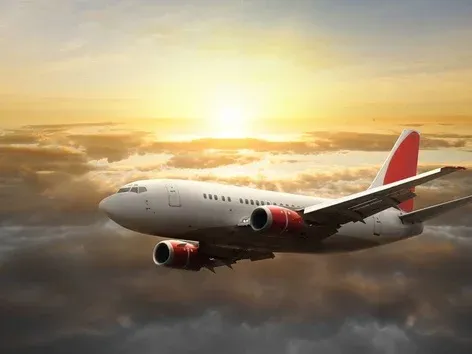
Airspace bans over Saudi Arabia, Mali and Iran and a nationwide ground stop in the United States have left travellers facing reroutes, delays and missed connections. Learn more about what caused each disruption, which airports and air corridors are affected and how to plan your trip

Air travellers are dealing with disruption on several fronts at once. According to Travel And Tour World, a telecommunications failure grounded departures across the United States for more than four hours. At the same time, security threats and regulators' warnings have restricted flights over Saudi Arabia, Mali and Iran.
The combination matters for anyone flying between Europe, Asia, Africa and North America. Airlines are rerouting thousands of passengers, long-haul flights are taking longer, and airports are crowded with travellers waiting for new departure times. Below is what caused each disruption, which airports and corridors are affected and what passengers can do.
What happens to your plans if your flight is held on the ground for hours or rerouted around a closed airspace?
Delays, missed connections and extra nights at a transit hub can quickly turn into unexpected expenses. Travel insurance from Visit World covers medical expenses abroad, flight delays and lost luggage in any country. Get your policy online before your next long-haul trip.

Which regions are affected by the current flight disruptions?
Travel And Tour World describes four major aviation regions under strain at the same time: Saudi Arabia, the United States, Mali and Iran. The causes differ from one region to another.
- In the United States, a technical failure in the air traffic control network led to a rare nationwide ground stop.
- In Saudi Arabia, missile and drone threats have put the airspace on high alert and partially restricted the main airport in Riyadh.
- Over Mali, armed conflict and anti-aircraft weapons have led regulators to impose strict altitude limits.
- Over Iran, international regulators advise airlines not to enter the airspace at any altitude.
As a result, airlines face cancellations, long detours and scheduling bottlenecks on key routes across the Middle East and West Africa, while North American hubs are still clearing backlogs.
Why are flights in Saudi Arabia being rerouted and delayed?
Regional hostilities and persistent threats from missiles and unmanned aerial vehicles have turned Saudi airspace into a high-alert zone. This affects both domestic passengers and international travellers in transit through the kingdom.
After repeated security incidents targeting key infrastructure, diplomatic missions issued urgent security alerts. Among them, the U.S. Mission to Saudi Arabia restricted government personnel from using local airports without special authorisation.
Which Saudi airports are affected?
- King Khalid International Airport (RUH) in Riyadh operates under partial restrictions.
- Prince Naif bin Abdulaziz International Airport (ELQ) in Qassim receives many regular services diverted from Riyadh.
- King Abdulaziz International Airport (JED) in Jeddah remains open, but passengers face cascading delays and late schedule changes.
- King Fahd International Airport (DMM) in Dammam also remains open, with similar delays and revisions.
Aviation authorities advise passengers transiting through Saudi Arabia to check departure status directly with their airline. Air defence interceptions often trigger temporary airspace closures across the Arabian Peninsula with little warning.
What caused the nationwide ground stop in the United States?
According to Travel And Tour World, a critical telecommunications failure in the air traffic control network of the Federal Aviation Administration (FAA) halted departures across the entire country for more than four hours.
How did a router stop US flights?
Investigators traced the problem to a newly installed network router. It was part of an ongoing switch from old copper wiring to modern optical fibre, and it flooded area control centres with thousands of connection requests every few seconds.
Backup radio frequencies and radar feeds kept working well enough for controllers to land about 3,500 aircraft already in the air without incident. As a precaution, however, the FAA suspended all take-offs.
How did the disruption spread abroad?
The effects quickly reached other continents. Aviation authorities in the 42 Eurocontrol member states and in Mexico temporarily suspended departures bound for the United States.
Technicians isolated the faulty hardware and US airspace reopened, but major hub airports were left with backlogs lasting several days. Airlines had to move aircraft and crews back into position, and hundreds of thousands of passengers were stranded or looked for alternatives such as rail travel.
Visit World services for tourists, migrants, and expats: Insurance | Guides | Legal advice
Why are flights over Mali restricted?
Worsening security, coordinated militant offensives and the use of advanced anti-aircraft weapons have sharply limited commercial flying over Mali. The country lies under key north-south and east-west air corridors of West Africa.
Several regulators have issued Notices to Airmen (NOTAMs) warning airlines of extreme hazards in the Dakar (GOOO) and Niamey (DRRR) Flight Information Regions above Malian territory:
- the FAA in the United States;
- the Civil Aviation Authority of the United Kingdom;
- Transport Canada;
- the aviation authorities of France.
What do the restrictions require?
Regulators prohibit commercial aircraft from flying below high-altitude limits, which range from 25,000 feet above ground level to Flight Level 320. The aim is to keep jets out of reach of shoulder-fired missiles and active drone operations.
Because of escalating clashes near the capital, European authorities also advise airlines not to use Bamako-Senou International Airport (GABS), even as an emergency diversion airfield.
Mali sits directly beneath the main trans-Saharan routes linking Europe with sub-Saharan Africa. The altitude rules and the warning on Bamako force airlines to carry extra contingency fuel and plan complex, costly routings.
Why do airlines avoid Iranian airspace between Europe and Asia?
Direct conflict, military strikes and the risk that civil aircraft could be misidentified have led to broad international avoidance of the Tehran Flight Information Region (OIIX).
The European Union Aviation Safety Agency (EASA) and national regulators in the United States, the United Kingdom, France, Germany and Italy maintain Conflict Zone Information Bulletins. They advise commercial operators not to enter Iranian airspace at any altitude.
Iranian authorities technically keep the skies open for some regional overflights. Western and other international airlines, however, refuse to fly near active missile defence systems and contested military zones. We previously described the start of this situation in our article on the aviation crisis over Iran and closed skies.
Which routes do airlines use instead?
The main air bridge between European hubs and South Asia, Southeast Asia and Australasia has effectively been cut. Hundreds of daily long-haul flights are now diverted onto one of two options:
- narrow northern corridors over the Caucasus and Central Asia;
- crowded southern detours via Egypt, Saudi Arabia and Oman.
According to Travel And Tour World, these bypass routes add up to ninety minutes of flying time, burn considerably more fuel and push up international airfares worldwide.
About why flight prices to Asia surged in 2026 — read more at the link.
How do industry observers assess the situation?
Anup Kumar Keshan, founder and editor-in-chief of Travel And Tour World, called the overlap of technical failures and regional conflicts a wake-up call for global aviation. In his view, a single faulty router was able to stop the domestic fleet of a superpower while conflicts were narrowing vital air corridors over the Middle East and Africa.
He said travellers should expect rolling delays, costly detours and unpredictable airspace restrictions. He also urged airlines, airports and regulators to modernise old infrastructure and strengthen contingency plans to prevent future gridlock at terminals.
What should travellers do now?
US engineers found the faulty router quickly, but aircraft and crew shortages are still causing delays. The conflicts around Saudi Arabia, Mali and Iran mean altitude limits and full overflight bans are likely to remain. Travel And Tour World offers the following practical advice:
- Check the flight path and connections. On long-haul trips between Europe, Asia and North America, find out whether your airline uses detour corridors. Such routes often need longer layovers because flights take more time.
- Follow official advisories. When flying to or from the Middle East and West Africa, watch real-time airline notifications and government travel advisories. Security alerts can close secondary diversion airports at very short notice.
- Leave extra time in US hubs. Passengers connecting through major US airports should expect lingering schedule changes, tight aircraft turnarounds and high demand for rebooking after the ground stop.
- Stay flexible. Allow plenty of time between connections and keep checking updates from the airline until the situation in the skies stabilises.
Some airlines are also adjusting their networks in response. About how European airlines are changing routes to Asia and Africa, read in our earlier article.
Long detours, ground stops and closed diversion airports can leave you waiting at a hub for hours or days. Travel insurance from Visit World helps with flight delays, lost luggage and medical costs abroad. Buy your policy online before you fly.
We remind you! In our previous article, we wrote about flight disruptions in Europe in 2026 and what travellers should expect.
Products from Visit World for a comfortable trip:
Travel guide for 200 countries;
Legal advice from a local specialist on visa and migration issues;
Travel insurance around the world (please select the country of interest and citizenship to receive services);
Medical insurance all over the world.
We monitor the accuracy and relevance of our information, so if you notice any errors or inconsistencies, please contact our hotline.
© 2018-2026, Visit World. Use, copying or reprinting of materials on this site is permitted only with a link (hyperlink for online publications) to Visit World. All rights reserved.
Frequantly
asked questions
Why are flights over Saudi Arabia being delayed and rerouted?
What caused the nationwide ground stop in the United States?
Can airlines fly over Mali?
Why do flights between Europe and Asia take longer now?
How should travellers prepare for airspace closures?
Recommended articles
3 min
Popular
Aviation crisis over Iran: canceled flights, closed skies, and consequences for passengers worldwide
The conflict surrounding Iran has caused the most significant crisis in global aviation since the Covid-19 pandemic. Eight Middle Eastern countries have restricted their airspace, thousands of flights have been canceled, and airlines around the world are changing routes and incurring huge financial losses. Learn more about which carriers have been hit hardest, what is happening with fuel prices, and how to protect yourself while traveling
03 Mar. 2026
More details3 min
Popular
Flight prices to Asia surge due to the Iran war in 2026: what’s happening with international flights
Airfares between Europe, Asia, and Australia have risen sharply following the closure of part of the Middle East's airspace due to the war between the United States and Israel against Iran. Passengers are massively rebooking flights, and some routes are already sold out for several days in advance. Read more about how the conflict is affecting global air travel and ticket prices
05 Mar. 2026
More details3 min
Transport
European airlines change routes: more direct flights to Asia and Africa
The war in Iran is changing global routes: tourists are avoiding flights through the Middle East, and airlines are urgently adapting their networks. European carriers are already increasing the number of direct flights to Asia and Africa to meet demand and minimize risks. Find out more about how this will affect travel in 2026
20 Mar. 2026
More details3 min
Air travel
Flight disruptions in Europe in 2026: delays, cancellations and what travelers should expect
The global aviation industry is entering a new crisis: due to the war in the Middle East, fuel shortages, and rising costs, airlines are cutting flights en masse. Europe is already warning of potential disruptions, and carriers are even proposing to revise passenger compensation rules. Find out how this will affect travel in 2026
28 Apr. 2026
More detailsAll materials and articles are owned by VisitWorld.Today and are protected by international intellectual property regulations. When using materials, approval from VisitWorld.Today is required.