

Guide to schools in Thailand for foreign parents: what to choose, an international school or public education?
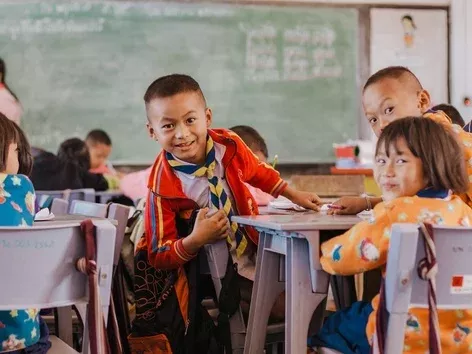
Choosing a school is a daunting task that can be stressful. Especially with so many options in Thailand. Learn more about the pros and cons of public schools as well as the private education system in Thailand

Educational institutions in Thailand are divided into private and public. A number of factors should be considered when choosing between international and national schools, including curriculum preferences, language of instruction, cultural influence, individual approach and financial considerations.
How to choose a school that will suit your child? We talk about the main advantages and disadvantages of each type of institution further in our material.
Pros and cons of public schools in Thailand
The public education system in Thailand is managed by the Ministry of Education. The program is designed to provide free education to all citizens up to the 9th grade. In general, it is divided into three years of free preschool education and free upper secondary education.
Advantages of public schools in Thailand
1. Available to all Thai citizens.
2. It is free of charge.
3. Establishes a strong sense of community and national identity.
Disadvantages of the national education system
1. Large class sizes can hinder personalized learning, which is critical to individual development.
2. Limited amount of resources, which affects the quality of education, especially in rural areas.
3. Old infrastructure.
4. The widespread practice of rote learning may not fully develop critical thinking skills and will not teach how to solve problems that need to be able to solve in today's complex world.
Advantages and disadvantages of the private education system in Thailand
The sector of private educational institutions is an important part of the national education system. It includes more than 240 educational institutions, offering students a variety of opportunities.
Educational institutions are divided into international schools with global curricula and specialized institutions that focus on language learning. This sector is regulated by the Office of the Commission for Private Education.
Demand for the private education system is quite high, with more than 77 500 students currently studying in international schools in Thailand.
Advantages of private schools in Thailand
1. One-to-one training - usually private schools have a smaller number of students, which allows the teacher to adapt to the needs of everyone.
2. Global options of educational programs that facilitate international mobility of students and open opportunities for studying abroad. In particular, in the country you can find schools that offer American, British curricula or the international baccalaureate system.
3. Bilingual environment and multicultural education – the learning atmosphere is much better thanks to the diverse student body and language immersion programs.
4. Extra-curricular activities and advanced infrastructure – given that private schools have more money than public schools, they can spend additional funding on various extra-curricular activities and state-of-the-art facilities.
Disadvantages of private schools in Thailand
1. High cost of education.
2. The limited number of institutions and their uneven location - considering that most schools are located in the central part of large cities, it may be difficult to find an institution near the place of residence or it will be necessary to move closer to the educational institution.
How to choose a school in Thailand? Checklist for parents
1. Research available training programs
International schools in Thailand mainly focus on global perspectives and offer curricula such as American Curriculum with Advanced Placement, Capstone Programs, International Baccalaureate (IB) or Cambridge International Examinations. These institutions favor a multicultural and holistic approach to education and try to prepare students for a globalized world.
Public schools follow the Thai National Curriculum, which emphasizes the study of Thai language, culture and history. In addition, public schools in Thailand often strive to provide acceptable and affordable education to the general population.
2. Pay attention to the infrastructure of the educational institution
International schools in Thailand often have modern campuses, well-equipped classrooms and science laboratories, as well as libraries and sports halls. Public schools in Thailand, although gradually improving, may lack some infrastructure due to budget constraints.
3. Consider the cost of education
International schools in Thailand tend to have higher tuition fees due to premium facilities, international curricula and qualified staff. Public schools in Thailand are funded by the government, so they can be a more affordable option for some families.
4. Location is another important factor
International schools are usually located in the central part of the city, while public educational institutions are located throughout the country.
Moving to Thailand for study or work is an important step that requires careful preparation. Our migration specialists will help you avoid bureaucratic difficulties and save time.
Qualified specialists of Visit World - your reliable support during migration abroad!

Hence, public schools in Thailand offer a solid education at minimal cost, while private schools offer a more personalized environment with modern resources.
Therefore, consider your priorities and choose. However, we note that regardless of which path you choose, the educational system of Thailand will prepare your child for successful admission to university.
Let us remind you! In 2025, Thailand will abolish the ETA system and introduce a digital arrival card (TDAC) for visa-free tourists. We have already told you who needs a new card, how to apply for it, the validity period and the main changes in the entry rules.
Products from Visit World for a comfortable trip:
Checklist for obtaining a visa and necessary documents in Thailand;
Legal advice on immigration to Thailand;
Travel insurance for foreigners in Thailand;
Medical insurance all over the world.
We monitor the accuracy and relevance of our information, so if you notice any errors or inconsistencies, please contact our hotline.
Frequantly
asked questions
Can foreign children study in public schools in Thailand?
How much does it cost to study at international schools in Thailand?
What curricula do international schools in Thailand offer?
Recommended articles
2 min
Residence permit
Moving to Thailand for permanent residence: important nuances
Every year, more and more expats dream of moving to Thailand for permanent residence because of its golden beaches, affordable prices, and relaxed pace of life. If foreigners cannot obtain citizenship of this country, it is quite possible to obtain a residence permit. Learn more about the requirements for obtaining a residence permit in Thailand
09 Jun. 2025
More details2 min
Education
Studying in Thailand: A Complete Guide for International Students
Thailand is becoming an increasingly popular educational center in 2025. Learn everything about studying in Thailand: how to enter a university, how much education costs, what documents are needed, how to apply for a student visa and get a scholarship
31 Jul. 2025
More details2 min
Work
Thailand is becoming a popular destination for foreigners looking to work in a variety of fields, thanks to its culture and economic development. Find out how to move to Thailand for work in 2025 and where most expats in the country work and how much they earn
31 Mar. 2025
More details1 min
Travels
Thailand Digital Arrival Card (TDAC): what is this permit, who needs it and how to apply?
Thailand has introduced a Digital Arrival Card (TDAC) for all international travellers from 1 May 2025. Find out what TDAC is and how it will replace the paper TM6 form, what the benefits are, who needs to fill out the card and when to do so
06 May. 2025
More detailsAll materials and articles are owned by VisitWorld.Today and are protected by international intellectual property regulations. When using materials, approval from VisitWorld.Today is required.