

Turkey's Green Passport in 2026: How to Obtain a Document Granting Visa-Free Entry to the Schengen Area?
Table of contents
- What is Turkey’s “green passport”?
- Who is eligible to receive a green passport in Turkey?
- The export route to a green passport for CBI investors
- Application Procedure and Processing Times
- Who is the export route for obtaining the document suitable for?
- Changes in EU-Turkey Relations in 2025–2026
- The Schengen Visa Cascade Rule for Turkish Citizens
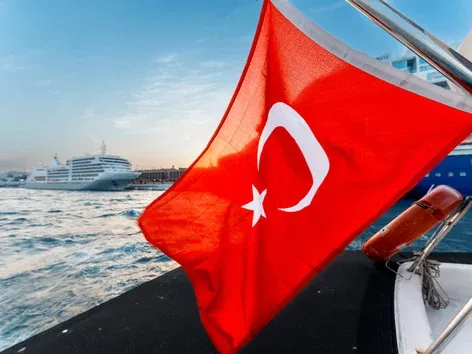
The Turkish “green passport” (Hususi Damgalı Pasaport) grants its holders visa-free entry to the Schengen Area and approximately 158 other countries worldwide. In addition to high-ranking government officials, investors who have established an export business in Turkey with an annual turnover of over $500,000 are eligible for this document. Learn more about the requirements, application process, and processing times for obtaining a “green passport” in 2026

The program for granting Turkish citizenship through investment remains one of the most popular in the world. According to former Interior Minister Suleyman Soylu, after the minimum investment threshold was lowered in 2018, more than 40,000 foreigners submitted applications, and the total amount of funds raised is estimated at $15 billion. As of 2026, the minimum investment in real estate is $400,000.
The burgundy Turkish passport grants its holder visa-free access to over 110 countries and entitles them to apply for U.S. E-1 and E-2 investor visas. A separate category is the so-called “green passport”—a document granting holders visa-free entry to the Schengen Area. In this article, we’ll explain what this document entails, who is eligible for it, how the investment pathway works for investors, and how changes in EU-Turkey relations affect the mobility of Turkish citizens.
Are you planning to obtain Turkish citizenship through investment and interested in additional opportunities for traveling in Europe?
The immigration lawyers at the Visit World portal will advise you on the CBI program, the investment route to the “green passport,” and the optimal strategy for investing in Turkish real estate.

What is Turkey’s “green passport”?
The “green passport” is called Hususi Damgalı Pasaport in Turkish and falls under the category of special travel documents provided for by national legislation. The document has special status and differs from the standard burgundy passport in that it offers expanded rights for international travel.
Holders of such a passport are entitled to visa-free entry into the Schengen Area for up to 90 days within any 180-day period. The total number of destinations accessible without prior visa application is approximately 158 countries. The document is valid for five years, with the possibility of renewal provided the grounds for its issuance remain valid.
Who is eligible to receive a green passport in Turkey?
The primary category of “green passport” holders traditionally consists of high-ranking civil servants. This refers to officials in the first, second, and third grades on the Turkish pay scale—typically, reaching this level requires at least 15 years of service and a college degree. A separate subgroup consists of mayors, who are entitled to the document for the duration of their term of office. Retirees who have left their respective positions retain this right after retiring.
For individuals who are not part of the civil service system, a separate qualification pathway is provided—through export activities. This is based on the “Principles for Issuing Special Passports to Exporters,” introduced in 2017.
Eligibility for the document extends to shareholders, directors, and employees of Turkish companies that exceed the established annual export threshold. For 2026, this threshold is set at $500,000, calculated as the average over the last three calendar years.
About 10 places in Turkey that are definitely worth visiting — read here.
The export route to a green passport for CBI investors
An investor who has purchased Turkish real estate worth $400,000 under the Citizenship by Investment program receives a standard burgundy passport. Access to the “green passport” requires passing a separate qualification procedure, which is based on verified export activity of the business.
The sequence of steps is as follows: after obtaining Turkish citizenship, the investor registers a new company or acquires an existing business, then launches export operations totaling over $500,000 per year. This volume must be maintained for three consecutive calendar years. The Istanbul-based consulting firm IstaProperty confirms this sequence—only after establishing a company and reaching the required export volume can an investor apply for the special document.
Visit World services for tourists, migrants, and expats: Insurance | Guides | Legal advice
Application Procedure and Processing Times
Once the investor has confirmed a three-year history of export operations, the final stages of the application process proceed relatively quickly. The certificate of compliance is issued by the relevant Exporters’ Union, which verifies the company’s foreign trade volumes. The matter is then forwarded to the Turkish Ministry of the Interior, which grants final approval of the application.
According to Turkish consultants, this stage takes four to eight weeks. Each application is reviewed on a case-by-case basis—the Exporters’ Association analyzes the company’s specific metrics, while the Ministry of the Interior reserves the full right to make the final decision on whether to issue or deny the document.
How to plan a budget trip to Istanbul in 2026 — we explain at the link.
Who is the export route for obtaining the document suitable for?
The export route for obtaining a “green passport” makes sense for a specific category of investors—those already involved in international trade or seriously planning to build a real Turkish export business. Often, this route fits into a broader commercial strategy or relocation plan, where the passport is just one element of a long-term solution.
Turkey maintains its position as a major manufacturing hub, integrated into European supply chains through a thirty-year-old customs union with the EU, a network of free trade agreements, and bilateral trade with European countries exceeding 200 billion euros. Key export sectors—automotive, textiles, metallurgy, and machinery—are naturally well-suited to meeting the necessary threshold.
Investors interested solely in rapid Schengen visa-free travel without engaging in business should note: the total processing time for this program is longer than that of Caribbean CBI programs or certain “golden visa” programs in
EU countries, which offer faster travel access.
Changes in EU-Turkey Relations in 2025–2026
The period from late 2025 to early 2026 brought several important developments in bilateral relations between Brussels and Ankara. These developments are significant for anyone considering a Turkish passport as a tool for long-term mobility.
In February 2026, European Commissioner for Enlargement Marta Kos, during a visit to Ankara, announced a proposal to include Turkey in the Single Euro Payments Area (SEPA), which unites 41 countries and regulates cross-border transfers in euros. EU Chargé d’Affaires Jurgis Vilcinskas confirmed that this initiative was discussed with Turkish Foreign Minister Hakan Fidan. The Turkish Ministry of Finance is currently reviewing the proposal. If approved, Turkish businesses and the Turkish diaspora in Europe will be able to make euro transfers at speeds and costs comparable to domestic transactions within the EU. By comparison, smaller candidate countries (Albania, Moldova, Montenegro, and North Macedonia), which joined the system last year, could collectively save up to 500 million euros, according to EU estimates.
On March 4, 2026, the European Commission published a draft Industrial Accelerator Act, which introduces “Made in the EU” labeling requirements and low-carbon standards for public procurement and subsidies in strategic sectors. A separate provision of the document stipulates that goods from countries that have a customs union or a free trade agreement with the EU may receive “Union origin” status for public procurement purposes. As a member of the customs union, Turkey automatically falls under these rules—Trade Minister Ömer Bolat publicly welcomed the recognition. The document is currently in the draft stage; its final text requires approval by member states and the European Parliament.
We discussed the rules for entering Turkey in a previous article.
The Schengen Visa Cascade Rule for Turkish Citizens
On July 15, 2025, the EU introduced more favorable conditions for Turkish citizens to obtain Schengen visas through the so-called cascade system. Its logic is based on a gradual increase in the validity period of visas for applicants with a proven travel history.
After the lawful use of two visas over a three-year period, a Turkish citizen becomes eligible for a one-year multiple-entry visa, followed by a three-year visa, and eventually a five-year multiple-entry visa.
The European Commission clarified that the rule applies to Turkish citizens residing in the country and is processed through Turkish consulates in EU member states. An exception is made for truck drivers. Consulates retain the right to review each application individually—automatic progression through the cascade levels is not provided for. EU Ambassador to Turkey Tomas Osowski called the tiered system a practical improvement, while emphasizing that the broader goal is full visa liberalization. Turkey has fulfilled 66 of the 72 criteria within the liberalization dialogue, and this figure has remained unchanged since the publication of the Commission’s progress report in 2016. The six outstanding criteria relate to politically sensitive issues—in particular, reform of anti-terrorism legislation and deepening cooperation with Europol.
Processing documents related to Turkish citizenship, obtaining a “green passport,” or preparing for export activities in Turkey requires a deep understanding of local legislation and procedural requirements. The immigration lawyers at the Visit World portal will help assess your specific case, select the optimal strategy for obtaining Turkish citizenship, and guide you through the process of establishing a company in Turkey and preparing documents for applying for a special passport.
Schedule a consultation with an immigration lawyer on the Visit World portal to receive a personalized action plan tailored to your goals, budget, and desired timeline!
Reminder! In Turkey, most government services are already available online through the e-Devlet system. It allows you to handle important matters without waiting in lines or dealing with paperwork. We explain how to register and use the e-Devlet portal at the link below.
Photo: Freepik
Products from Visit World for a comfortable trip:
Checklist for obtaining a visa and necessary documents in Turkey;
Legal advice on immigration in Turkey;
Travel insurance for foreigners in Turkey;
Medical insurance all over the world.
We monitor the accuracy and relevance of our information, so if you notice any errors or inconsistencies, please contact our hotline.
Frequantly
asked questions
What is Turkey's “green passport” and how does it differ from a regular passport?
How much does it cost to obtain Turkish citizenship through investment in 2026?
Recommended articles
3 min
Expats
Moving to Norway: Complete Guide to Living, Working, and Adapting
Moving to another country is always a strategic decision that requires careful preparation. Norway is consistently ranked among the most comfortable countries to live in the world due to its high standards of welfare, social protection and ecology. Find out what opportunities this northern state offers, how to obtain legal residence, how much does it cost to live and what foreigners should be prepared for before moving
30 Mar. 2026
More details3 min
Expats
Immigration to New Zealand in 2026: Visas, Employment, Costs, and the Path to Citizenship
Moving to New Zealand in 2026 is a strategy that relies on choosing the right type of visa and understanding the actual costs and chances of obtaining residency. The immigration system is becoming more demanding, but at the same time, it offers clear opportunities for professionals, investors, and families. Learn more about the requirements, costs, and best ways to move
05 Apr. 2026
More details2 min
Expats
Electronic Visa for Venezuela: How to Apply Online, Cost, and Validity Period
Venezuela has officially switched to an electronic system for issuing tourist and business visas to foreign nationals. The new system significantly reduces processing times and eliminates the need for travelers to visit consular offices in person. Learn more about the e-visa application process, its cost, validity period, and key requirements for applicants
15 Apr. 2026
More details3 min
Expats
Best Countries for Digital Nomads in 2026: Expert Ranking
Digital nomads are increasingly choosing countries with an affordable cost of living, fast internet, and special visas for remote work. In 2026, experts identified the top destinations offering the best conditions for remote professionals. Learn more about which countries made the list and what makes them attractive to digital nomads
15 Apr. 2026
More detailsAll materials and articles are owned by VisitWorld.Today and are protected by international intellectual property regulations. When using materials, approval from VisitWorld.Today is required.