

Major Greece Strike on June 24, 2026: What Tourists Need to Know Before Traveling
Table of contents
- What is known about the nationwide strike in Greece on June 24, 2026?
- Why are tourism and hospitality workers going on strike?
- How might the strike affect tourists?
- Tourism in Greece is breaking records, but the industry is facing a staffing crisis
- What should tourists do if they are in Greece on June 24?
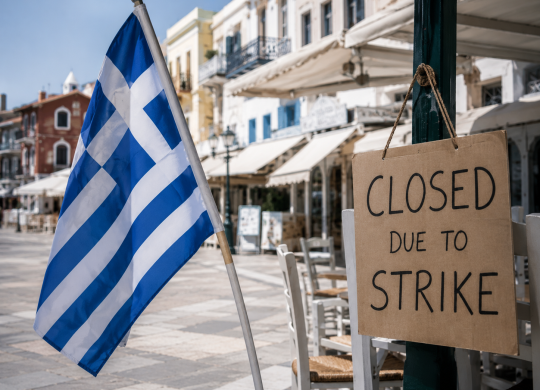
On June 24, 2026, workers in Greece’s tourism and restaurant industries will hold a nationwide strike. Labor unions cite staff burnout, labor shortages, and violations of labor rights, while the country’s tourism sector continues to post record numbers. Learn more about the reasons for the strike, the possible consequences for tourists, and tips for those planning a vacation in Greece in the coming days

In the midst of the summer tourist season, Greece has faced a new wave of protests in the hospitality sector. A nationwide strike, scheduled for June 24, 2026, will involve workers at hotels, restaurants, cafes, and other tourist establishments across the country. The action was organized by the Panhellenic Federation of Food and Tourism Workers (POEET), which accuses employers of systematic violations of labor laws and the exploitation of staff.
Although the strike will last only one day, it could disrupt operations at thousands of tourist facilities in popular resort regions, including Athens, Crete, Rhodes, Corfu, and other destinations. The event is drawing particular attention because the protests are taking place against a backdrop of record-high tourist demand and an acute labor shortage in the industry.
In this article, we’ll examine why tourism sector workers have decided to go on strike, which services may be unavailable to tourists, and how to prepare for potential inconveniences while traveling to Greece.
Planning a trip abroad is often accompanied by questions about visas, documents and entry rules. To avoid mistakes and save time, use the “Tourist Guide” from Visit World - a convenient step-by-step guide for travelers. It contains all the necessary information to prepare for your trip.
Choose a destination and get ready-made instructions today!

What is known about the nationwide strike in Greece on June 24, 2026?
On June 24, workers in the tourism and restaurant industries will hold a 24-hour strike throughout Greece. The decision to hold the strike was unanimously supported by the leadership of the POEET union. Demonstrations and protest events are planned in various cities across the country, and the main rally will take place near the Ministry of Labor in Athens.
According to preliminary estimates, the strike may affect operations at:
- Hotels and resort complexes
- Restaurants, cafes, and bars
- Catering companies
- Tourist dining establishments
- Certain services for vacationers in resort regions
Although a complete shutdown of tourism is not expected, tourists are advised to be prepared for limited service and possible delays at establishments.
In a previous article, we wrote about little-known Greek islands where you can find an authentic getaway without the crowds.
Why are tourism and hospitality workers going on strike?
Although tourism remains one of Greece’s key economic sectors, workers in the industry have been complaining about deteriorating working conditions for several years in a row. Unions claim that the tourism industry’s record profits have not led to improved conditions for the staff who actually keep hotels, restaurants, and resorts running.
Among the strikers’ main demands are:
- Higher wages
- Full pay for overtime
- Stricter enforcement of labor laws
- Improved working conditions and workplace safety
- Addressing the issues faced by seasonal workers, who often lack adequate social protection between tourist seasons
A severe labor shortage remains a separate issue. According to Greek industry organizations, at the start of the 2026 summer season, the country’s tourism sector was short more than 85,000 workers.
The largest number of vacancies is in hotels, restaurants, bars, and entertainment venues. This is more than 40% higher than the previous year’s figures.
Due to the staff shortage, many workers are forced to work long shifts without enough days off. Unions claim that overtime has become common practice, and the workload during the peak season continues to rise. That is why employees view the strike not only as a fight for higher wages but also as an attempt to draw attention to systemic problems in the tourism industry.
European institutions also acknowledge the labor shortage. In its report on the Greek economy, the European Commission notes that the shortage of workers remains one of the main problems in the labor market, particularly in the tourism sector.
Learn more about the summer quiet period in Greece in 2026 by following the link.
How might the strike affect tourists?
Most tourists who will be in Greece on June 24 are unlikely to face serious problems during their vacation. However, certain services may experience disruptions, especially in popular resort regions where the workload on staff is highest. The consequences will depend on the scale of employee participation in the strike and the decisions of individual employers.
The greatest difficulties may arise in the food service sector. Some restaurants, cafes, and bars may temporarily close or operate with reduced staff. In tourist areas, wait times for orders may increase, and some establishments may limit their menus to a single-day selection.
Hotels are unlikely to close, but tourists may face delays during check-in or check-out, longer wait times for room cleaning, and reductions in certain services. This is likely to affect large resort complexes the most, where a significant number of seasonal staff are employed.
Tourists should also keep an eye on updates from their tour operators and hotels. In some cases, there may be changes to tour programs, transfers, or organized events, especially if workers in related service sectors join the protests.
The most popular tourist destinations where the effects of the strike may be felt:
- Athens
- Crete
- Rhodes
- Corfu
- Santorini
- Mykonos
It is in these destinations that the tourist season is traditionally at its peak, and the labor shortage is felt most acutely. According to Greek industry associations, the largest number of job openings in the hospitality sector is concentrated on the country’s popular islands and resort regions.
We previously reported that the Greek real estate market is shifting toward compact housing, which is seeing faster growth in prices and demand.
Tourism in Greece is breaking records, but the industry is facing a staffing crisis
The strike is taking place against the backdrop of one of the most successful periods for Greece’s tourism industry. The country continues to be one of the most popular destinations in Europe, and the number of foreign tourists is growing every year. That is precisely why the current conflict between workers and employers is particularly telling: the tourism sector generates billions of euros in revenue, yet the problem of staff shortages is only getting worse.
According to the Bank of Greece, more than 40 million tourists visited Greece in 2025, and revenue from international tourism exceeded 21 billion euros. Tourism accounts for a significant portion of the Greek economy and provides hundreds of thousands of jobs across the country.
Demand for vacations on popular islands and resorts is growing particularly rapidly:
- Crete
- Rhodes
- Corfu
- Santorini
- Mykonos
- Chalkidiki
It is in these regions that employers face the greatest difficulty in finding enough staff to serve tourists during the high season.
Representatives of the hotel industry have repeatedly stated that the labor shortage has become one of the biggest problems facing the tourism sector. According to estimates by professional associations, the Greek tourism industry will face a shortage of more than 80,000 workers by 2026. The greatest demand is for housekeepers, waitstaff, cooks, receptionists, and other hotel service personnel.
Experts attribute this situation to several factors. Following the pandemic, some workers left the hospitality sector and moved to other industries. Additionally, the seasonal nature of the work, high workloads, and relatively low wages make it difficult to attract new staff. As a result, many businesses are operating with understaffed teams even during a record-breaking tourist season.
That is why the strike on June 24 was not only a protest against specific labor violations but also a signal of deeper problems that could affect the quality of tourism services in the future. If the staff shortage persists, Greece’s tourism industry will have to find new ways to attract workers in order to maintain a high level of service and cope with the growing influx of tourists.
We previously reported that Greece is introducing new restrictions due to the influx of tourists.
What should tourists do if they are in Greece on June 24?
For most travelers, the strike is unlikely to disrupt their vacation. At the same time, tourists should prepare in advance for possible inconveniences, especially if they plan to visit restaurants, take part in tours, or change accommodations on June 24.
First and foremost, it is recommended to check the latest updates from your hotel, tour operator, or rental provider. Many establishments inform guests in advance about possible changes to their services during strikes and other mass protests.
It’s also a good idea to:
- Reserve a table at a restaurant the day before or confirm the establishment’s operating hours
- Stock up on water and food if you’re staying in an apartment
- Plan your check-in and check-out times with plenty of time to spare
- Check for updates from tour companies
- Save the hotel’s and transportation provider’s contact information for quick communication
If you’re traveling to popular islands such as Santorini, Rhodes, or Corfu, it’s advisable to follow local news. In resort regions, the impact of a strike may be felt more acutely due to the economy’s significantly greater dependence on the tourism industry.
At the same time, Greece’s tourism industry has extensive experience dealing with periods of protests and strikes. Even during large-scale protests, most hotels continue to welcome guests, and transportation and tourism infrastructure typically operate as usual or with only minor restrictions.
For tourists, the main rule remains the same: follow official announcements, verify information directly with service providers, and be prepared to make minor adjustments to your plans for a single day. In most cases, this helps avoid any serious problems during your vacation.
A trip to the Greek islands is not only about choosing a location, but also about properly preparing documents, knowing the rules of entry and the nuances of your stay. The “Travel Guide” from Visit World will help you avoid unnecessary stress: in it you will find step-by-step instructions for applying for a visa, a list of required documents, rules for filling out questionnaires and even useful life hacks for traveling. All information is up-to-date and comes in a convenient PDF format immediately after registration. This is especially important if you are planning an independent trip without travel agents and want to be sure of every step.
Prepare for your trip correctly - download your travel guide now!
We remind you! Time Out, together with Intrepid Travel, has published an annual ranking of the cities in the world with the best access to parks, gardens and natural landscapes in 2026. Read here which cities received the highest ratings from residents for green areas and why these locations are recognized as the benchmark for ecological urbanism.
Products from Visit World for a comfortable trip:
Checklist for obtaining a visa and the necessary documents in Greece;
Legal advice on immigration to Greece;
Travel insurance for foreigners in Greece;
Medical insurance around the world.
We monitor the accuracy and relevance of our information, so if you notice any errors or inconsistencies, please contact our hotline.
Frequantly
asked questions
Why have workers in Greece’s tourism industry gone on strike?
Will hotels remain open during the strike on June 24?
Could restaurants and cafes close?
Which regions are likely to be most affected by the strike?
Should you cancel your trip to Greece because of the strike?
Recommended articles
2 min
Popular
Summer Quiet Hours in Greece 2026: Times, Fines, and Important Rules
On April 1, 2026, Greece implemented its summer quiet hours policy, which will remain in effect until the end of September. During this period, strict noise restrictions apply both day and night, and violations are subject to fines and even criminal liability. Learn more about the rules, quiet hours, and what tourists need to keep in mind
03 Apr. 2026
More details2 min
Travels
Hidden Greek Islands 2026: Where to Experience Authentic Greece Without Crowds
Greece is a whole different place beyond the popular resorts. Find out which islands to choose for a peaceful and authentic holiday without the crowds of tourists
20 Apr. 2026
More details2 min
Travels
Greece, which welcomes tens of millions of tourists every year, is beginning to implement new restrictions to combat overtourism. The country’s authorities plan to regulate coastal development, the number of tourist facilities, and even beach use to reduce the strain on the islands and historical sites. Learn more about the new rules being introduced in Greece and how they will affect tourists in 2026
13 May. 2026
More details3 min
Investment
Rental Yields on Real Estate for the Greek Golden Visa: Regions, Rates, and Calculations
Greece’s Golden Visa program attracts investors from around the world, but rental yields on real estate vary significantly depending on the region, property type, and minimum investment thresholds. New regulations have changed the program’s eligibility requirements, and the 2026 tax reform is affecting owners’ net income. Learn more about which regions of Greece offer the highest rental yields and how investment thresholds affect an investor’s actual profit
17 May. 2026
More detailsAll materials and articles are owned by VisitWorld.Today and are protected by international intellectual property regulations. When using materials, approval from VisitWorld.Today is required.