

How Train Tickets Work in Europe: Prices, Types, and Surcharges
Table of contents
- How do Interrail and Eurail rail passes work?
- What is the difference between Interrail and Eurail?
- In which countries are Interrail and Eurail valid?
- Global Pass: a pass for routes through multiple countries
- One Country Pass: a pass for traveling within a single country
- Why do you have to pay extra after buying a pass?
- Plus Pass: Which Reservations Are Included in the Pass
- Popular Routes and Regional Passes
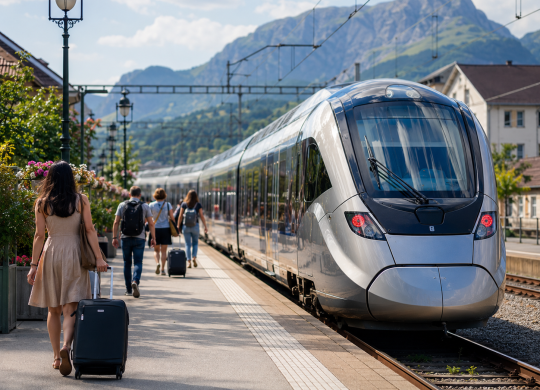
Interrail and Eurail passes allow you to travel by train in 33 European countries, but not all trips can be taken without additional fees. Find out how the Global Pass and the One Country Pass differ, how much they cost, and when you need to reserve a seat separately

When traveling between several European countries, you don’t have to buy a separate ticket for each train. Interrail and Eurail passes are valid on the networks of dozens of rail companies, including France’s SNCF, Spain’s Renfe, and Switzerland’s SBB, and cover 33 countries: from Portugal and the United Kingdom to Turkey and the Baltic states.
The cost of a Global Pass starts at €212, while a four-day pass for traveling around the Greek islands starts at €97. However, the price of the pass itself isn’t always the final cost: on high-speed, overnight, and the most popular trains, passengers often have to pay extra for a seat reservation.
The choice between Interrail and Eurail depends primarily on the traveler’s place of residence. Interrail is intended for citizens and residents of European countries, while Eurail is for those living in Asia, Africa, the Americas, or Oceania. In this article, we’ll break down the types of passes, current prices, key restrictions, and situations where a single ticket covering multiple countries can really help you save money.
In our previous article, we discussed how to choose safe accommodation, avoid mistakes, and book a hotel without unnecessary expenses.
Planning a trip abroad and want to protect yourself from unforeseen situations?
Travel insurance from Visit World will cover medical expenses, flight delays, and lost luggage in any country. Get a policy online in a few minutes and travel with confidence!

How do Interrail and Eurail rail passes work?
Interrail and Eurail are not tickets for specific trains, but passes that grant the right to travel on trains operated by partner rail companies in 33 European countries. Passengers plan their own itinerary, choose their travel dates, and add the desired trips to the Rail Planner mobile app.
The passes are valid on most regional, intercity, and international trains. However, they do not guarantee a seat on the train. For high-speed, overnight, and some international trains, you must make a separate reservation and pay the reservation fee.
Before boarding, passengers must:
- Activate the pass
- Enter their passport or other identification information
- Add a specific train to their itinerary
- Activate the travel day if using a flexible pass
- Show the QR code to the conductor along with their identification
One travel day covers travel from 00:00 to 23:59. During this period, you can take as many trains as you like, provided they are all part of the Interrail or Eurail network. For example, you can travel the Prague–Vienna–Budapest route in a single day using just one day of your pass.
A separate rule applies to night trains. If a passenger boards the train before midnight and does not make any transfers after 00:00, only the day of departure is typically counted. However, a seat, couchette, or sleeper compartment must still be reserved separately.
The pass does not always cover the metro, city buses, and regular public transportation. In some countries, it may include commuter trains, ferries, or special tourist routes, but these conditions must be checked separately for each carrier.
In our previous article, we reported that Germany will ban alcohol consumption at all train stations.
What is the difference between Interrail and Eurail?
Interrail and Eurail operate on the same principle and cover the same rail network. The difference lies in who each pass is intended for.
Interrail passes are available to citizens and legal residents of European countries. Eurail is intended for travelers who permanently reside outside of Europe—in Asia, Africa, North or South America, or Oceania.
When purchasing and validating your pass, you may need:
- A passport or other form of identification
- A document confirming your country of permanent residence
- Pass number or mobile ticket in the Rail Planner app
For Interrail holders, there is a restriction on travel within their country of residence. The Global Pass allows you to use the pass there for only two trips: one when traveling abroad and one upon return. These trips are not added to the package separately but are counted as regular travel days.
For example, a resident of Germany can use Interrail to travel from Berlin to Prague, and at the end of the trip, to return from another country to Germany. You cannot use the Global Pass for unlimited domestic travel within Germany throughout its entire validity period.
There is no such restriction for Eurail holders, as their country of residence is located outside the European network. The rest of the rules are the same: before boarding, you must add the trip to your itinerary, activate a travel day, and, if necessary, make a separate seat reservation.
Earlier, we reported that free public transportation has been introduced in Porto: who can use it.
In which countries are Interrail and Eurail valid?
The Global Pass covers the rail networks of 33 European countries. These include Austria, Belgium, Bosnia and Herzegovina, Bulgaria, the United Kingdom, Greece, Denmark, Estonia, Ireland, Spain, Italy, Latvia, Lithuania, Luxembourg, the Netherlands, Germany, Norway, North Macedonia, Poland, Portugal, Romania, Serbia, Slovakia, Slovenia, Turkey, Hungary, Finland, France, Croatia, the Czech Republic, Montenegro, Switzerland, and Sweden. The pass provides access to over 30,000 destinations within this network.
However, the “33 countries” label does not mean that the pass is automatically valid on every train or form of public transportation. Each country has its own list of participating rail companies and train types. Some private carriers, tourist routes, airport express trains, subways, and city buses may not be included in the price.
For example:
1. In Germany, the pass is valid on Deutsche Bahn trains, including ICE, IC, EC, and most regional services, but does not cover FlixTrain
2. In France, you can use TER, Intercités, and TGV INOUI, while OUIGO is not part of the network
3. In Italy, Trenitalia regional trains, InterCity, and Frecciarossa are available, but private Italo trains are not covered
4. In the United Kingdom, the pass is accepted by numerous national operators, though the London Underground and Heathrow Express require separate payment
5. In Norway, most major rail routes are included in the network, but the popular Flåm Railway may not be fully covered
Some ferries and buses also participate in the program, but the terms vary. In some cases, the pass covers the full cost of the trip; in others, it only provides a discount. Therefore, before planning your route, you should check the specific carrier in Rail Planner or the official list of partners.
If your trip covers multiple countries, you’ll need a Global Pass. A One Country Pass is valid only within the selected country or region and typically does not cover travel to that country from abroad or the return trip
.
In our previous article, we wrote about the most beautiful train routes for summer travel in Europe.
Global Pass: a pass for routes through multiple countries
The Global Pass is suitable for travel through two or more countries. It entitles you to use trains operated by partner carriers throughout the entire Interrail or Eurail network, but does not waive the requirement to reserve seats on certain trains.
There are two main types of Global Pass:
1. Flexi Pass – a set number of travel days within one or two months;
2. Continuous Pass – an unlimited number of consecutive travel days within a 15-day period, one, two, or three months.
The Flexi Pass is suitable for a route with several extended stops. For example, a seven-day pass valid for one month allows you to choose any seven dates on which you’ll travel by train. Days between trips are not deducted.
The Continuous Pass is ideal for a busy trip with frequent travel. During its validity period, you can travel daily with no limit on the number of trains, provided they are part of the partner network.
The starting price for the Global Pass is €212. The final price depends on:
- The number and format of travel days
- First or second class
- The passenger’s age
- The selected Interrail or Eurail type
- Promotions valid at the time of purchase
A discounted Youth Pass is available for travelers aged 12 to 27, and a Senior fare is available for passengers aged 60 and older. Children aged 4 to 11 can receive a free Child Pass when accompanied by an adult, a young traveler aged 18 or older, or a senior passenger. One accompanying adult may bring no more than two children with free passes.
It’s important to factor in additional costs. Most high-speed and overnight trains require a separate paid reservation. Therefore, before purchasing a Global Pass, you should plan your route in advance and add the cost of all required reservations to the price of the pass.
We previously reported that the European Commission has banned airlines from charging passengers additional fees after a ticket is purchased—even during a fuel crisis.
One Country Pass: a pass for traveling within a single country
The One Country Pass is suitable for a route within a single country or a specific region. Depending on the option chosen, passengers receive 3 to 15 travel days, which can be used within a single month.
This pass is convenient for a packed trip around a country with several stops. For example, it can be used for a route such as Milan–Florence–Rome–Naples or for travel between cities in Switzerland. On any given travel day, you may take multiple trains without using up additional days.
However, the One Country Pass has several important restrictions:
- It does not cover travel to the selected country from abroad
- The return trip from that country must also be paid for separately
- The Interrail One Country Pass cannot be purchased for your country of permanent residence
- Not all private rail operators are included in the program
- High-speed and overnight trains may require a separate reservation
The name “One Country Pass” does not always refer to just one country. For example, the Benelux Pass covers Belgium, the Netherlands, and Luxembourg, while the Scandinavian Pass may include several Northern European countries depending on the specific offer. A separate pass is available for the Greek islands, which is used primarily on ferries between the islands.
Prices for individual regional options start at approximately €97–103. The final price depends on the number of days, the passenger’s age, and the class of service.
Before purchasing, it’s worth comparing the One Country Pass with the price of regular tickets. If you’re planning only two or three trips, the carrier’s early-bird fares may be cheaper. A pass is usually more cost-effective when the itinerary includes many trips, tickets are purchased shortly before departure, or the passenger wants to change plans while traveling.
In our previous article, we reported that Europe is suspending biometric checks due to issues with the EES system.
Why do you have to pay extra after buying a pass?
Interrail and Eurail cover the trip itself but do not always include a specific seat in the car. On regional trains, an active pass is often sufficient, whereas reservations may be required for high-speed, international, and overnight trains.
A separate reservation is most often required for:
- TGV in France
- Frecciarossa and other high-speed trains in Italy
- AVE in Spain
- Eurostar between continental Europe and the United Kingdom
- Night trains with seats, couchettes, or sleeping compartments
- Certain international routes during peak season
The cost of a reservation depends on the country, train type, class, and route. For a standard seat, the surcharge may be a few euros, while a sleeper compartment on a night train will cost significantly more. Additional costs can be particularly high in France, Italy, and Spain, where high-speed trains actively use a mandatory reservation system.
Without a reservation, a passenger may be denied boarding, even if their Global Pass or One Country Pass is valid. Therefore, it’s not enough to simply add a trip in Rail Planner: if it’s indicated that a reservation is required, you must book a seat separately.
There are also trains where reservations are not mandatory but are recommended. In such cases, passengers can board without a reservation, but during peak hours, they risk not finding an available seat.
To minimize additional fees, you can:
- Choose regional trains more often
- Avoid the most popular high-speed routes
- Reserve seats as early as possible
- Check alternative trains that do not require reservations
- Compare the total cost of the pass with individual tickets
It is often these additional reservations that determine whether the pass is truly cost-effective. If the route consists mainly of high-speed trains with reserved seating, the final cost may turn out to be significantly higher than the pass’s starting price.
Plus Pass: Which Reservations Are Included in the Pass
The Plus Pass is designed for routes that frequently use high-speed trains with mandatory reservations. Unlike the standard Interrail or Eurail Pass, it allows you to make most available reservations through the official schedule at no additional cost.
With the Global Plus Pass, passengers also receive three credits. These are used to book certain popular trips that aren’t covered by the unlimited benefit: depending on the route, a single reservation may cost one or two credits. Before confirmation, the system shows whether the seat is covered by the pass and how many credits will be deducted.
The Plus Pass is available in several formats:
- Global Plus Pass for travel across multiple countries;
- Italy Plus Pass for rail routes in Italy;
- German Rail Plus Pass for travel in Germany.
The Italy Plus Pass and German Rail Plus Pass do not require separate credits: bookings made through the official schedule are processed at no additional charge. However, coverage depends on the specific carrier and trip.
The Plus Pass does not mean that absolutely all additional costs are eliminated. The following may be charged separately:
- Paper reservations that cannot be made online
- A sleeper berth or couchette on a night train
- Trips not listed in the official Plus Pass schedule
- Certain private, tourist, and international trains
- Reservations made after all available credits have been used
For example, a basic trip on a night train may be included in the pass, but selecting a couchette or a private compartment will require an additional fee. Similarly, not all special panoramic and cross-border routes can be booked using credits.
The Plus Pass is worth considering if your itinerary includes many high-speed trains and you want to control your reservation costs in advance. For travel primarily on regional trains, the standard Pass may be more cost-effective, as reservations are often not required at all on such trains.
Popular Routes and Regional Passes
Some One Country Passes cover not just one country, but an entire region. They’re convenient for routes where several countries are located close to one another, and travel between capitals takes just a few hours.
Benelux Pass: The Netherlands, Belgium, and Luxembourg
The Benelux Pass allows you to use the rail network in all three countries. Prices start at €103 for three days of travel within a single month.
One of the most popular routes is Amsterdam–Brussels. The trip by high-speed train takes approximately 2 hours and 43 minutes. You can extend the route to Luxembourg or add short stops in Antwerp, Ghent, Bruges, or Rotterdam.
The pass is a good value if you plan to spend at least three full days with multiple trips within a month. For the Amsterdam–Brussels route alone, a separate ticket purchased in advance may be cheaper.
Nordic Pass: Denmark, Norway, Sweden, and Finland
The Nordic Pass covers four countries in Northern Europe. The starting price is €164. This pass is suitable for a route through Copenhagen, Oslo, Stockholm, and Helsinki.
When planning your trip, keep in mind that not all segments between countries can be traveled exclusively by train. For example, some routes to Finland may require ferries or additional transfers. Mandatory reservations may also apply on overnight and popular intercity trains.
Greek Islands Pass
The Greek Islands Pass is primarily designed for travel by ferry across the Aegean Sea. Prices start at €97 for four days of travel within a single month.
Before purchasing, be sure to check the list of ferry companies, available islands, and reservation rules. The pass does not grant unlimited access to all ferries in Greece: certain routes, port fees, cabins, or premium seats may incur additional charges.
Regional passes should be evaluated based on the full cost of the route. You’ll need to add the cost of seat reservations, ferries, city transit, and tickets for sections not included in the partner network to the pass price.
No matter how well thought-out your itinerary is, there is always room for force majeure when traveling. Unexpected medical expenses, transportation delays, or problems with luggage can ruin your plans and budget. Travel insurance helps you avoid unnecessary worries in such situations. You can apply for a travel insurance policy for a specific trip online at Visit World - quickly and without unnecessary bureaucracy!
Take out a policy online at Visit World and enjoy your trip without any unnecessary worries!
We remind you! Popular European tourist destinations are becoming increasingly crowded, so travelers are looking for alternatives without the crowds. In 2026, attention is turning to countries that remain off the beaten path but offer unique experiences, affordable prices, and an authentic atmosphere. Read more about 5 European countries that are rarely visited by tourists.
Products from Visit World for a comfortable trip:
Travel guide for 200 countries;
Legal advice from a local specialist on visa and migration issues;
Travel insurance around the world (please select the country of interest and citizenship to receive services);
Medical insurance all over the world.
We monitor the accuracy and relevance of our information, so if you notice any errors or inconsistencies, please contact our hotline
Frequantly
asked questions
Can you use Interrail or Eurail without a seat reservation?
Which is better: Interrail or Eurail?
Can I use an Interrail Pass in my country of residence?
Are night trains included in the pass price?
Can you ride subways and buses with an Interrail or Eurail pass?
When is it better to buy individual tickets instead of a pass?
Recommended articles
3 min
Transport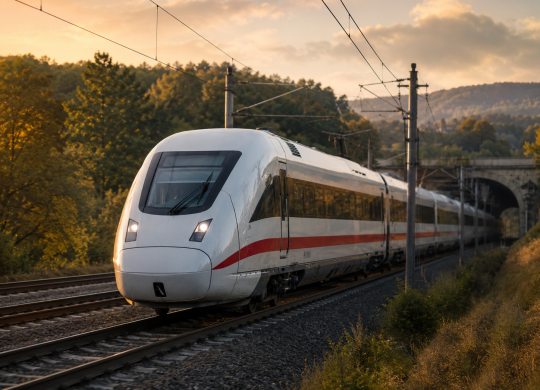
Europe is launching a new ICE high-speed international train that will connect six popular cities in Germany and Belgium. The route will begin service in the fall of 2026 and will allow tourists to travel quickly between Cologne, Aachen, Liège, Leuven, Brussels, and Antwerp without transfers. We’ll tell you how much tickets will cost, how long the trip will take, and why this route could become one of the most interesting options for traveling through Europe in 2026
18 May. 2026
More details2 min
Transport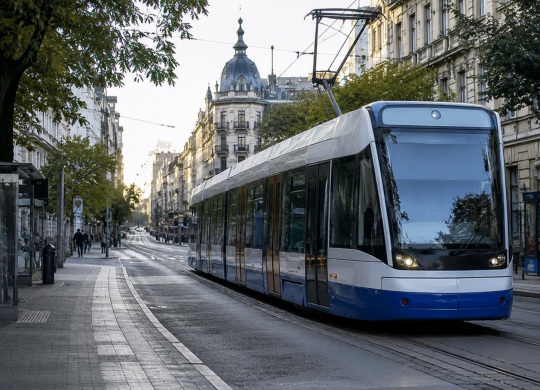
How much does public transportation cost in European capitals: a price comparison
The cost of public transportation in Europe continues to rise, but the difference between capital cities remains significant. While a monthly pass in Bucharest or Budapest costs less than 20–25 euros, transportation expenses in London can exceed 250 euros per month. Prices depend not only on income levels but also on the transportation system, subsidies, and the city’s popularity among tourists. Learn more about how much public transportation costs in various European capitals and where it remains the most affordable
21 May. 2026
More details2 min
Transport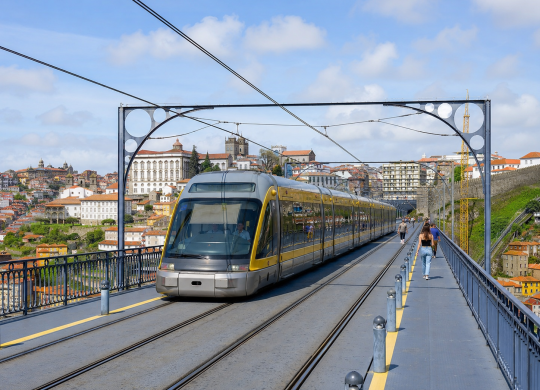
Free public transportation has been introduced in Porto: who is eligible to use it
Starting July 10, 2026, residents of Porto can use the metro, buses, commuter trains, and other forms of public transportation free of charge throughout the entire metropolitan area. To do so, you must have a Cartão Porto municipal card and activate the appropriate pass. Learn more about the program’s terms and conditions, available routes, and the rules for obtaining free travel
17 Jul. 2026
More details2 min
Popular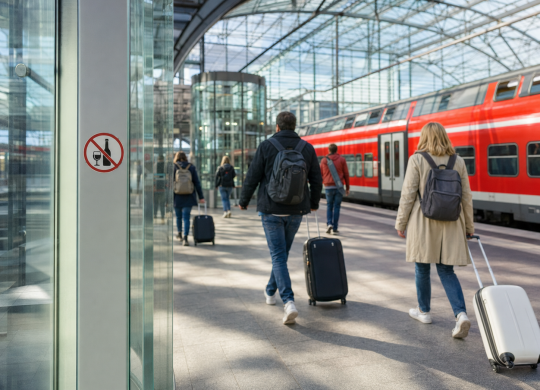
Germany to Ban Alcohol Consumption at All Train Stations: When Will the New Rule Take Effect?
Deutsche Bahn is implementing a ban on drinking alcohol at all 5,400 train stations across the country. Learn more about when the rule takes effect, any exceptions, and the consequences for violators
24 Jul. 2026
More detailsAll materials and articles are owned by VisitWorld.Today and are protected by international intellectual property regulations. When using materials, approval from VisitWorld.Today is required.