

Filming Locations for Christopher Nolan’s “Odyssey”: Film Locations for Your Next Journey
Table of contents
- Greece: The Cyclops’ Cave and Odysseus’ Palace
- Italy: Favignana as Ithaca
- Morocco and Western Sahara: Troy and the Island of Calypso
- Scotland: Kirkie Island and the Shipwreck Coast
- Iceland: Black beaches as the realm of the dead
- Draken Harald Hårfagre: The Real Ship from *Odyssey*
- How to Plan a Trip to the “Odyssey” Locations?
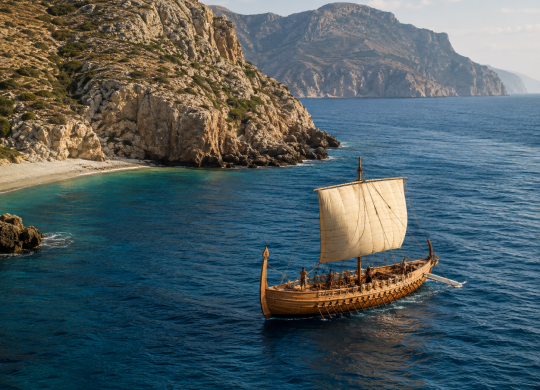
To film Odysee, Christopher Nolan’s team used castles, caves, islands, deserts, and black sand beaches in six countries. Most of these locations are open to tourists and could serve as the basis for a separate movie-themed road trip. Learn more about the film’s locations in Greece, Italy, Morocco, Scotland, Iceland, and Norway

Christopher Nolan turned Odysseus’s journey into a large-scale film expedition. The film crew spent 91 days shooting in Greece, Italy, Morocco, Scotland, Iceland, and Norway. The Sicilian island of Favignana served as Ithaca, Troy was recreated among the clay fortifications of Aït-Ben-Haddou, and the realm of the dead was filmed against the backdrop of Iceland’s black volcanic landscapes.
The film, starring Matt Damon as Odysseus, was released on July 17, 2026. A significant portion of the scenes were shot in real castles, caves, forests, and along the coast. Full-scale ships were used for the sea scenes, and crowd scenes were filmed outdoors under natural lighting. Most of the locations are accessible to tourists, though some are in remote areas or require special preparation for the trip. Here’s where *The Odyssey* was filmed and how you can see these places in person.
In our previous article, we wrote about 5 European countries that tourists are hardly visiting in 2026.
Discovering a new country for yourself without the help of travel agents or intermediaries is very simple. All you need is a checklist or a “Travel Guide” from Visit World – a step-by-step guide with all the key information for your trip.
The guide contains information on visa requirements, visa-free entry rules, permitted periods of stay and a list of required documents.
After completing the form, the guide will be sent to your email in PDF format in just a few minutes.
Choose a country and get your travel guide today.

Greece: The Cyclops’ Cave and Odysseus’ Palace
The Greek portion of *The Odyssey* was filmed in the Peloponnese in March and April 2025. The Hellenic Film Commission has officially confirmed five locations: Nestor’s Cave, the beaches of Voidokilia and Almirolaka, the castle of Methoni, and Acrocorinth. The Greek Ministry of Culture granted permission for filming on the condition that regulations for the protection of historical monuments and natural areas were followed.
Voidokilia and Nestor’s Cave
The horseshoe-shaped beach at Voidokilia was featured in the scenes depicting the arrival of Odysseus’s fleet. Nestor’s Cave, situated on a hill overlooking the bay, served as the lair of the Cyclops Polyphemus. According to Greek mythology, this is where Nestor, king of Pylos, kept his livestock.
Voidokilia is located approximately 12 km from Pylos. You can drive to the beach, but you’ll have to walk the last stretch. The climb to the cave is rocky and offers almost no shade, so you’ll need closed-toe shoes, water, and sun protection. Don’t plan to visit the beach just for a quick photo stop: nearby are the Gialova Lagoon, the ruins of Paleokastro, and scenic trails.
Learn more about the 10 most beautiful places in the Balkans for a budget vacation by following the link.
The Castle of Methoni and Almirolaka Beach
The Venetian Castle of Methoni served as Odysseus’s palace on Ithaca in the film. Scenes depicting the fleet’s departure for the Trojan War were filmed here, as well as scenes featuring Penelope and Telemachus awaiting the ruler’s return. The fortress occupies a cape on the southwestern coast of the Peloponnese and is connected to the mainland by a stone bridge. Its most famous feature is the octagonal Burdzi sea tower.
Methoni is located about 12 km south of Pylos. You should set aside at least an hour and a half to explore the complex. There are few shaded areas inside, and the stone pavement is uneven in places. Before your trip, be sure to check the seasonal operating hours of the archaeological site.
The wild beach of Almirolaka was used for large-scale scenes featuring hundreds of actors. Here, the gathering of Greek warriors was filmed in the open sea, with natural waves and wind. For certain scenes, the crew built house sets, which were then burned down during filming.
In our previous article, we discussed, which destinations topped the ranking of the quietest and noisiest countries in the world.
Acrocorinth
Acrocorinth served as the setting for Agamemnon’s return to Mycenae. The fortress towers on a cliff above ancient Corinth and commands the approaches to the Peloponnese. Its fortifications were built up over many centuries: elements from the ancient, Byzantine, Frankish, Venetian, and Ottoman periods have been preserved here.
Acrocorinth is located about 85 km from Athens. The most convenient way to get there is by car via Corinth, combining a visit to the fortress with a tour of the archaeological site of Ancient Corinth. Admission to Acrocorinth is free, and you should allow up to two hours for a full tour. Inside, there are many steep climbs and uneven stones, so it’s best to visit on a cool morning.

Italy: Favignana as Ithaca
The main Italian location was the island of Favignana, located west of Sicily as part of the Egadi Islands. In the film, it served as Ithaca, the homeland of Odysseus. The island is predominantly limestone. Its coastline features cliffs, former quarries, grottoes, and small coves.
The Fortress of Santa Caterina, perched atop the 314-meter-high mountain of the same name, served as Odysseus’s palace. Scenes featuring Penelope, Telemachus, and the suitors who had taken over the absent ruler’s home were filmed here. There is no road leading to the fortress: the climb up the rocky, winding path takes about an hour one way. There is almost no shade along the route, so it’s best to set out early in the morning during the summer.
Other locations on Favignana include:
- Bue Marino – a rocky coastline with caves and traces of tuff quarrying
- Cala Rossa – one of the island’s most famous coves with crystal-clear water
- Favignana Port—the main arrival point and a convenient base for exploring the island
- The former Florio factory—a museum dedicated to the history of tuna fishing and processing
You can reach Favignana by ferry or high-speed boat from the Sicilian port of Trapani. The crossing usually takes 30 minutes, depending on the type of vessel. Once on the island, it’s convenient to get around by bicycle, e-bike, or scooter. A car isn’t always necessary, as the distances between the main bays are short.
The best times to visit are May, June, September, or early October. In July and August, the island is hot, accommodations are more expensive, and popular coves are crowded. Ferry schedules depend on the season and weather, so it’s a good idea to check tickets and return times in advance.
Some scenes were filmed on the Aeolian Islands north of Sicily. The Faraglioni di Lipari sea cliffs served as the on-screen “Wandering Rocks” through which Odysseus’s ship was supposed to pass. It’s difficult to combine Favignana and the Aeolian Islands into a short trip: they’re located on opposite coasts of Sicily. For such an itinerary, you’ll need to set aside at least a week and plan for a trip across the island.

Morocco and Western Sahara: Troy and the Island of Calypso
For the Moroccan portion of the shoot, the crew utilized four distinct types of landscapes: the adobe architecture of Aït Ben Haddou, the Atlantic coast of Es-Suweira, the palatial interiors of Marrakesh, and the White Dune near Dakhla. It’s impossible to visit all these locations within a single short itinerary: Dakhla is located more than 1,000 km south of the main Moroccan filming locations.
Aït Ben Haddou as Troy
The fortified settlement of Ait Ben Haddou served as the basis for the on-screen Troy. Near the historic ksar, the crew erected temporary sets depicting the city and several wooden Trojan horses about 10 meters tall. This is where they filmed the streets of the city engulfed in flames and the scenes following the end of the ten-year siege.
After filming, the sets were dismantled, so tourists won’t see the cinematic Troy in its finished form. The ksar itself—a complex of earthen houses, towers, and defensive walls—has been preserved. UNESCO added Aït-Ben-Haddou to the World Heritage List in 1987. Previously, *Gladiator*, *Lawrence of Arabia*, and select scenes from *Game of Thrones* were filmed here.
Aït-Ben-Haddou is located approximately 30 km from Ouarzazate and 180 km from Marrakesh. The drive from Marrakech through the Atlas Mountains takes about four hours one way, so it’s best to visit the site after staying overnight in Ouarzazate or in the village itself. You can only explore the ksar on foot. In the summer, daytime temperatures often exceed 35°C, so the best times to visit are in the morning or late afternoon.
In our previous article, we wrote about the TOP 5 uncrowded Mediterranean resorts where you can relax without lines or noise.
Essaouira and Marrakech
The discovery of the Trojan Horse, its transport to the city, and the departure of Odysseus’s ships after the fall of Troy were filmed on the wide beaches of Essaouira. The Atlantic coast and the stone defensive walls also made it into the shots.
Essaouira is located approximately 190 km from Marrakech. The trip by bus or car takes about three hours. The city is known for its strong winds, so even during the warmer months, you’ll need a light jacket for an evening stroll along the coast.
The interiors of Menelaus’s palace were filmed in Marrakesh. The Moroccan and Greek locations complemented each other: exterior scenes of the residence were shot among the fortresses of the Peloponnese, while some of the interior scenes were filmed in Marrakesh. The specific palace used by the crew is not a separate, permanent tourist attraction.
The main sites can be combined into a 4–5-day itinerary:
- Two days in Marrakech
- One day in Essaouira
- Drive through the Atlas Mountains
- Ait Ben Haddou and Ouarzazate with an overnight stay
Learn more about the best cities for a fall getaway under €100 a day by following the link.
Dakhla and the White Dune
The White Dune near Dakhla became the island of Ogygia, where the nymph Calypso held Odysseus captive for seven years. It is a sandy hill on the shore of a lagoon, surrounded by water at high tide. Filming in the Dakhla area lasted several days.
Geographically, Dakhla is located in the Western Sahara. The UN includes it on the list of non-self-governing territories, and its political status remains unresolved. Most of the region is controlled by Morocco, while the Polisario Front advocates for the independence of Western Sahara. Filming in Dakhla drew criticism from Sahrawi activists.
Dahla should not be added to a typical road trip through Marrakesh and Ouarzazate. The most practical option is a separate flight. Before traveling, be sure to check the latest official recommendations, insurance coverage, and travel regulations for the region.

Scotland: Kirkie Island and the Shipwreck Coast
Filming in Scotland took place along the Moray Firth coast in the Moray and Aberdeenshire regions. Local authorities have officially confirmed four main locations: Findlater Castle, Sunnyside Beach, Calbin Forest, and the Calbin Sands dunes. The harbors of Bucky and Burghead were used to moor ships and provide technical support for the filming.
Findlater Castle and Sunnyside Beach
The ruins of Findlater Castle became the island of Eea, where the sorceress Circe lived. This is where Odysseus’s encounter with Circe and the transformation of his warriors into pigs were filmed. The castle stands on a rocky outcrop about 15 meters above the sea. The fortress has existed since at least the 13th century, and its current ruins date primarily from the 15th–16th centuries.
Climbing directly onto the ruins is dangerous due to unstable structures, steep cliffs, and the lack of fencing. The castle should be viewed from the coastal trail and designated viewing points. The most convenient starting points for a visit are the villages of Callan, Sandend, or Portsoy.
Sunnyside Beach is located below the castle. Scenes were filmed here in which Odysseus and his crew wash ashore after a shipwreck.
There is no road access to the beach. From Sandend, you’ll need to walk about 1.5 km along the coastal trail.
For this route, you’ll need:
- Waterproof shoes with good traction
- A windbreaker, even in summer
- A supply of water and food
- An offline map
- Check the weather forecast, tides, and wind speed
In our previous article, we wrote about the TOP 5 uncrowded Mediterranean resorts where you can relax without lines or noise.
Calbin Forest and Calbin Sands
The Calbin pine forest became the territory of the Laestrygonians—giant cannibals who destroyed nearly the entire fleet of Odysseus. The battle scenes were filmed among the trees using natural lighting. To emphasize the difference in height, tall, burly actors were cast as the Laestrygonians, while Odysseus’s warriors were played by shorter, slimmer performers.
Calbin is located on the coast north of the town of Forres, about an hour’s drive from Inverness. The area encompasses a pine forest, sand dunes, marshes, and the coastline. Several hiking and biking trails of varying lengths have been established here. Some of the trails may be muddy after heavy rains.
Bucky Harbor and Full-Scale Ships
Baki served as the main port base for the Scottish phase of production. Replicas of ancient Greek ships with wooden hulls, oars, and sails were stationed here. Among them was the 35-meter Draken Harald Hårfagre—the largest modern Viking drakkar, which served as Odysseus’s warship in the film.
The harbors of Baki and Burghead themselves served primarily a logistical function. No permanent sets remained here after production wrapped up. However, both ports can be included in a coastal road trip along with Callan, Sunnyside, and Findlater. Two days are enough to explore the main Scottish locations.

Iceland: Black beaches as the realm of the dead
Filming in Iceland lasted about ten days in June 2025. For the realm of Aida, the crew used black volcanic plains, sea caves, glacial rivers, and a desolate coastline. The main locations were Hjerlaevshodi, the Markarfloot River area, Landeyjahápen Harbor, and the Snæfellsnes Peninsula. Some scenes are also associated with Reynisfjara Beach.
Main Icelandic Locations:1. Hjellevshövdi—a volcanic mountain surrounded by a black sand plain. Nearby is Gigjagja Cave, known as “Yoda’s Cave”2. Reynisfjara—a black sand beach with basalt columns and sea cliffs, which was used for otherworldly scenes3. Markarflot—a glacial river in southern Iceland with a wide valley and dark alluvial plains
4. Landeyjahæpen—a harbor opposite the Westman Islands, which also served as the location for the sea-based scenes
5. Snæfellsnes—a peninsula featuring lava fields, cliffs, black sand beaches, and the Snæfellsjökull volcano
Hjærleifshöfði, Reynisfjara, Markarfjörður, and Landeyjahæpn can be included in a route along the southern coast. They are located along or near the Ring Road between Reykjavík and Vík. You’ll need a car and at least two days for this trip if you plan to stop at the Seljalandsfoss and Skógafoss waterfalls.
Snæfellsnes lies in the opposite direction, west of Reykjavík. It’s not practical to include it in a one-day itinerary along the south coast. It’s best to set aside one or two separate days for the peninsula and spend the night in Stikkishólmur, Grundarfjörður, or Arnarstapi.
Learn more about the 10 safest islands in the world in 2026 by following the link.
Why does Reynisfjara require special caution?
Reynisfjara is one of Iceland’s most dangerous tourist spots. So-called “sneak waves” can suddenly reach much further up the shore and knock people off their feet. Strong currents can quickly sweep a person out into the open sea.
On the beach, you must:
- Pay attention to warning signs and restricted areas
- Do not approach the water just to take a photo
- Do not turn your back to the ocean
- Do not walk onto the sea cliffs during high tide
- Keep children close by
- Leave the beach immediately if the weather worsens
Before departing, check road and weather conditions on the official websites of SafeTravel Iceland and the Icelandic Road and Coastal Administration. Even in summer, strong winds, fog, or heavy rain can make certain sections of the route dangerous. In winter, the trip requires a four-wheel-drive vehicle, experience driving on slippery roads, and consideration of the short daylight hours.

Draken Harald Hårfagre: The Real Ship from *Odyssey*
Norway is often included in the list of countries associated with the filming of *Odyssey*. However, it is more accurate to speak not of a specific on-land location, but of the origin of the film’s main ship.
The ship featured in *The Odyssey* was the Draken Harald Hårfagre—a 35-meter wooden vessel built in Haugesund, Norway, using traditional techniques. It is a fully seaworthy vessel with an oak hull, a mast, a sail, and authentic rigging. During the filming, it was crewed by an international team of sailors, some of whom also appeared on screen.
The Draken was modeled after ships from the Viking Age, which began long after the events of Homer’s epic. Therefore, the vessel should not be considered an exact reconstruction of an ancient Greek ship. For Nolan, what mattered most were the realistic scale, the natural movement on the waves, and the ability to film the actors on the open sea without replacing the ship with a digital model.
After the premiere, the ship arrived in Oslo, where it was temporarily opened to visitors. The Draken does not have a regular tourist schedule: the ship conducts expeditions and participates in special events. Before your trip, be sure to check its current location and the availability of tours on the official website of the Draken Harald Hårfagre.
Learn more about Europe’s most amazing natural sites by following the link.
How to Plan a Trip to the “Odyssey” Locations?
It’s impossible to cover all the filming locations in a single short vacation. They’re located in different parts of Europe and North Africa. The best option is to choose one country or a geographically close group of locations.
1. Peloponnese, 3–4 days. You can start your itinerary in Kalamata, then visit Voidokilia Beach, Nestor’s Cave, Almirolaka, and the Metoni Castle. Acrocorinth will require a separate day and a car.
2. Favignana, 2–3 days. Ferries and high-speed boats run to the island from Trapani. You can explore the main sights by bike or scooter: the port, Cala Rossa, Bué Marino, and Santa Caterina Castle. The Aeolian Islands are located on the other side of Sicily, so it’s best to include them in a separate part of your itinerary.
3. Morocco, 4–5 days. It’s convenient to combine a visit to Marrakech with trips to Aït Ben Haddou and Essaouira. The distances between the cities are considerable, so it’s more practical to rent a car or book a transfer. Dakhla lies more than a thousand kilometers to the south and requires a separate flight.
4. Northern Scotland, 2–3 days. Inverness, Elgin, or Baki can serve as your base. Be sure to include Findlater Castle, Sunnyside Beach, and Calbin Forest in your itinerary. Public transportation in this part of the country is limited, so a car will make your trip much easier.
5. Iceland, 4–6 days. Destinations along the southern coast can be combined into a road trip through Gjörleifsgjörð, Reynisfjara, Markarfjöt and Landeyjahöfn. Allow an additional one or two days for the Snæfellsnes Peninsula.
The best time to visit most European destinations is May, June, September, and early October. There are fewer tourists during these months than in the height of summer, and the temperatures are ideal for long walks. In Scotland and Iceland, the weather can change quickly regardless of the season. Before setting out, be sure to check road conditions, the marine forecast, and any warnings issued by local authorities.
Are you planning a trip and want to prepare without unnecessary stress? Visit World's travel guide contains key tips for travelers: rules of entry and stay, current requirements for tourists, basic safety, transportation and accommodation. Such a guide will help you quickly navigate a new country, avoid common mistakes during your trip, and plan your route taking into account practical nuances that often go unnoticed by tourists.
We remind you! Popular tourist destinations can be a trap. We have already told you which 8 places in the world Fodor’s advises to avoid in 2026 due to overtourism, environmental risks and social tension – and what alternatives to choose instead.
Products from Visit World for a comfortable trip:
Travel guide for 200 countries;
Legal advice from a local specialist on visa and migration issues;
Travel insurance around the world (please select the country of interest and citizenship to receive services);
Medical insurance all over the world.
We monitor the accuracy and relevance of our information, so if you notice any errors or inconsistencies, please contact our hotline
Frequantly
asked questions
Where was Christopher Nolan’s film *Odysee* shot?
Which island served as Ithaca in “Odyssey”?
Was the film shot on the actual island of Ithaca?
Where was the cave of the Cyclops Polyphemus filmed?
Can you visit Odysseus’s ship?
Recommended articles
3 min
Events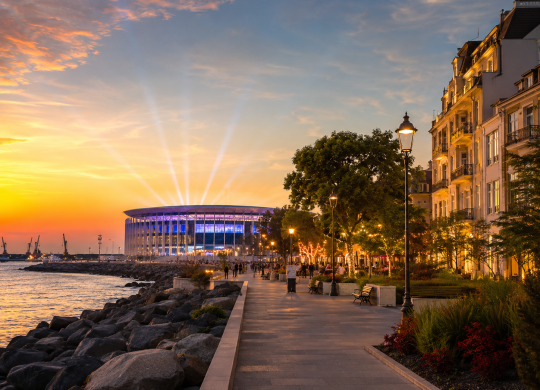
Eurovision 2027 in Burgas: Where to Stay and What to See in the City
In May 2027, Burgas, Bulgaria, will become one of Europe’s leading music capitals: it is here that the two Eurovision semifinals and the final will take place. Find out when the contest will be held, where to look for accommodations, how to get to the city, and which places to include in your itinerary
22 Aug. 2026
More details3 min
Travels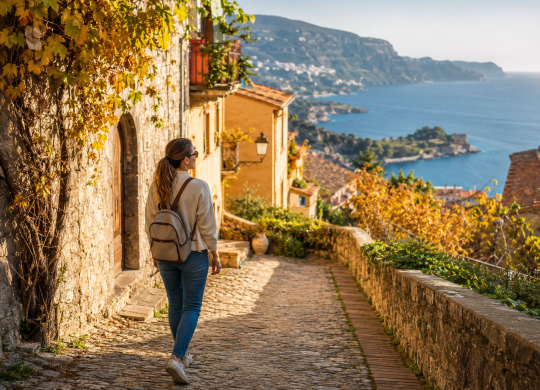
The Best Places in Europe for a Fall Trip: Top Spots and Destinations
This fall in Europe, you can extend the beach season in Cyprus and the Canary Islands, explore the vineyards of Tuscany, or visit lakes and medieval towns. This selection includes 15 destinations with varying weather conditions, budgets, and vacation styles. Learn more about the best places to travel in Europe this fall
05 Sep. 2026
More details3 min
Events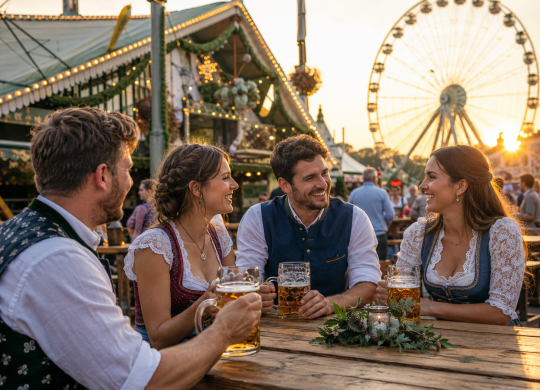
Oktoberfest 2026 in Munich: Dates, Program, Prices, and Rules for Tourists
Oktoberfest 2026 will kick off in Munich on September 19 and run for 16 days. This year, a liter of festival beer will cost up to 15.90 euros, and the most popular tents may fill up before noon. Learn more about the festival program, table reservations, admission rules, and travel costs
01 Sep. 2026
More details3 min
Travels
The Best Cities for Nightlife in 2026
Time Out, in partnership with Intrepid Travel, has compiled a ranking of the nightlife capitals for 2026. Learn more about the 10 cities with the most vibrant nightlife
31 Aug. 2026
More detailsAll materials and articles are owned by VisitWorld.Today and are protected by international intellectual property regulations. When using materials, approval from VisitWorld.Today is required.