

Where to Go on Vacation in October: The Best Destinations
Table of contents
- 1. Cyprus – for warm seas and peaceful beaches
- 2. The Antalya Coast, Turkey – for an all-inclusive vacation
- 3. Tenerife, Spain – for consistent warmth in the Canary Islands
- 4. Crete, Greece — for beaches, history, and road trips
- 5. Valletta and the Coast, Malta — for the Sea and Excursions
- 6. Madeira, Portugal – for hiking and ocean views
- 7. Sicily, Italy — for gastronomy and road trips
- 8. Andalusia, Spain – for a warm city break
- 9. Marrakesh, Morocco – for culture and an Eastern atmosphere
- 10. Sharm el-Sheikh and Hurghada, Egypt – for warm seas
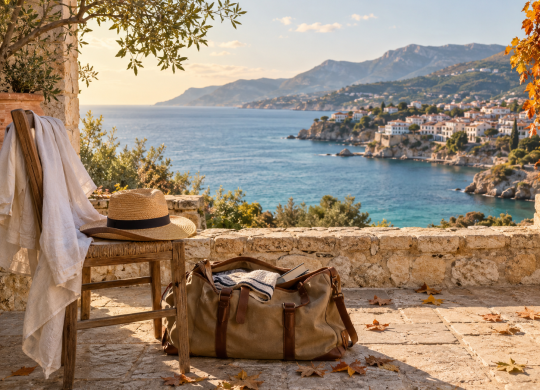
October offers plenty of travel opportunities: from beach vacations by the warm sea to island hikes and strolls through historic cities without the summer heat. Learn more about ten destinations worth considering for a mid-fall vacation

October doesn’t mark the end of the vacation season; it simply changes the travel map. While it’s getting cooler in Central and Northern Europe, you can still go swimming in Cyprus, the Canary Islands, Turkey, and Egypt. In Madeira, the ideal season for hiking begins, and you can finally explore Europe’s southern cities without the sweltering heat.
At the same time, you shouldn’t choose a destination based solely on the average air temperature. In October, sea temperature, precipitation, the resort’s location, and daylight hours are all important factors. We’ve compiled a list of ten different destinations and explained where to go for a beach vacation, active adventures, culinary experiences, or a packed sightseeing itinerary.
In our previous article, we wrote about 5 European countries that tourists are hardly visiting in 2026.
Discovering a new country for yourself without the help of travel agents or intermediaries is very simple. All you need is a checklist or a “Travel Guide” from Visit World – a step-by-step guide with all the key information for your trip.
The guide contains information on visa requirements, visa-free entry rules, permitted periods of stay and a list of required documents.
After completing the form, the guide will be sent to your email in PDF format in just a few minutes.
Choose a country and get your travel guide today.

1. Cyprus – for warm seas and peaceful beaches
Cyprus remains one of the most reliable European destinations for a beach vacation in October. According to the country’s official tourism portal, the water temperature in the open sea exceeds +22 °C from June through November. The average daytime temperature on the island in October is around +27 °C, and the nighttime temperature is approximately +17 °C.
For a classic beach vacation, Ayia Napa and Protaras are your best bets. This is where the sandy beaches of Nissi Beach, Makronissos, and Fig Tree Bay are located. Larnaca is a good choice for those who value proximity to the airport and urban amenities. Paphos is worth choosing for those who want to combine the beach with archaeological sites and road trips around the island.
At the beginning of the month, the weather usually feels more like summer. By the end of October, the likelihood of brief showers increases, and the evenings grow cooler. For your vacation, it’s best to pack a light jacket and check whether your chosen hotel, beach club, and water attractions will remain open until the end of the season.
Cyprus is ideal for families with children, couples, and travelers who want to relax by the sea without a long flight to tropical destinations. Renting a car will allow you to explore the Akamas Peninsula, the Troodos Mountains, and small villages, but keep in mind that they drive on the left.
Learn more about 10 European destinations for day trips by following the link.
2. The Antalya Coast, Turkey – for an all-inclusive vacation
October on the Turkish Riviera is still part of the beach season. The average high temperature in Antalya is around +26…+27 °C, and at night the air cools down to +15…+18 °C. The Mediterranean Sea retains the heat accumulated over the summer and is usually warmed to +24…+25 °C.
The most stable weather is usually seen in the first half of the month. After mid-October, short but intense downpours and thunderstorms are possible. They rarely last all day, but they can temporarily disrupt boat tours or close the beach due to high waves. According to climate data, approximately 70–90 mm of precipitation falls during the month.
Resorts along the Antalya coast differ not only in price but also in the type of vacation experience they offer:
1. Lara and Kundu are located closest to Antalya Airport. These areas are dominated by large all-inclusive hotels with their own sandy beaches
2. Belek is known for its family-friendly resorts, golf courses, and spacious hotel complexes. The transfer from the airport usually takes about 30–45 minutes
3. Side combines gently sloping beaches with ancient ruins, a promenade, and an old town. The drive from the airport is longer, so it’s worth checking the duration of the group transfer
4. Kemer is surrounded by the Taurus Mountains and is better suited for nature excursions. Most of the beaches here are pebbly, and the sun sets earlier behind the mountains
5. Alanya usually stays warm longer but is located the farthest from Antalya Airport. For this resort, you can also check flights to Gazipasa Airport
October allows you to combine a beach vacation with excursions that are difficult to endure in the summer due to the heat. From Antalya, you can visit ancient Perge, the Aspendos Theater, and the mountain town of Termessos. In the city itself, be sure to see the historic Kaleici district, Hadrian’s Gate, the Old Harbor, and the Düden Waterfalls.
Before booking a hotel, be sure to check not only whether there are pools and a water park but also their operating dates. Toward the end of the season, some outdoor restaurants, kids’ clubs, and water slides may close. The water in unheated pools can also be significantly colder than the sea.
Learn more about the 10 most beautiful places in the Balkans for a budget vacation by following the link.
3. Tenerife, Spain – for consistent warmth in the Canary Islands
Tenerife is ideal for those who want to extend their summer but aren’t counting on a scorching tropical sea. The average air temperature in October is +23.4 °C. The month averages 222 hours of sunshine and only about 19 mm of rainfall.
For a beach vacation, it’s best to choose the southern part of Tenerife. Costa Adeje, Los Cristianos, and Playa de las Américas typically get more sun than the northern part of the island. The Atlantic Ocean warms up to about +23…+24 °C in October, though the water may feel cooler due to waves and wind.
Tenerife offers more than just beaches. In a single trip, you can explore the volcanic landscapes of Teide National Park, hike the trails of the Anaga mountain range, visit the Masca Gorge, and go on a whale-watching tour.
Due to the difference in elevation, the temperature near the volcano can be 10–15 degrees lower than on the coast, so you’ll need warm clothing even on a sunny day.
A car makes getting around the island much easier, but parking lots fill up quickly on popular routes. Access to some trails and the summit of Teide must be booked in advance. It’s also worth keeping an eye out for warnings about strong winds, high waves, and kalima—dust from the Sahara that sometimes reduces visibility and air quality.

In our previous article, we discussed, which destinations topped the ranking of the quietest and noisiest countries in the world.
4. Crete, Greece — for beaches, history, and road trips
Crete in October is ideal for tourists who don’t want to spend their entire vacation at a hotel. Daytime temperatures along the coast generally range from +22 to +25 °C, while the sea is around +23 °C. At the beginning of the month, you can still enjoy a full-fledged beach vacation, but after mid-October, the weather becomes more unpredictable. The likelihood of rain, wind, and waves increases.
Crete stretches approximately 260 km from west to east, so it’s difficult to explore the entire island in a single short trip. Distances on the map may seem short, but mountain roads, winding roads, and driving through towns increase travel time. For example, a drive between Heraklion and Chania takes about two hours without long stops.
You should choose your accommodations based on your planned itinerary:
1. Chania is a good base for exploring the western part of the island. From here, it’s easy to reach the beaches of Elafonisi, Falasarna, and the Balos Lagoon.
2. Rethymno is located roughly halfway between Chania and Heraklion. The city is known for its old quarter, the Venetian fortress Fortezza, and its long beach.
3. Heraklion is worth choosing for the Palace of Knossos, the Archaeological Museum, and convenient transportation links.
4. Agios Nikolaos and Elounda offer a more peaceful resort vacation on the eastern part of the island. Trips to the island of Spinalonga are organized from here.
5. Plakias, Agia Galini, and Ierapetra on the southern coast often have milder weather, but it’s harder to get there without a car.
Greece’s official tourism portal highlights the Samaria Gorge, Balos Lagoon, and Elafonisi Beach as among Crete’s top natural attractions. However, October marks the end of the season for some of these destinations. The Samaria Gorge may be closed due to rain, the risk of rockfalls, or other adverse conditions. The number of boat tours to Balos and Spinalonga is also gradually decreasing.
For swimming, it’s best to look for coves sheltered from the wind and check sea conditions in the morning. Large open beaches on the northern and western coasts can be rough. If the beach is unguarded and lifeguards have already wrapped up for the season, it’s especially important to pay attention to flags, currents, and warnings from local authorities.
In our previous article, we wrote about the TOP 5 uncrowded Mediterranean resorts where you can relax without lines or noise.
5. Valletta and the Coast, Malta — for the Sea and Excursions
Malta in October is ideal for travelers who want to combine swimming with a rich cultural program. The average daytime temperature is approximately 24–25°C, and the nighttime temperature is around 18°C. The sea remains warm, typically reaching 23–24°C, so the beach season isn’t over yet.
At the same time, October is one of the wetter months of the year. Sunny days may alternate with downpours, thunderstorms, and strong winds. Rain is often brief but intense. Due to inclement weather, ferries to Comino, boat tours, and diving trips may be canceled.
Malta is a small country, but its regions differ significantly:
1. Valletta is ideal for a short cultural trip. The capital is home to St. John’s Co-Cathedral, the Upper Barrakka Gardens, palaces, museums, and fortifications.
2. Sliema is convenient for getting around by public transportation and by ferry to Valletta. There are many apartments, restaurants, and shops here, but almost no classic sandy beaches.
3. St. Julian’s is worth choosing for its restaurants and nightlife. The Paceville area can be noisy even after summer ends.
4. Mellieħa is located closer to the large sandy beaches. Mellieħa Bay has a gentle slope into the water and is suitable for families with children.
5. Bugibba and Aura offer a wide selection of waterfront accommodations, though most of the swimming spots here are rocky.
6. The island of Gozo is ideal for a more peaceful vacation, rural landscapes, diving, and coastal hiking trails.
Malta is notable for its high concentration of attractions. In just a few days, you can explore the fortified city of Valletta, the medieval city of Mdina, the towns of Vittoriosa, Senglea, and Cospicua, as well as prehistoric megalithic temples. For a trip to Gozo, you should set aside at least one full day—and it’s best to stay overnight.
For a day at the beach, consider Mellieħa Bay, Golden Bay, and Għajn Tuffieħa. The popular Blue Lagoon on Comino has vibrantly colored water but offers almost no natural shade and fills up quickly with visitors. Before your trip, be sure to check the wind forecast and the ferry schedule.
Public buses cover almost the entire archipelago, but in traffic, the journey can take significantly longer than the map indicates. Renting a car gives you more freedom, but Malta drives on the left, and it’s difficult to find parking in Valletta, Sliema, and St. Julian’s.
If you’re staying in central areas, it’s often more convenient to combine buses, ferries, and taxis.

Learn more about the best cities for a fall getaway under €100 a day by following the link.
6. Madeira, Portugal – for hiking and ocean views
Madeira in October is better suited for active travel than for a classic beach vacation. Daytime temperatures along the coast are mostly between +22 and +25 °C, dropping to +17 to +19 °C at night. The Atlantic Ocean warms to about +23 °C, but due to waves and wind, swimming conditions vary from day to day.
The island has distinct microclimates. It may be sunny in Funchal, while it’s raining in the mountains or on the north coast at the same time. The southwestern areas of Ponta do Sol and Calheta usually get more sun. The north of the island is greener and wetter, and temperatures at the peaks can be 10 degrees lower than near the ocean.
For your first trip, you might want to consider a few areas:
1. Funchal offers the widest selection of hotels, restaurants, tours, and public transportation. It’s a convenient base for exploring different parts of the island.
2. Calheta is ideal for a quieter getaway near one of Madeira’s few man-made sandy beaches.
3. Ponta do Sol is worth choosing for its sunnier weather, small promenade, and convenient access to the western part of the island.
4. São Vicente and Seixal will appeal to fans of green mountains, waterfalls, and the dramatic northern coastline.
5. Porto Moniz is known for its natural pools carved into volcanic rock. Access to them may be temporarily restricted during rough ocean conditions.
The main reason to visit Madeira is the hiking trails along the levadas—mountain canals that wind through forests, hillsides, and valleys. Among the most popular trails are PR1 between Pico do Areiro and Pico Ruivo, PR6 to the 25 Fontes waterfalls, PR8 on the São Lourenço Peninsula, and PR9 to Caldeirão Verde.
In 2026, the rules for visiting these trails changed. According to the official Madeira tourism portal, classified PR hiking trails require advance online booking through the government platform SIMplifica. Payment must also be made in advance, as there may be no cell service in the mountains.
Before setting out, check not only the weather forecast but also the trail’s official status. Trails are closed following heavy rains, landslides, fires, or maintenance work. Attempting to hike a closed section is dangerous: the trails feature narrow ledges, wet rocks, tunnels, and steep elevation changes.
For hikes, you’ll need hiking boots with non-slip soles, a lightweight waterproof jacket, a warm layer of clothing for the mountains, a flashlight for tunnels along the mountain pastures, water, and a snack, as well as a downloaded offline map.
Renting a car makes it easier to reach overlooks and trailheads. However, roads in older villages can be very narrow and steep, and parking lots near popular trails fill up quickly. Tourists without experience driving in the mountains may find it more convenient to book a shuttle or an organized tour.
In our previous article, we wrote about the best hiking trails in Madeira.
7. Sicily, Italy — for gastronomy and road trips
Sicily in October offers a pleasant combination of the sea, cities, and nature trails. Along the coast, daytime temperatures typically range from +22 to +26 °C, and at night, around +15 to +19 °C. The sea at the beginning of the month can warm up to +23…+24 °C, although strong winds and waves sometimes make swimming difficult.
The weather varies depending on the part of the island. Palermo and the northern coast tend to get more rain, while Syracuse, Noto, and the southeast usually remain drier. It is significantly cooler in the mountainous regions and near Mount Etna. At higher elevations, you’ll need warm clothing, closed-toe shoes, and protection from the wind.
Sicily is the largest island in the Mediterranean Sea, with an area exceeding 25,000 km². It’s not worth trying to tour the entire island in five or seven days. For your first trip, it’s better to choose either the western or eastern part and plan your itinerary around a single airport.
Main itinerary options:
1. Palermo, Monreale, and Cefalù are ideal for exploring Arab-Norman architecture, street food, and the northern coast.
2. Trapani, Erice, and Marsala are worth visiting for their salt lagoons, wineries, medieval towns, and trips to the Egadi Islands.
3. Catania, Mount Etna, and Taormina combine volcanic landscapes, Baroque architecture, and resorts on the eastern coast.
4. Syracuse, Ortigia, Noto, and Ragusa offer ancient landmarks, Baroque city centers, and gastronomic tours of the southeast.
5. Agrigento attracts visitors with its Valley of the Temples but is located off the main tourist routes. It’s worth setting aside a separate day to visit.
October is particularly ideal for visiting archaeological parks and ancient cities. In the summer, it’s difficult to explore the open-air sites in Agrigento, Syracuse, or Selinunte due to the heat. In the fall, temperatures become more comfortable, but daylight hours are shorter, so it’s best to visit large sites in the morning.
A trip to Mount Etna requires special preparation. The lower tourist areas can be reached by car or tour bus. Access to higher-altitude areas depends on volcanic activity, weather, and decisions by local authorities. Some routes may only be traversed with a licensed mountain or volcanological guide.
October also coincides with the harvest of grapes, olives, pistachios, and certain varieties of citrus fruits. Seasonal dishes featuring mushrooms, chestnuts, and pumpkin appear on the menu. Be sure to try pasta alla Norma, arancini, caponata, cannoli, and granita, although the names and recipes vary across different parts of the island.
In 2026, the Le Vie dei Tesori festival is scheduled to take place in Sicily from September 19 to November 15. During the event, historic buildings, gardens, and other cultural sites are opened to visitors. Before your trip, be sure to check the program for your specific city and the booking conditions.
A car is necessary for visiting villages, nature reserves, wineries, and remote beaches. At the same time, restricted traffic zones (ZTL) are in effect in the old town centers. Cameras automatically record license plate numbers, and you may receive a fine after you return home. A hotel with parking outside the historic center is often more practical than accommodations on the main square.
It’s easy to travel between Palermo and Cefalù without a car, as well as along the east coast between Catania, Taormina, and Syracuse. Connections to smaller towns in the island’s interior are less frequent. On Sundays and holidays, the number of buses may be reduced.
We previously wrote about the best resorts on the Italian Riviera and tips for choosing a destination.
8. Andalusia, Spain – for a warm city break
Andalusia in October is ideal for sightseeing vacations, culinary tours, and trips between cities. The summer heat is subsiding, but it remains warm across most of the region. In Seville and Córdoba, daytime temperatures often reach 25–28°C; in Málaga, they hover around 23–25°C; and in Granada, it can be a few degrees cooler.
The difference between daytime and nighttime temperatures is quite noticeable. In Seville, it usually stays around +16 °C in the evening, while in Granada, the air can cool down to +10…+12 °C. For a trip involving several cities, you’ll need both light summer clothing and a jacket.
For a beach vacation, the Costa del Sol and the Costa de la Luz are your best bets. However, the Mediterranean Sea off the coast of Málaga in October has a temperature of about +20…+22 °C. You can still go swimming, but the water will be cooler than in Cyprus or Turkey. The Atlantic coast near Cádiz and Tarifa is even cooler and tends to be windier.
The most interesting options for your itinerary:
1. Seville – the Cathedral, the Alcázar palace complex, Plaza de España, and the Triana district
2. Córdoba – the Mezquita-Cathedral, the old Jewish quarter, and the Roman bridge. One or two days are enough to see the main sights
3. Granada – the Alhambra, the Generalife Gardens, and the Albayzín and Sacromonte neighborhoods
4. Málaga – city beaches, the Alcazaba fortress, Gibralfaro Castle, and museums in the historic center
5. Ronda – El Tajo Gorge, the Puente Nuevo bridge, and the White Villages route
6. Cádiz – a compact old town on a peninsula, ocean beaches, and seafood cuisine
For your first trip, plan on spending seven to ten days. In a week, you can visit Seville, Córdoba, and Granada. For a longer vacation, add Málaga, Ronda, or the white villages to your itinerary, including Setenil de las Bodegas, Grazalema, and Arcos de la Frontera.
Tickets to the Alhambra must be purchased in advance through the complex’s official website. The number of visitors is limited, and entry to the Nasrid Palaces is time-specific. The name on the ticket must match the identification document, which you may be asked to show during security checks.
A car isn’t necessary for traveling to major cities. Seville, Córdoba, Málaga, and Granada are all connected by rail. Taking the train saves you from wasting time looking for parking and dealing with traffic restrictions in historic city centers.
A car will come in handy for visiting Ronda, nature parks, wineries, and small white villages. Before entering a city, be sure to check the rules for local low-emission zones and parking regulations. Some old neighborhoods are closed to non-resident vehicles, and the narrow streets can be difficult to navigate in a large car.
October 12 is a national holiday in Spain. On this day, government offices have altered hours, some stores may be closed, and public transportation and popular attractions will be more crowded. If your trip falls on this date, it’s best to book tickets and accommodations in advance.

In our previous article, we wrote about the TOP 5 uncrowded Mediterranean resorts where you can relax without lines or noise.
9. Marrakesh, Morocco – for culture and an Eastern atmosphere
October is one of the most comfortable months to visit Marrakech. The sweltering summer heat gradually subsides, but the days remain dry and warm. The average high is around +28 °C, and at night the temperature can drop to +14…+17 °C.
Marrakech is located far from the coast, so this destination isn’t suitable for a beach vacation. Instead, the city offers historical sites, traditional markets, Moroccan cuisine, and a wide selection of day trips. Three or four days are enough for a first visit, while a week will allow you to add a trip to the mountains or the Atlantic coast.
Main areas to stay:
1. The Medina is suitable for tourists who want to stay in a traditional riad and have quick access to the main attractions. Be prepared for noise, narrow streets, and tricky navigation.
2. Gueliz features modern hotels, shopping centers, cafes, and wider streets. You can take a taxi from here to Jemaa el-Fna Square.
3. Ivernage is known for its more expensive hotels, restaurants, and nightlife. The area is quieter than the medina.
4. Palmeraie offers resort complexes with swimming pools and spacious grounds, but it is located far from the historic center.
In the medina, be sure to visit the Bahia Palace, the Ben Youssef Madrasa, the Saadian Tombs, Le Jardin Secret, and the souk markets. Jemaa el-Fna Square is liveliest in the evening, when food stalls open and street performers gather. The Moroccan National Tourist Office also highlights Marrakech as one of the country’s top destinations for exploring the medina, gardens, museums, and traditional culture.
It’s best to buy tickets in advance to visit the Majorelle Garden. The number of visitors is limited during peak hours, and lines can remain long even in October. It’s best to set aside the morning hours for palaces, museums, and gardens, and save the markets for the afternoon.
Marrakech can also serve as a base for trips outside the city:
- The Ourika Valley is located at the foot of the Atlas Mountains and is ideal for a day trip
- Ouzoud attracts visitors with its cascade of waterfalls, but the round-trip drive takes up a significant part of the day
- Essaouira lies on the Atlantic coast, about a three-hour drive away
- The Agafay Desert is located near Marrakech, but it’s a rocky terrain rather than classic sand dunes
- Merzouga is known for the great dunes of the Sahara, but it’s too far away for a day trip
The one-day tours to Merzouga sometimes advertised in the city involve a grueling drive or even lead to a different destination altogether. For a full-fledged trip to the Erg Chebbi dunes, you should plan for at least three days. The route passes through the Atlas Mountains, Ouarzazate, and the valleys of southern Morocco.
Even if it’s around +28 °C in Marrakech during the day, it will be significantly cooler in the mountains. For a morning excursion to the Atlas Mountains, you’ll need a jacket and closed-toe shoes. After heavy rains, some roads and trails may be damaged or temporarily inaccessible.
In the medina, it’s best to use an offline map, but don’t rely on it entirely. Some of the passageways are covered by roofs, and GPS can be unreliable among the tightly packed buildings. It’s a good idea to book a transfer to your riad in advance: cars often can’t pull up right to the entrance.
You’ll need cash at small shops, markets, and in taxis. It’s best to confirm the fare before getting in or ask the driver to turn on the meter. In crowded markets, keep an eye on your personal belongings and don’t accept unsolicited “help” with finding your way without first discussing the payment.
Learn more about the 10 safest islands in the world in 2026 by following the link.
10. Sharm el-Sheikh and Hurghada, Egypt – for warm seas
October is one of the best months for a beach vacation on the Red Sea. Daytime temperatures at the resorts are usually +30…+33 °C, and at night – around +21…+24 °C. The water warms up to about +27…+28 °C, so swimming is comfortable even early in the morning and after sunset.
Unlike Mediterranean destinations, the chance of rain here is very low. The main weather factors are the sun, wind, and sea swells. At midday, UV rays remain intense, so high-SPF sunscreen, a hat, and a supply of drinking water are necessary even in late October.
Sharm el-Sheikh and Hurghada offer different vacation experiences:
1. Sharm el-Sheikh is known for its coral reefs, crystal-clear water, and numerous hotels with their own private docks. The resort is particularly well-suited for snorkeling and diving
2. Hurghada has more sandy beaches with a gentle slope into the water. It’s easier to find a hotel here for families with young children
3. Makadi Bay and Soma Bay are located south of Hurghada. These areas offer large resort complexes, beaches, and water sports centers
4. Sahl Hasheesh is geared toward a more relaxed and expensive vacation in gated hotel complexes
5. Marsa Alam is suitable for experienced divers and travelers who want to explore less crowded reefs. The resorts here are spread out, and there is little infrastructure outside the hotels
In Sharm el-Sheikh, you need to carefully consider not only the hotel category but also the beach’s specific features. At many resorts, the coral plateau begins right at the shore, so you can only enter the water from a pontoon. This option isn’t always convenient for young children, people who aren’t confident swimmers, or tourists with mobility impairments.
For a gentle, sandy entry into the water, look for hotels in the bays of Naama Bay, Sharm el-Maya, and certain parts of Hadaba. The Nabq Bay area offers many modern resorts but tends to be windy. Due to the shallow waters, the pontoons there can be very long, and a red flag sometimes restricts swimming in the open sea.
In Hurghada, the beaches are mostly sandy, but the quality of the house reef depends on the hotel. If your main goal is daily snorkeling without boat tours, you should check reviews separately regarding the condition of the coral and access to the water. Photos of swimming pools do not give an accurate picture of the actual conditions on the beach.
Popular boat trips from Hurghada head to the Giftun Islands, Orange Bay, and offshore reefs. When choosing a tour, be sure to clarify the number of passengers, the duration of stops, the availability of life jackets, and whether the fee for visiting the protected area is included in the price.
You must not touch the corals, step on them, or take pieces of them with you. This damages the reef and can lead to injury. Sea urchins and sharp rocks are also found in shallow waters, so special footwear is recommended. However, it does not make walking on the coral plateau completely safe.
October is also a good time for excursions, although it’s still hot in the desert during the day. Trips to Luxor are organized from Hurghada, but the drive takes several hours one way. A day trip will be packed with activities and exhausting, especially for children. For a leisurely tour of Karnak, the Valley of the Kings, and other sights, it’s best to stay in Luxor for at least one night.
Are you planning a trip and want to prepare without unnecessary stress? Visit World's travel guide contains key tips for travelers: rules of entry and stay, current requirements for tourists, basic safety, transportation and accommodation. Such a guide will help you quickly navigate a new country, avoid common mistakes during your trip, and plan your route taking into account practical nuances that often go unnoticed by tourists.
We remind you! Popular tourist destinations can be a trap. We have already told you which 8 places in the world Fodor’s advises to avoid in 2026 due to overtourism, environmental risks and social tension – and what alternatives to choose instead.
Products from Visit World for a comfortable trip:
Travel guide for 200 countries;
Legal advice from a local specialist on visa and migration issues;
Travel insurance around the world (please select the country of interest and citizenship to receive services);
Medical insurance all over the world.
We monitor the accuracy and relevance of our information, so if you notice any errors or inconsistencies, please contact our hotline
Frequantly
asked questions
Where is the warmest sea in October?
Where can you travel on a budget in October?
Which destination should you choose for a vacation with children?
Where in Europe is the lowest risk of rain in October?
When should you book your October vacation?
Recommended articles
3 min
Travels
Filming Locations for Christopher Nolan’s “Odyssey”: Film Locations for Your Next Journey
To film Odysee, Christopher Nolan’s team used castles, caves, islands, deserts, and black sand beaches in six countries. Most of these locations are open to tourists and could serve as the basis for a separate movie-themed road trip. Learn more about the film’s locations in Greece, Italy, Morocco, Scotland, Iceland, and Norway
05 Sep. 2026
More details2 min
Travels
The World's Most Beautiful Hotels of 2026, According to Time Out
An ancient castle in Ireland, a palace in Florence, and a hotel nestled among Iceland’s volcanic landscapes have made it onto Time Out’s list of the world’s most beautiful hotels. Learn more about the Top 10, each hotel’s unique features, and nightly rates
07 Sep. 2026
More details2 min
Travels
Top 10 Places for Wildlife Encounters: 2026 Ranking
New study reveals world's best wildlife encounters. Find out where to see gorillas, penguins and saigas in 2026
05 Sep. 2026
More details3 min
Travels
Where to Go in Europe for a Day Trip: The Best Destinations for Short Trips
Pompeii, Coimbra, and Nazaré made the list of the best short trips. Learn more about 10 places in Europe for day trips
12 Sep. 2026
More detailsAll materials and articles are owned by VisitWorld.Today and are protected by international intellectual property regulations. When using materials, approval from VisitWorld.Today is required.