

Social Protection in Spain in 2026: New Rules and Benefits
Table of contents
- When will the new social protection rules take effect in Spain?
- Sick leave in Spain: new cases and payment amounts
- Caring for a seriously ill child: what has changed for parents?
- Child maintenance from the state fund: up to €300 a month
- Survivor’s pensions for couples without a registered marriage
- Compensation for victims of terrorism and other changes
- What this means for foreigners living in Spain
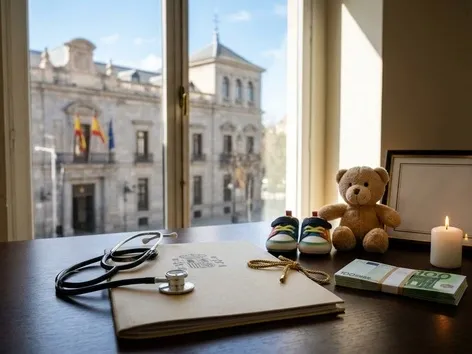
Spain has expanded social protections for workers, parents and families. Find out what has changed regarding sick leave, pensions, child maintenance and compensation for victims

Spain has made a series of changes to its social security system, and they affect very different people: women with severe menopause symptoms, women who have suffered violence, parents of children with cancer, unmarried couples, families who receive no child maintenance, and victims of terrorist attacks. Overall, social protection in Spain has been broadened by a single document, so it is now important to understand what already applies and what will start working later. The new rules are set out in a decree-law published in the official gazette BOE on 21 October 2026.
Because it is a decree-law, it took effect immediately, but Parliament must validate it within a month. The Cortes have been dissolved ahead of the 29 November elections, so the vote will be held by the Permanent Deputation of the Congress. Until then the rules apply, but the final word rests with the deputies.
To find out how much money you need to have for a legal stay in Spain in 2026, read our previous article.
Moving, working or studying in another country almost always starts with a package of permit documents, and even a small mistake in it can lead to a refusal. The VisitWorld migration lawyer is a specialist in immigration law who helps you put together a complete set of papers and choose the permit that matches the purpose of your trip. Enter your citizenship and destination country on VisitWorld and choose a consultation with a migration lawyer.

When will the new social protection rules take effect in Spain?
The document known as Royal Decree-law 31/2026 came into force on the day of publication, but some provisions have their own dates:
- 23 October 2026: new rules on the benefit for caring for a seriously ill child and on reduced working hours;
- 1 November: a new minimum for pensions paid to victims of terrorism and a review of the amounts of child maintenance advances;
- 1 December: two new types of sick leave;
- 1 January 2027: a rule on the contribution base for self-employed workers who receive benefits.
The remaining provisions, including those for unmarried couples, apply from 21 October.
Reminder! In early October, Spain’s Congress repealed the rental decrees that had been in force for only a day. For the current rules on renting a home in Spain, follow the link.
Visit World services for tourists, migrants, and expats: Insurance | Guides | Legal advice
Sick leave in Spain: new cases and payment amounts
Two new grounds have been added to the special cases of temporary incapacity for work. The first concerns a severe menopausal disorder that a doctor in the public health system codes separately and that prevents a woman from working. The second covers injuries a woman has suffered at the hands of a current or former husband or partner, even if they did not live together. A diagnosis alone is not enough: medical care within the public system is required, along with confirmation that the condition genuinely prevents the person from working.
The requirements are stricter in cases of violence. Before the woman is discharged, official documents must be in place: a report to the prosecutor’s office or a court, a protection order, a precautionary measure or a conviction. No minimum contribution record is required. Payment starts the day after the leave begins, while the employer pays wages for the first day. The benefit is 60% of the calculation base up to the 20th day and 75% from the 21st. The rule also covers special social security schemes, including the self-employed.
Important! Spain offers up to €40,000 towards buying a home: find out who can get it here.
Caring for a seriously ill child: what has changed for parents?
The benefit is intended for the parent who cuts their working day by at least half in order to care for a child with cancer or another serious illness. The legislator now refers not only to hospital treatment but also to situations treated as equivalent, although the list of those situations still has to be clarified by secondary legislation.
The base age of the child is 18. If the illness continues, payment is extended to 23, and to 26 where a disability of 65% or more was established before the age of 23. In exceptional cases the right continues even longer: for people with a disability of 65% or more or a grade III dependency, provided they continue to live with the person caring for them. The benefit is 100% of the calculation base, in proportion to the reduction in hours. What is also new is that both parents can receive it, in turns or at the same time, in which case each is entitled to 50%.
Child maintenance from the state fund: up to €300 a month
The maximum monthly advance from the Child Maintenance Guarantee Fund is now €300 per recipient, so in a family with several children the limit applies separately to each child. Existing advances will be recalculated automatically from 1 November, without a new application. The income ceiling is now tied to the minimum wage with a coefficient of 1.75 for one child, rising by 0.25 for each additional child.
The fund has also been opened more widely to children who are not citizens of EU countries. They need two years of legal residence in Spain immediately before applying. For children under two, this requirement is applied to the person who has custody, and if the guardian is Spanish, legal residence at the time of application is enough.
In Spain, people and families with low incomes can apply for the Ingreso Mínimo Vital (minimum living income); details here.
Survivor’s pensions for couples without a registered marriage
Previously, an unmarried couple had to prove registration as a couple two years before the partner’s death, plus five years of living together. Now, if there are children in common, neither a register entry nor a notarial document is required: two years of continuous cohabitation immediately before the death is enough, confirmed by a certificate of registration at the address (empadronamiento). For couples without children, five years and registration still apply.
There is also a transitional rule. If the partner died before 21 October 2026 and the pension was refused because of formalities, an application can be submitted within 12 months, that is, by October 2027. Payment will start from the first day of the month after the application. Separately, payments to the children of women killed as a result of violence have been increased: the minimum is double the monthly minimum wage.
Read Visit World’s overview of how Spain tightened its immigration laws in 2026.
Compensation for victims of terrorism and other changes
Victims of terrorist attacks who have not received civil compensation, because there is no final judgment or the judgment does not set an amount, can apply for payment five years after the crime, within one year. In the event of death, the amount can reach €500,000 if the recipients were only the children, or the children together with the spouse or partner of the deceased. If the recipient was only the spouse, the partner or the parents, or the parents together with the children or a partner, the maximum is €350,000.
Those who have already been paid compensation may request a top-up within four years, and it will be paid in three equal annual instalments. The minimum pension for acts of terrorism is now tied to double the minimum wage. In addition, the rule that certain benefits may be treated as occupational risks in the event of major disasters has been made permanent.
What this means for foreigners living in Spain
As before, sick leave can be relied on by those who work officially and are registered in the social security system. Children from outside the EU need two years of legal residence to qualify for the maintenance fund. And for couples with children, the key document becomes the certificate of registration at the address, so it is worth having it to hand in advance.
Spanish social benefits are closely tied to status: legal residence, registration at an address, official employment or a proven period of living together often decide whether you will receive support. For foreigners this is especially noticeable: for example, children from outside the EU qualify for the maintenance fund only after two years of legal residence. The migration lawyer at VisitWorld will help you work out whether your situation meets the requirements and will prepare documents to confirm your residence. The specialist can also advise whether changing your residence or work permit will affect your right to benefits. Enter your citizenship and destination country on VisitWorld, choose a consultation with a migration lawyer and check in advance what you personally need.
Reminder! Spanish banks assess not only a prospective borrower’s salary but also job stability, debts, savings and income prospects. We have already covered which categories of clients have the best chances of getting a mortgage in Spain and what financing terms they can expect.
Photo: generated by Gemini
Products from Visit World for a comfortable trip:
Checklist for obtaining a visa and necessary documents in Spain;
Legal advice on immigration to Spain;
Travel insurance for foreigners in Spain;
Medical insurance all over the world.
We monitor the accuracy and relevance of our information, so if you notice any errors or inconsistencies, please contact our hotline.
Frequantly
asked questions
Where can you prove that you live with your partner in Spain?
Where should you apply for sick leave and benefits?
Are there limits on the amount if a person already receives another pension?
Recommended articles
3 min
Residence permit
5 best places for expats to live in Spain
We’ve selected five Spanish cities that expats are most likely to choose in 2026. Each has its own advantages. Learn more about them
28 Aug. 2026
More details1 min
Blog
Spain's Terrace Smoking Ban 2026: What the New Anti-Tobacco Law Proposes
Spain is preparing to significantly expand its smoking ban in public places. Find out which terraces, beaches and areas will be banned, how the rules for vapers and minors will change, and when the law could come into effect
04 Aug. 2026
More details3 min
Transport
Spain's Traffic Regulations in 2026: Fines, Toll Roads, and ZBE
In Spain, most expressways can be used without a toll sticker, but some autopistas still require a toll. In major cities, there are Low-Emission Zones (ZBE), automated cameras, and specific entry rules. Learn more about Spain’s traffic laws in 2026, current fines, toll roads, and restrictions on vehicles in cities
06 Sep. 2026
More details3 min
Investment
How to Start a Business in Spain: Documents, Taxes, and Expenses
Foreigners can do business in Spain as self-employed individuals or by establishing a separate company. The choice of business structure affects registration, taxes, social security contributions, and the entrepreneur’s personal liability. Learn more about the required documents, key steps, costs, and rules for starting a business in Spain
08 Sep. 2026
More detailsAll materials and articles are owned by VisitWorld.Today and are protected by international intellectual property regulations. When using materials, approval from VisitWorld.Today is required.