

How much will it cost to live in the best EU countries in 2026: actual monthly expenses
Table of contents
- Switzerland – the highest quality of life and some of the highest costs in Europe
- Denmark – a country of happiness, social security, and stability
- Liechtenstein – a small Alpine country with very high salaries
- Ireland – Europe’s tech hub with some of the highest rents in the EU
- Luxembourg – Europe’s richest country with free public transportation and high salaries
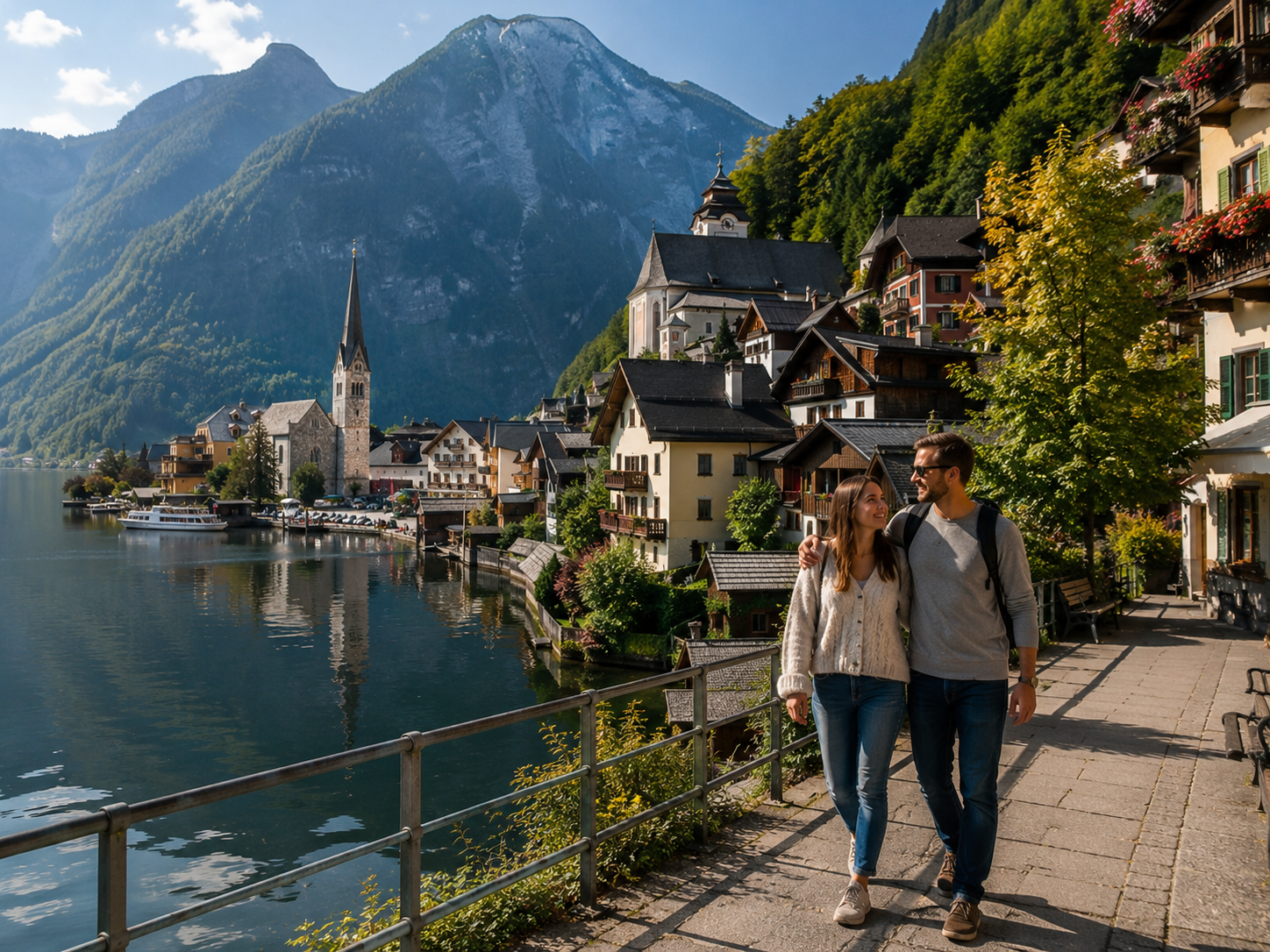
European countries with the highest quality of life attract millions of people with their stable economies, safety, social security, and high salaries. However, living comfortably in Switzerland, Denmark, or Luxembourg requires a substantial budget—rent alone in some cities can exceed several thousand euros a month. We’ll tell you how much it actually costs to live in the top five European countries in 2026 and what expenses await foreigners and expats

European countries with the highest quality of life scores traditionally top the rankings for relocation, work, and study. High salaries, advanced healthcare, a safe environment, robust social systems, and a healthy work-life balance make them particularly popular among expats, IT professionals, and international workers.
However, life in such countries has a downside—high costs for housing, health insurance, groceries, and transportation. In some countries, even above-average salaries do not always fully offset the rapid rise in real estate prices and daily expenses.
According to the RankingRoyals ranking, in 2026, the top 5 European countries by quality of life included Switzerland, Denmark, Liechtenstein, Ireland, and Luxembourg. Let’s take a look at the monthly budget required to live in each of these countries and why they remain among the most desirable places to move to.
Earlier, we talked about the European countries where it is easiest to get a work visa and start a career abroad.
Planning to move to Europe or apply for a residence permit? Migration legislation is changing rapidly, and even a minor error in the documents can cost months of waiting or refusal.
Consultation with a migration lawyer will help you assess your chances, choose the optimal type of visa and prepare for filing without risks.
Sign up for a consultation and get a clear action plan now.

Switzerland – the highest quality of life and some of the highest costs in Europe
Switzerland has remained one of the most comfortable countries in the world to live in for many years. The country combines a stable economy, high salaries, a safe environment, modern healthcare, and one of the best transportation systems in Europe. At the same time, Switzerland is among the most expensive countries in the world—this is particularly noticeable in Zurich and Geneva.
To live comfortably in 2026, a single person will need an average of 3,000–3,500 Swiss francs per month ($3,186–$3,720), including rent. The largest expense is housing. Renting a one-bedroom apartment in the center of Zurich or Geneva costs 1,500–2,000 francs ($1,600–2,100), while in smaller cities, prices start at 1,000 francs.
Health insurance, which is mandatory for all residents of the country, is a separate consideration. A monthly policy costs 300–500 francs ($320–530), and the deductible can be up to 2,500 francs per year. At the same time, the Swiss healthcare system is considered one of the most efficient in the world: getting a doctor’s appointment takes very little time, and bureaucracy is kept to a minimum.
Daily living costs in the country also remain high:
- Groceries – 600–900 francs per month;
- A typical dinner at a restaurant – 25–35 francs;
- Coffee at a café – 4–5 francs;
- Monthly public transit pass – 70–85 francs.
Despite high prices, Switzerland attracts people with its work-life balance. A 42-hour workweek and 4–6 weeks of paid vacation per year are considered the norm here. Employees usually finish their workday on time, and access to nature has become part of everyday life.
Even large cities are located near lakes, hiking trails, and ski resorts.
In our previous article, we discussed the richest cities and regions in Europe in 2026.
Denmark – a country of happiness, social security, and stability
Denmark regularly ranks among the happiest countries in the world thanks to its high level of social protection, safety, and a stable economy. The country is known for free education, a universal healthcare system, and support for families with children. These factors create one of the best work-life balances in Europe.
In 2026, a single person will need approximately 2,140 euros per month ($2,320) to live in Denmark, including rent. For a family of four, average monthly expenses amount to about 5,855 euros ($6,350).
Despite the high cost of living, Denmark remains attractive due to its very high salaries. The average income in the country reaches 50,000 Danish kroner per month (nearly $6,900), which significantly exceeds the basic cost of living.
One of Denmark’s key features is its robust social support system:
- Free education from preschool through university;
- Public healthcare for all residents;
- Subsidized childcare;
- Support for low-income families.
The concept of hygge—a sense of coziness, comfort, and inner peace—plays an important role in the Danish way of life. It is this cultural trait that often explains why Denmark has remained among the world leaders in terms of population happiness for years.
Earlier, we wrote about the happiest cities in the world in 2026.
Liechtenstein – a small Alpine country with very high salaries
Liechtenstein – one of the smallest and at the same time richest countries in Europe. The country is located between Switzerland and Austria and covers only 160 square kilometers, yet the standard of living here is among the highest in the world. The country combines Swiss financial stability, low crime rates, and a peaceful Alpine lifestyle.
Liechtenstein is home to about 38,000 people, so there is a very strong sense of local community here. According to the ranking, poverty is virtually nonexistent in the country, and residents often know their neighbors personally.
However, living in the country is expensive. The monthly budget for one person is approximately $2,491–2,800 (2,350–2,650 Swiss francs). At the same time, costs here are 56% higher than in France.
Major expenses in Liechtenstein are as follows:
- Rent for a one-bedroom apartment – 1,500–2,500 Swiss francs;
- Groceries – 800–1,200 francs per month;
- Health insurance – 250–450 francs per month;
- Gasoline – 1.60–1.80 francs per liter.
A distinctive feature of the country is its almost complete dependence on cars. There is virtually no comprehensive public transportation system here, so a car is, in fact, a necessity for most residents.
At the same time, high living costs are offset by very high salaries. The average income starts at 7,000 Swiss francs ($7,425) per month, and many professionals in the financial sector, industry, and international business earn 10,000–15,000 francs per month.
We previously wrote about the best cities in Europe to live in 2026.
Ireland – Europe’s tech hub with some of the highest rents in the EU
Ireland remains one of the main hubs for international business and the tech industry in Europe. It is home to the European headquarters of companies such as Apple, Google, Microsoft, Amazon, LinkedIn, and Meta. This makes the country particularly popular among IT professionals, financiers, and pharmaceutical sector employees.
However, along with high salaries, Ireland has faced an acute housing crisis. By 2026, housing costs had become the main problem for most residents and expats, especially in Dublin.
To live in the capital, a single person needs approximately €2,900–3,500 per month ($3,145–3,795), including rent. Meanwhile, the average rent for a one-bedroom apartment in Dublin has already reached €2,540 ($2,755), which is 5.8% higher than a year earlier.
Housing prices in other cities across the country are also rising rapidly:
- Cork — average rent €2,213 ($2,400), a 13.6% increase over the year;
- Galway — €1,200–1,470 ($1,300–1,595);
- Limerick — €2,405 ($2,610), marking the highest annual increase in Ireland (+20.4%);
- Rural areas — an average of €1,645 ($1,785) per month.
Buying real estate also remains expensive. The average price of a home in Dublin already exceeds €700,000 ($759,000), making the capital one of the most expensive places in Europe to buy a home.
Despite this, Ireland continues to attract foreigners with high salaries and opportunities for career growth. This is especially true in the tech sector, where income levels significantly exceed the European average. Additionally, the English language, international environment, and active job market make the country one of the most popular destinations for relocation within the EU.
At the same time, experts are increasingly warning that without a solution to the housing crisis, even high incomes do not guarantee a comfortable standard of living, especially for young professionals and entry-level workers.
Learn more about the most expensive EU capitals for renting in 2026 by following the link.
Luxembourg – Europe’s richest country with free public transportation and high salaries
Luxembourg is considered the richest country in Europe in terms of per capita income and one of the EU’s major financial centers. Despite its small size, the country plays an important role in the European economy—it is home to the European Investment Bank, the Court of Justice of the European Union, and over 140 international banks.
The country has a population of only about 120,000 people in the capital, but nearly half of the residents are foreigners. In everyday life, French, German, Luxembourgish, and English are all used simultaneously, creating a very international environment for work and life.
Along with high incomes, Luxembourg ranks among the most expensive countries in Europe. A single person needs approximately €4,318 ($4,680) per month to live comfortably, while a family of four needs about €6,415 ($6,950).
Housing remains the main expense. The cost of rent and real estate here is, on average, 87% higher than the EU average.
However, the high costs are offset by some of the highest salaries in Europe:
- The average salary is over €7,000 ($7,590) per month;
- Professionals in the financial sector and international business often earn €10,000–15,000;
- The minimum wage is €2,571 ($2,788) per month—one of the highest in Europe.
A distinct advantage of the country is free public transportation. In 2020, Luxembourg became the first country in the world where all public transportation is completely free for residents and tourists.
Thanks to high incomes, safety, an international environment, and a stable economy, Luxembourg remains one of the most attractive places to live and work in Europe, especially for financiers, lawyers, and employees of international companies.
If you are planning to legalize, apply for a residence permit or submit migration documents abroad, the assistance of specialized migration lawyers can significantly simplify the process. Specialists will help you assess your chances of obtaining legal status, prepare a package of documents, avoid common mistakes, and accompany you at all stages of the migration procedure: from the initial consultation to obtaining a decision from the migration authorities.
We remind you! New economic indicators show which countries have been able to increase their GDP and which have lost ground due to inflation and slowing growth. Ranking of the richest countries in the world in 2026 — follow the link.
Products from Visit World for a comfortable trip:
Travel guide for 200 countries;
Legal advice from a local specialist on visa and migration issues;
Travel insurance around the world (please select the country of interest and citizenship to receive services);
Medical insurance all over the world.
We monitor the accuracy and relevance of our information, so if you notice any errors or inconsistencies, please contact our hotline
Recommended articles
3 min
Popular
Happiest Cities in the World in 2026: Where People Live With Less Stress
In 2026, the key factors for a comfortable life were no longer salaries or popularity with tourists, but low stress levels, safety and a good work-life balance. We reveal which cities topped the Happy City Index, why major cities are losing ground, and where people feel happiest today
08 maj. 2026
More details3 min
Popular
Europe’s wealthiest cities and regions in 2026: where incomes and living standards are highest
The economic divide between different parts of Europe continues to widen. Whilst some regions are enjoying record revenues, high wages and a strong influx of investment, others still lag significantly behind in terms of living standards and economic development. We look at which European cities and regions have become the wealthiest in 2026, what lies behind their success, and where the continent’s main financial centres are concentrated today
11 maj. 2026
More details2 min
Expats
Fastest Countries to Get Citizenship in 2026: Top 10 Easiest Paths to a Second Passport
Some countries allow citizenship after 2–5 years of legal residence. Find out which countries offer the fastest path to a second passport in 2026, what the naturalization requirements are, and what to consider before moving
09 maj. 2026
More details1 min
Expats
Gdzie w 2026 roku jest bardziej opłacalne mieszkać: w Niemczech, Polsce czy w Czechach?
Kraje europejskie nadal są popularnymi miejscami do przeprowadzki z powodu stabilnych gospodarek, wysokiego standardu życia i możliwości kariery. Dowiedz się, gdzie w 2026 roku jest bardziej opłacalne mieszkać - w Niemczech, Polsce czy w Czechach, jakie wynagrodzenia i wydatki czekają na ekspatów oraz który kraj wybrać w zależności od swoich celów
11 maj. 2026
More detailsAll materials and articles are owned by VisitWorld.Today and are protected by international intellectual property regulations. When using materials, approval from VisitWorld.Today is required.