

The Best Countries to Live in with Children in 2026: Where Families Feel Most Comfortable Living and Raising Children
Table of contents
- How were the best countries for raising children selected?
- The Netherlands: a country where children are among the happiest in the world
- Denmark: one of the best countries for a safe and comfortable childhood
- Sweden: a country where support for parents has become part of public policy
- Finland: one of the world’s best countries for the quality of education
- Switzerland: a high standard of living, safety, and one of the best healthcare systems
- Canada: one of the best countries for family immigration
- New Zealand: a safe environment and a high standard of living for families
- What should you consider before moving to another country with children?
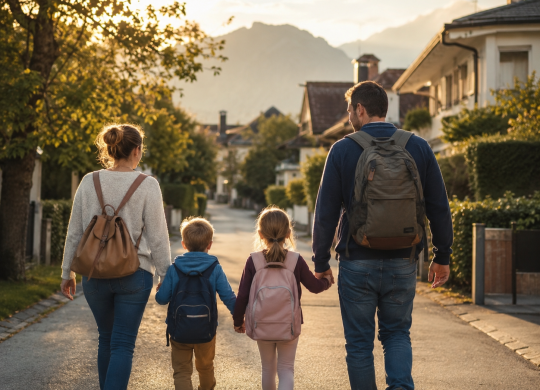
La calidad de la educación, el acceso a la sanidad, la seguridad, el apoyo social y el medio ambiente: estos son los factores que, con mayor frecuencia, determinan el grado de comodidad con el que una familia puede vivir en otro país. A continuación, te contamos cuáles son los siete países que hoy en día se consideran entre los mejores para criar a los hijos y qué es lo que atrae a las familias de todo el mundo

Moving abroad with children involves much more than just finding a job or handling paperwork. For most families, the quality of schools, safety, access to healthcare, government support for parents, and the overall comfort of daily life are the deciding factors.
International studies help assess these factors. In particular, in 2025, UNICEF published a new report titled *Child Well-Being in an Unpredictable World*, which compares children’s well-being across 43 EU and OECD countries. The Netherlands, Denmark, and France topped the rankings, scoring highest on criteria such as children’s mental and physical health, educational attainment, and overall well-being.
In this article, we’ve compiled a list of seven countries that consistently rank highly in international rankings thanks to their safety, modern education systems, high-quality healthcare, family support, and high standard of living. We’ll also discuss the key factors to consider before moving to each of them.
Earlier, we talked about the European countries where it is easiest to get a work visa and start a career abroad.
Planning to move to Europe or apply for a residence permit? Migration legislation is changing rapidly, and even a minor error in the documents can cost months of waiting or refusal.
Consultation with a migration lawyer will help you assess your chances, choose the optimal type of visa and prepare for filing without risks.
Sign up for a consultation and get a clear action plan now.

How were the best countries for raising children selected?
Choosing a country to move to with children depends not only on income levels or the cost of living. Equally important are the quality of education, access to healthcare, safety, government support for families, the environmental situation, and opportunities for a child’s harmonious development. That is why this selection includes countries that consistently demonstrate high performance across several international indicators.
What research was used to compile this ranking?
The selection is based on data from international organizations and authoritative analytical studies that regularly assess living conditions for families and the well-being of children in various countries around the world. Among the main sources are:
1. UNICEF Innocenti Report Card – assesses children’s physical and mental health, educational attainment, social environment, and overall well-being.
2. OECD Better Life Index—analyzes the quality of education, housing conditions, household income, safety, work-life balance, and life satisfaction.
3. Global Peace Index 2026—identifies the world’s safest countries based on indicators of internal security, crime rates, and political stability.
4. World Happiness Report 2026—takes into account the level of social support, access to healthcare, trust in government institutions, and overall quality of life.
5. Statistical data from the OECD, Eurostat, and national statistical agencies on education, healthcare, social policy, and the cost of living.
What criteria were decisive?
When selecting countries, we considered the indicators that most significantly impact the comfort and safety of families with children:
- High levels of personal safety and low crime rates
- A high-quality system of preschool, K-12, and higher education
- An accessible and effective healthcare system
- Government support for parents, including paid leave and social benefits
- A favorable work-life balance
- Environmental conditions, air quality, and urban infrastructure
- Economic stability and a high standard of living
At the same time, the ranking is not universal, as the needs of each family may differ.
In addition to the advantages, the article also examines the specific characteristics of each country that may influence the decision to relocate, including the cost of living, housing affordability, the language environment, and immigration requirements.
Learn more about the most affordable countries for expats to live in 2026 by following the link.
The Netherlands: a country where children are among the happiest in the world
The Netherlands has remained one of the best places to live with children for many years in a row. The country regularly tops international rankings thanks to its high level of child well-being, quality education, safe urban environment, and effective healthcare system. For many families, the Netherlands has become the benchmark for how a country can create comfortable conditions for a child’s development.
Why does the Netherlands top international rankings?
In the 2025 UNICEF Innocenti Report Card 19, the Netherlands ranked first among 43 EU and OECD countries in terms of overall child well-being. The assessment covered mental health, physical well-being, educational skills, and the social environment. This is not the first time the country has ranked among the world leaders in this category.
Other international rankings are equally impressive:
- The Netherlands ranks among the top 10 happiest countries in the world according to the World Happiness Report 2026.
- According to the OECD Better Life Index, the country has one of the best work-life balance scores, allowing parents to spend more time with their children.
- In the Global Peace Index 2026, the Netherlands is also among the world’s safest countries.
It is precisely this combination of economic stability, high-quality public services, and a high level of trust in institutions that makes the country so attractive to families.
Education and a Supportive Environment for Children
One of the country’s main advantages is its education system. Education is compulsory from ages 5 to 16, although most children begin attending school as early as age four. Major cities are home to a large number of international schools that teach in English, which greatly simplifies the adjustment process for children of foreign nationals.
The Netherlands is also known for its approach to urban planning. The country has over 37,000 km of bike paths, and many of its cities rank among the most bike-friendly in the world. Thanks to this, children can travel more safely to school, sports activities, or parks without constantly relying on a car.
Great attention is also paid to the development of public spaces: playgrounds, sports areas, green parks, and safe residential neighborhoods are an integral part of most Dutch cities.
What should you consider before moving?
Despite the high standard of living, moving to the Netherlands also has its challenges.
First and foremost is the housing shortage. According to government data, the lack of housing remains one of the main problems, which is why apartment rents—especially in Amsterdam, Utrecht, and Rotterdam—are among the highest in Europe.
You should also consider:
- High costs of preschool childcare without government subsidies
- Mandatory health insurance for adults
- Competition in the rental market
- The need to learn Dutch for full integration, although the majority of the population speaks English
Despite these factors, the Netherlands remains one of the best countries for families seeking a combination of high quality of life, modern education, safety, and a comfortable environment for raising children.
In our previous article, we discussed the cost of living in the best EU countries in 2026.
Denmark: one of the best countries for a safe and comfortable childhood
Denmark has long been among the countries where families with children enjoy one of the highest standards of living in the world. A high level of safety, a well-developed social safety net, high-quality healthcare and education, as well as policies supporting parents make the country one of the most attractive destinations for relocation.
Social Support for Families and Work-Life Balance
One of Denmark’s main advantages is its family-friendly policies. Parents can count on paid leave after the birth of a child, financial support, and the opportunity to balance their careers with raising children. Flexible work schedules and the option to work remotely have become standard practice for many companies.
According to the OECD Better Life Index, Denmark ranks among the world leaders in work-life balance. Only about 1% of employees regularly work more than 50 hours per week—one of the lowest rates among OECD countries. By comparison, the average rate across the organization is about 10%.
In addition, families receive government child benefits (børne- og ungeydelse), the amount of which depends on the child’s age. These payments partially offset the costs of raising and educating children.
Education, Healthcare, and Safety
The Danish education system is considered one of the strongest in Europe. Public schools are free, and the curriculum is based not only on academic knowledge but also on the development of critical thinking, teamwork, and independence.
Another equally important advantage is the healthcare system. Most medical services are funded by the government through taxes, so permanent residents have access to treatment without additional payment for each visit.
According to the 2026 Global Peace Index, Denmark ranks among the top ten safest countries in the world. Low crime rates, a well-developed cycling infrastructure, and an abundance of public spaces allow children to feel comfortable both in large cities and in small towns.
What should you know before moving?
Despite its many advantages, life in Denmark has certain peculiarities that are worth considering in advance.
First and foremost are the high taxes. These taxes fund free healthcare, education, and social programs, but they may seem unusual to newcomers.
You should also keep in mind:
- One of the highest costs of living among European countries
- Significant housing costs, especially in Copenhagen
- A limited supply of affordable housing in major cities
- The need to learn Danish for smooth integration and employment
Despite these challenges, Denmark remains one of the best options for families seeking a safe country with high-quality education, an effective healthcare system, and a high standard of living for children.
Learn more about the cost of renting in various European cities by following the link.
Sweden: a country where support for parents has become part of public policy
Sweden has long been considered one of the most family-friendly countries in the world. The government invests heavily in education, healthcare, and social programs, and supporting families with children is a top priority of public policy. As a result, the country consistently ranks highly in global rankings of quality of life and child well-being.
Parental Leave and Financial Support for Families
Sweden has one of the most generous parental leave systems in the world. In total, parents are entitled to 480 days of paid leave per child, with a portion of this time reserved separately for each parent to encourage both to participate in caring for the child.
In addition, families receive a monthly child allowance (barnbidrag), which is paid regardless of income level. Additional supplements are provided for families with multiple children.
According to the OECD Better Life Index, Sweden also scores highly on work-life balance indicators, allowing parents to spend more time with their families.
Education, Healthcare, and a Supportive Environment for Children
Education in Sweden is free for children, and the curriculum focuses not only on academic knowledge but also on developing creative thinking, independence, and collaboration skills. In many municipalities, children have access to modern libraries, sports facilities, and after-school clubs.
Another equally important advantage is the healthcare system. Medical services for children are funded by the state, and preventive checkups, vaccinations, and most consultations are available at no additional cost to families.
Sweden is also among the countries with the best environmental conditions in Europe. Large green spaces, clean air, and well-developed public transportation create a comfortable living environment even in large cities.
What should you consider before moving?
Moving to Sweden has its own unique aspects that should be evaluated before relocating.
Among the main challenges:
- High cost of rent, especially in Stockholm, Gothenburg, and Malmö
- Waiting lists for long-term rental housing in certain cities
- High taxes, which fund social programs
- Knowledge of Swedish is desirable for most job openings and for everyday life
Despite this, Sweden remains one of the best options for families seeking a country with a high level of social protection, a modern education system, and the opportunity to balance a career with raising children.
Previously, we wrote about the best countries to move to for retirement in 2026.
Finland: one of the world’s best countries for the quality of education
Finland has long been associated with high educational standards, a safe environment, and a high quality of life. The country consistently ranks among the world leaders in terms of happiness, trust in government institutions, and the well-being of its population. For families with children, this means not only access to high-quality public services but also a comfortable environment for learning and development.
Why is Finnish education considered one of the best in the world?
The Finnish education system has long served as a model for many countries. It is based on the principles of equality, an individualized approach, and minimizing stress for students. Schools place great emphasis on developing critical thinking, teamwork, and practical skills, rather than just grades and testing.
According to the results of the 2022 PISA international study conducted by the OECD, Finnish students achieved scores significantly higher than the OECD average in reading, mathematics, and science. Furthermore, the achievement gap between students at different schools remains one of the lowest among OECD countries, indicating a high level of equality in access to education.
Access to preschool education is another key advantage. Most children attend municipal preschools, and families can receive government support to cover part of the costs.
Safety, Nature, and Comfort for Families
Finland consistently ranks among the safest countries in the world. According to the 2026 Global Peace Index, the country ranks among the top due to its low crime rate, political stability, and high level of trust in law enforcement agencies.
Another advantage is the environment. Approximately 75% of Finland’s territory is covered by forests, making it one of the most forested countries in Europe. The country has about 188,000 lakes, and a large number of parks, nature areas, and playgrounds create comfortable conditions for children to enjoy active recreation throughout the year.
In addition, Finland has topped the World Happiness Report for eight consecutive years, reflecting a high level of life satisfaction, trust among people, and an effective social support system.
What should you consider before moving?
Despite its many advantages, life in Finland isn’t for everyone.
Before moving, you should consider:
- Long, dark winter months, especially in the northern regions of the country
- A high cost of living compared to many other European countries
- The complexity of the Finnish language, which differs significantly from most European languages
- A relatively small labor market compared to other Northern European countries
At the same time, for families who value safety, quality education, a clean environment, and a high level of social protection, Finland remains one of the best options for living and raising children.
Learn more about the world’s most livable city in 2026 by following the link.
Switzerland: a high standard of living, safety, and one of the best healthcare systems
Switzerland consistently ranks among the countries with the highest quality of life in the world. High incomes, safe cities, modern healthcare, and a prestigious education system make it attractive to families planning a long-term move. At the same time, it is one of the most expensive countries in Europe, so moving there requires careful financial planning.
High-Quality Healthcare and a High Level of Safety
The Swiss healthcare system is consistently ranked among the best in the world. The country has state-of-the-art clinics, and life expectancy is approximately 84 years—one of the highest rates in the world, according to the OECD.
Safety is an equally important advantage. Switzerland ranks among the top ten safest countries in the world according to the 2026 Global Peace Index, and cities such as Zurich, Geneva, and Bern consistently rank highly in global quality-of-life rankings.
For families with children, this means a comfortable urban environment, well-developed public transportation, low crime rates, and a high level of trust in government institutions.
Education and Opportunities for International Families
Switzerland offers both a strong public education system and one of the world’s largest networks of international schools. This is particularly important for families moving with school-age children who plan to continue their education in English or another international language.
The country is also known for its multilingual environment. The official languages are German, French, Italian, and Romansh, so the choice of school often depends on the region of residence.
Another advantage is the country’s compact size and efficient transportation system. Even when living outside major cities, families can quickly reach work, school, or medical facilities.
Why isn’t life in Switzerland for everyone?
The main challenge for most foreigners is the cost of living. According to international cost-of-living rankings, Zurich, Geneva, and Basel regularly rank among the world’s most expensive cities.
Before moving, you should also consider:
- High rental and home purchase prices
- Mandatory health insurance for all residents, which is paid separately
- Significant costs for childcare
- Competition in the job market for certain professions
- The need to know the official language of the respective canton for full integration
Despite the high costs, Switzerland remains one of the best choices for families seeking the safest possible environment, a modern healthcare system, and high standards of living.
In our previous article, we discussed the richest cities and regions in Europe in 2026.
Canada: one of the best countries for family immigration
Canada remains one of the most popular destinations for families to relocate to, thanks to its high level of safety, quality education, and straightforward immigration system. The government continues to prioritize economic immigration and family reunification, and the children of newcomers have nearly the same rights to education and healthcare as Canadian citizens.
Education and Healthcare
All Canadian provinces provide free public school education for the children of residents. In addition to English-language schools, many regions have French-language schools and programs for children who are still learning English or French.
According to the OECD, Canada ranks among the countries with the strongest education systems, and its strength lies not only in its prestigious universities but also in the high quality of its elementary and secondary education. The gap in academic performance between the children of immigrants and local residents is one of the smallest among OECD countries, indicating the successful integration of newcomers.
Most essential medical services are covered by the public healthcare system, although the rules and list of free services may vary by province.
Why does Canada attract families from all over the world?
Canada is one of the most multicultural countries in the world: nearly a quarter of the population was born abroad, so foreign families typically find it easier to adapt than in many other countries. Major cities offer support centers for newcomers, language courses, and integration programs.
Another benefit is the Canada Child Benefit (CCB)—a monthly government payment for families with children under 18. The amount depends on family income, and permanent residents who meet the program’s requirements are also eligible to receive this benefit.
What should you consider before moving?
Before moving to Canada, there are several important factors to consider:
- In Toronto and Vancouver, housing is among the most expensive in North America
- In most provinces, new residents must wait for their public health insurance to take effect or purchase a temporary policy
- The cost of daycare varies significantly by province, although a federal program is gradually rolling out child care at approximately 10 Canadian dollars per day
- In most professions, knowledge of English or French is a prerequisite for employment
Thanks to its strong education system, government support for families, a safe environment, and a high quality of life, Canada remains one of the best options for a long-term move with children.
Earlier, we wrote about the happiest cities in the world in 2026.
New Zealand: a safe environment and a high standard of living for families
New Zealand attracts families not only with its picturesque nature but also with its stable economy, high-quality education, and high level of safety. The country regularly ranks among the world leaders in quality of life, and government policy is focused on creating comfortable conditions for children and their parents.
Safety, the Environment, and a Comfortable Daily Life
According to the 2026 Global Peace Index, New Zealand ranks second among the world’s safest countries, second only to Iceland. Low crime rates, political stability, and a high level of trust in government institutions make the country particularly attractive to families with children.
Another major advantage is the natural environment. About 30% of the country’s territory is protected by the government in the form of national parks and nature reserves. As a result, most cities have easy access to beaches, forests, and hiking trails, and outdoor recreation is a regular part of life for many families.
Education and Support for Children
In New Zealand, children can attend public schools for free if they are citizens or permanent residents of the country. The education system emphasizes not only academic knowledge but also the development of practical skills, critical thinking, and creativity.
Another distinctive feature is the small class sizes in many schools, which allow teachers to give each student more individual attention. A significant portion of the learning process takes place outside the classroom: sports activities, environmental projects, and research programs are an important part of school education.
According to UNICEF, New Zealand is also among the countries with the best conditions for early childhood care and support for young parents.
Life in New Zealand for International Families
Moving to New Zealand comes with its own challenges that should be considered in advance.
These include:
- Significant distance from Europe and North America, which complicates international travel
- Relatively high housing costs in Auckland and Wellington
- Certain immigration programs have requirements regarding profession, income level, or work experience
- Due to the small domestic market, there are fewer job opportunities than in Canada or Western European countries
At the same time, for families who value a safe environment, quality education, a clean environment, and a relaxed pace of life, New Zealand remains one of the most attractive destinations for relocation.
We previously wrote about the best cities in Europe to live in 2026.
What should you consider before moving to another country with children?
Even if a country ranks highly in global rankings, this does not guarantee that it will be the right fit for your family. Before moving, it’s important to evaluate not only salary levels and safety but also daily expenses, housing affordability, educational conditions, and the ability for your children to integrate quickly.
First and foremost, check whether foreigners are eligible for free education and public healthcare. In most countries, these services are fully or partially available only to citizens, permanent residents, or holders of certain types of residence permits. You should also find out in advance whether you need to purchase private health insurance, how much daycare costs, and whether there are waiting lists for spots.
It is equally important to consider the actual cost of living. For example, in Switzerland, the Netherlands, and Canada, rent is often the largest expense in a family’s budget, whereas in Denmark or Sweden, a well-developed social support system covers a significant portion of these costs. In addition, it’s worth paying attention to language requirements, as these often determine parents’ employment prospects and their children’s comfortable integration into the new environment.
Before making a final decision on a country, it’s recommended to evaluate several key factors:
- Requirements for obtaining a visa or residence permit
- Availability of public and international schools
- Health insurance coverage for the entire family
- Average cost of rent and monthly living expenses
- Employment opportunities for both parents
- Availability of support programs for families with children and newly arrived immigrants
Moving to another country is a long-term decision that affects not only adults but also children. Therefore, before relocating, it’s important to compare not only international rankings but also everyday living conditions, educational and developmental opportunities for your child, and your own financial situation. A comprehensive approach is key to choosing a country where the whole family will feel at home.
If you are planning to legalize, apply for a residence permit or submit migration documents abroad, the assistance of specialized migration lawyers can significantly simplify the process. Specialists will help you assess your chances of obtaining legal status, prepare a package of documents, avoid common mistakes, and accompany you at all stages of the migration procedure: from the initial consultation to obtaining a decision from the migration authorities.
We remind you! New economic indicators show which countries have been able to increase their GDP and which have lost ground due to inflation and slowing growth. Ranking of the richest countries in the world in 2026 — follow the link.
Products from Visit World for a comfortable trip:
Travel guide for 200 countries;
Legal advice from a local specialist on visa and migration issues;
Travel insurance around the world (please select the country of interest and citizenship to receive services);
Medical insurance all over the world.
We monitor the accuracy and relevance of our information, so if you notice any errors or inconsistencies, please contact our hotline
Recommended articles
3 min
Popular
How much will it cost to live in the best EU countries in 2026: actual monthly expenses
European countries with the highest quality of life attract millions of people with their stable economies, safety, social security, and high salaries. However, living comfortably in Switzerland, Denmark, or Luxembourg requires a substantial budget—rent alone in some cities can exceed several thousand euros a month. We’ll tell you how much it actually costs to live in the top five European countries in 2026 and what expenses await foreigners and expats
15 maj. 2026
More details3 min
Expats
The World's Most Livable City in 2026: Which Metropolis Tops the New Ranking
Experts have released new rankings of the world’s most livable cities for 2026. The assessment took into account safety, healthcare, transportation, the environment, cost of living, and overall quality of life for both locals and expats. Learn more about the cities that topped the global quality-of-life rankings
27 maj. 2026
More details2 min
Expats
Które kraje europejskie mają najwyższe ceny: ranking kosztów życia Eurostatu
Nowe dane z Eurostatu ujawniły, jak bardzo koszty życia różnią się w poszczególnych krajach europejskich. W niektórych krajach ten sam zestaw towarów i usług kosztuje prawie cztery razy więcej niż w innych. Dowiedz się, które kraje znalazły się na szczycie listy najdroższych i najtańszych, a także gdzie będziesz musiał wydać najwięcej na zakupy spożywcze, restauracje i hotele
01 lip. 2026
More details2 min
Popular
Rent Prices in Europe: Which Cities Were the Most Expensive in 2026
Housing remains the largest expense for most European households. New data from Eurostat shows that the difference in the cost of renting a two-bedroom apartment between different European cities is nearly sevenfold: ranging from €470 in Skopje to €3,350 in Geneva. Find out which cities topped the ranking of the most expensive rents, where you can find the most affordable housing, and why prices vary so much
02 lip. 2026
More detailsAll materials and articles are owned by VisitWorld.Today and are protected by international intellectual property regulations. When using materials, approval from VisitWorld.Today is required.