

Where in Europe is the best work-life balance: TOP 5 countries for work-life balance
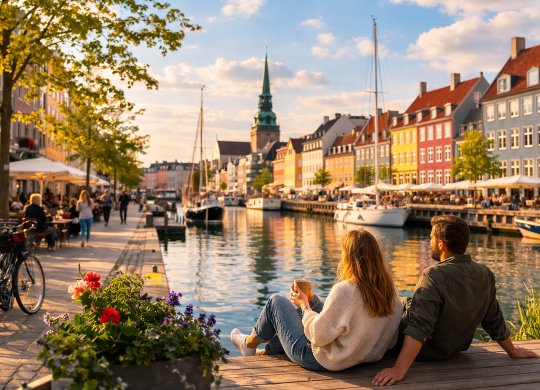
Work-life balance is becoming one of the main factors when choosing a country to live or work in. A new ranking shows where in Europe employees have more time for rest, family and personal development. Learn more about the European countries with the best work-life balance in 2026

Work-life balance is becoming an increasingly important factor for people planning a career, relocation or work abroad. In today's world, many employees seek not only a stable income but also enough time for family, leisure and personal development.
European countries are gradually introducing policies aimed at employee well-being: shorter working weeks, longer paid vacations, social guarantees and a safe living environment. These factors increasingly determine how comfortable it is to combine work and personal life.
According to the European Life-Work Balance Index 2025, prepared by the international company Remote, several European countries demonstrate particularly good results in this regard. The researchers evaluated the countries by such indicators as the length of the working week, paid vacations, access to healthcare, security, happiness, and inclusiveness.
Earlier we told you that the EU has approved the first ever visa policy strategy.
Are you planning to move, work or stay in the EU for a long time and don't know where to start?
To avoid getting lost in the changes to visa and migration policy, use the immigration guide from Visit World. It contains up-to-date information on obtaining a residence permit and citizenship in different countries, step-by-step instructions, requirements for applicants, a list of documents, deadlines and costs. The guide will be sent to your email in PDF format in just a few minutes and will help you plan your legal move without unnecessary stress.

Ireland is the best country in Europe for work-life balance
Ireland has topped the ranking of European countries with the best work-life balance. The country was ranked first in Europe and second in the world in the European Life-Work Balance Index 2025 study.
During the evaluation, experts analyzed a number of indicators that affect the quality of life of employees. These include the length of the working week, the number of paid vacations, social guarantees, access to healthcare, security, inclusiveness, and the overall level of happiness of the population.
According to the survey, Ireland received 82.89 points out of 100, which is 4.22 points more than in the previous ranking. One of the reasons for this result was the relatively small number of working hours. On average, employees here work about 34.3 hours per week, which is less than in many other European countries.
In addition, Ireland demonstrates high social standards. The minimum wage in the country is €14.15 per hour, and employees are entitled to 26 weeks of paid maternity leave. The country also received high marks for public safety and life satisfaction.
In the previous article, we provided information on the most expensive cities in the world to live in in 2026 according to Numbeo.
Iceland
Iceland was ranked second in the European Life-Work Balance Index 2025 with 77.98 points. The country is consistently among the countries with favorable conditions for combining professional and personal life.
During the study, experts evaluated a number of factors that directly affect employee well-being. In particular, they took into account public safety, access to healthcare, social guarantees, inclusiveness and general working conditions.
Iceland received particularly high marks for public safety and inclusiveness. The country has been considered one of the safest in the world for many years and is also known for its policy of equal rights and social support.
The state's social policy also plays an important role in shaping this balance. Iceland is actively implementing initiatives aimed at improving working conditions, supporting families and creating a comfortable living environment.
In the previous article, we provided a rating of the top 10 tourist destinations according to Time Out for travel in 2026.
Belgium
Belgium took the third position in the European Life-Work Balance Index 2025 ranking with 76.41 points. Compared to the previous year, the country has risen one step, which indicates a steady improvement in conditions for employees.
Belgium performs well in several key indicators that affect work-life balance. In particular, the country has a high score on the index of happiness of the population, which is even slightly higher than that of Ireland.
In addition, employees in Belgium have access to stable social guarantees, a high-quality healthcare system, and a sufficient number of paid vacations. These conditions help maintain a comfortable balance between professional life and personal time.
In the Global Work-Life Balance Index, Belgium also showed a very high result, ranking second in the world, behind only New Zealand. This once again confirms that the country is among the countries with the best living and working conditions.
In the previous article, we have discussed in detail the advantages and disadvantages of moving to Brussels.
Denmark
Denmark took fourth place in the European Life-Work Balance Index 2025 with a score of 74.24 points. The country is traditionally associated with a high quality of life and the famous Danish concept of “hygge”, which means comfort, coziness and balance in everyday life.
Denmark demonstrates very high levels of public happiness; it ranks second only to Finland and is comparable to Iceland. An important factor is also the short working week: on average, employees work about 32.5 hours, which is one of the lowest in Europe.
In addition, the Danish social security system is considered one of the most generous in Europe. Employees have long paid vacations, sick leave, and maternity benefits, which helps maintain a healthy balance between professional life and personal time.
Earlier, we told you that in 2026 Denmark will adjust its approach to attracting foreign workers, relying on positive lists of professions.
Germany
Germany took fifth place in the ranking with 73.18 points. The country has moved up two positions compared to the previous year due to improved social guarantees and working conditions.
German work culture is often described as pragmatic, punctual, and professional. At the same time, Germany is increasingly associated with the ability to maintain a healthy work-life balance.
The country's growing position has been facilitated by an increase in sick leave benefits, as well as improved public safety, happiness and inclusiveness.
Another important factor is economic conditions: Germany has one of the highest minimum wages in Europe at around $15.16 per hour, and the average working week is approximately 33.2 hours, one of the lowest on the continent.
In our previous article, we provided a step-by-step guide for foreigners on how to work in Germany in 2026.
Why is Europe becoming a leader in work-life balance?
The results of the ranking show a clear trend: it is European countries that create some of the best conditions for combining work and personal life. In the Global Work-Life Balance Index, seven out of the top ten positions are occupied by European countries.
These results are explained by comprehensive social policies aimed at employee well-being. Many European countries have rules in place to limit excessive working hours, guarantee paid vacations, sick leave and maternity benefits, and provide access to quality healthcare and social services.
Experts also note that the approach to productivity in the modern world is changing. More and more governments and companies are recognizing that productivity should not be achieved at the expense of employees' health or personal time. That is why many countries are increasingly focusing on policies that help people maintain a balance between career, family and personal life.
Planning to move or legalise your status? Use our proven guide!
To live legally in another country, expats need to obtain a residence permit, which may eventually entitle them to citizenship. The procedures, requirements and deadlines vary depending on the country and the reason for moving.
You can find up-to-date and structured information on obtaining a residence permit or citizenship in any country in the immigration guide from Visit World. In PDF format, you will receive step-by-step instructions, a list of documents, costs and processing times, applicant requirements, rules for filling out forms, practical advice and status benefits — all delivered to your email in just a few minutes.
If you are considering moving or staying abroad for a long time, purchase the immigration guide from Visit World and prepare in advance!
We remind you! Electronic travel authorisations, extended visa-free travel, digital arrival cards instead of paper forms — in 2026, border crossing rules in many countries will change again. Travel will not become more difficult, but it will require more advance preparation. Read about the new travel rules in 2026 at the link.
Products from Visit World for a comfortable trip:
Travel guide for 200 countries;
Legal advice from a local specialist on visa and migration issues;
Travel insurance around the world (please select the country of interest and citizenship to receive services);
Medical insurance all over the world.
We monitor the accuracy and relevance of our information, so if you notice any errors or inconsistencies, please contact our hotline.
Frequantly
asked questions
Which European countries have the best work-life balance?
What indicators are taken into account in the work-life balance rating?
Which European country took the top spot in the ranking?
Can work-life balance influence the decision to relocate?
Recommended articles
3 min
Work
Minimum wage ranking in Europe 2026: leaders and outsiders
Minimum wages in European countries vary significantly: in some countries, they are more than two thousand euros, while in others they are several times less. In 2026, the difference between countries became even more pronounced, especially when the cost of living is taken into account. Learn more about where in Europe the minimum wage is the highest and what these figures mean in practice
13 Feb. 2026
More details3 min
Work
Easy work visa in Europe: TOP countries for labor migration in 2026
European countries continue to actively attract foreign specialists by offering clear and relatively simple mechanisms for obtaining work visas. In 2026, countries with transparent rules and high chances of approval of applications remain the most accessible for migration. Learn more about the European countries where it is easiest to get a work visa and start a career abroad
01 Mar. 2026
More details4 min
Work
Working in the UK for foreigners in 2026: what do you need to know before moving?
In 2026, the UK offers foreigners many opportunities for legal employment — from sponsored work visas to programs that do not require an offer from an employer. Each visa category has its own financial conditions, salary thresholds, and processing times. Learn more about available visa programs, application costs, popular vacancies, and a step-by-step application process
05 Mar. 2026
More details2 min
Employment
Talent Shortage in Europe in 2026: The Hardest Jobs for Employers to Fill
European employers are increasingly facing a shortage of skilled workers, especially in technology and engineering. Find out which European countries have the most acute shortages, which professions are the hardest to close, and which skills companies will value most in 2026
08 Mar. 2026
More detailsAll materials and articles are owned by VisitWorld.Today and are protected by international intellectual property regulations. When using materials, approval from VisitWorld.Today is required.