

Where is the best place to live in 2026: ranking of the world's most livable cities released
Table of contents
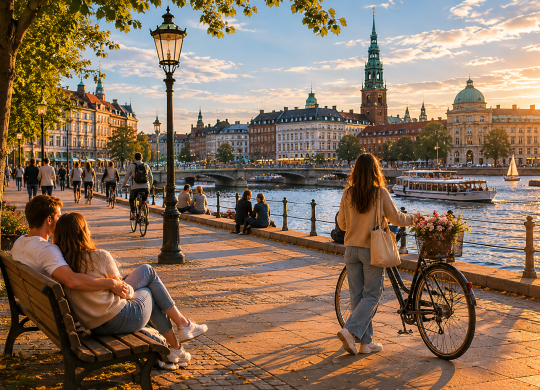
Experts from the Economist Intelligence Unit evaluated 173 cities around the world and identified the best places to live in 2025. This year, the long-time leader of the ranking ceded the top spot to a new winner. Learn more about the world’s most livable cities and the criteria that helped them top the ranking

Experts from the Economist Intelligence Unit (EIU) have released the new Global Liveability Index 2026, which ranks 173 cities worldwide based on their quality of life. The study traditionally takes into account dozens of indicators, ranging from safety and healthcare to the quality of infrastructure, education, and the environment. In 2026, the ranking saw one of the biggest changes in recent years: Vienna, the long-time leader, lost its top spot.
For the first time in several years, Copenhagen has become the world’s most livable city. The Danish capital received top marks in several key categories and managed to overtake Vienna, which had topped the ranking for three consecutive years. The top ten also included Zurich, Melbourne, Geneva, Sydney, Osaka, Auckland, and Vancouver.
Earlier, we talked about the European countries where it is easiest to get a work visa and start a career abroad.
Planning to move to Europe or apply for a residence permit? Migration legislation is changing rapidly, and even a minor error in the documents can cost months of waiting or refusal.
Consultation with a migration lawyer will help you assess your chances, choose the optimal type of visa and prepare for filing without risks.
Sign up for a consultation and get a clear action plan now.

What criteria are used to determine the world’s most livable cities?
Every year, experts from the Economist Intelligence Unit analyze cities around the world to determine where people have the best living conditions. The assessment takes into account not only economic indicators but also how comfortable, safe, and convenient daily life is for residents.
The ranking is based on five main categories:
- Stability and safety;
- Healthcare;
- Education;
- Infrastructure;
- Culture and environment.
Each category includes a number of individual indicators. For example, when assessing stability, crime rates, the political situation, and the risk of social unrest are taken into account. In the infrastructure category, the quality of roads, public transportation, housing stock, energy supply, and telecommunications is analyzed.
Experts pay particular attention to the accessibility of medical services and the quality of education. It is these factors that often determine how comfortable life will be for families with children, students, or older people.
Interestingly, a high income level does not guarantee a city a spot among the leaders. For example, many megacities with strong economies lag behind smaller cities due to traffic congestion, high housing costs, and lower safety ratings. That is why cities that have managed to strike a balance between development, the environment, and the quality of the urban environment often rank at the top of the list.
Learn more about the most affordable countries for expats to live in 2026 by following the link.
Copenhagen Became the World’s Most Livable City in 2025
Copenhagen took first place in the 2026 Global Liveability Index. The Danish capital scored 98 out of a possible 100 points and, for the first time in several years, managed to outrank Vienna, which was previously considered the undisputed leader in quality of life.
One of Copenhagen’s main strengths was its high scores for stability, education, and infrastructure. The city also received top marks for the quality of education and the development of urban infrastructure. An efficient public transportation system, safe streets, and a large number of green spaces play a significant role.
Copenhagen is often cited as one of the most bike-friendly capitals. According to city officials, over 60% of residents use bicycles daily to commute to work or school. Thanks to its extensive network of bike lanes, the city has remained a global leader in sustainable mobility for many years.
Another advantage is Denmark’s environmental policy. Copenhagen actively invests in renewable energy, the development of public transportation, and the reduction of carbon emissions. The city aims to become one of the world’s first major metropolises with net-zero CO₂ emissions.
High scores were also driven by a high-quality healthcare system, low crime rates, and access to cultural and sports facilities. It is the combination of safety, modern infrastructure, and a comfortable urban environment that has allowed Copenhagen to top the ranking of the world’s best cities to live in for 2026.
In our previous article, we discussed the richest cities and regions in Europe in 2026.
Top 10 Most Livable Cities in the World in 2026
The top ten cities in the Global Liveability Index include cities from Europe, Australia, New Zealand, Canada, and Japan. Most of them have consistently achieved high scores for many years thanks to their developed infrastructure, high-quality healthcare, safety, and high environmental standards.
Top 10 Most Livable Cities in the World in 2026:
1. Copenhagen, Denmark – 98.0 points.
2. Vienna, Austria – 97.1 points.
3. Zurich, Switzerland – 97.1 points.
4. Melbourne, Australia – 97.0 points.
5. Geneva, Switzerland – 96.8 points.
6. Sydney, Australia – 96.6 points.
7. Osaka, Japan – 96.0 points.
8. Auckland, New Zealand – 96.0 points.
9. Adelaide, Australia – 95.9 points.
10. Vancouver, Canada – 95.8 points.
It is noteworthy that three Australian cities made it into the top ten. This is the best result among all countries in the ranking. Meanwhile, Switzerland is represented by two cities—Zurich and Geneva—which traditionally demonstrate high scores in the areas of safety, healthcare, and education.
Another interesting trend is the dominance of cities with populations of up to two million people. Unlike megacities, they handle traffic better, have lower pollution levels, and provide more comfortable conditions for daily life.
Earlier, we wrote about the happiest cities in the world in 2026.
Which cities remain among the world leaders in quality of life?
Although Copenhagen has become the new leader in the ranking, the competition for the top spots remains extremely fierce. The difference between cities at the top of the list is often just a few tenths of a point, so even minor changes in individual indicators can affect the final rankings.
Vienna, which topped the ranking of the world’s most livable cities for three consecutive years, draws particular attention. In 2026, the Austrian capital dropped to second place. Experts attribute this primarily to a decline in the stability score following several incidents that affected the city’s overall safety rating.
The Swiss cities of Zurich and Geneva have once again confirmed their reputation as some of the best cities to live in. They consistently receive high ratings thanks to high-quality healthcare, efficient municipal services, a high level of safety, and a well-developed transportation infrastructure.
Australia remains one of the world’s leading centers for quality of life. Three Australian cities—Melbourne, Sydney, and Adelaide—made it into the top 10. Experts particularly praise the local healthcare systems, the quality of education, and the environmental conditions.
Canada also remains a regular in the top tier of the ranking. Vancouver has been among the world’s most livable cities for many years thanks to a combination of modern infrastructure, access to nature, and high levels of public safety.
At the same time, the ranking highlights another important trend: the most successful cities are those that invest not only in economic growth but also in the development of public spaces, transportation systems, healthcare, and environmental programs. It is precisely these factors that increasingly influence the overall quality of life for residents.
We previously wrote about the best cities in Europe to live in 2026.
Why do large metropolises rarely top such rankings?
At first glance, it might seem that the world’s richest and most famous cities should automatically occupy the top spots in quality-of-life rankings. However, the results of the Global Liveability Index reveal a different pattern: the leaders are most often not megacities, but medium-sized cities with well-balanced urban infrastructure.
One of the main reasons is traffic congestion. In cities like New York, London, Paris, or Los Angeles, millions of people use roads and public transportation every day, leading to traffic jams, overloaded networks, and longer travel times.
Housing prices remain an equally important factor. In many global megacities, the cost of renting and buying real estate is rising faster than household incomes. Because of this, even cities with high salaries often lose points on indicators of affordability and overall quality of life.
The ratings are also influenced by:
- High levels of noise and environmental pollution;
- Significant population density;
- Overburdened social and healthcare services;
- A more challenging public safety situation in certain areas.
In contrast, cities like Copenhagen, Zurich, or Melbourne offer a different approach to development. Here, the focus is on high-quality public transportation, abundant green spaces, access to healthcare, and comfortable urban planning. As a result, residents enjoy a higher quality of life even without the status of a global financial or tourist hub.
That is precisely why, in modern rankings, cities that focus not on scale but on creating a comfortable environment for people’s daily lives are increasingly coming out on top.
If you are planning to legalize, apply for a residence permit or submit migration documents abroad, the assistance of specialized migration lawyers can significantly simplify the process. Specialists will help you assess your chances of obtaining legal status, prepare a package of documents, avoid common mistakes, and accompany you at all stages of the migration procedure: from the initial consultation to obtaining a decision from the migration authorities.
We remind you! New economic indicators show which countries have been able to increase their GDP and which have lost ground due to inflation and slowing growth. Ranking of the richest countries in the world in 2026 — follow the link.
Products from Visit World for a comfortable trip:
Travel guide for 200 countries;
Legal advice from a local specialist on visa and migration issues;
Travel insurance around the world (please select the country of interest and citizenship to receive services);
Medical insurance all over the world.
We monitor the accuracy and relevance of our information, so if you notice any errors or inconsistencies, please contact our hotline
Frequantly
asked questions
Which city was named the most livable in the world in 2026?
Why did Vienna lose its top spot in the ranking?
What criteria are used to evaluate cities?
Which city ranked highest in North America?
Why do megacities rarely make it to the top of the rankings?
Recommended articles
3 min
Popular
Happiest Cities in the World in 2026: Where People Live With Less Stress
In 2026, the key factors for a comfortable life were no longer salaries or popularity with tourists, but low stress levels, safety and a good work-life balance. We reveal which cities topped the Happy City Index, why major cities are losing ground, and where people feel happiest today
08 May. 2026
More details3 min
Popular
Europe’s wealthiest cities and regions in 2026: where incomes and living standards are highest
The economic divide between different parts of Europe continues to widen. Whilst some regions are enjoying record revenues, high wages and a strong influx of investment, others still lag significantly behind in terms of living standards and economic development. We look at which European cities and regions have become the wealthiest in 2026, what lies behind their success, and where the continent’s main financial centres are concentrated today
11 May. 2026
More details2 min
Expats
Fastest Countries to Get Citizenship in 2026: Top 10 Easiest Paths to a Second Passport
Some countries allow citizenship after 2–5 years of legal residence. Find out which countries offer the fastest path to a second passport in 2026, what the naturalization requirements are, and what to consider before moving
09 May. 2026
More details3 min
Popular
How much will it cost to live in the best EU countries in 2026: actual monthly expenses
European countries with the highest quality of life attract millions of people with their stable economies, safety, social security, and high salaries. However, living comfortably in Switzerland, Denmark, or Luxembourg requires a substantial budget—rent alone in some cities can exceed several thousand euros a month. We’ll tell you how much it actually costs to live in the top five European countries in 2026 and what expenses await foreigners and expats
15 May. 2026
More detailsAll materials and articles are owned by VisitWorld.Today and are protected by international intellectual property regulations. When using materials, approval from VisitWorld.Today is required.