

Poland's Labor Market: How Many Foreigners Work in the Country and in Which Sectors Are They Most Numerous
Table of contents
- Why Poland needs foreign workers: ZUS figures
- Age of foreign workers in Poland: who comes to work
- Top sectors in Poland by share of foreign workers
- Sectors with minimal foreign presence in Poland
- Which Polish provinces and cities lead in terms of the number of migrants?
- Polish cities with the highest share of foreign workers
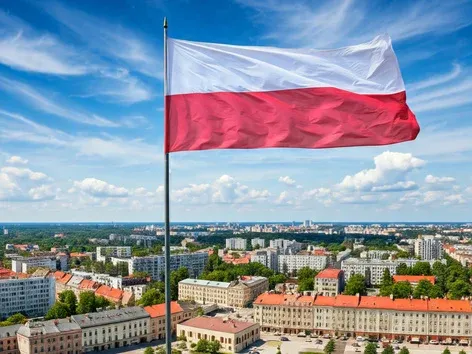
The Polish labor market is becoming increasingly dependent on foreign workers, who are filling labor shortages in key sectors of the economy. Migrants now account for 6–10% of the total workforce, and some sectors would effectively be unable to operate as usual without them. Learn more about the distribution of foreign workers by industry, region, and city in Poland

Foreign workers account for between 6% and 10% of the total workforce in Poland—and this figure continues to rise. According to a study by the Institute of Public Affairs, Deloitte, and Ipsos, migrants have become a significant resource for the Polish economy: they fill labor shortages, boost consumer demand, and support the social security system.
Where exactly are foreign workers concentrated, which industries depend on them the most, and why do Poland’s western regions lead in terms of migrant numbers—we’ll cover all this in the article below.
Want to learn how to legally find employment in Poland and what documents are required?
The Visit World portal has developed a practical guide containing all the latest information on work permits, application requirements, and the rights of foreign workers.

Why Poland needs foreign workers: ZUS figures
The number of Polish citizens registered in the ZUS social insurance system is steadily declining:
- 2023 — a decrease of 75,000 people;
- 2024 — a decrease of 59,000 people;
- the first three quarters of 2025 — a decrease of nearly 90,000 people.
Despite this, the total number of insured workers remains relatively stable. The balance is maintained thanks to the steady growth in the number of foreign employees registering in the system.
Migrants also generate additional consumer demand: they purchase goods and services, which stimulates the domestic economy and positively impacts GDP. At the same time, the demographic profile of foreign workers places less of a burden on the state budget compared to Polish citizens—the majority of migrants are of working age.
Where in Europe are household incomes growing the fastest in 2026? — find out by following the link.
Age of foreign workers in Poland: who comes to work
The demographic structure of migrants differs significantly from that of Polish workers. As of the end of September 2025, 56% of foreigners were under 40, while among Polish citizens, the corresponding figure was only 41%.
The largest gap was recorded in the 25–39 age group: 46% among foreigners versus 34% among Poles. However, among workers over 55, migrants account for only 9%—among Polish citizens, this share reaches 19%.
This age structure is beneficial for the state. Young workers actively pay taxes and social contributions, require expensive medical services less often, and do not yet receive pension payments.
By the way, demand for temporary workers has surged in Poland.
Visit World services for tourists, migrants, and expats: Insurance | Guides | Legal advice
Top sectors in Poland by share of foreign workers
The distribution of migrants across economic sectors is uneven. The highest concentration of foreigners is found in administrative and support services—by the end of 2024, their share in this sector reached about 25%. This category includes cleaning, facility security, reception work, contact centers, staffing agencies, travel companies, equipment and car rentals, as well as general office positions.
Next in the ranking:
- Hospitality and food service — 16% foreign workers.
- Transportation and logistics — 14%.
- Construction — 11%.
- IT, telecommunications, and media — 10%.
Industrial production and trade deserve special attention. The share of foreign workers here is relatively small — 7% and 4%, respectively. However, in absolute terms, these sectors are among the largest employers of migrants: approximately 195,000 people in manufacturing and 88,000 in trade.
In our previous article, we reported that new rules for calculating work experience are in effect in Poland.
Sectors with minimal foreign presence in Poland
A low share of migrants persists in sectors with strict regulatory requirements regarding qualifications, licensing, or citizenship. These include public administration, the defense sector, education, and healthcare. It is precisely these regulatory restrictions that remain the main barrier to the employment of foreigners in these fields.
Which Polish provinces and cities lead in terms of the number of migrants?
The highest concentration of foreign workers is observed in the western regions of Poland and in large urban agglomerations.
Leading provinces by share of foreigners (2024):
- Lubusz — 10%;
- Lower Silesia — 6%;
- West Pomerania — 6%;
- Pomerania — 6%;
- Greater Poland — 6%.
Voivodeships with the lowest share:
- Subcarpathia — 2%;
- Świętokrzyskie — 2%;
- Lublin — 2%;
- Kuyavian-Pomeranian — 2%;
- Warmian-Masurian — 2%.
In terms of the absolute number of employed migrants, the Mazovian Voivodeship leads with 210,000 people, followed by Lower Silesian — 123,000, and Greater Poland — 113,000. The fewest foreign workers are registered in the Świętokrzyskie (9,000), Warmian-Masurian (14,000), and Subcarpathian (14,000) provinces.
In which European countries do people most often work on weekends — read here.
Polish cities with the highest share of foreign workers
Among major cities, the highest percentage of migrants is found in Wrocław (16%), Gożów Wielkopolski (14%), Szczecin (14%), Warsaw (13%), Zielona Góra (13%), Poznań (13%), Opole (12%), Gdańsk (12%), Kraków (12%), and Łódź (11%).
Even higher rates have been recorded in certain cities with county rights: Świnoujście — 18%, Legnica — 14%, and Słupsk — 14%.
Are you planning to find a job in Poland or already looking for vacancies?
The Visit World portal has prepared a detailed guide to help you navigate the paperwork, work permits, and the specifics of Polish labor law.
Order the guide on the Visit World website and prepare to enter the Polish labor market with a full understanding of the process!
Reminder! In our previous article, we discussed the EU countries leading in remote work.
Photo: Magnific
Products from Visit World for a comfortable trip:
Checklist for obtaining a visa and necessary documents in Poland;
Legal consultation on immigration to Poland;
Travel insurance for foreigners in Poland;
Medical insurance worldwide.
We monitor the accuracy and relevance of our information, so if you notice any errors or inconsistencies, please contact our hotline.
Frequantly
asked questions
In which sectors in Poland are the most foreigners employed?
Which Polish cities have the most foreign workers?
Recommended articles
2 min
Work
New rules for calculating seniority are now in effect in Poland: what has changed for employees
In Poland, new rules for calculating length of service for employees of private companies took effect on May 1, 2026. Now, more periods of employment and other activities can be included in the calculation of length of service; however, employees must verify this information themselves through ZUS. Learn more about who is eligible for additional vacation days and what documents you should submit now
19 May. 2026
More details2 min
Work
Demand for temporary workers has surged in Poland: who are employers looking for in 2026?
Polish employers are increasingly turning to temporary hiring. The highest demand is currently seen in logistics, warehousing, manufacturing, and e-commerce, and the number of foreign workers in the Polish labor market has already exceeded 1.29 million. Learn more about why Polish businesses are changing their hiring approach, which job openings are currently the most popular, and what salaries employees can expect in 2026
25 May. 2026
More details2 min
Popular
Poland Changes Property Purchase Rules for Foreigners: What You Need to Know in 2026
Poland is preparing changes to the rules governing real estate purchases by foreigners. The new measures are designed to tighten oversight of certain transactions and may affect the home-buying process for certain categories of buyers. Learn more about who will be affected by the changes and how foreigners can buy real estate in Poland in 2026
06 Jun. 2026
More details2 min
Residence permit
EU Residence Documents in Poland Expire August 3, 2026: Who Is Affected and What to Do
Poland is canceling old EU residence permits – even permanent ones – from August 3, 2026. Find out who this deadline affects, what the consequences of inaction will be, and how to apply for a replacement on time
10 Jun. 2026
More detailsAll materials and articles are owned by VisitWorld.Today and are protected by international intellectual property regulations. When using materials, approval from VisitWorld.Today is required.