

Waiting times at European borders may increase starting in September: what will change in the EES's operations
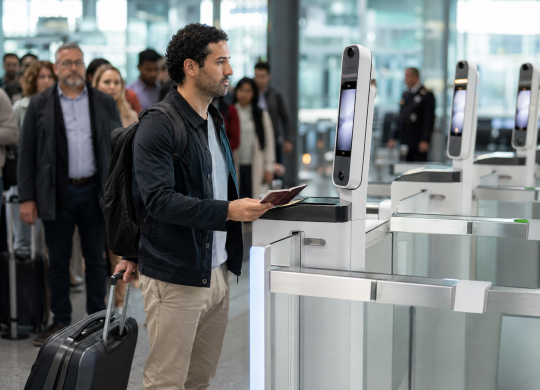
Starting September 6, European countries will no longer have the temporary option to suspend EES biometric registration during periods of excessive border traffic. This may increase the time it takes to go through passport control at airports, seaports, and land border crossings. Learn more about the new rules and how to prepare for your trip

The Entry/Exit System has been fully operational at the Schengen Area’s external borders since April 10, 2026. It has replaced passport stamps with digital registration of entries and exits, and automatically tracks the permitted 90-day stay within any 180-day period.
Upon first crossing the border, travelers must provide their passport information, a facial image, and fingerprints. This initial registration takes the most time and has already caused delays at some airports. Once the temporary exemptions expire in September, there will be fewer opportunities to quickly suspend biometric checks during peak periods.
In our previous article, we discussed how to choose safe accommodation, avoid mistakes, and book a hotel without unnecessary expenses.
Planning a trip abroad and want to protect yourself from unforeseen situations?
Travel insurance from Visit World will cover medical expenses, flight delays, and lost luggage in any country. Get a policy online in a few minutes and travel with confidence!

What will change in the EES’s operation after September 6?
After the full launch of the EES, countries were allowed to temporarily suspend the collection of biometric data if, due to excessive passenger traffic, wait times at a specific border crossing point became too long. This measure could be applied for a maximum of six hours, provided the European Commission and the eu-LISA agency were notified.
This mechanism was used by certain airports in France, Greece, Portugal, and Spain. During peak hours, border guards could choose not to collect fingerprints in order to process passengers more quickly and reduce lines. Document checks were not waived, however.
This temporary exemption expires on September 6, 2026. After that date, airports will no longer be able to suspend biometric registration solely due to large crowds. This does not mean that lines will automatically form at all border crossings, but the risk of delays will be higher at major tourist hubs, small seasonal airports, and checkpoints with insufficient equipment or staff.
We previously wrote about The Top 10 Most Dangerous Airports in the World: The Most Extreme Places to Take Off and Land.
Who is affected by the new entry rules?
The EES applies to citizens of countries outside the EU or the Schengen Area who are traveling to Europe for a short-term stay—no more than 90 days within any 180-day period. The rules are the same for travelers with a short-term Schengen visa and citizens of countries with visa-free travel.
The system operates at the external borders of 29 European countries: in EU member states (except Ireland and Cyprus), as well as in Norway, Switzerland, Iceland, and Liechtenstein. The EES is used at airports, seaports, and land border crossing points.
As a general rule, the following are exempt from biometric registration:
1. Citizens of the EU, Iceland, Liechtenstein, Norway, and Switzerland
2. Holders of residence permits or long-term visas from countries that use the EES
3. Certain family members of EU citizens who hold a legally required resident card
4. Citizens of Andorra, Monaco, San Marino, and holders of Vatican City passports
5. Certain categories of diplomats, cross-border workers, and crew members
The EES does not apply to flights between Schengen Area countries, as passengers do not cross an external border. If a traveler is merely in transit and does not leave the airport’s international zone, registration is also generally not required. However, during a layover involving passport control, the traveler will have to undergo verification in the first country of entry into the Schengen Area.
In our previous article, we explained how to find cheap last-minute flights using Skyscanner’s tips.
How does EES screening work?
Upon first crossing the external border, a border control officer or a self-service kiosk scans the passport and creates a digital profile of the traveler. This profile includes the traveler’s name, date of birth, citizenship, document number, and the date and place of entry or exit.
The system also collects biometric data:
- A digital facial image
- Fingerprints, if required for the traveler’s category
- Information about any refusal of entry, if such a decision was made
Children under 12 are not fingerprinted, but their faces are photographed. If fingerprinting is not possible due to a person’s physical condition, border guards follow the prescribed exception procedure; however, this may increase the time required for the check.
Full registration is not usually repeated on subsequent trips. The Border Guard Service verifies the passport and biometric data against an existing profile, and the system adds a new record of the border crossing. If the document has changed, the data cannot be verified, or the retention period has expired, registration may be repeated.
Stamps are no longer placed in passports at the borders of countries that use the EES. Entries and exits are recorded in an electronic database, which automatically calculates the remaining duration of the authorized stay. Refusal to provide the required biometric data without a valid reason may be grounds for denial of entry.
Learn more about the world’s most beautiful airports in 2026 according to the Prix Versailles ranking by following the link.
Why do lines form at airports and border crossings?
The initial registration of travelers takes the most time. Instead of a quick passport check, border guards must scan the document, take a photo of the person, capture their fingerprints, and create a digital profile. If several flights from non-Schengen countries arrive at the same time, even a few extra minutes per passenger can quickly result in a long line.
Delays are exacerbated by:
1. An insufficient number of automated terminals and staff
2. Equipment reboots due to technical glitches or overloads
3. Rescans due to failed facial or fingerprint recognition
4. Longer registration times for children, families, and large tour groups
5. The simultaneous arrival of multiple international flights
Particular difficulties arise with fingerprint scanning for older individuals. Even if they are exempted from this procedure due to a physical inability to provide biometric data, border guards require additional time to verify and document the exception.
The European Commission acknowledged problems at approximately 20 border crossing points, although most borders continued to operate without critical delays. By July, the EES had recorded about 110 million crossings and 44,500 refusals of entry. Frontex estimates that it may take one to two years for the system to fully stabilize in all countries.
The highest risk of lines occurs during peak hours, at small seasonal airports, and when large numbers of passengers are entering for the first time. Travelers with short layovers who go through passport control at the first airport in the Schengen Area need to plan their time particularly carefully.
No matter how well thought-out your itinerary is, there is always room for force majeure when traveling. Unexpected medical expenses, transportation delays, or luggage problems can ruin your plans and budget. Travel insurance helps you avoid unnecessary worries in such situations. You can apply for a travel insurance policy for a specific trip online at Visit World - quickly and without unnecessary bureaucracy!
Take out a policy online at Visit World and enjoy your trip without any unnecessary worries!
We remind you! Popular European tourist destinations are becoming increasingly crowded, so travelers are looking for alternatives without the crowds. In 2026, attention is turning to countries that remain off the beaten path but offer unique experiences, affordable prices, and an authentic atmosphere. Read more about 5 European countries that are rarely visited by tourists.
Products from Visit World for a comfortable trip:
Travel guide for 200 countries;
Legal advice from a local specialist on visa and migration issues;
Travel insurance around the world (please select the country of interest and citizenship to receive services);
Medical insurance all over the world.
We monitor the accuracy and relevance of our information, so if you notice any errors or inconsistencies, please contact our hotline
Frequantly
asked questions
Do I need to register with the EES online before my trip?
Do they still stamp passports?
How do children go through the EES?
Do residence permit holders need to use the EES?
How does the EES differ from ETIAS?
Recommended articles
3 min
Air travel
Summer is traditionally the busiest season for European airports, but in 2026, the situation could prove particularly challenging. Experts are already warning of possible flight delays, long lines, and overcrowding at certain transportation hubs. Learn more about which European airports are likely to cause the most problems for travelers this summer and how to prepare for your trip
27 Jun. 2026
More details2 min
Air travel
How to Find Last-Minute Cheap Flights: 7 Tips from Skyscanner
A last-minute vacation doesn't have to mean expensive plane tickets. Experts at Skyscanner have shared seven simple ways to help you find great deals even just a few days before your flight. Learn more about how to save money on airfare without sacrificing comfort
12 Jul. 2026
More details2 min
Air travel
EES Border Checks 2026: Why 9 EU Countries Are Asking Brussels for More Time
Nine European countries have officially asked the European Commission to extend the relaxed regime of the Entry/Exit System (EES) after September 6, 2026. Find out why airports and airlines are criticizing the current control system, what delays occur at the borders and what travelers should consider when planning a trip to the Schengen area
14 Jul. 2026
More details3 min
Air travel
How to Overcome Jet Lag Faster: What to Eat and Drink After a Flight
After a long flight, it may take your body a few days to adjust to the new time zone. Learn more about which foods and drinks can help reduce fatigue, sleep problems, and digestive discomfort—and what you should avoid while traveling
01 Aug. 2026
More detailsAll materials and articles are owned by VisitWorld.Today and are protected by international intellectual property regulations. When using materials, approval from VisitWorld.Today is required.