

EES Border Checks 2026: Why 9 EU Countries Are Asking Brussels for More Time

Nine European countries have officially asked the European Commission to extend the relaxed regime of the Entry/Exit System (EES) after September 6, 2026. Find out why airports and airlines are criticizing the current control system, what delays occur at the borders and what travelers should consider when planning a trip to the Schengen area

Nine European countries have asked the European Commission to extend the temporary relaxed regime of the Entry/Exit System (EES) - this is stated in a joint letter from Belgium, France, Germany, Greece, Italy, Malta, the Netherlands, Portugal and Switzerland, Euronews reports. The letter came amid a wave of complaints from airports and airlines, which once again warn of hours-long queues at the borders. We will tell you the reason for the queues and what the countries are asking the European Commission for.
Also read: What tourists are most often fined for on European roads in 2026.
When traveling to Europe in conditions of constant changes in border rules, it is important to have reliable protection in case of unforeseen situations. Travel insurance covers medical assistance, loss of luggage, cancellation or delay of the trip and a number of other risks that may arise on the road. You can apply for a policy completely online in a few minutes, choosing coverage for a specific route. Take care of your peace of mind before you leave - take out travel insurance at Visit World today.

EES - what is this system?
EES is a digital entry and exit registration system that requires citizens of non-EU countries to undergo fingerprint and facial scanning when crossing the external border of the Schengen area. The system has been in operation in stages since October 2025, and from April 10, 2026 it has completely replaced traditional passport stamping, allowing for the automatic detection of those who have exceeded the permitted period of stay. It was the first months of the system's full operation that showed how unprepared the EU borders are for the load.
Visit World services for tourists, migrants, and expats: Insurance | Guides | Legal advice
What are 9 European countries asking the European Commission for?
The ministers of the nine EU states that sent a letter to the European Commission this week do not deny the very idea of biometric control - they confirm their support for the EES as a tool. But they insist on something else: to maintain the “partial suspension” mechanism, which currently allows border guards to temporarily waive biometrics collection in exceptional circumstances in order to avoid creating huge traffic jams, after September 6, 2026.
The letter says that the end of this mechanism on September 6 “raises serious and legitimate concerns”, shared not only by several member states, regardless of their level of readiness, but also by the entire transport sector. Industry representatives frankly believe that technical and operational problems are unlikely to be fully resolved by early September.
The European Commission has not yet given a clear signal whether it will comply. An EC spokesman said that the agency welcomes the confirmation by countries of their intention to fully implement the system, and that Brussels is in close contact with countries experiencing difficulties at individual border crossing points. There has been no formal response to the request for continued flexibility.
Myths about the new EU Entry/Exit System (EES) at the link.
Why are airports reporting significant delays?
Complaints about the EES are being heard not only from governments, but also from those who directly encounter queues every day. EasyJet CEO Kenton Jarvis called the queues at borders in recent weeks “completely unacceptable” and called for either effective use of existing flexible mechanisms or for them to be extended beyond the September deadline.
The head of Fraport Greece, which operates 14 airports in Greece, was even more harsh: he openly spoke about the “fundamental flaws” of border controls. According to him, some airports had to install canopies to protect passengers in queues from the sun while data processing is ongoing, and vulnerable travelers are being given priority for security reasons. Emergency suspension mechanisms, in his opinion, are only a temporary patch: the system needs a full upgrade, including the ability to check in before departure, rather than in a live queue at the border.
Earlier this month, European airports, airlines and aviation authorities wrote a joint open letter to the European Commission, warning that delays at some borders were reaching five hours and were seriously disrupting air traffic and the tourism sector as a whole.
Ryanair has previously named the airports with the largest queues through the EES system in the summer of 2026.
What do the discussions around the EES mean for those planning to travel to the EU?
It is important not to confuse two different issues here. The discussion around 6 September is not about whether the EES will operate, but about how flexibly border guards will be able to apply it in practice at the busiest border crossing points. The system itself remains mandatory for all third-country nationals: when crossing the Schengen area’s external border for the first time after the launch of the EES, travellers entering under the visa-free regime will have to undergo a facial scan and fingerprints – this applies to adults and children aged 12 and over.
The continuation of the relaxed regime, if adopted, would mean less chaos in queues at problematic border crossing points rather than a change in the requirements for travellers themselves. Along with the EES, the usual rule of 90 days of stay in any 180 days applies for short-term trips - it is now controlled automatically by the system, so it is worth planning your route in advance and counting the days, especially if you are planning several trips in a row.
In practice, this means that you should allow more time at the border than before, especially during the peak summer months and at the busiest airports and checkpoints in continental Europe.
How to find cheap last-minute flights: 7 tips from Skyscanner at the link.
Delays at EU borders through the EES are not only an inconvenience, but also a real risk of missing a connecting flight, being late for your hotel or finding yourself without a plan of action in a force majeure situation. It is for such cases that travel insurance provides compensation for expenses in case of delay or cancellation of the trip for reasons beyond your control, and also covers emergency medical care if something goes wrong during the trip. The policy will not cover chronic diseases or injuries caused by intoxication, so it is important to carefully read the terms and conditions before applying.
Don't leave the safety of your trip to chance - choose Visit World travel insurance and travel with confidence.
Reminder! European islands remain one of the most popular destinations for summer vacations, but choosing the perfect place among dozens of options can be difficult. The new rating compared 80 islands by weather, gastronomy and the number of green areas. We have already talked about the best islands in Europe for travel in 2026 and the destinations that are most suitable for beach, active and gastronomic holidays.
Photo - generated by Gemini
Products from Visit World for a comfortable trip:
Travel guide for 200 countries;
Legal advice from a local specialist on visa and migration issues;
Travel insurance around the world (please select the country of interest and citizenship to receive services);
Medical insurance all over the world.
We monitor the accuracy and relevance of our information, so if you notice any errors or inconsistencies, please contact our hotline.
Frequantly
asked questions
Does the temporary suspension of EES procedures apply to travelers who have already completed biometric registration?
Can travelers speed up the EES border control process?
Recommended articles
3 min
Travels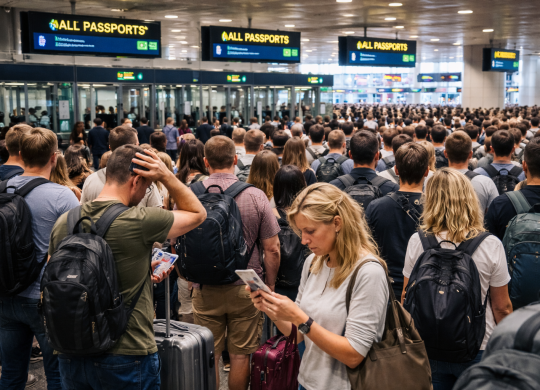
New EU entry rules have brought airports to a standstill: passengers are waiting for hours
The EU’s new border control system, which involves the collection of biometric data, has already caused widespread delays at airports. Passengers are forced to wait for up to several hours, and the situation could worsen this summer. Learn more about why the new system has caused chaos and how it will affect travel in 2026
16 Apr. 2026
More details2 min
Air travel
Ryanair has introduced new booking rules for families with children: how to book seats now
Ryanair has changed its seat reservation policy for passengers traveling with children. The airline will no longer require a mandatory surcharge for parents to sit next to their child, but the new terms have some nuances. Learn more about who is affected by the changes, how automatic seat assignment will work now, and in which cases you will still have to pay for seat selection
27 Jun. 2026
More details2 min
Air travel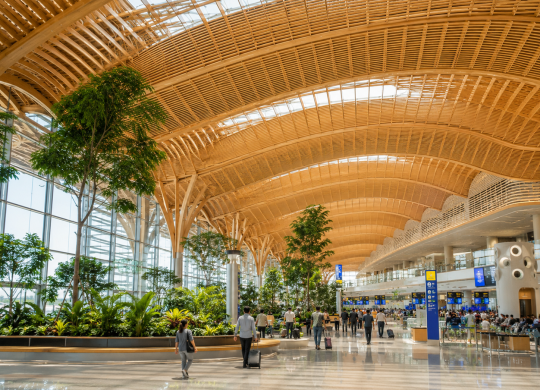
The 7 Most Beautiful Airports in the World in 2026: The Prix Versailles Ranking
The Prix Versailles International Architecture Award, presented annually under the auspices of UNESCO, has released its list of the world’s most beautiful airports for 2026. The ranking includes seven new or completely renovated terminals that combine modern design, eco-friendly solutions, and passenger comfort. Find out which airports have become global architectural landmarks this year
05 Jul. 2026
More details2 min
Air travel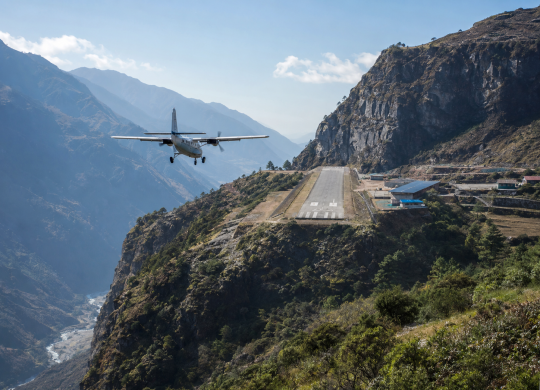
Top 10 Most Dangerous Airports in the World: The Most Extreme Places to Take Off and Land
Short runways, high mountains, sudden gusts of wind, and the ocean just a few meters from the plane turn an ordinary flight into a challenging ordeal for the crew. Learn more about the 10 most dangerous airports in the world and the reasons why only specially trained pilots are allowed to land at some of them
19 Jul. 2026
More detailsAll materials and articles are owned by VisitWorld.Today and are protected by international intellectual property regulations. When using materials, approval from VisitWorld.Today is required.